The processes, sheet by sheet
What is done to the coffee between the picked cherry and the green bean, process by process. One sheet per process: the principle, the sequence with its parameters, what it gives in the cup, what goes wrong. And everywhere the same rule, separating what has been measured from what is merely claimed.
32 processes, from fruit to green coffee
Each sheet carries the scene of its process, its details and its sources. To see two processes side by side, step by step, open the plate's comparator.
The dry process
The washed process
The intermediate processes
Directed fermentations
Drying
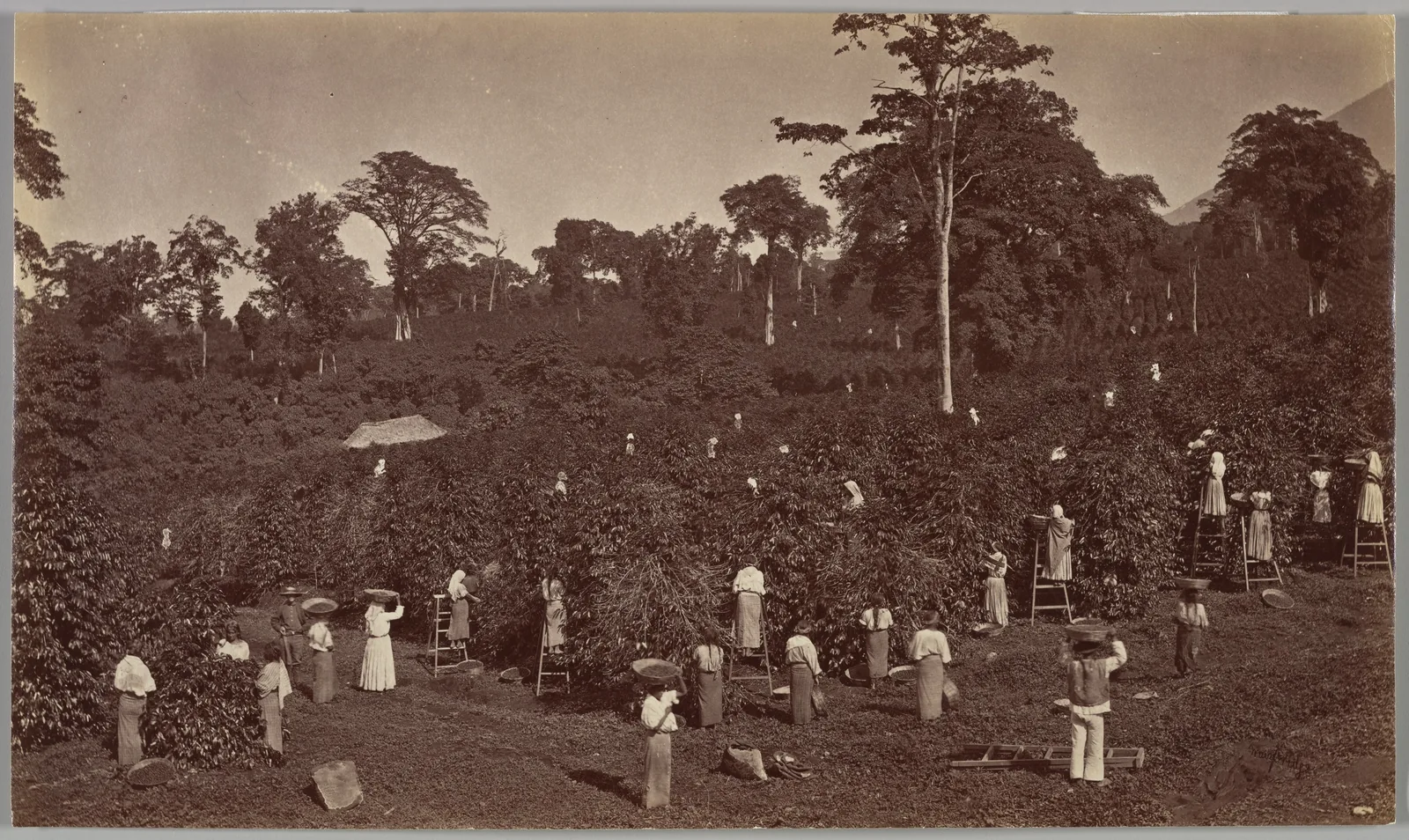
The dry process
The whole cherry dried on its bean, with nothing removed from it. It is the oldest of the routes and by far the most difficult: nothing protects the bean during the three weeks it dries in its own sugar.
The washed process
The pulp is removed before drying. The mucilage, that sticky layer stuck to the parchment, is broken down in a tank and then washed off. This is the process that gives the cleanest cups, and the one that uses the most water.
The intermediate processes
In between lies a whole gradient: the coffee is pulped but part of the mucilage is kept, more or less, and dried with it. The honeys and pulped natural are degrees of the same idea, not distinct processes.
Directed fermentations
For about ten years, fermentation is no longer endured, it is conducted: closed tank, inerting, inoculation, dosed oxygen, thermal shock. It is the most active ground of the trade, and the one where the most is claimed without being measured.
- Thermal shockthermal shock
- Co-fermentation and infusionco-fermentation, infused coffee
- Double fermentationdouble fermentation
- Fermentation in a closed tank, known as anaerobicanaerobic fermentation
- Lactic fermentationlactic fermentation, lactic process
- Extended fermentationextended fermentation
- Koji and fungal fermentationskoji process
- Selected yeastsstarter cultures, selected yeasts
- Carbonic macerationcarbonic maceration
- Micro-oxygenationMOX, micro-oxygenation
- Natural in a closed tankanaerobic natural
Drying
The processing route decides what is taken from the fruit; drying decides how the water is removed from what remains. The two dimensions are independent, and that is the whole point of separating them: a washed coffee is dried on a raised bed exactly as a natural is, and the choice of support changes the duration, the evenness and the risk of mold far more than the choice of route.
After drying
What happens to the bean once it is dry and still changes the cup: resting in parchment, hulling, monsooning, aging, and all the sorting that decides what goes and what stays.
- Green coffee defects and their classificationgreen coffee defects
- Hulling and resting in parchmenthulling, dry milling
- Processing water and pulpcoffee processing wastewater
- Monsooned coffeeMonsooned Malabar
- Wet polishingwet polishing
- Sorting, from flotation to the optical sortersorting, grading
- Deliberate agingaged coffee