Hulling and resting in parchment
After drying.
Rest, then the dry mill
Start the scene or choose a stage. The animation simplifies the mechanism; what follows gives the details and the available references.
Dried to 10 to 12%, the coffee keeps its parchment, the fibrous endocarp around the bean, for a few weeks in a silo or in bags. It acts as a buffer: water distributes itself between the core and the surface of each bean, and between the beans of the lot. The 15 to 60 days that circulate are a trade figure, no trial compares them.
Read the stages without animation
- Resting in parchmentDried to 10 to 12%, the coffee keeps its parchment, the fibrous endocarp around the bean, for a few weeks in a silo or in bags. It acts as a buffer: water distributes itself between the core and the surface of each bean, and between the beans of the lot. The 15 to 60 days that circulate are a trade figure, no trial compares them.
- Friction splits the parchmentStones, wood and metal are removed first, because they break beans. Then the bean is pushed against a perforated cylinder: the husk splits and comes away, and the silverskin goes with it, except in the center cut.
- Air carries away the huskAn air stream carries away the husk debris and dust; the heavier green bean falls. The screens, the gravity table and sorting follow, then the bags, under 12.5% moisture for shipping.
- It all comes down to the bean's waterToo wet, above 12 or 13%, the soft bean deforms instead of letting its husk split. Too dry, below 10%, it breaks, and its fragments burn while the lot roasts. A badly adjusted huller also lets parchment beans through, which come out of the roaster blond.
To remember: the parchment protects the dry bean during the rest; the dry mill removes it by friction, air separates it, and the bean's moisture decides the breakage.
In history: In history: the first English patent for a coffee hulling mill goes to William Panter in 1775.
Read the full article and its sources ↓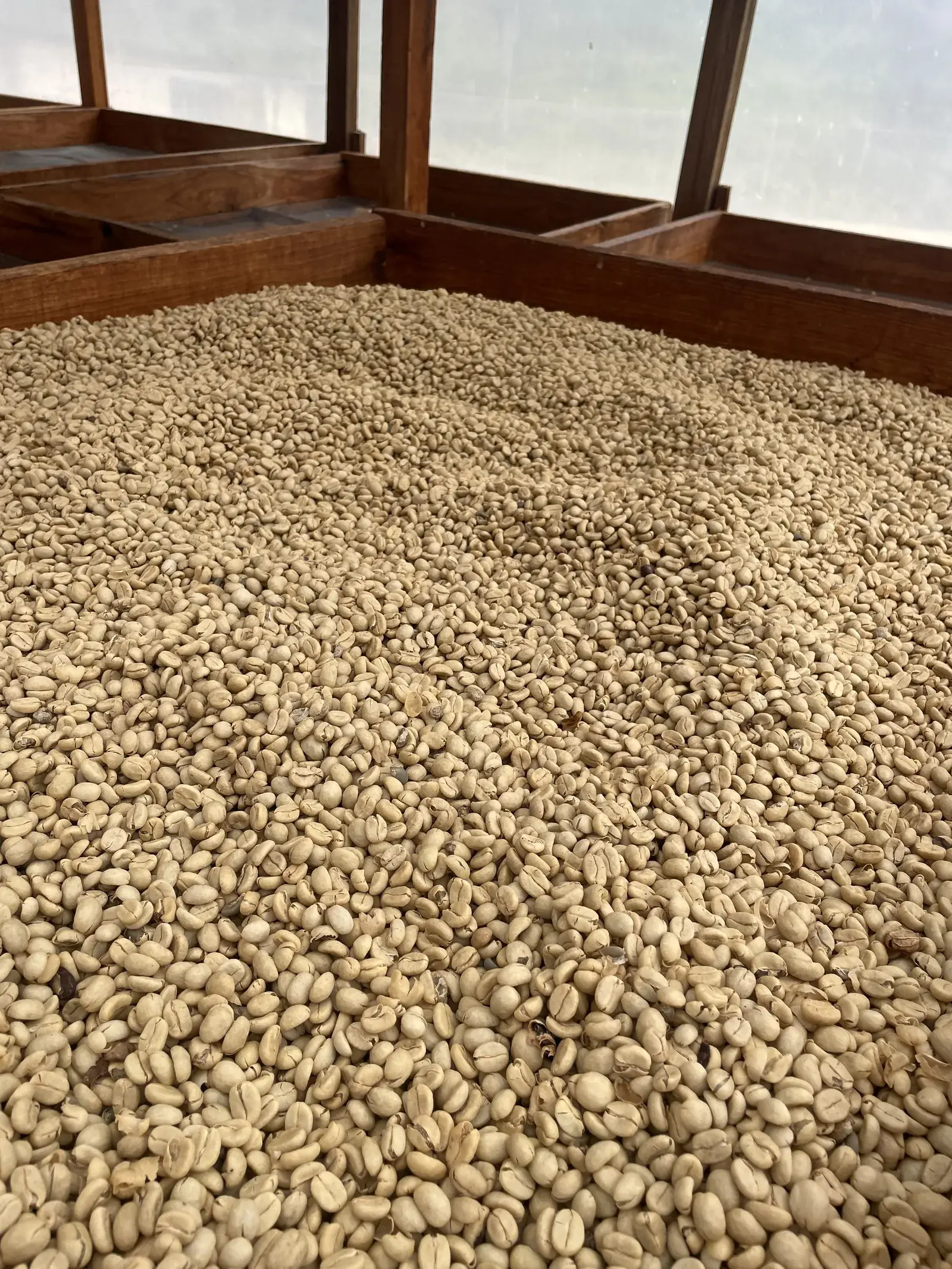
Where it is practiced
Wherever pulping is done. Parchment exists only on washed, honey and pulped natural coffees: natural keeps its dried cherry and follows the same logic with another envelope. Colombia built its domestic trade on the unit of dry parchment coffee (“café pergamino seco”, in Spanish): the producer sells parchment, not green. In Central America, East Africa and, in Brazil, for pulped natural (cereja descascado, in Portuguese), the dry mill is a trade separate from the farm. Mechanization is old. The first English patent for a coffee hulling mill goes to William Panter in 1775. The first American patent goes to Nathan Reed, of Belfast, Maine, in 1822. A dense series of hullers follows until the 1850s. The French expression “café en parche” is attested in Guadeloupe before 1922, where polished coffee bore the name “café bonifieur”. In Indonesia, wet hulled (giling basah, in Indonesian) reverses the rule and hulls early; its dating has only commercial sources.
The principle
Parchment is the endocarp of the fruit, the fibrous, cellulose-rich shell that stays stuck to the bean once drying is finished. Keeping it is not a rite. It serves as a hygroscopic buffer and a mechanical shell.
A buffer, because the parchment and its bean do not carry the same water. Cenicafé measured the moisture of parchment coffee, then hulled the same samples and measured the kernel, that is, the bare green bean. The kernel is moister by 0.21% on average, within a range of 0.14 to 0.27%. The institute attributes the gap to the cellulose of the shell, which retains less water than the albumen of the bean. Measuring a lot in parchment therefore amounts to underestimating the real water of the bean by about two tenths of a point.
The rest exploits this imbalance. For weeks in a silo, water redistributes between the core and the surface of each bean, and between the beans of a single lot. The average of a lot says nothing about its dispersion, and it is the dispersion that makes roasts uneven.
Hulling, for its part, is a friction job. The beans are pushed against a perforated metal cylinder, or between discs, until the husk splits and comes away. The silverskin, the thin silvery film lodged under the parchment, goes at the same time, except for fragments that stay in the center cut of the bean. The bean's resistance to this friction depends entirely on its water. Too wet, it deforms and tears. Too dry, it is brittle and bursts.
The sequence
- End of drying at 10 to 12% moisture, wet basis. This corridor commands everything else. Below 10%, the bean becomes brittle, and its baseline metabolism is affected. Above 11.5%, its respiration speeds up and its chemical composition begins to shift. Molds, for their part, need much more water, and only start beyond 14%.
- Cooling before storage. A coffee leaving a mechanical dryer is hot, and a coffee shut up hot sweats. A 1992 Colombian trial cooled bulk parchment by controlled mechanical aeration, in experimental silos. The air ranged from 10 to 22 °C, with 66 to 98% relative humidity, on beans of 8 to 13.57% moisture. The result was judged on three criteria: the color of the kernel, the microbial population and the cup.
- Rest in parchment, 15 to 60 days, in a silo or in bags. The figure comes from the ITC Coffee Guide, which attributes it to two industry consultants and not to a trial. The rest is said there to be longer for naturals than for parchment coffees.
- Room conditions: relative humidity of 60 to 80%, cool temperature. Coffee is hygroscopic, it exchanges water with the air until equilibrium. This range aims at a water activity of the bean at most equal to 0.7, that is, under the mold growth threshold. At constant bean moisture, between 10 and 12%, water activity falls with temperature. Cenicafé measures 0.6254 at 25 °C, 0.6161 at 20 °C and 0.6059 at 15 °C. A cool warehouse therefore buys microbiological margin without touching moisture.
- Precleaning and metal removal. Stones, wood and pieces of metal are removed before the huller. They break beans and wear the machine.
- Hulling. Friction against a perforated cylinder or between discs, machine calibrated to the bean size. Badly adjusted, it breaks beans or lets through beans still in parchment.
- Polishing, optional. It removes by additional friction the remains of silverskin, often in a second machine with a bronze cylinder. The ITC does not recommend it on arabica.
- Cleaning by air stream, which carries away dust and husk debris.
- Screen grading, so that the beans of a single lot roast at the same pace.
- Gravity table, which lifts dense beans and sets aside hollow ones.
- Color or manual sorting, which removes color defects.
- Tasting, grading, bagging or siloing.
- Shipping. The accepted ceiling is 12.5% moisture. A 2026 review retains it for transport and storage, on the grounds of ochratoxin A risk. Above it, condensation in the container feeds fungi. The ISO 6673 standard does not set this threshold: it describes the method for measuring the moisture of green coffee. Cenicafé asks for even stricter, 10 to 12% along the whole chain, transport included. Indian monsooned coffees are the accepted exception.
What it gives in the cup
What is measured.
Quality is already readable before hulling. A 2026 study classifies sensory defects by near-infrared spectroscopy with 93.5% accuracy on dry parchment, against 82.4% on green bean. Hulling therefore does not create quality. It reveals and sorts it.
High moisture during storage gives paper and wood notes. Cenicafé measures that above 11.5% moisture the bean's respiration speeds up, and that carbohydrates, lipids and proteins decrease. The institute describes these notes as characteristic and discriminating of “café reposado”. The term is a false friend: “reposado” here names a defect of aged coffee, not the rest in parchment. Cenicafé ties this defect to the moisture of the bean, not to the length of the rest. The original measurement is that of Ribeiro and colleagues, in 2011.
The opposite defect also costs. A 2026 review sums it up thus. Below 10% moisture, or at a water activity near 0.4, microbial activity stops, but the bean's baseline metabolism is affected. Lipids and proteins, aroma precursors, oxidize. The cup becomes flat and stale.
One effect plays out at the roaster, not at the producer. Below a water activity of 0.6, the mobility of the chemical compounds of the bean falls. The Maillard reaction combines reducing sugars and amino acids. It forms, among other things, melanoidins, those brown polymers that carry color and part of the body. Deprived of free water, it is slowed, and caramelization takes over. Cenicafé here applies a principle of general food chemistry, without a coffee trial to support it.
On early hulling, a 2005 Indonesian trial stored wet parchment for 1, 7 and 14 days before wet hulling. It finds no clear relationship between storage duration and the cup. The best Mandheling of the lot came from the sample stored a single day, then dried at once to 12%. The authors attribute the dispersion of their results to the heterogeneity of the parchment lots used.
What is claimed without measurement.
The rest “would sometimes reduce the green taste” and “improve quality attributes”. The Coffee Guide writes this with no trial reference. The round durations that circulate among buyers, thirty, sixty or ninety days, refer to no published comparison at constant moisture.
What goes wrong
- Hulling too wet. Above 12 or 13%, the bean is soft: friction deforms it and opens it instead of splitting the husk. In Indonesia the defect has a name, the goat's nail (kuku kambing, in Indonesian), the cleft left by hulling a soft bean. The description comes from trade literature, not from an article.
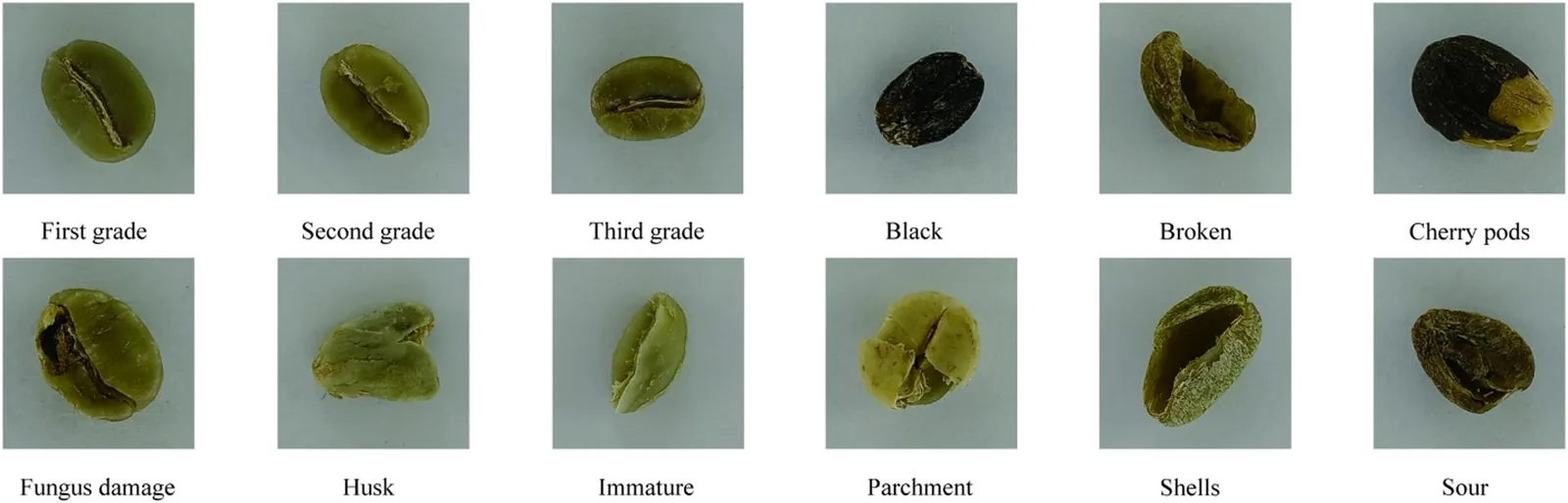
- Hulling too dry. Below 10%, the bean is brittle. The ITC writes that a coffee stored below 11% is more exposed to breakage at the dry mill. Broken pieces roast faster than whole beans, and burn while the lot roasts.
- Badly calibrated huller. It breaks beans, or lets through beans still in parchment. These beans come out pale at roasting, staying blond when the rest of the lot is done.
- Resting too wet. Above 11.5%, respiration speeds up and aging begins. Aspergillus ochraceus starts to grow from a water activity of 0.76, or 14.2% moisture on green bean. Ochratoxin A production needs more, from 0.83 to 0.87. Between the two values, one gets mold without toxin, which is enough to give the moldy defect.
- Water uptake during the rest. The bean exchanges with the air until equilibrium. A room that is too humid brings it back above the shipping threshold, and the lot becomes unshippable.
- Hysteresis in measurement. The same coffee can show a lower water activity at origin than at destination, at equal moisture. Cenicafé explains it by the thermal damage suffered by cell structures during drying, which changes their capacity to retain and release water. A contract that sets a maximum water activity on arrival therefore does not commit to the same thing as at departure.
- Absorbed odors. Bags and silos pick up foreign odors, at each storage stage, before as after hulling.
- Heat in storage. Lipid oxidation speeds up with temperature, light and oxygen. A 2026 review judges it more sensitive to temperature than to the type of packaging. Hexanal and methional serve as markers, and their accumulation accompanies rancid notes.
- Wet hulling. Storing wet parchment lets black Aspergillus grow, the dominant species in the 2005 Indonesian trial. A. ochraceus infected 0 to 15.3% of beans there. Ochratoxin A was found in only 5 samples out of 42, between 0.17 and 2.24 ppb, under the maximum level of 3.0 µg/kg that the Union sets for roasted coffee; parchment and green coffee have no maximum level in the Union. The health risk therefore remained low. The risk of a defect in the cup is another question.
Benchmarks
- Moisture of parchment coffee at the end of drying10 to 12% wet basis
- Threshold for acceleration of bean respiration11.5% moisture
- Moisture gap between the parchment and its kernel0.21% on average, kernel moister, range 0.14 to 0.27%
- Water activity of parchment coffee at 11.05% moisture0.6184, measured upper limit 0.6251
- Water activity at constant moisture by temperature0.6254 at 25 °C, 0.6161 at 20 °C, 0.6059 at 15 °C
- Warehouse conditions60 to 80% relative humidity, water activity of the bean at most 0.7
- Length of the rest in parchment before hulling15 to 60 days, a trade figure with no trial
- Start of Aspergillus ochraceuswater activity 0.76, or 14.2% moisture on green bean
- Minimum threshold for ochratoxin A productionwater activity of 0.83 to 0.87
- Shipping ceiling12.5% moisture, measured according to ISO 6673