Diseases and pests
What attacks the coffee plant, how it travels, how it is monitored and fought, and why no resistance is final. The rust of Ceylon (1869) to the genomics of 2024 and the races of 2024, the Big Rust of 2008-2013 country by country, the coffee berry borer, coffee wilt disease, berry anthracnose, the nematodes, the bugs, the leaf miner, control methods compared with their costs and dates, the pharmacopoeia of 1955 and what remains of it. After Coste's treatise (1955, chapters by H. Barat and P. Vayssière), McCook's world history of rust (2019), the study of the British Society for Plant Pathology (Koutouleas and Collinge, 2022), the UCDA canephora manual (2019), the World Coffee Research variety catalog (2025), the review articles cited, and the Livre café (ch. 11b to 16).
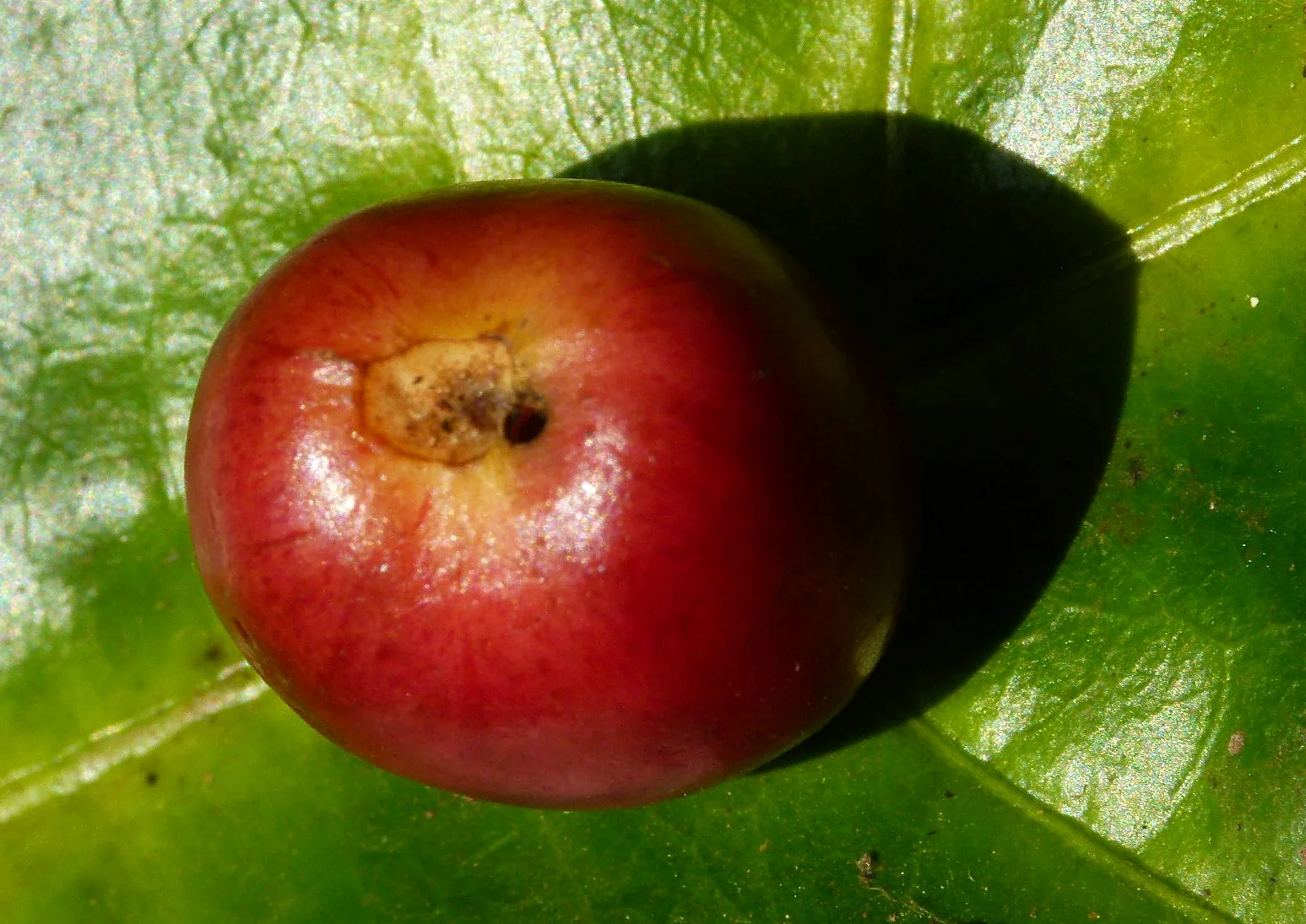
The 19 sections of this plate
Each section has its own page. The first sentence says what you will find there.
- 01The disease triangleA plant epidemic requires three things brought together in the same place at the same time: a pathogen able to attack (present and virulent), a host able to be attacked (a plant susceptible to that precise agent), and an environment that allows the meeting (temperature, free water on the organs, light, cultural practices).
- 02Fungi, spores, obligate parasitesA fungus has no chlorophyll: it makes nothing and takes material that has already been made, from dead wood, debris or a living plant.
- 03Orange rust: biology and cycleThe symptoms described by Barat in 1955 have not changed: on the underside of the leaf, yellowish spots of 1 to 2 mm, scattered and then coalescing, translucent against the light like oil stains on paper, covered with a bright orange powder of urediniospores that stays on the fingers.
- 04Ceylon, 1869-1890: the birth of plant pathologyIn 1869, Donald Reid, superintendent of the Galloola estate, noticed leaves turning yellow.
- 05A fungus's world tour, 1872-2020Puerto Rico eradicates rust in 1903:
- 06Races, SH genes and the Oeiras catalogSince the fungus exists as races, we need to know which ones, where, and which ones open what.
- 07Resistance: Kent, S.795, the Timor Hybrid and its descendantsRust had reached Timor around 1886. In the 1920s, on a Portuguese plantation on the island, some trees were noticed that did not fall sick.
- 08The great coffee leaf rust of 2008-2013, country by countryBetween 2007 and 2011, Colombia lost about a third of its production, a drop of 33%, including 31% in 2008 alone.
- 09Milder nightsThe climatic trigger described by McCook is not “it is hotter” but “the nights are less cold”.
- 10The erosion of resistance, 2017-2024Honduras, January 2017: IHCAFE receives reports of rust on Lempira, the Catimor (HdT 832/1 × Caturra) massively replanted after 2012 and now a significant share of the national orchard.
- 11Diagnosis, surveillance and warningRust is diagnosed by eye, by turning over the lower leaves.
- 12The coffee berry borer, the chief enemyHypothenemus hampei (Stephanoderes coffeae in Vayssière, who defends that name in a footnote and lost) is an African beetle.
- 13Coffee wilt disease: from the Ubangi to UgandaIn 1927, in Ubangi-Shari (present-day Central African Republic), excelsoid coffee plants abruptly stop growing; the foliage blackens and curls without falling, the tree “looks burned”.
- 14Coffee berry disease, Kenya 1922 and 1971Barat describes anthracnose under the name Glomerella cingulata, whose asexual form is called Colletotrichum coffeanum.
- 15Nematodes, bugs, leaf miners, scale insects, borersNematodes are worms a few tenths of a millimeter long that penetrate roots without any specific symptom: the tree yellows, stagnates, and the observer concludes a fertilization fault.
- 16Diseases of soil, of fruit, and what is not aliveRoot rots bear the color names that planters gave to what they saw on dug-up roots: white fungus (Leptoporus lignosus), brown rot (Phellinus lamaensis), black fungus (Rosellinia bunodes, apoplectic death).
- 17The pharmacopoeia of yesterday and todayThe arsenal of 1955: carbon disulfide injected into borer galleries, sodium arsenate on stumps against coffee wilt disease, chloropicrin and dichloropropene (DD) as soil fumigants against nematodes, and against insects the range of organochlorines and organophosphates of the day: DDT, HCH and lindane, chlordane, aldrin, dieldrin, parathion, HETP/TEPP, paradichlorobenzene.
- 18Control methods comparedThe principle of integrated pest management, spread through world agriculture from the 1960s in reaction to calendar-based spraying, fits in one sentence: one does not treat because a pest is present, but because it exceeds the level at which it costs more than the treatment, and one preserves the beneficial insects that do most of the work for free.
- 19Today: 2023-2026Honduras. The average national incidence of rust, surveyed by IHCAFE, went from 7.57% to 8.44% in March 2026.
Elsewhere on the site, the passages that deal with the same things as this page. Computed from the text, not picked by hand.