Topic I
The living world
one drupe, two seeds, four species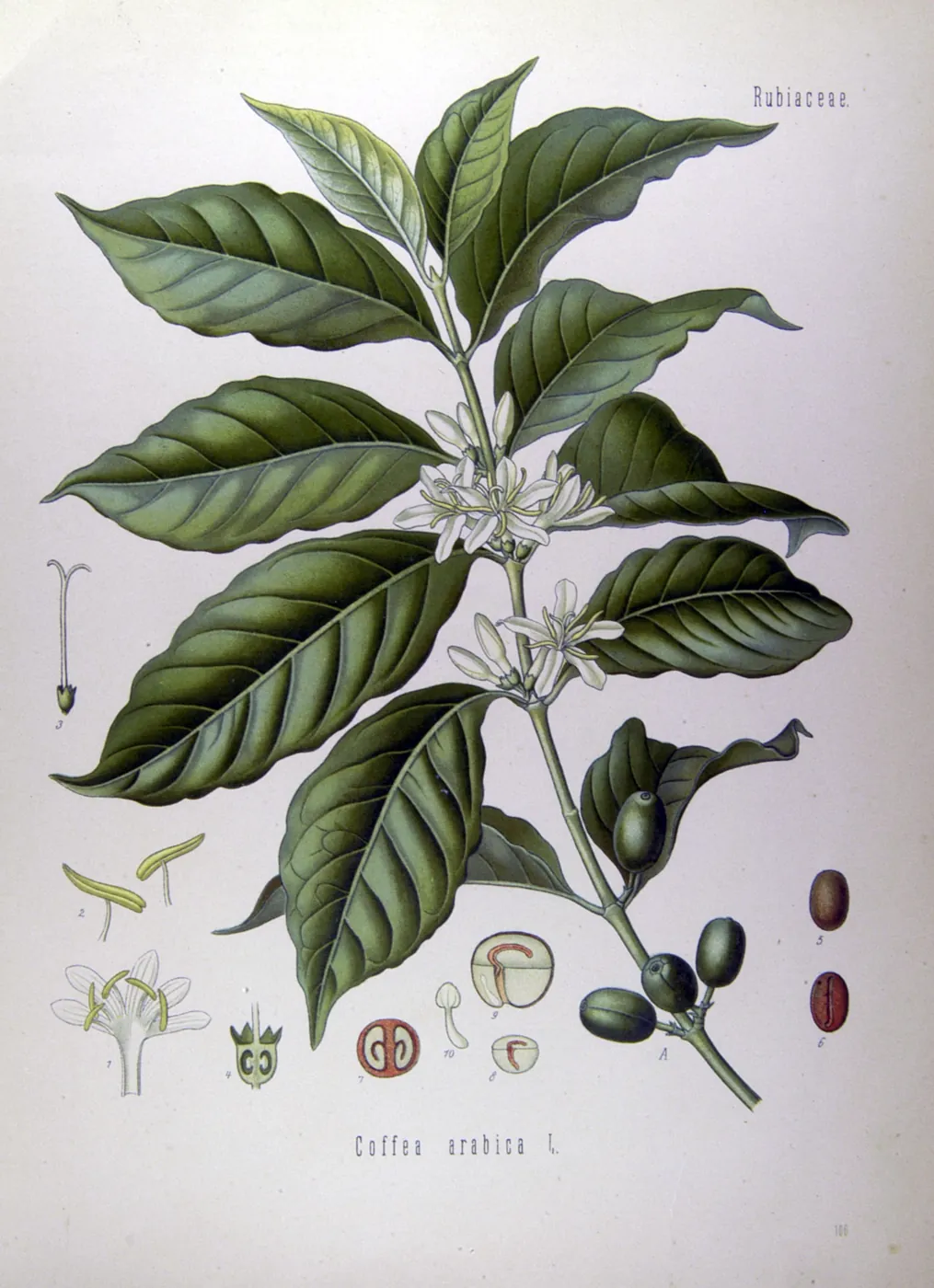
Illustration
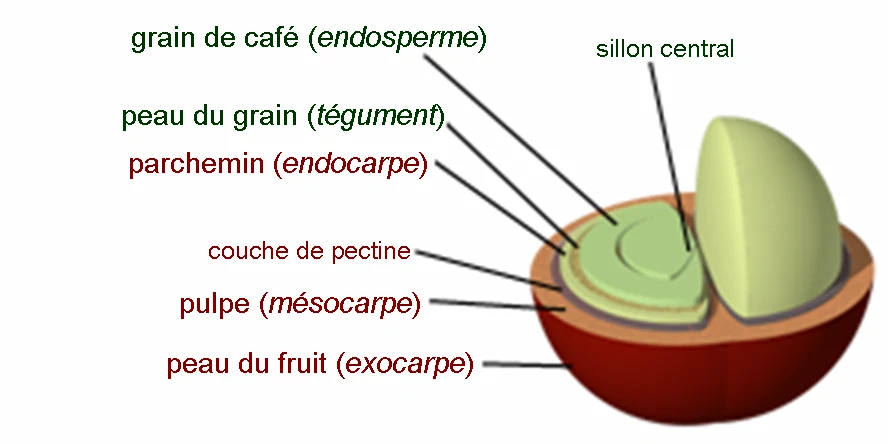
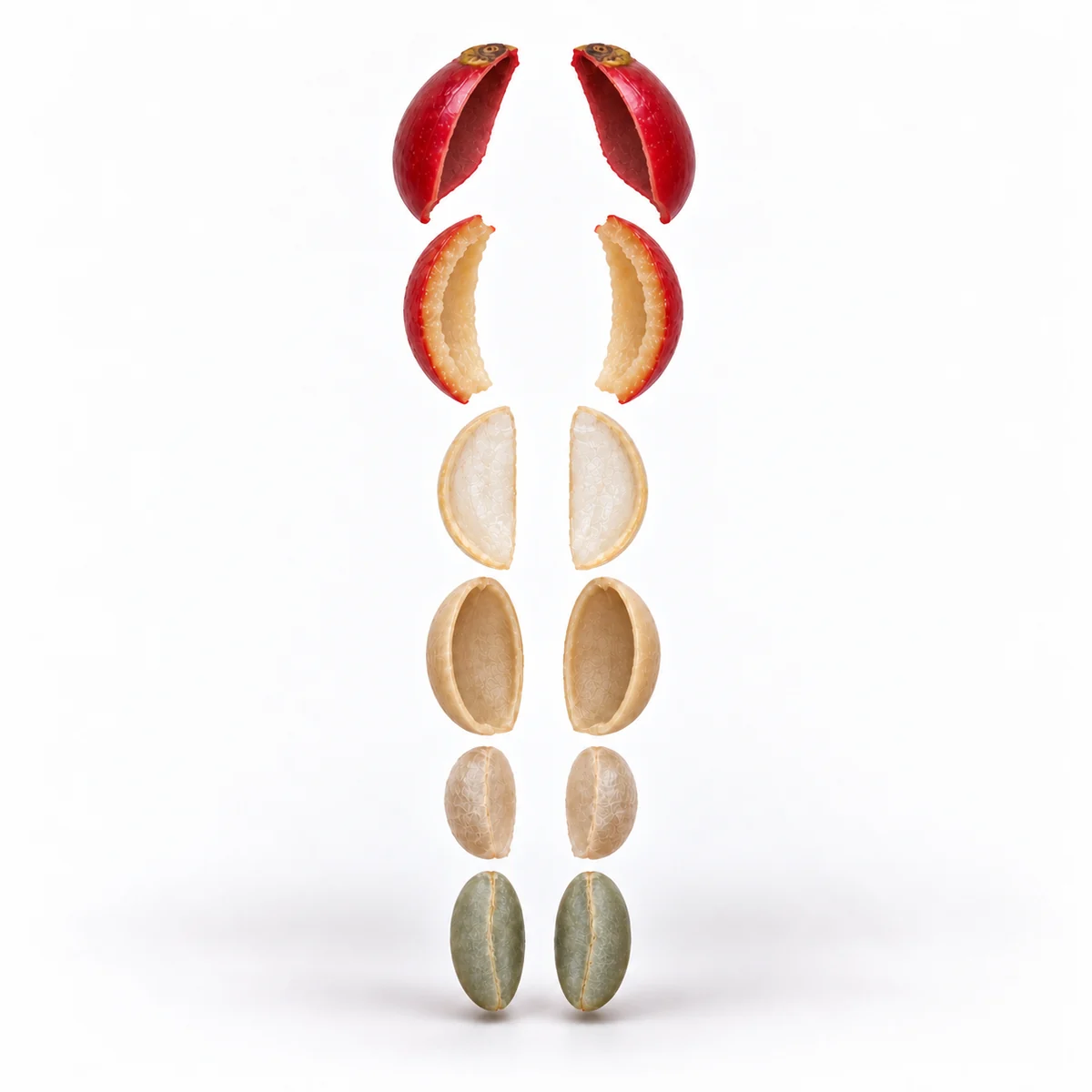
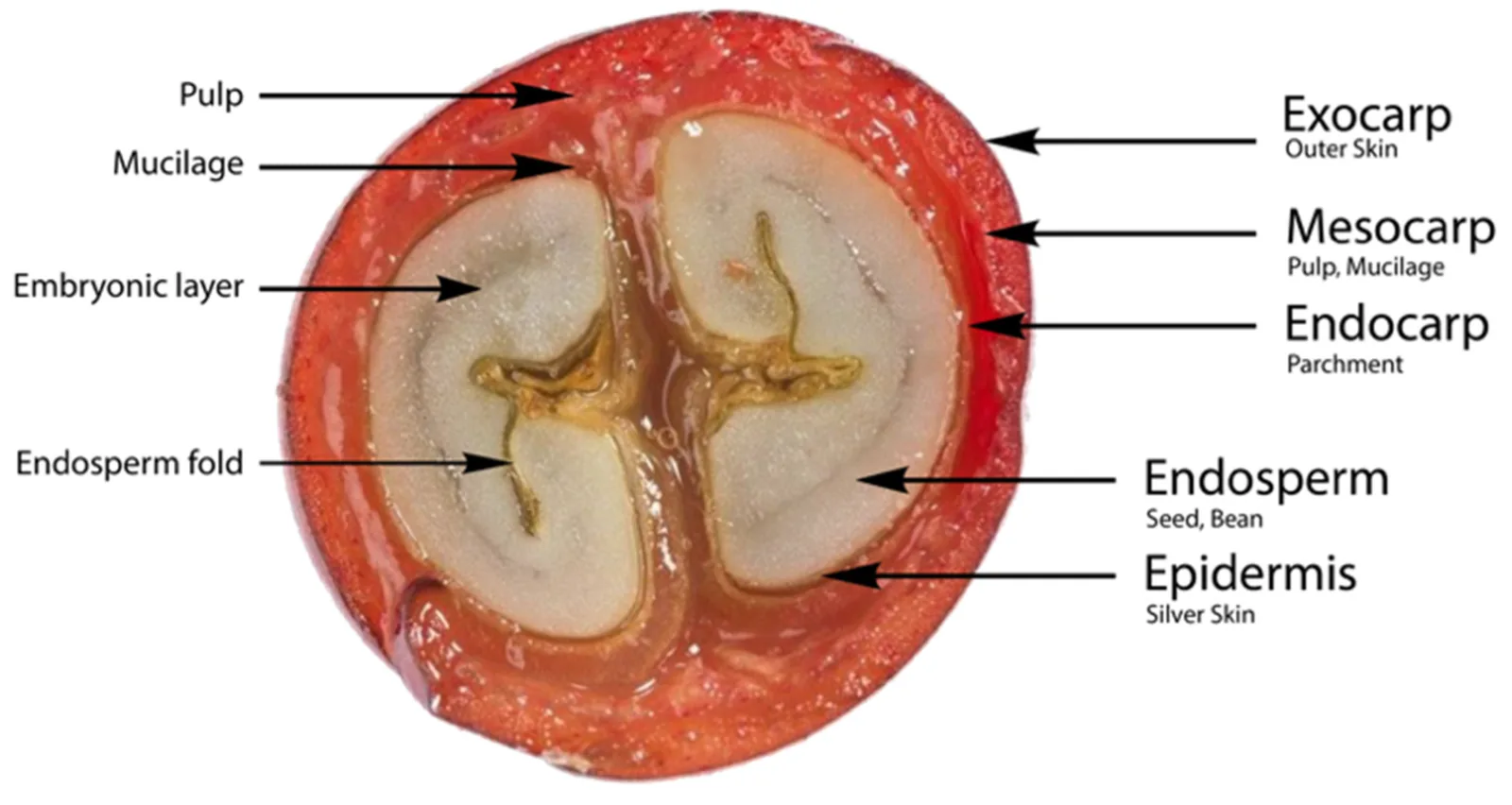
- Exocarp, the skinGreen, then red or yellow depending on a single gene: the yellow of the Bourbon and Catuaí amarelos comes from a mutation of Typica spotted at Botucatu in 1871.
- Mesocarp, the pulpSweet, thin in arabica. What the wet process strips off at the pulper, what the dry process leaves to dry around the seed.
- MucilageThe slimy layer that fermentation dissolves in 36 to 60 hours depending on altitude (Thurber, 1881, without the slightest microbiological concept).
- Endocarp, the parchmentThe hard, straw-yellow covering that gives its name to “parchment coffee,” stored before hulling.
- Integument, the silverskinA thin skin that comes off during roasting.
- The two seedsFlat on the side where they touch, as in section 7 of the plate. When one ovule aborts, the other gives the peaberry. Each seed carries 44 chromosomes in arabica, 22 in all the other cultivated species: Piza counted them in 1929, without being able to draw the conclusion from it.
THE PROCESS IN MOTION
From flower to cherry, what happens to the coffee plant?
Start the scene or choose a stage. The animation simplifies the mechanism; what follows gives the details and the available references.
The flower
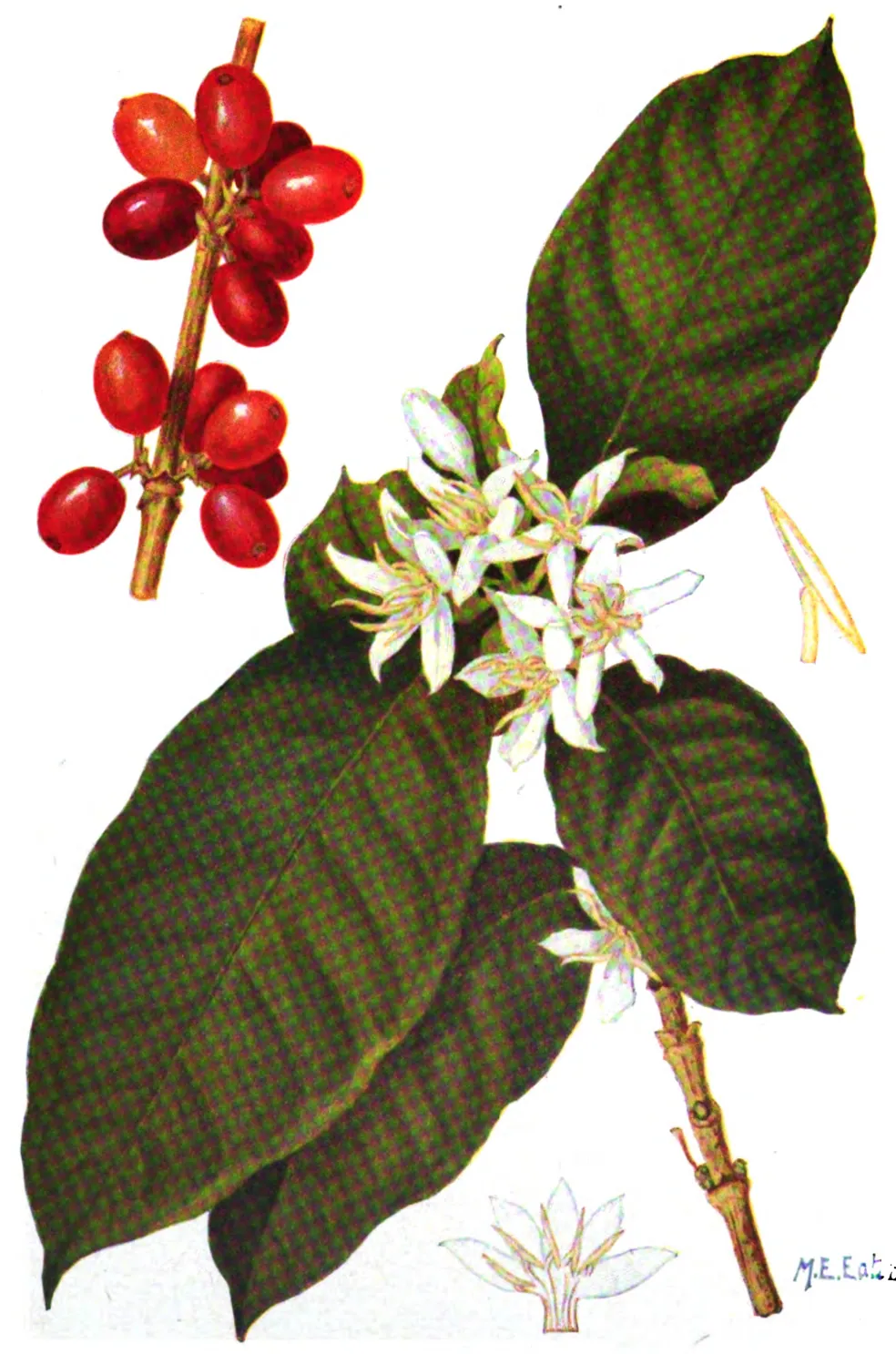
Köhler's plate shows the flower in section: the calyx, the stamens that carry the pollen, the pistil that receives it. It is there, deep inside, that the ovules that will become the seeds are found.
Read the stages without animation
- The flowerKöhler's plate shows the flower in section: the calyx, the stamens that carry the pollen, the pistil that receives it. It is there, deep inside, that the ovules that will become the seeds are found.
- Two ovules, two seedsEach fertilized ovule gives one seed, and the two seeds grow face to face, flat on the side where they touch. When an ovule aborts, the other gives a single seed, the peaberry.
- The fruit swellsAround the seeds, the fruit swells. Its skin, the exocarp, is green at first. The page gives no duration, neither for flowering nor for ripening: the scene does not invent any.
- Red or yellowAt maturity, the skin turns red or yellow depending on a single gene: the yellow of the Bourbon and Catuaí amarelos comes from a mutation of Typica spotted at Botucatu in 1871.
- Six layersIn section, the cherry shows six layers: the exocarp, the skin; the mesocarp, the pulp, sweet and thin in arabica; the mucilage, which fermentation dissolves in 36 to 60 hours depending on altitude; the endocarp, the straw-yellow parchment; the integument, the silverskin that comes off during roasting; and the two seeds. Each carries 44 chromosomes in arabica, 22 in the other cultivated species.
To remember: A coffee cherry is a drupe with two seeds: what processing removes, layer by layer, is what the flower built around them.
In history: Piza counted the 44 chromosomes of arabica in 1929, without being able to draw the conclusion from it.
Read the full article and its sources ↓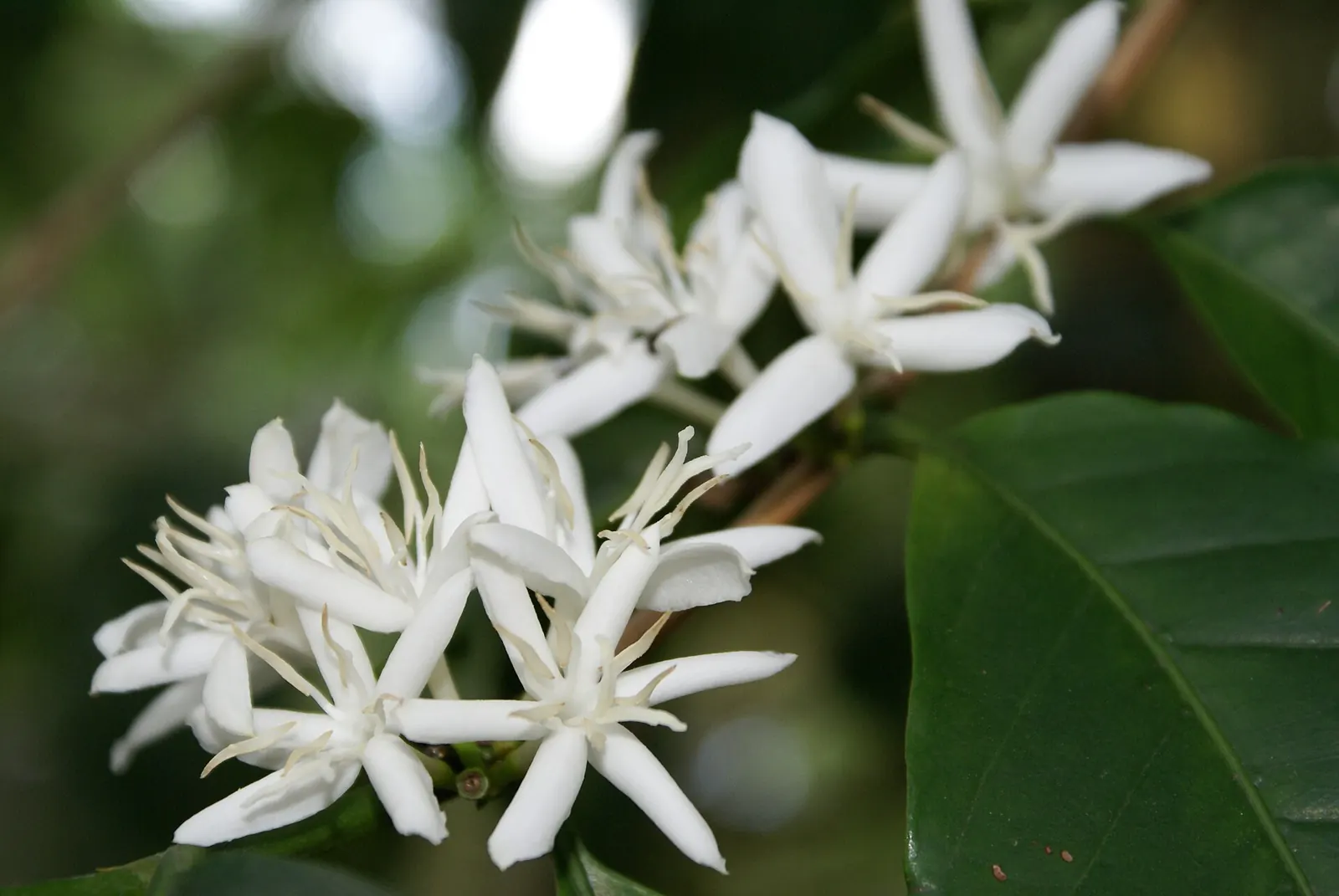
Coffea arabica 2n = 44
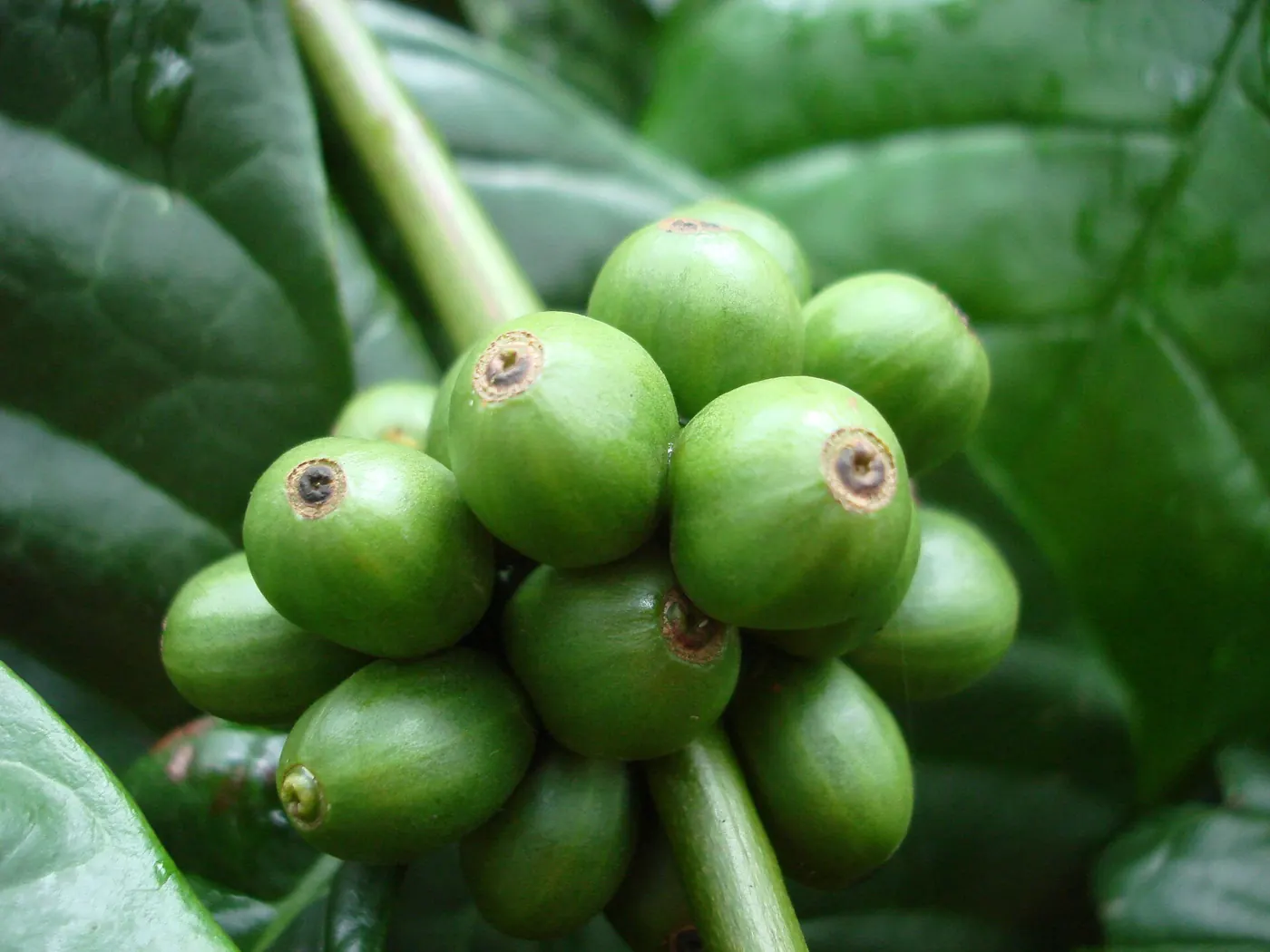
Coffea canephora 2n = 22
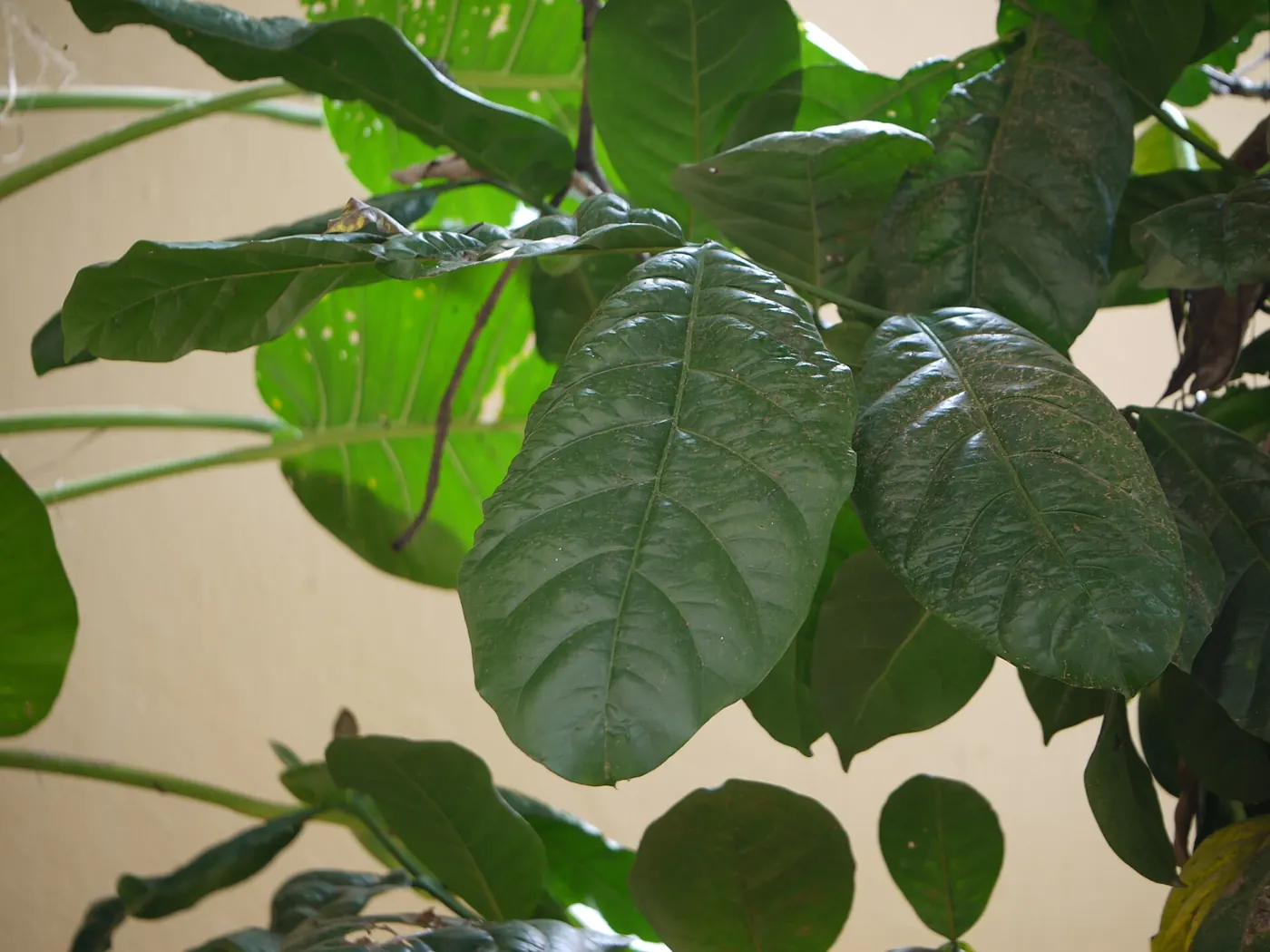
Coffea liberica 2n = 22
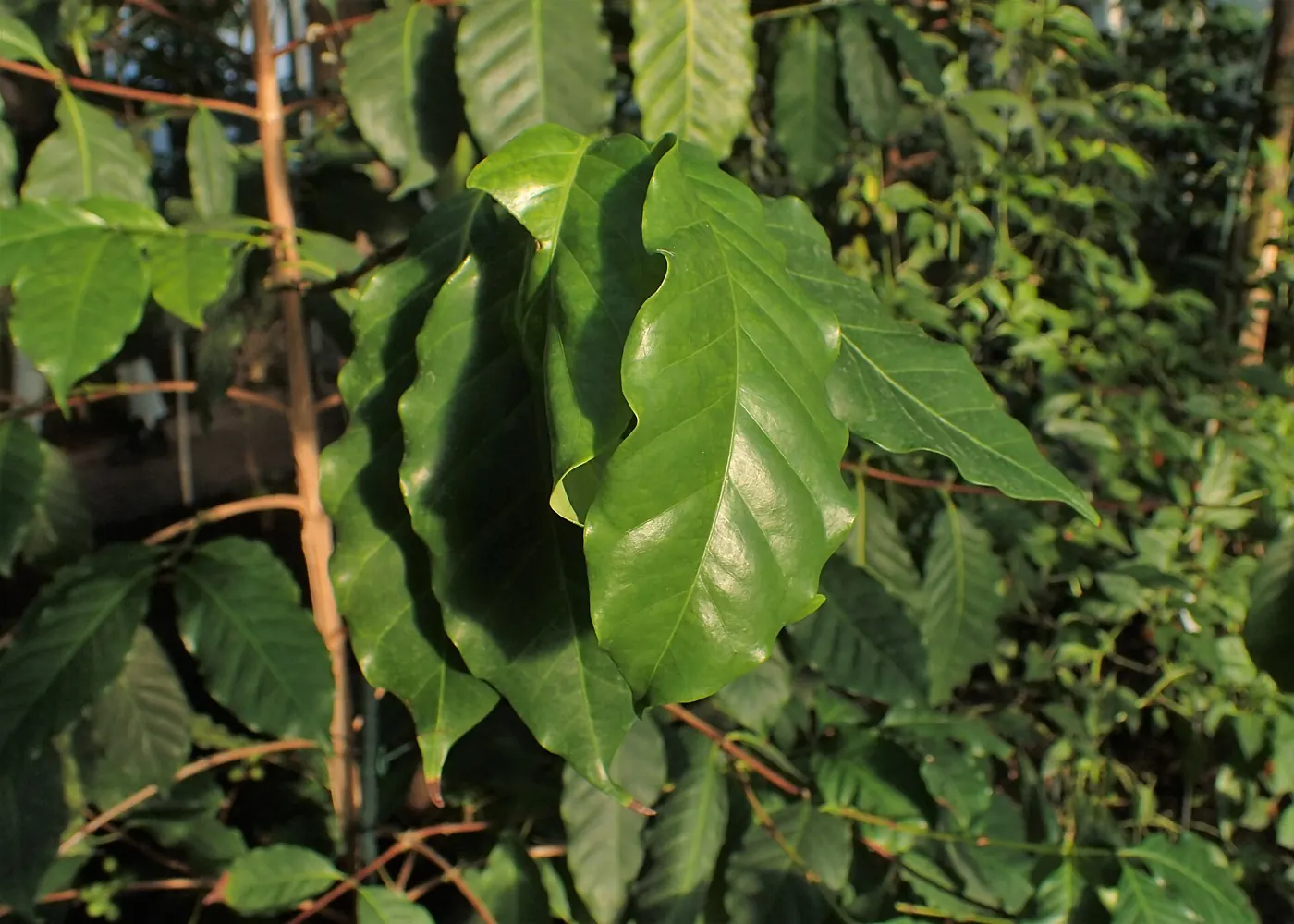
Coffea stenophylla 2n = 22
01Two archive plates