Micro-oxygenation
Directed fermentations.
What does micro-oxygenation mean?
Start the scene or choose a stage. The animation simplifies the mechanism; what follows gives the details and the available references.
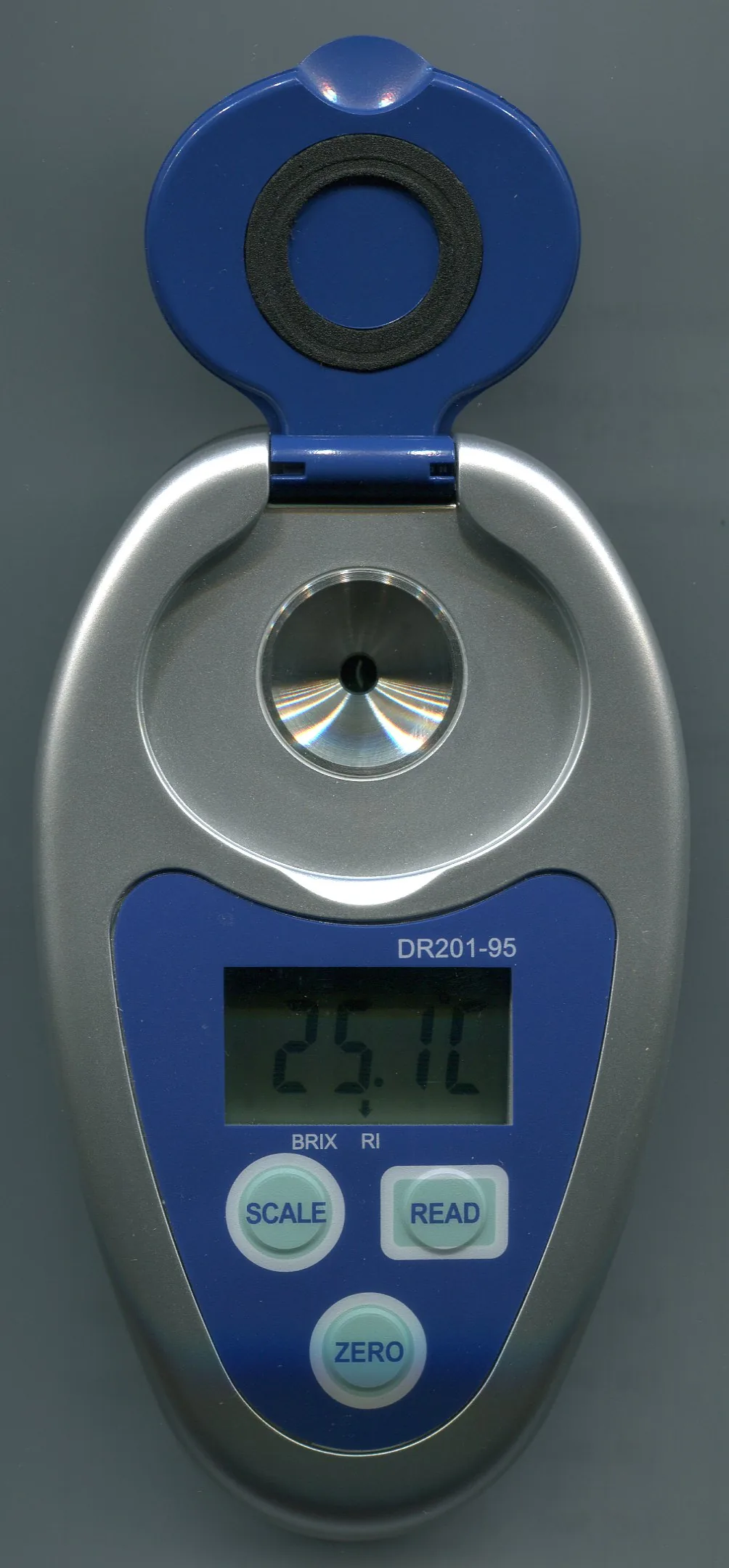
Ripe cherries, sorted; the 2025 protocol picks them with a refractometer between 22 and 25 degrees Brix, Brix measuring dissolved sugar. They are pulped without water and the time is noted. Pulp and skin are pressed separately to draw a must, the mosto, added to the tank at 30 to 50% of the volume. Then the tank is closed.
Read the stages without animation
- Pulp, add the must, closeRipe cherries, sorted; the 2025 protocol picks them with a refractometer between 22 and 25 degrees Brix, Brix measuring dissolved sugar. They are pulped without water and the time is noted. Pulp and skin are pressed separately to draw a must, the mosto, added to the tank at 30 to 50% of the volume. Then the tank is closed.
- Phase 1: a closed fermentationFor 24 to 48 hours, between 18 and 22 °C, without agitation, the monitored pH falls from 6.5 toward 4.5. The process is described as a cross between an anaerobic fermentation and an input of oxygen in low doses: at this stage, oxygen has not yet been added.
- Phase 2: oxygen through the stoneDuring the first twelve hours of the aerobic phase, oxygen from an industrial cylinder is introduced gradually up to a target level of 5 to 8%, under gentle agitation, between 20 and 24 °C. A diffusion stone of porous ceramic disperses it in fine bubbles rather than in a single large one.
- The cliquage, ten minutes every six hoursFrom the twelfth to the seventy-second hour comes the cliquage, a winemaking term for injecting oxygen in bursts: ten minutes every six hours, level held between 5 and 10%, pH stabilized between 4.0 and 3.8. At each injection, the stopper is removed to smell the mass. The original protocol injected twenty minutes every three hours: 160 minutes a day, against 40 today. The 5 to 10% level is defined nowhere.
- Washing gently, drying in the shadeEnd of the line: filtration, gentle washing, drying on raised beds in the shade down to 10 to 12%, then 30 to 60 days of resting in parchment before shipping. No peer-reviewed publication and no controlled comparison covers this process.
To remember: Micro-oxygenation does not mean opening the tank to the open air: it is a closed tank to which oxygen is given back in small doses, at chosen moments.
In history: The author of the site is one of the designers of the process; this position is stated in the article.
Read the full article and its sources ↓Where it is practiced
The process was born in Nicaragua from 2017, and was worked on in Colombia in 2022. This dating rests on the first-hand testimony of the author of the site, not on a public document. No census says how many lots have been produced, or in which countries, or with what regularity from one year to the next. The term is absent from the glossaries of the Specialty Coffee Association and from the scientific literature. The same question is studied elsewhere, and with no connection to this process. Cenicafé, the national coffee research center based in Manizales, Colombia, works on oxygen availability during fermentation, under neutral terms: an open tank is called semi-aerobic there, a closed tank comes under self-induced anaerobic fermentation. This work is cited in this sheet for comparison, and for nothing else. **The designer of the process has never worked with Cenicafé**, and none of the trials described here was conducted with that institute or validated by it.
One declaration, to finish, because a site that cites a thousand sources cannot keep quiet about it: the author of this site is one of the designers of the process. The sheet treats it as it would treat anyone else's, and the reader judges on the measurements cited rather than on anyone's word.
The principle
All the directed fermentations of the last decade seek to remove oxygen. Micro-oxygenation does the opposite. It puts some back, in small quantities, at chosen moments, in a tank that is otherwise closed.
The word comes from wine. Winemaking distinguishes two opposite actions. Macro-oxygenation refers to occasional, large inputs. Micro-oxygenation refers to small, fractionated, controlled inputs. They are delivered by a diffusion stone, a block of porous ceramic that breaks the flow into fine bubbles. It is this second action that coffee has borrowed, along with its equipment.
The reasoning concerns the microbial population, not aroma. Yeasts need oxygen to make their sterols and unsaturated fatty acids, that is, the building blocks of their membrane. Deprived of these blocks, they lose viability and fermentation slows. A winemaking measurement gives the order of magnitude. Under anaerobic conditions, Saccharomyces cerevisiae consumes 0.3 to 1.5 milligrams of oxygen per gram of dry matter. This consumption goes essentially through the sterol synthesis pathway. Aeration carried out after forty-eight hours of anaerobic fermentation restarts growth, raises cell viability and raises the unsaturation index of fatty acids.
One detail makes this reasoning interesting for coffee. Saccharomyces knows how to work around the lack of oxygen. It has two transporters, AUS1 and PDR11, that capture sterols already present in the medium. A 2021 study found no homolog of these two genes in six non-Saccharomyces wine yeasts:
- Hanseniaspora uvarum and Hanseniaspora guillermondii;
- Lachancea thermotolerans;
- Torulaspora delbrueckii;
- Metschnikowia pulcherrima;
- Starmerella bacillaris.
These strains capture the sterols of the medium poorly. They reach a lower final population and ferment more slowly than Saccharomyces. Now the flora of the mucilage, the layer of sweet flesh stuck to the parchment, is rich in non-Saccharomyces yeasts. Cenicafé identifies Pichia, Issatchenkia and Wickerhamomyces as the genera whose abundance varies most with oxygen availability. None of these three genera is among the six species tested in 2021. The idea that they would suffer from prolonged anoxia is therefore an extrapolation, not a measurement. This is the theoretical foundation of the process, and it is verified neither on coffee nor on these genera.
The downside, however, is measured. Acetic bacteria are aerobic. They oxidize ethanol into acetic acid, which pushes the lot toward vinegar. Cenicafé finds them more abundant in an open tank than in a closed one, Acetobacter at the head. Oxygen also heats the mass, because respiration releases far more energy per sugar molecule than fermentation. The same trial measures up to 37 degrees in an open tank. In a closed tank, the mass exceeds the ambient temperature by only 0.5 to 3.7 degrees, for an ambient held at 20 degrees.
Hence the handling. A small, fractionated dose, and never a continuous current of air. The technical document that describes the process defines it as an anaerobic fermentation to which small doses of oxygen are added. The fractionation aims to avoid outright oxidation and phenolic notes: a massive dose would exceed what the yeasts can consume, and the surplus would oxidize the medium. The final result must be a washed coffee.
The sequence
1. Harvest and sorting. Ripe cherries only, hand sorted. The 2025 protocol adds a selection by refractometer between 22 and 25 degrees Brix, Brix measuring dissolved sugar. This threshold governs the amount of sugar available in the tank, and it screens out insufficiently ripe cherries before the start.
2. Pulping without water, keeping a thin layer of mucilage. The time is noted. The whole procedure is counted from this moment, and not from harvest.
3. Extraction of the cherry must. The pulp and skin are gently pressed separately, the juice is filtered. This must, which the trade calls the mosto, is added to the tank at 30 to 50% of the total volume. It brings sugars and enzymes, and it governs how fast the indigenous yeasts and bacteria get started.
4. Closing the tank, without gas. **There is no inerting**: the tank is simply closed, and the medium becomes anoxic because the microorganisms consume the oxygen in it, which is exactly what Cenicafé calls a self-induced anaerobic fermentation.
The consequence should be drawn rather than looking for another argument. **The first phase of MOX is an ordinary anaerobic phase.** It is distinguished from that of a so-called anaerobic lot neither by equipment nor by mechanism. What distinguishes the process comes afterward, and only afterward: the reintroduction of oxygen in measured doses, at chosen moments. The description gains in simplicity, and it has the advantage of being true.
A caveat follows from this, and it is worth writing down: without purging, the starting point is not defined. The amount of oxygen in the headspace of the tank at closing depends on the filling, and nobody measures it. The doses injected afterward are therefore added to an unknown quantity.
5. Phase 1, enriched anaerobic phase, 24 to 48 hours. Temperature held between 18 and 22 degrees. pH monitored, gradual fall from 6.5 to 4.5. No agitation, to avoid early oxidation. The low temperature governs the speed of the population: the colder it is, the wider the stopping window. These pH steps are protocol targets, not published measurements.
6. Phase 2, aerobic activation, the first twelve hours. Gradual introduction of oxygen up to a target level of 5 to 8%. Gentle agitation to homogenize the diffusion. Temperature of 20 to 24 degrees, pH falling toward 4.2 then 4.0.
7. Cliquage, from the twelfth to the seventy-second hour. Ten minutes of exposure to oxygen every six hours. Level held between 5 and 10%. pH stabilized between 4.0 and 3.8. Only one rule of handling is stated: if acetic notes appear, increase the oxygenation.
8. The equipment, which is the real border with an anaerobic lot. The original document lists:
- a plastic tank of at least fifteen gallons, new, airtight and clean;
- a perforated rubber stopper and a stainless steel valve for the oxygen inlet;
- a porous ceramic diffusion stone, which spreads the dose instead of concentrating it in one big bubble;
- an industrial oxygen cylinder, a regulator and a bubbler.
9. Checking by nose. At each injection, the stopper is removed. This is the moment to smell the mass and judge whether what is developing is pleasant and complex. If it is not, the system needs adjusting. Neither of the two documents replaces this action with an instrument.
10. End of fermentation: filtration then gentle washing.
11. Drying on raised beds in the shade down to 10 to 12% moisture. The original document also allowed the marquesina (a drying greenhouse) and the mechanical silo at between 35 and 40 degrees.
12. Resting of the coffee in parchment, 30 to 60 days, before shipping.
The trajectory of the doses between the two documents is itself a piece of data. The original protocol injected twenty minutes every three hours, that is 160 minutes of input per day. The 2025 protocol injects ten minutes every six hours, that is 40 minutes. The dose was therefore divided by four. It fell while four elements of handling that were absent at the start appeared:
- the thermometer;
- the pH meter;
- the refractometer;
- the resting in parchment.
The more instrumented the tank, the less oxygen goes into it. The trial reported by the original document held 72 hours between 12 and 20 degrees, of which 24 hours as whole cherry and 48 hours after pulping.
What it gives in the cup
What is observed in the field, and by whom. The designer of the process agreed to publish what he saw, in answer to a direct question. What follows is therefore an author's statement and not a published record, and should be read as such: neither inflated nor downplayed.
The trials were conducted every year, with no declared interruption, at an average of four to five lots a year, in Colombia and Nicaragua. Six varieties went through them: Maracaturra, Marsellesa, Pacamara, Bourbon, Caturra and Parainema.
These six varieties are not six random points, and it is the only element of this statement that the reader can verify for themselves in the variety map of this site. They cover three clear genealogical branches. Bourbon and Caturra, that is, Bourbon and its dwarf mutation. Maracaturra and Pacamara, that is, the descendants of Maragogype, that giant-bean mutation discovered near Bahia in 1870. Marsellesa and Parainema, that is, two Sarchimors, hence two lines derived from the cross of Villa Sarchí with Timor Hybrid 832/2, which carry Coffea canephora genetics. The process was therefore run on genetically distant material, including interspecific hybrids, and not only on arabicas selected for the cup. This is an argument from robustness, and it asks no one to take it on trust.
The reported profile is described as constant from one year to the next and from one variety to the next:
- marked exotic fruits;
- very little acidity;
- strong sweet sensation;
- fruity and floral aromas far more evident than in conventional processing.
An internal contradiction must be pointed out at once, because it is instructive. The 2025 protocol announces among its expected effects a lively acidity. The field observation reports very little acidity. The two statements do not say the same thing, and this sheet does not choose between them. This gap is, moreover, a sign of sincerity rather than confusion: someone reciting a brochure would have reported the lively acidity.
What this observation establishes. A recognizable profile, repeated over several years, in two countries, six varieties and three distant genealogical branches. The repetition on genetically distant material is what matters most here: it makes a lot accident improbable, and it argues against an effect that would come only from the variety or only from the terroir. What remains common to all these lots is the handling of the tank.
What it cannot establish on its own, and this must be said once, precisely. The observation has no control lot from the same picking, so it cannot isolate the share of the process from that of the picking, the drying and the roasting. And it is the designer who reports the profile.
These two findings do not cancel each other, they complement each other. A practitioner's observation repeated over several seasons is a piece of data, not an opinion: it is the basic material of agronomy, and the origin of almost all process innovations, which research then formalizes. What it calls for is not a refutation but a complement of analysis, and this complement is precisely what the rest of this sheet undertakes: it establishes that a phenomenon occurs, the rest explains by what mechanism it can occur, and says what remains to be measured to confirm it.
What is claimed. The two documents announce the following effects:
- increased aromatic complexity, with exotic fruits and floral notes;
- a lively acidity;
- a structuring, juicy body;
- fewer fermentation defects;
- better stability from one lot to the next;
- a reduction in astringency, in the technical document only.
These effects are announced by the protocol documents, and none has yet been measured against a control: they are therefore expected effects, which remain to be confirmed.
This point deserves to be put in the protocol's own words. The comparison with a conventional fermentation figures there among the variants that remain to be tested. It is ranked at the same level as the choice between 36 and 72 hours of aerobic phase.
The original document limits its own claims. It writes three things. That it is not a miracle process and will not turn an ordinary coffee into an exceptional one. That it moves the coffee toward a more complex and cleaner taste and length. That the result depends on the variety and on the production conditions of the cherries.
What is measured, on the oxygen axis and not on the process. Cenicafé compared in 2025 an open tank and a closed tank over 192 hours. The trial covered whole cherry and pulped coffee, with a control, replicates and sampling every 24 hours. All the samples sit around 83.14 points, plus or minus 0.39, within a range of 80.75 to 85.00. The integrated quality index is best in the closed tank and over short durations. Long durations in the open tank fall to 0.497 for pulped coffee and 0.369 for whole cherry, on a scale where 1.0 is the optimum. On this trial, more oxygen and more time give worse results. This is not a refutation of micro-oxygenation, which does not oxygenate continuously. It is the only published point of comparison available.
A second trial, from Ecuador, compared three atmospheres: aerobic, anaerobic and carbon dioxide. Durations ran from zero to ninety-six hours, in steps of twenty-four hours, at 25 degrees. It was a dry fermentation, on whole unpulped cherry. The aerobic condition was obtained by simple contact with air, without dosing. The acetic acid concentration doubles at 96 hours. This study includes no tasting.
A technical clarification is needed on the drop in astringency, because it is often explained wrongly. In wine, micro-oxygenation acts on the polymerization of condensed tannins, through acetaldehyde and anthocyanins. Coffee has neither: its phenolic compounds are mostly chlorogenic acids. This is therefore not the mechanism at work here, and the sheet does not need it: the one that accounts for astringency is described further down, and it is the enzymatic oxidation of the polyphenols in the must, as known in apple juice.
What goes wrong
Acescence is the risk specific to the process. Oxygen feeds acetic bacteria, which oxidize ethanol into acetic acid. Cenicafé finds them more abundant in an open tank, Acetobacter at the head. The Ecuadorian trial measures acetic acid doubled at 96 hours in aerobic conditions. The lot turns to vinegar. The protocol and the published measurements contradict each other here. The rule of handling asks to increase oxygenation when acetic notes appear. The published measurements on the oxygen axis go the other way. Nobody has tested this rule.
Heating is the second risk, and it is underestimated. In an open tank, Cenicafé measures up to 37 degrees at 48 hours on whole cherry. The mass stays above 30 degrees there until the end. In a closed tank, it exceeds the ambient temperature by only 0.5 to 3.7 degrees. The more the mass heats, the faster everything goes, and the more the stopping window closes.
The phenolic defect is named and located. In the Cenicafé trial, only one sample shows it: whole cherry, open tank, 72 hours. It is exactly the defect that the fractionation of the dose claims to avoid.
Death of the embryo threatens long durations under oxygen. Viability stays above 80% at 120 hours in a closed tank. It drops to 25% at 192 hours in an open tank. A bean whose embryo is dead dries poorly and keeps poorly.
Ordinary over-fermentation remains possible, with its named defects. The fermented and the over-fermented. The stinkers, due to butyric acid, which smells of rancid butter, and to propionic acid, which smells of onion.
One risk of handling remains, less spectacular and more bothersome. Neither of the two documents gives a flow rate in liters per minute. Without a flow rate, ten minutes of injection do not define a dose. Two operators following the same protocol with two different regulator settings do not make the same coffee.
Finally, the cherry must added at 30 to 50% of the volume loads the tank with sugar and brings the lot closer to a co-fermentation. This juice comes from the same lot of cherries, so it is not an ingredient external to the coffee. How competitions would classify this action remains to be established.
The fungal downside, and the thermal risk finally put in figures
This sheet points out that putting oxygen back into a tank wakes the acetic bacteria and pushes the lot toward vinegar. This is the main downside, it is measured, and it is well established. Two elements extend it, one by giving it its magnitude, the other by adding a family of organisms to it.
What a puff of oxygen really costs
The sheet writes that respiration releases far more energy per sugar molecule than fermentation, and that is correct. The ratio can now be put in figures. Glycolysis yields two molecules of adenosine triphosphate, the energy currency of the cell, per sugar split. If oxygen is present, the tricarboxylic acid cycle and the electron transport chain yield twenty-five more, that is twenty-seven in all; if it is absent, one stays at two. The ratio exceeds thirteen.
Putting oxygen back into a tank therefore means allowing a metabolism more than thirteen times more energetic per sugar molecule, with the heat that goes with it, since no biological conversion is perfect and the share dissipated grows with the total converted. This is what gives its magnitude to the figure this sheet already reports: up to thirty-seven degrees in an open tank, against an excess of only zero point five to three point seven degrees above an ambient held at twenty degrees in a closed tank. The difference is not one of thermal insulation, it is one of metabolic regime. And it is the underlying reason for fractionating the doses: a massive injection does not merely tip the chemistry, it releases heat that nothing carries off in a mass of several hundred kilograms, and that heat in turn accelerates everything that is going on.
Oxygen does not only wake the yeasts and the acetic bacteria
The second element is a downside that this sheet does not mention. Hackler and Särchen describe among the fermentation pathways a citric pathway carried by Aspergillus niger, a mold, which works in aerobiosis from sucrose. This pathway also has an instructive peculiarity: it requires an initial pH below two, which guarantees the organism a low probability of competition, acidity serving here as a selection weapon.
Coffee never drops to pH two, and this precise pathway therefore has no reason to establish itself in a tank. That is not the point. The point is that filamentous fungi, among them several Aspergillus, are aerobes, and that they are the family against which anoxia protects best. A closed tank is a medium where they can do nothing; a tank to which oxygen is given back in small doses becomes again a medium where they can do something, in a sugary, warm and acid bath that otherwise suits them. This sheet points out the acetic downside: it can add the fungal downside, noting that it is theoretical as things stand, none of the sources consulted having assayed molds in a micro-oxygenated tank. This is a precise gap, and it would be filled by a simple fungal count on the same series of trials.
Sources for this passage: Energy balance: Hackler and Särchen, chapter 3, pp. 25 and 26. Citric pathway of Aspergillus niger: chapter 3, p. 31. Tank temperatures and abundance of acetic bacteria: sheet 16, after Cenicafé.
Where the line runs
This process can be described in two ways. The first consists in listing what has not been published about it, and it is quickly done. The second consists in asking whether the lever it acts on is a real lever, and what the physiology of microorganisms says about it. It is the latter that is followed here, because it is more instructive and because the answer is less uncertain than it seems.
Here is this mechanism, in the order in which it acts.
Oxygen is not an ingredient, it is a factor of thirteen
It all starts from an energy balance, and it is taught in the first year of biochemistry.
Glycolysis splits a six-carbon sugar into two three-carbon pyruvates, and yields two molecules of adenosine triphosphate, the energy currency of every living cell. If oxygen is available, these two pyruvates enter the tricarboxylic acid cycle and then the electron transport chain, and yield twenty-five more molecules. Otherwise, the cell makes do with reducing the pyruvate to ethanol and carbon dioxide, and gets nothing beyond the initial two.
Two against twenty-seven. A factor greater than thirteen, on the same sugar molecule.
This single piece of data explains three things that the trade observes without connecting them. It explains why an open tank heats up: with thirteen times more energy per molecule, the heat released follows, and that is indeed what Cenicafé measures with its thirty-seven degrees in an open tank against half a degree to three and a half degrees above ambient in a closed tank. It then explains a result that seems absurd and is not: in aerobic conditions one finds **more** residual glucose and fructose, because the cell draws thirteen times more energy from each molecule and so consumes thirteen times fewer for the same work. In other words, oxygen does not burn the sugars, it spares them.
And finally it explains why dosing oxygen is a lever and not a cosmetic setting. Between a closed tank and an open tank, it is not one parameter that varies by one notch: it is the energy yield of the whole microbial population that changes by an order of magnitude. A process that claims to act there acts on the most determining variable of the tank.
Yeasts need oxygen to exist, not to breathe
Here is the point that is poorly understood, and which is nevertheless the heart of the matter.
Even in strictly anaerobic fermentation, a yeast needs molecular oxygen. Not to produce its energy, it does without that, but to make two families of molecules that it can build only in the presence of oxygen: sterols and unsaturated fatty acids. These are the building blocks of its membrane, that is, of its envelope. Deprived of these blocks, it does not die at once, it loses viability, its population plateaus, and fermentation slows and then stops.
The order of magnitude is measured. Under anaerobic conditions, *Saccharomyces cerevisiae* consumes 0.3 to 1.5 milligrams of oxygen per gram of dry matter, and this consumption goes essentially through the sterol synthesis pathway. Aeration carried out after forty-eight hours of anaerobic fermentation restarts growth, raises cell viability and raises the unsaturation index of fatty acids.
A process that reintroduces oxygen in small doses after a closed phase is therefore not a whim: it gives back to the population what it needs at the precise moment when it begins to lack it.
And this argument holds more for coffee than for wine
This is where the reasoning stops being a borrowing from winemaking and becomes an argument specific to coffee, and it is the strongest point of the sheet.
*Saccharomyces* knows how to work around the lack of oxygen. It has two transporters, named AUS1 and PDR11, which let it capture the sterols already present in the medium instead of making them. This is what gives it its robustness in a closed tank, and it is why wine tolerates long anaerobic spells.
A 2021 study looked for these two genes in six non-*Saccharomyces* wine yeasts and found no homolog of either. These strains capture the sterols of the medium poorly, reach a lower final population and ferment more slowly.
Now the flora of coffee mucilage is not dominated by *Saccharomyces*. It is dominated by non-*Saccharomyces* yeasts, and Cenicafé identifies *Pichia*, *Issatchenkia* and *Wickerhamomyces* as the genera whose abundance varies most with oxygen availability.
The reasoning thus assembles itself. **The organisms that work in a coffee tank are precisely those that tolerate prolonged anoxia least well**, because they lack the escape route of the wine yeast. A long anaerobic spell puts them in difficulty; a reintroduction of oxygen relieves them. Coffee is therefore, in theory, a better candidate for micro-oxygenation than the wine from which the technique comes.
The exact limit of this argument must be stated, and it is narrow: the 2021 study tested six non-*Saccharomyces* wine species, and none of the three that Cenicafé reports in coffee. Extending the result to *Pichia*, *Issatchenkia* and *Wickerhamomyces* is an inference, not a measurement. It is reasonable, it rests on a trait shared by a whole group, and it remains an inference.
Why acidity falls, and how to check it with one titration
The profile reported in the field gives very little acidity. There is a simple mechanistic explanation for this, which follows from the handling itself.
Yeasts can consume organic acids, but not at just any time. The transport of malate and other acids across the membrane is substrate-inducible and subject to catabolite repression by glucose: as long as sugar remains, the acids are untouched.
Now the sequence of the process places the system exactly in the window where they can be. During the twenty-four to forty-eight hours of closed phase, the sugars of the mucilage are consumed and the acids accumulate, hence the pH drop the protocol describes. Then comes the aerated phase: the sugars are exhausted, glucose repression is therefore lifted, and oxygen arrives at the precise moment when the acids become respirable substrates.
This is not speculation about taste, it is a verifiable prediction, and it can be checked in a way that costs nothing. If the titratable acidity of the drink has fallen, the flora has consumed the acids and the mechanism is operating. If the titratable acidity is unchanged while perceived acidity falls, the effect is perceptual and comes from the next section. **A single titration with sodium hydroxide separates the two hypotheses**, and nobody has done it.
The perceptual half, which is the most solid of all
What remains is the part of the reasoning that requires no new chemistry, and which is the best established in the file.
Bitter and sweet suppress each other. This is not a taster's impression, it is a result of psychophysics: at medium and strong intensities, bitter-sweet mixtures are mutually suppressive. The mechanism is central and not chemical, that is, it takes place in the brain and not on the tongue, which split-tongue stimulation established as early as 1985. It has been measured on coffee and not only on pure solutions, with a hypoadditivity of thirty to forty percent on total intensity. And it has been quantified: in thirty-three subjects, sucrose at 250 millimolar lowers the bitterness of caffeine by forty-seven percent.
The decisive point comes from elsewhere, and it is established on coffee. By fractionating filter coffees over the course of the water's passage, Batali and his co-authors showed that the late fractions are systematically sweeter and more floral, and that **no fraction contained a monosaccharide at a perceptible concentration**. The sweetness of a coffee is not made of sugar.
The consequence is mechanical. Any handling that lowers bitterness releases the suppression that it exerted, and so raises perceived sweetness and lowers perceived acidity, without a gram of sugar having been added anywhere. The profile reported in the field, marked exotic fruits, very little acidity, strong sweet sensation, evident floral notes, follows entirely from there.
What all this is worth, and what remains to be done
The tally is as follows.
Four links hold. The energy balance is established biochemistry. The need of yeasts for oxygen for their sterols is measured and published. The particular vulnerability of non-*Saccharomyces* yeasts to anoxia is measured, and its extension to the coffee genera is a reasonable inference. The mutual suppression between bitter and sweet is one of the best reproduced results of taste psychophysics, and it has been measured on coffee.
Two links are plausible and not demonstrated. The consumption of organic acids in the aerated phase, which calls for a titration. And the enzymatic oxidation of the polyphenols of the mosto, which is known to lower bitterness and astringency in apple juice, whose parts all exist in a coffee tank, and which nothing establishes as reaching the inside of the bean.
Finally, the axis itself is not an isolated intuition: Cenicafé measured in 2025 that oxygen availability during fermentation significantly changes pH, glucose consumption, lactic acid production, dry matter, embryo viability and the percentage of sound beans. Oxygen is therefore a determining variable of the tank, established independently of this process and by an institute that has no part in it. A process that doses it works on the right lever.
Benchmarks
- Oxygen dose, original protocol20 minutes every 3 hours, that is 160 minutes a day
- Oxygen dose, 2025 protocol10 minutes every 6 hours, that is 40 minutes a day
- Target oxygen level, 2025 protocol5 to 10%, unit of measurement not defined
- Injection flow ratenever published, in either of the two documents
- Cherry selection by refractometer22 to 25 degrees Brix
- Mass temperature, open tank (Cenicafé 2025)up to 37 degrees at 48 hours
- Mass temperature, closed tank (Cenicafé 2025)0.5 to 3.7 degrees above an ambient of 20 degrees
- Embryo viability at 192 hours, open tank (Cenicafé 2025)25%
- Average sensory score of the Cenicafé 2025 trial83.14 points, range 80.75 to 85.00
- Oxygen consumption of Saccharomyces cerevisiae under anaerobic conditions0.3 to 1.5 mg per gram of dry matter
- Seasons declared by the designerevery year, 4 to 5 lots a year, Colombia and Nicaragua
- Varieties put through the process6, covering 3 distinct genealogical branches
- Controlled trials with a control published on this processnone
- Proanthocyanidins in the pulpabout 1% of dry matter in arabica, 2.7% in canephora
- Chlorogenic acids in green arabica4 to 8.4% of dry matter
- Suppression of caffeine bitterness by sucrose at 250 mM (Keast 2008)minus 47%
- Drop in perceived sweetness with a nose clip, on coffeeabout 40%
- Residual sucrose measured in a roasted coffeeabout 100 mg/L, against a detection threshold around 2,000 mg/L
- Oxygen need of a fermenting wine must (IFV)10 to 20 mg/L in total
- Winemaking micro-oxygenation during aging1 to 4 mg of O2 per liter per month
- Trial that would settle it3 arms, 18 paired lots, one season