01The legends of coffee, and the date of their texts
This chapter does not ask whether the great origin stories of coffee are true; it asks when the texts that carry them date from, and what the gap between the date of the text and the date of the events lets us see.
Read moreCollapse2,137 words
The history of coffee circulates with a stock of stories that almost everyone knows and almost no one dates. The goatherd and his restless animals, the exiled saint who boils berries, the seven seeds brought back from Arabia in a beard, the plant watered during the crossing by an officer who goes without water himself, the seeds obtained from a governor's wife, the pope who tastes the drink of the infidels and finds it good.
These stories are beautiful, they are taught, they are painted on sacks and on shop signs. Yet there is a modest, verifiable question to be asked about them, which is not the question of their truth: in which book, in which year, does this story first appear in writing? The answer is a fact of the archive, one that can be established and cited, whereas the truth of a scene a thousand years old cannot be established at all.
A late story is not for all that a false one: an ancient oral tradition may wait centuries before being printed. But when the date of the text is known, we at least know in what period the story was useful, and to whom.
The oldest sustained text on the origin of coffee is neither European nor legendary. Abd al-Qadir ibn Muhammad al-Ansari al-Jaziri al-Hanbali completed in 996 of the Hijra, the Muslim reckoning that begins in 622, that is, in 1587 of our era, a treatise entitled Umdat al-safwa fi hill al-qahwa, which can be rendered roughly as “what the pure rely on concerning the lawfulness of coffee.” The manuscript is held at the Bibliothèque nationale de France under the shelfmark Arabe 4590.
It has seven chapters: the etymology of the word, the virtues of the bean, then above all the religious quarrel in Mecca in 1511 and the refutation of those who wanted to ban the drink, and it ends with a collection of Arabic verses composed during that quarrel. A Latin note on the flyleaf of the volume sums it up: a book in seven chapters, published in the year 996 of the Hijra, when a hundred and twenty years had passed since the use of this drink had become established in Arabia Felix.
Yet this text recounts neither goats nor miracle. It attributes the adoption of coffee to a mufti of Aden, that is, a jurist charged with pronouncing the law, Jamal al-Din al-Dhabhani, who died around 1470 and who is said to have spread its use around 1454. A hundred and thirty years separate the thing told from the text that tells it, and al-Jaziri himself refers to an earlier author, Shihab al-Din, of whom no copy is known. The oldest surviving witness thus rests on a lost witness.
This manuscript reached Europe in the baggage of Nointel, ambassador of Louis XIV to the Ottoman Porte. Antoine Galland, the orientalist who would later give the Thousand and One Nights their French form, analyzed it and translated part of it under the title De l'origine et du progrès du café, in 1699. More than a century later, Sylvestre de Sacy edited its first two chapters in his Chrestomathie arabe, an anthology of selected passages intended for the students of the École des langues orientales, published in 1806 and reissued in 1826.
The count is instructive: between the use attested around 1454 and the treatise of 1587, a hundred and thirty years; between the treatise and its first French reading, a hundred and twelve more.
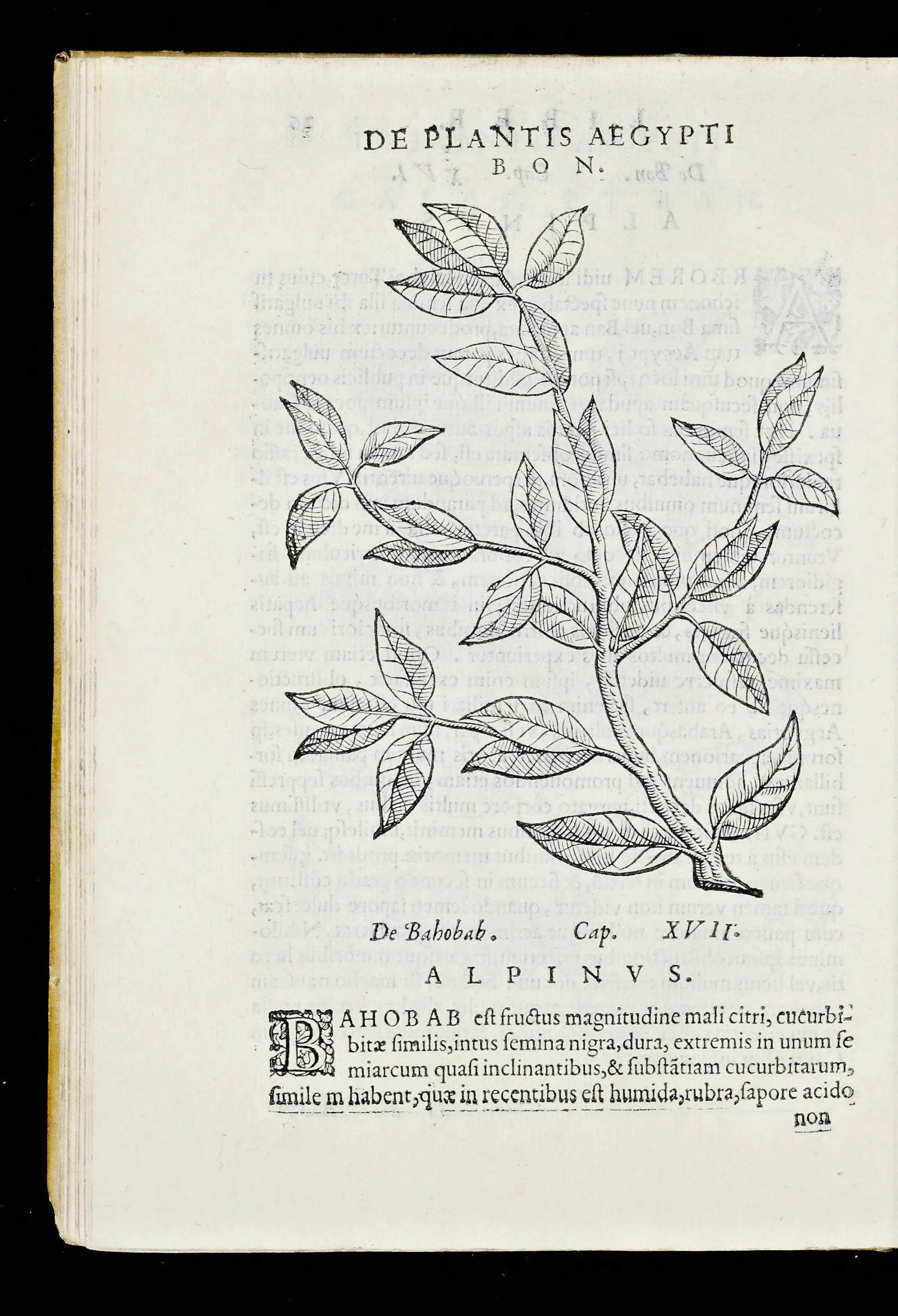
The goatherd, for his part, enters print in 1671. The book is by Antonio Fausto Naironi, a Maronite, professor of Chaldean and Syriac languages at the college in Rome: De saluberrima potione cahue, seu cafe nuncupata discursus, printed in Rome by Michele Ercole and dedicated to a cardinal. It is the first printed treatise devoted to coffee alone. In it we find a herder in Arabia Felix, animals that become lively after eating certain fruits, and a monk from the neighborhood who makes a decoction from them to keep his brothers awake.
No name appears there. The goatherd is called Kaldi only in later retellings, and I have not managed to establish with certainty the date at which this name becomes attached to the character: it is reported sometimes in 19th-century English versions, sometimes in the mass diffusion that Ukers gave it in 1922, and I have verified none of these earliest occurrences myself.
What is certain and verifiable is that the name is absent from the 1671 text. The events recounted are commonly placed around the 9th century; the text, for its part, is eight centuries younger.
Galland, in 1699, does not hold back from saying so. He reproaches Naironi for having accepted as history the stories of Omar and the Abyssinian goatherd, then adds a remark that illuminates the scene better than any refutation: the abbot and his monks, he writes in substance, are the mufti Gemaleddin and Muhammad al-Hadrami, and the monks are dervishes, that is, members of a Sufi brotherhood who keep vigil while reciting.
The Yemeni story was translated into a convent. The usefulness of this translation is easy to understand: in 1671, in Rome, in a work dedicated to a prince of the Church, a drink from the Muslim world gains a great deal from having been revealed to monks. This is not a falsification, it is a work of acclimatization, the same one that many plants and many words have undergone.
Sheikh Omar follows the same path, in the opposite direction. Tradition places him in 656 of the Hijra, that is, in 1258, exiled to Mount Ousab for misconduct, reduced to boiling the berries he finds, then recalled in triumph to Mocha, where a convent is built for him. The written foundation is the 1587 manuscript, thus three and a half centuries after the supposed events, and the story reaches the French public only with Galland in 1699 and Jean de La Roque in 1716.
In the meantime it has accumulated embellishments: in a version reported by Ukers, the dead master reappears under a veil and grown by ten cubits, water gushes from the ground, a bird of marvelous plumage leads the exile to the tree. Ukers himself makes no secret of it: in the chronology that closes his book, the date 1258 carries a note marker that refers to a single word, “legendary,” and a second that signals that the date is approximate.
The main vehicle of the story thus flags it as a story. What the legend of Omar contributes is clear: it attaches coffee to a lineage of saints, that of Shadhili, patron of Mocha, and it gives a drink contested by jurists a protector whom the jurists cannot challenge.
There is one case where the dating is complete, and it serves as a model for all the others. Vienna, 1683: the besieged city, the Ottoman army withdrawing, the sacks of green beans left behind, Kolschitzky receiving them as a reward and opening the Blue Bottle. This story first appears in 1783, from the pen of Gottfried Uhlich, exactly a century after the siege, and the historian Karl Teply established this in 1980.
The city's archive says otherwise: the privilege of serving coffee in Vienna was granted on January 17, 1685 to the Armenian merchant Johannes Diodato. Uhlich's story nonetheless won; it has its statue and its street. It is the textbook case, because one can see what a centenary is for: in 1783, Vienna tells itself the story of its siege, and the founding of the Viennese café finds a hero there rather than a commercial privilege.
The Indian tradition of Baba Budan, a pilgrim returned from Mecca with seven fertile seeds hidden on his person, planted on the slopes of Chikmagalur, resists this exercise. Ukers, in 1922, gives it as plausible while hesitating over the date, “as early as 1600” according to some, 1695 according to an authority he judges better, and his chronology marks the entry with two signs at once, approximate date and legendary story.
I have not found the first putting into writing of the seven-seeds story and so I do not give one. What is attested is more mundane and more solid: coffee grew in the Mysore hills well before the English began plantations there in 1840, the range bears the name of Baba Budan, and the shrine exists. The number seven, a number of blessing, and the hiding place in the beard belong to the later life of the story, the one in which a tale grows more specific as it ages.
Gabriel de Clieu offers the opposite case, one where we have an author. The story of the plant carried under a glass frame and watered during the crossing from his own water ration comes from a letter from the man himself, published in L'Année littéraire in 1774. It is a first-hand account, and it was written some fifty years after the crossing, in the very year of its author's death, when he was close to eighty-eight.
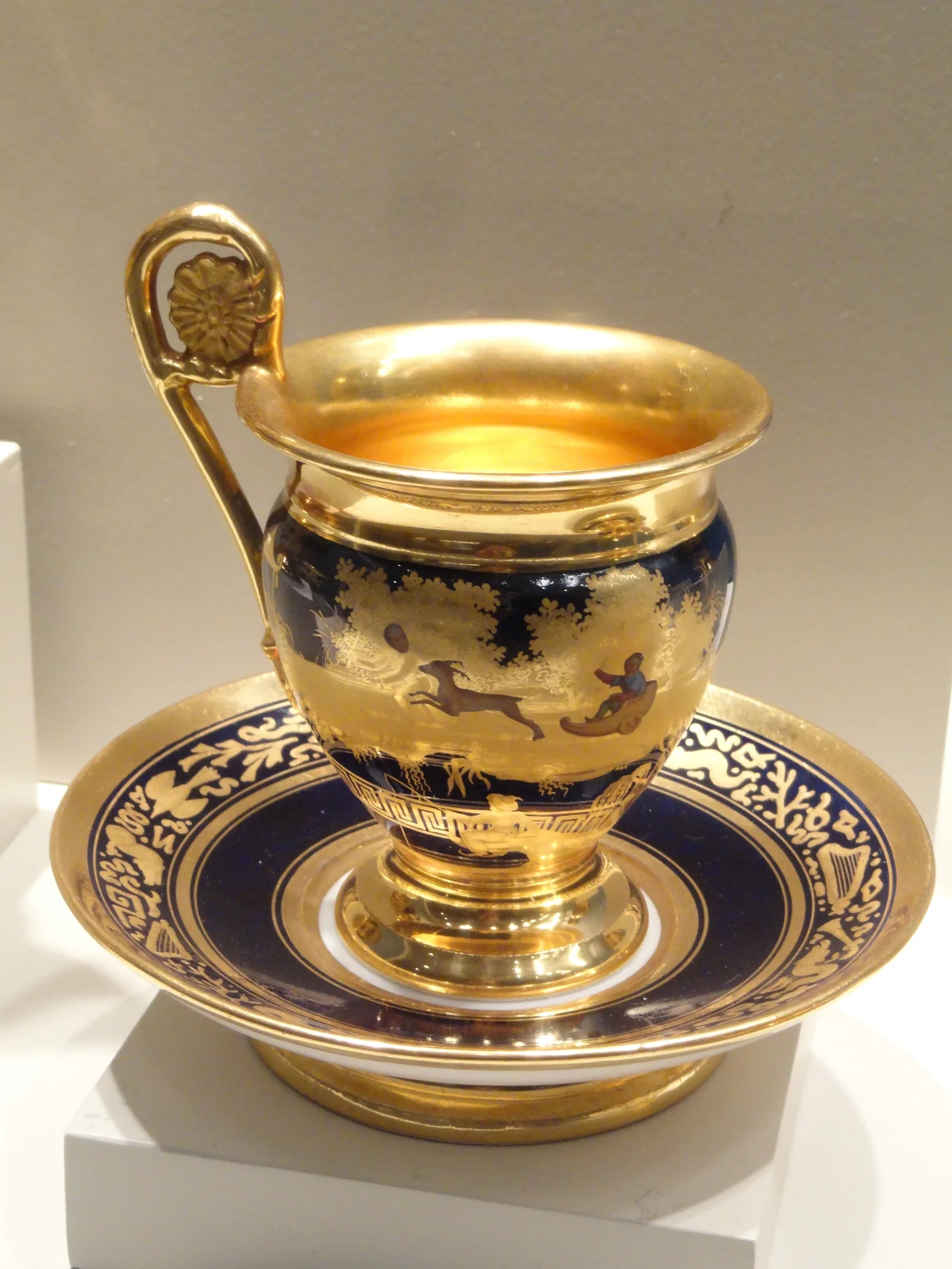
Ukers notes the wavering: some date the arrival to 1720, others to 1723; Jardin supposes two voyages, one of them failed, to reconcile the two; there is hesitation between one plant and three, de Clieu saying one. The sentence about the shared water is in his own hand, and it has made its way: a poem in L'Année littéraire the same year, verses by Esmenard, a porcelain service commissioned in his honor, a botanical garden in Fort-de-France opened in 1918 and dedicated to him.
One can read this success without contempt and without naivety: it places a colonial fortune under the sign of private devotion, one man and one plant, where there were fleets, monopolies and forced labor.
Francisco de Melo Palheta raises the same question with fewer documents. What is attested administratively fits in few words: in 1727, an officer of the Portuguese crown is sent to Cayenne on a border matter, and he returns with seeds and plants. The bouquet offered by the governor's wife, in which the seeds that French Guiana forbade to export were supposedly hidden, belongs to another layer of the story, and I have not been able to date its first telling.
Two negative indications deserve to be noted rather than a verdict: Ukers, in 1922, does not enter this episode in his chronology, where the Brazilian entry for those years mentions only the failure of the Pará plantation in 1723; and the gallant version circulates mainly in 20th-century literature, where Pendergrast takes it up in 1999. The scene has the world's greatest coffee economy begin with a gift, that is, with a favor granted, rather than with a state mission and with what the plantation then demanded in human beings.
That leaves the pope. No known pontifical act concerns coffee, either to ban it or to bless it. Ukers relates the story of the priests asking Clement VIII to proscribe the drink of Satan, and of the pope who tastes it and proposes to baptize it, introducing it with a cautious formula, “according to a much-cited legend,” and naming no source. The detail that matters lies elsewhere: he does not include this episode in his chronology, whereas he includes Rhazes, Avicenna and Omar there with the mark “legendary.” I have not found the first printed version of this scene and so I propose none.
What can be dated around it, on the other hand, is well dated: in 1585, Gianfrancesco Morosini reports to the Senate of Venice that the Turks drink a black water made from a seed called cavee; in 1615, Pietro Della Valle writes from Constantinople that he will bring some back. The baptism anecdote settles in a single scene the question that those years were really asking, whether a drink of Islam could become Christian. The dedication of Naironi's book to a cardinal, in 1671, answers the same question by other means.
Put end to end, these gaps trace a slope. The oldest written testimony is Arabic, sober, administrative: a mufti of Aden, a date, a quarrel over law. The picturesque scenes, the goatherd, the marvelous bird, the amused pope, the governor's wife's bouquet, are later and, for the most part, European. That does not disqualify them, it situates them. Ukers, who more than anyone made them circulate, had taken care to put at the foot of his chronology two notes of three words, one for approximate dates, the other for legendary facts; the use made of his book has often erased these notes.
The proposal of this chapter is to put them back: keep the stories, which have their beauty and their usefulness, and set beside each one the date of its oldest text.
Abd al-Qadir ibn Muhammad al-Ansari al-Jaziri al-Hanbali, Umdat al-safwa fi hill al-qahwa, 996 of the Hijra (1587), Bibliothèque nationale de France, manuscript Arabe 4590; description of the manuscript, of the seven chapters and of the Latin flyleaf note in Ukers, All About Coffee (1922), section on the Arabic manuscript. Attribution of the adoption of coffee to Jamal al-Din al-Dhabhani, mufti of Aden who died around 1470, around 1454: al-Jaziri, taken up by the scholarly literature; Ukers writes Mocha where recent studies write Aden. Reference by al-Jaziri to Shihab al-Din, a lost work: Ukers, same section, after La Roque. Antoine Galland, De l'origine et du progrès du café, 1699, partial translation of the manuscript; criticism of Naironi and identification of the abbot and the monks with the mufti Gemaleddin, Muhammad al-Hadrami and the dervishes: Galland, cited by Ukers, chapter III. Antoine Isaac Silvestre de Sacy, Chrestomathie arabe, Paris, 1st edition 1806, 2nd edition 1826, which gives the first two chapters of al-Jaziri. Antonio Fausto Naironi, De saluberrima potione cahue, seu cafe nuncupata discursus, Rome, typis Michaelis Herculis, 1671, dedicated to a cardinal: title page of the digitized copy (Internet Archive, bub_gb_XqtX_0BdDbwC); first printed treatise devoted to coffee alone according to Ukers 1922, chapter III and the bibliographic chapter. Absence of the name Kaldi in the 1671 text: title page and text of Naironi, as well as the English-language Wikipedia entry on Kaldi, which makes the name a later addition; the exact date at which the name became attached to the character could not be established here. Jean de La Roque, Voyage de l'Arabie heureuse, Paris, André Cailleau, 1716, containing a Mémoire concernant l'arbre et le fruit du café and a Traité historique de l'origine et du progrès du café (full title in the Catalogue collectif de France, record CCFr ark:/06871/0011738666); Ukers's chronology dates this work to 1715. Ukers's 1922 chronology and its two note markers, [L] Approximate Date and [M] Legendary, applied notably to Rhazes around 900, Avicenna around 1000, Omar in 1258 and Baba Budan around 1600. Versions of the Omar story, including the one with the veiled specter and the bird: Ukers 1922, chapter III. Vienna: privilege of serving coffee granted on January 17, 1685 to the Armenian merchant Johannes Diodato (Vienna city archives); invention of the Kolschitzky story by Gottfried Uhlich in 1783, established by Karl Teply in 1980. Baba Budan: Ukers 1922, chapter on propagation, which hesitates between 1600 and 1695 and marks the entry as legendary; start of English plantations in India in 1840, same chapter. The first putting into writing of the seven-seeds story was not found. Gabriel de Clieu: letter from de Clieu published in L'Année littéraire in 1774, cited and discussed by Ukers 1922, chapter II, which notes the divergences of date (1720 or 1723), the two-voyage hypothesis proposed by Jardin, and the hesitation between one plant and three; obituary notice in the Mercure de France, December 1774; botanical garden of Fort-de-France opened in 1918. Francisco de Melo Palheta: 1727 mission to Cayenne over a border dispute, Brazilian tradition of the bouquet reported notably by Pendergrast, Uncommon Grounds (1999), chapter 1; Ukers's 1922 chronology mentions for these years only the failure of the Pará plantation in 1723; the first writing of the gallant version was not found. Clement VIII: Ukers 1922, p. 26, which gives the episode as a “much-cited legend” without source and does not enter it in his chronology; no known pontifical document; the first printed version was not found. Dated landmarks of the same moment: report of Gianfrancesco Morosini to the Senate of Venice, 1585, and letter of Pietro Della Valle from Constantinople, 1615, both cited by Ukers 1922, chapter on Italy. Full text of Ukers consulted from the Project Gutenberg edition, ebook 28500.