Koji and fungal fermentations
Directed fermentations.
What does koji do to a cherry?
Start the scene or choose a stage. The animation simplifies the mechanism; what follows gives the details and the available references.
Ripe cherries only, from blood red to burgundy red. Flotation in drinking water removes the fruits that float and knocks down the wild flora: koji starts slowly, and the cherry carries a dense population of competitors.
Read the stages without animation
- Sort and floatRipe cherries only, from blood red to burgundy red. Flotation in drinking water removes the fruits that float and knocks down the wild flora: koji starts slowly, and the cherry carries a dense population of competitors.
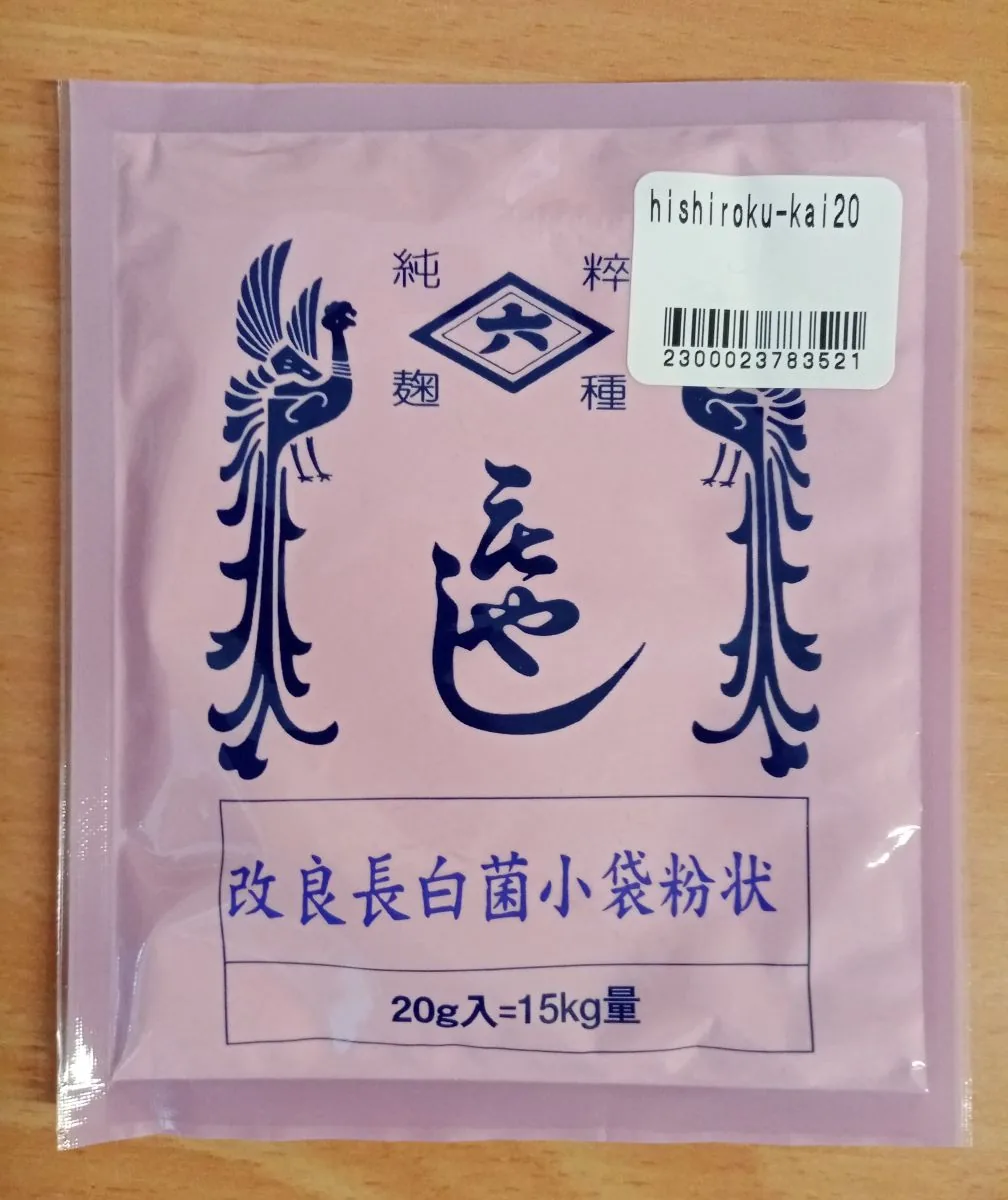
- Sow the spores on the cherryKoji is Aspergillus oryzae, a mold domesticated for sake and miso. The protocol published in 2021 sows its spores, the tane-koji, directly on the whole cherry: 1 g per kilo, gently mixed without breaking the skin. Bringing in 350 g from Japan treats about 70 kg of green coffee.
- Let it grow in the airThe cherry is spread in a thin layer in a bin with a lid laid on without tightening: laid on, because the fungus consumes oxygen; not tightened, because it also needs high humidity. It does not ferment: it secretes its enzymes and digests the skin, the pulp and the mucilage. The mass must stay between 25 and 30 °C, with a probe at the core every 6 hours and stirring at least every 12 hours; above that, it dies.
- Stop at the white veilOver 24 to 36 hours, a white veil covers the whole surface and the smell becomes frankly tropical. The phrase “koji turns starch into sugar” comes from rice: coffee pulp has very little starch, the plausible routes are those of pectins and proteins.
- Dry right away, for a long timeDrying is immediate, on raised beds under a shade net that cuts 60 to 80% of the light, between 20 and 30 °C, for 20 to 30 days as whole cherry. The target of 12.5 to 13% is not stable: vacuum packing and cold storage from the moment it is milled. These weeks of drying are also the window for the molds that produce ochratoxin A.
To remember: Koji is not a closed-tank fermentation: it is a mold that grows in the air on the whole cherry, and the whole job is played out between 25 and 30 °C.
In history: The protocol was designed in 2021 by Christopher Feran for El Vergel Estate, in Colombia, and published free of charge the same year.
Read the full article and its sources ↓Where it is practiced
Colombia, and first of all a farm. The protocol was designed in 2021 by Christopher Feran, a coffee consultant. He wrote it for El Vergel Estate, in Fresno in Tolima, at around 1,500 meters. The farm is run by Elias and Shady Bayter.
The published account names four other people.
- Kaapo Paavolainen, Finnish champion in 2021, who asked for the coffee for the competition.
- Elias Bayter Montenegro, head of processing at El Vergel, who carried it out.
- Koichi Higuchi, of the house of Higuchi Matsunosuke Shoten in Osaka, who supplied the spores.
- Jeremy Umansky, a cook at Larder, in Ohio, who brought the culinary practice of koji.
The competition lot was a Java. It was presented at the World Barista Championship in Milan, in 2021. The full protocol was published free of charge on October 23 of the same year. The farm's exporter has since sold koji lots on other varieties, including a Pink Bourbon. No census of the farms that practice the process can be verified. See OMBRE.
The published research, for its part, is elsewhere, and it concerns other substrates.
- Korea: whole arabica cherry in the dry process.
- Singapore: canephora green coffee in a solid medium.
- India: coffee pulp, to extract an enzyme from it.
- Brazil: green bean, for cosmetic purposes.
The principle
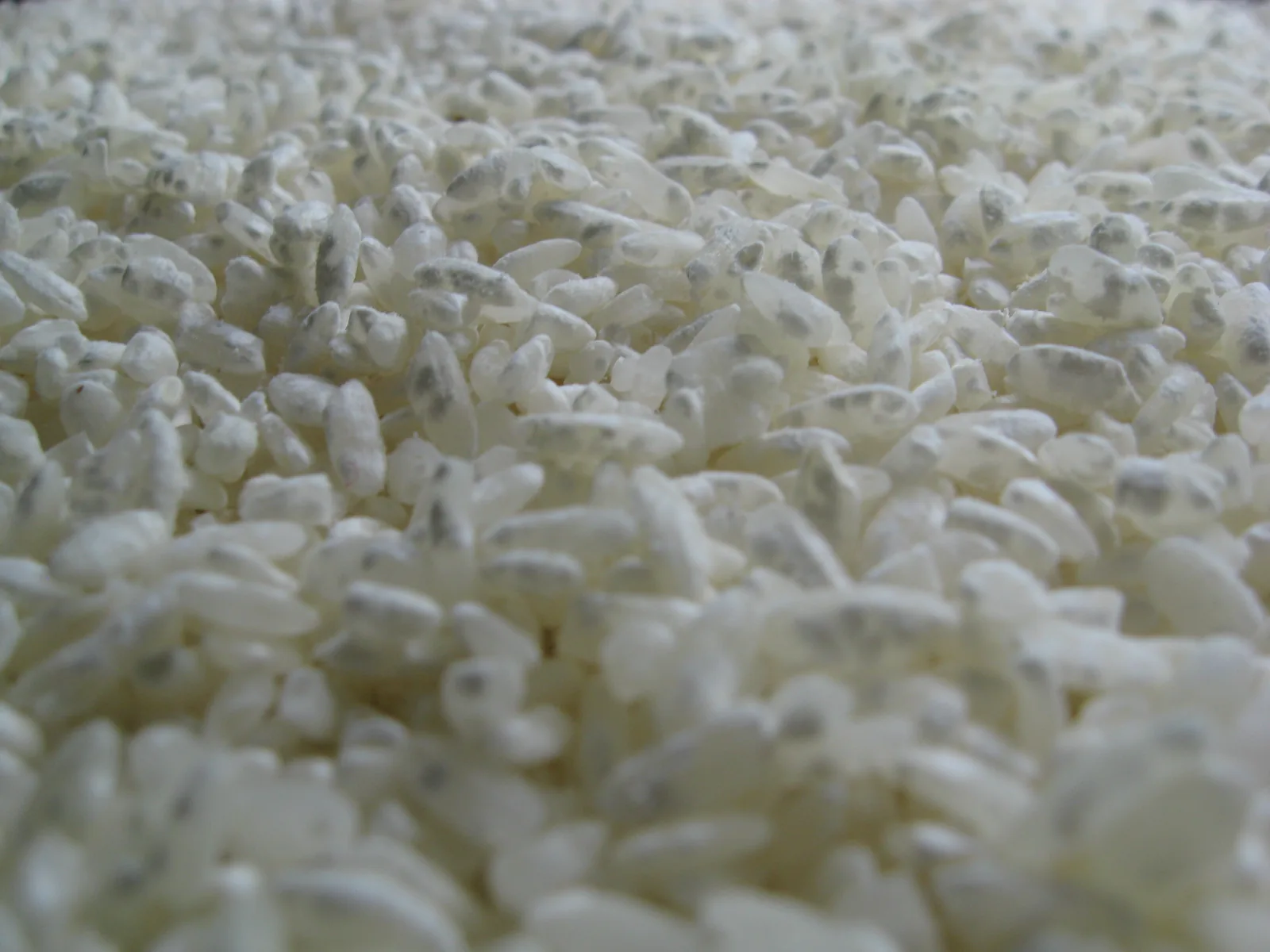
Koji is Aspergillus oryzae, a filamentous fungus, in other words a mold, domesticated in East Asia for sake, miso and soy sauce. In Japanese the word does not designate the fungus alone but the grain it has colonized. The spores sold to start it are called tane-koji, or moyashi.
On coffee, this fungus is sown on the surface of the whole cherry and made to grow there. It does not ferment in the sense of yeasts or bacteria: it does not first produce alcohol or lactic acid. It secretes enzymes outside its cells and digests its substrate on the spot. Hence the two constraints of the job. It needs oxygen, and it gives off a great deal of heat.
Three families of enzymes matter. Amylases cut starch into sugars. Proteases and carboxypeptidases cut proteins into peptides and then into free amino acids, including glutamate, which carries the umami taste. Pectinolytic enzymes, pectin methylesterases and polygalacturonases, cut up pectin. This last point is not theoretical. EFSA evaluated in 2023 an endo-polygalacturonase produced with a modified strain of A. oryzae, and coffee demucilaging figures among its five declared uses.
A correction is needed here, because the phrase “koji turns starch into sugar” circulates everywhere, including in the original protocol. It comes from rice and travels badly. The fungus stays outside. What it reaches is the skin, the pulp and the mucilage, the layer of sugary flesh stuck to the parchment. Now the wall polysaccharides of coffee pulp are mostly branched pectins of arabinogalactans. The author of the protocol acknowledges this himself in an interview: there is very little starch available to feed the koji. The pectinolytic route and the proteolytic route are therefore the plausible ones.
What can be measured at the end is a shift in the stock of precursors. In solid-state culture of A. oryzae at 30 °C and 70% relative humidity, on wheat bran and on rye bran, reducing sugars and primary amines both rise. On rapeseed cake the medium turns alkaline and only the amines accumulate. The substrate therefore governs the result, and one does not transpose from one substrate to another. Now reducing sugars and amino compounds are exactly the two reactants of the Maillard reaction, which builds the aroma at roasting. Indeed, after solid-state fermentation of canephora green beans and then roasting, the samples treated with A. oryzae show a significant rise in pyrazines, the nitrogen heterocycles that carry the roasted and hazelnut notes.
The split between the two routes would depend on temperature. The author of the protocol writes that the strain MSCO-11, the one used at El Vergel, produces more amylase in the upper part of its range and more amino acids in the lower part. No public technical sheet confirms it.
The sequence
The protocol published in 2021 sows the spores directly on the cherry. It does not go through rice.
- Purchase of the spores. Tane-koji from a Japanese manufacturer, strain MSCO-11 from Higuchi in Osaka. The cost weighs: 250 dollars to bring 350 g from Japan to Colombia, enough to treat about 70 kg of green coffee. The trade press also cites 17 dollars for 30 g of spores.
- Sorting and flotation. Ripe cherries only, from blood red to burgundy red. Flotation in drinking water removes the floaters and knocks down the wild flora. This is what gives the koji time to settle in: it starts slowly and the cherry carries a dense population of competitors.
- Inoculation. 1 g of spores per kilo of cherry. Gentle mixing, with a clean hand or a shovel, without breaking the skin.
- Growth phase. Thin layer in a food-grade bin with a lid laid on without tightening. Laid on, because the fungus is aerobic and consumes oxygen. Not tightened, because it also needs high humidity.
- Temperature control, which governs everything. The mass must stay between 25 and 30 °C. Below that growth drags, above it the fungus dies and leaves the field open. Probe in the heart of the pile every 6 hours, gentle stirring at least every 12 hours, moving to the shade or adding ice if it heats up.
- Stopping. From 24 to 36 hours, at the moment when a white veil covers the whole surface and the smell becomes frankly tropical.
- Drying, immediate. Raised beds under a shade net cutting 60 to 80% of the light. The mass stays between 20 and 30 °C, never above 30 °C, for 20 to 30 days as whole cherry. From 16 to 20% moisture, it is piled back up at night to even it out.
- Steering by weight, not by eye. The incoming cherry is taken to be at 65% water, so at 35% dry matter. This dry matter no longer changes. The target weight is calculated from it.
- Final target: 12.5 to 13%. The protocol itself says this is not a stable value. Hence vacuum packing from the moment of milling and cool storage.
El Vergel's commercial practice, as its exporter describes it, is a different process. It first makes koji rice, then uses it as a powdered inoculum.
- Koji rice. Steamed rice receives the spores. The process page says 48 hours, the product sheets 3 to 4 days. The colonized rice is dried then finely ground.
- Why this detour: it divides the expense. The author of the protocol puts forward that from 30 g of starter about 240 kg of koji rice is obtained.
- Inoculation. The powder is spread on the cherries laid out on African raised beds. The exporter writes in black and white that oxygen is needed for the fungus to grow.
- Fermentation. 36 hours on the process page, 24 to 72 hours on the product sheets. Both describe it as aerobic.
- Drying in two stages. A silo first removes 30% of the moisture, then the African raised beds finish in 15 to 25 days. Another page describes 10 days of sun and then 2 to 4 days of mechanical dryer, at 38 °C at most.
- Stabilization. Twenty days in GrainPro bags.
What it gives in the cup
What is measured, and it is little. A single published trial applies A. oryzae to the cherry in a real comparative design. Arabica cherries go to the dry process. Three treatments each receive an inoculum, A. oryzae, Leuconostoc mesenteroides or Saccharomyces cerevisiae. A fourth serves as the control. All three inoculations improve the score. The control gets 80.17 ± 1.04 and the best, the yeast, 84.00 ± 0.25, with p < 0.05. The score specific to koji is not readable in the sources consulted: see OMBRE. The three cultures almost double the 5-caffeoylquinic acid content of the bean and clearly increase antioxidant capacity.
Instrumental only, without a panel. Solid-state fermentation of canephora green beans changes free sugars, free amino acids and caffeoylquinic acids. After roasting, pyrazines rise significantly for A. oryzae, with clear differences according to the strain. A Mucor tested in parallel gives more furans instead. The fungus chosen therefore steers the result as much as the fact of fermenting does.
An Indian trial bypasses the fungus and uses only its enzyme. An acid carboxypeptidase is drawn from an A. oryzae isolated from coffee pulp, then produced on wheat bran at 35% moisture, 30 °C and 100 hours. Applied to coffee, it brings the internal organoleptic score to 7.5 against 4.5 for the control, with pyrazines up. This is neither an SCA score nor a described panel.
To situate the family, a non-koji neighbor. Talaromyces funiculosus KQ2 inoculated on cherry gains 1.5 points and crosses the 80-point threshold, with p < 0.01. The article ties this gain to a specific compound, 1,3-dimethoxybenzene, and measures 17.11% more sucrose.
What is claimed, and by whom. Kaapo Paavolainen tells of an A-B test. A koji lot was compared with a classic natural of the same variety, a Red Bourbon, tasted blind in four countries. The koji is said to have scored higher, with more body, more length and a finer acidity. Neither the scores, nor the size of the jury, nor the protocol were published, and it is a participant who reports it.
On the quantified gain, the two men do not say the same thing. Elias Bayter announces one to two points. Christopher Feran takes the example of an 85-point coffee raised to 87, then turns the argument around. According to him, a farm that produces 82 or 83 points will gain less with koji than with selective picking, stricter sorting and clean tanks.
A word on umami, which the trade puts forward. The exporter makes it the announced result of the process. Yet in the preparatory trials, koji grown directly on the green bean gave cups of broth, shoyu and miso, judged failures. It was the move to the cherry that gave a coffee profile. Umami is therefore first of all the failure mode of an abandoned route.
What goes wrong
Temperature first. Beyond 30 °C the fungus dies. What remains is a hot, humid and sugary pile, handed over to the wild flora. This is the ordinary road to fermented (fermento, in Spanish) and to moldy.
The sown mold is not the only one present. Higuchi's laboratory considered the trial difficult, because of the speed at which the cherry rots and the diversity of the competitors, including aflatoxin-producing molds.
A. oryzae is not automatically harmless, and this is the point the trade never mentions. Wild strains of the species have the potential to produce three mycotoxins: aflatoxins, cyclopiazonic acid and 3-nitropropionic acid. Aflatoxin production is generally prevented by deletions and mutations in the gene cluster of the pathway. One industrial lineage has been cleaned up for good, that of Novozymes, now Novonesis. Its strain BECh1 lost at once the aflatoxin and cyclopiazonic acid clusters, then the npaA and npaB genes of 3-nitropropionic acid. Nothing equivalent is published for a strain used on coffee.
The name of the species guarantees nothing. A. oryzae and A. flavus share about 99.5% of their genome and are distinguished only by deletion patterns in the aflatoxin gene cluster. Separating them requires a PCR, and the method published in 2025 reaches 92% accuracy on isolates of nuruk, the Korean ferment. A phylogenomic study of 711 Aspergillus genomes also finds extensive misidentification of strains. A label is therefore not proof.
There is no general presumption of safety in Europe for this fungus. The QPS status does not apply to filamentous fungi: it is granted at the species level to bacteria and a few yeasts only.
Ochratoxin A, which is the real mycotoxin question of coffee, does not come from koji. It comes from Aspergillus niger, A. ochraceus and A. carbonarius, during drying and storage. Now a koji lot dries as whole cherry for 15 to 30 days: this is exactly the window of these molds. On dry parchment coffee, ochratoxin A production by A. niger increases with storage time. The trial also notes a counterintuitive effect: below certain thresholds, the drop in temperature and relative humidity goes with a rise in the toxin. Roasting degrades 76.4% of it on a curve from 180 to 208.8 °C in 11.23 minutes. It reduces it, it does not cancel it.
The named defects of the trade, and their cause here.
- Moldy (mohoso, in Spanish): another mold has taken the place, almost always after a temperature drift or a drying that was too slow.
- Fermented, or vinegary (vinagre, in Spanish): the pile heated up, acetic, propionic and butyric acids accumulated.
- Phenol: reported on badly run long fermentations, same underlying causes.
- Broth, shoyu, aggressive umami: green bean route, or koji pushed too long.
Finally the final moisture. The published protocol aims at 12.5 to 13% and says itself that this is not a stable value, that it goes away quickly and that it requires vacuum and cold. A moister bean stored warm is a bean that molds.
Benchmarks
- Inoculation dose, published protocol1 g of spores per kg of cherry
- Temperature window of the mass25 to 30 °C, the fungus dies above
- Control during growthprobe every 6 h, stirring at least every 12 h
- Length of the growth phase, published protocol24 to 36 h, end at the complete white veil
- Drying as whole cherry, published protocol20 to 30 days between 20 and 30 °C
- Target final moisture12.5 to 13%, unstable value, vacuum and cold mandatory
- Potential mycotoxins of wild A. oryzae3 (aflatoxins, cyclopiazonic acid, 3-nitropropionic acid)
- Degradation of ochratoxin A at roasting76.4% from 180 to 208.8 °C in 11.23 min