Decaf
Removing one molecule from a seed without touching the thousand others that make up the flavor. The idea seems simple, yet it took a century, half a dozen solvents abandoned one after another because of cancer, and it remains the only place in coffee where the industry takes something out instead of adding something. This plate follows the operation from end to end: the chemistry that makes it difficult, the processes one by one, what the bean loses in measured figures, what must be changed at the fire to roast it, the few plants in the world able to do it, the price it puts in the bag, and what becomes of the caffeine taken out. After Ukers (1922), the Meyer-Roselius-Wimmer (1908) and Zosel (1981) patents, the Max Planck Institute, the European directives 1999/4/EC and 2009/32/EC, Swiss Water, Sweet Maria's, Perfect Daily Grind, Coffee Intelligence, Silvarolla and coauthors (Nature, 2004), and professional training documents.
The 14 sections of this plate
Each section has its own page. The first sentence says what you will find there.
- 01The problem comes down to one sentence of chemistryIn a green bean, caffeine does not move around freely.
- 02Decaf: from Bremen to SankaThe first attempts, reported by Ukers, extracted the caffeine from roasted coffee.
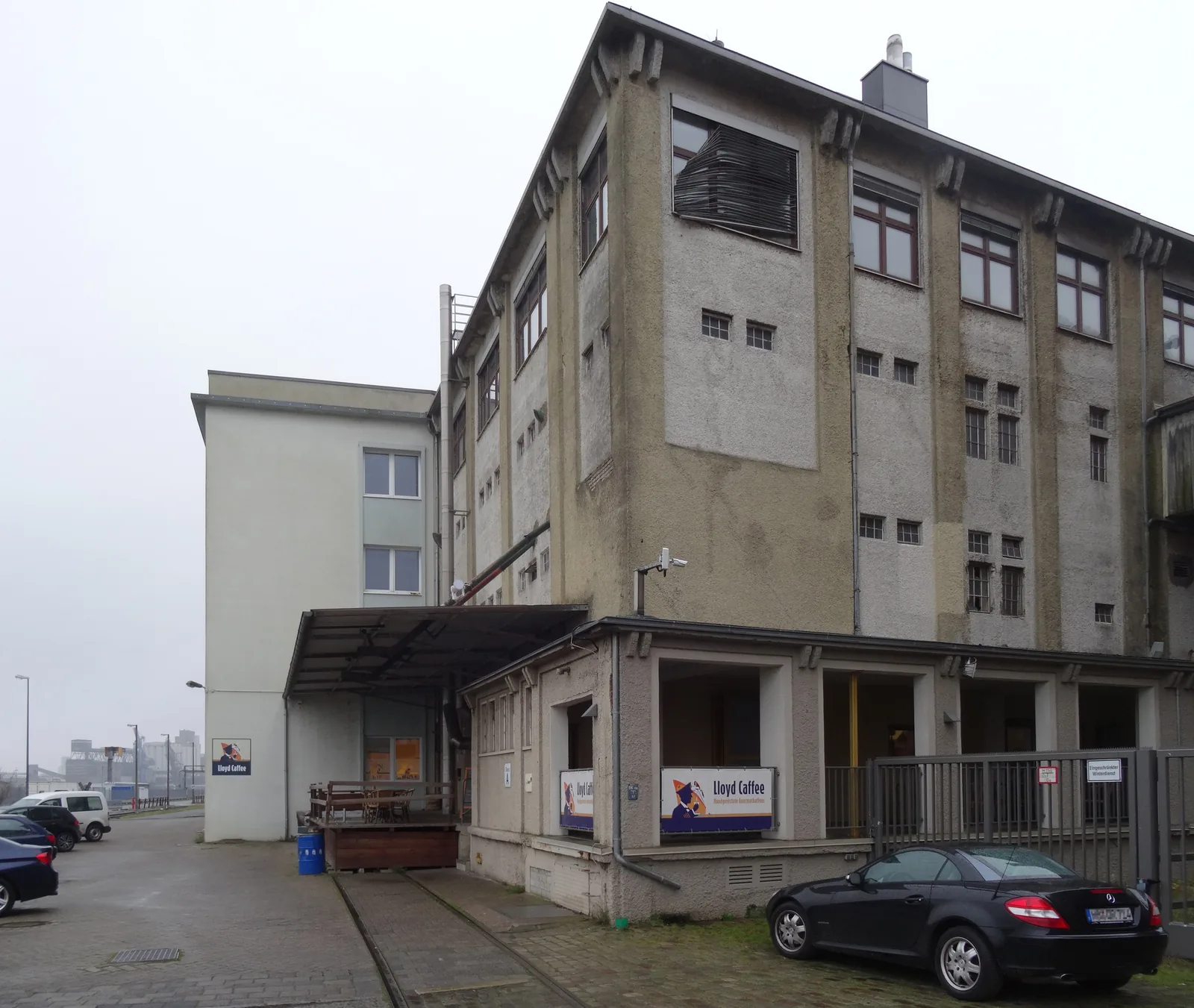
- 03What caffeine-free coffee built in BremenThe story usually stops at the patent. It is worth pursuing, because the fortune made from decaf financed one of the strangest streets in Europe, and because its owner ended up…
- 04Why decaf coffeepots are orangeIn any American diner, the pot with the orange neck holds the decaf and the one with the black neck the regular coffee.
- 05The processes, one by oneDirect solvent, called the “European method” or “traditional” on labels (Bremen, 1905; methylene chloride or ethyl acetate since the 1970s and 1980s).
- 06The processes specialty coffee is inventingThe four processes described above are between forty and one hundred twenty years old.
- 07The methylene chloride quarrelOn May 8, 2024, the Environmental Protection Agency finalized the ban on methylene chloride for consumer uses and most industrial uses.
- 08What the bean really loses, and what is attributed to it“Decaf has no taste” is one of those sentences that everyone repeats and almost nobody has checked.
- 09Roasting it: three landmarks that jump all at onceA roaster works with three instruments: what is seen, what is heard, what the probe says.
- 10Who decaffeinates, and where: a handful of plants worldwideCoffee grows in some sixty countries and is roasted in all of them.
- 11What it costs, and why decaf is more expensiveThree bills, in the order they come due.
- 12The extracted caffeine: which of the two is the by-product?The question is not rhetorical, it served as the title of a scientific article, and the answer is less obvious than it seems.
- 13The other route: coffee plants that make noneSince the problem is removing the caffeine, the elegant solution would be to grow a coffee plant that makes none.
- 14The questions people ask most oftenDoes decaf really contain zero caffeine?
Elsewhere on the site, the passages that deal with the same things as this page. Computed from the text, not picked by hand.