Italy, Spain, Portugal, Belgium
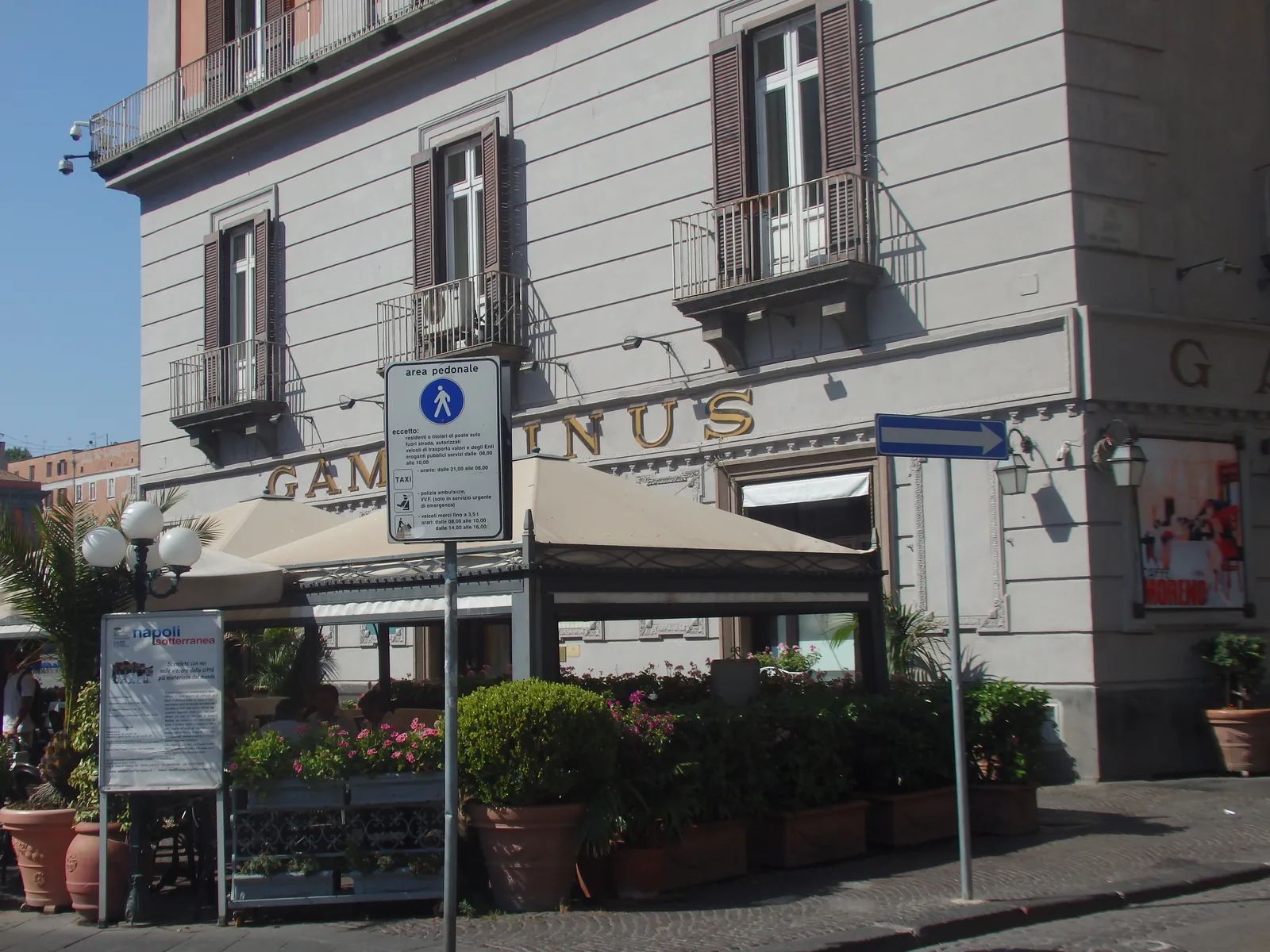
The Italy of 1922 is not yet the country of espresso. Ukers describes there roasting done wholesale, retail and at home, a marked taste for the full city roast that is also called Italian roast, frequent glazing and numerous additions; for restaurants, quick-filtration machines. As in France, great store is set by café au lait in the morning and black coffee is served at the end of dinner, and French-style cafés line the Corso in Rome, the Galleria Vittorio Emanuele in Milan and the arcades of St. Mark's Square. The lever machine, the standing counter and the vocabulary of the Italian bar are absent from this inventory: they came later.
Ukers 1922, ch. XXXV, p. 655-694In Spain and Portugal, French-style coffee prospers as in Italy. Around the Puerta del Sol in Madrid, coffee and chocolate are the favorite drinks. Coffee is made there by filtration, and Lisbon has its sidewalk terraces.
In Belgium too, the French filter dominates. Chicory is used there freely, not as a fraud but as a modifier, exactly the status it has in Paris.
Ukers finally reports that the greatest coffee drinker among reigning monarchs is said to be the King of the Belgians. His rhythm follows the whole day. A cup before breakfast, one after. One at the midday meal, one in the afternoon. One after dinner, and one more in the evening.
Ukers 1922, ch. XXXV, p. 655-694In this plateThe 21 sections
- 01The Arab ceremony: the coffee room and its gestures
- 02The Bedouin circle, the four sips, the rule of water
- 03Turkish coffee: the room, the price, the etiquette
- 04Ramadan, Karagöz and the coffee calendar
- 05Damascus, Cairo, Algiers: water, smoke and the storyteller
- 06Venice: the first caffè of Europe and the square as a salon
- 07Vienna: the blend, the newspaper and the word for ordering
- 08Paris: from Procope to the boulevard, and the waiter's vocabulary
- 09London: the penny university, and what replaced it
- 10Berlin, Saxony and the Kaffeeklatsch
- 11Amsterdam and Athens: the glass of water and the kaimaki
- 12The North and the East: copper kettles, lemon and flambéed cognac
- 13Italy, Spain, Portugal, Belgium
- 14The United States: Prohibition, the coffee room and the free cup
- 15New Orleans, Brazil, Cuba, Mexico, Australia
- 16Coffee in painting, engraving and caricature
- 17Coffee in music and literature
- 18Silverwork, porcelain and the furniture of service
- 19How a custom is made: taste is a habit
- 20What has changed since 1922
- 21Archive plates
The table of contents, with the first sentence of each section