The manufacturers, one by one
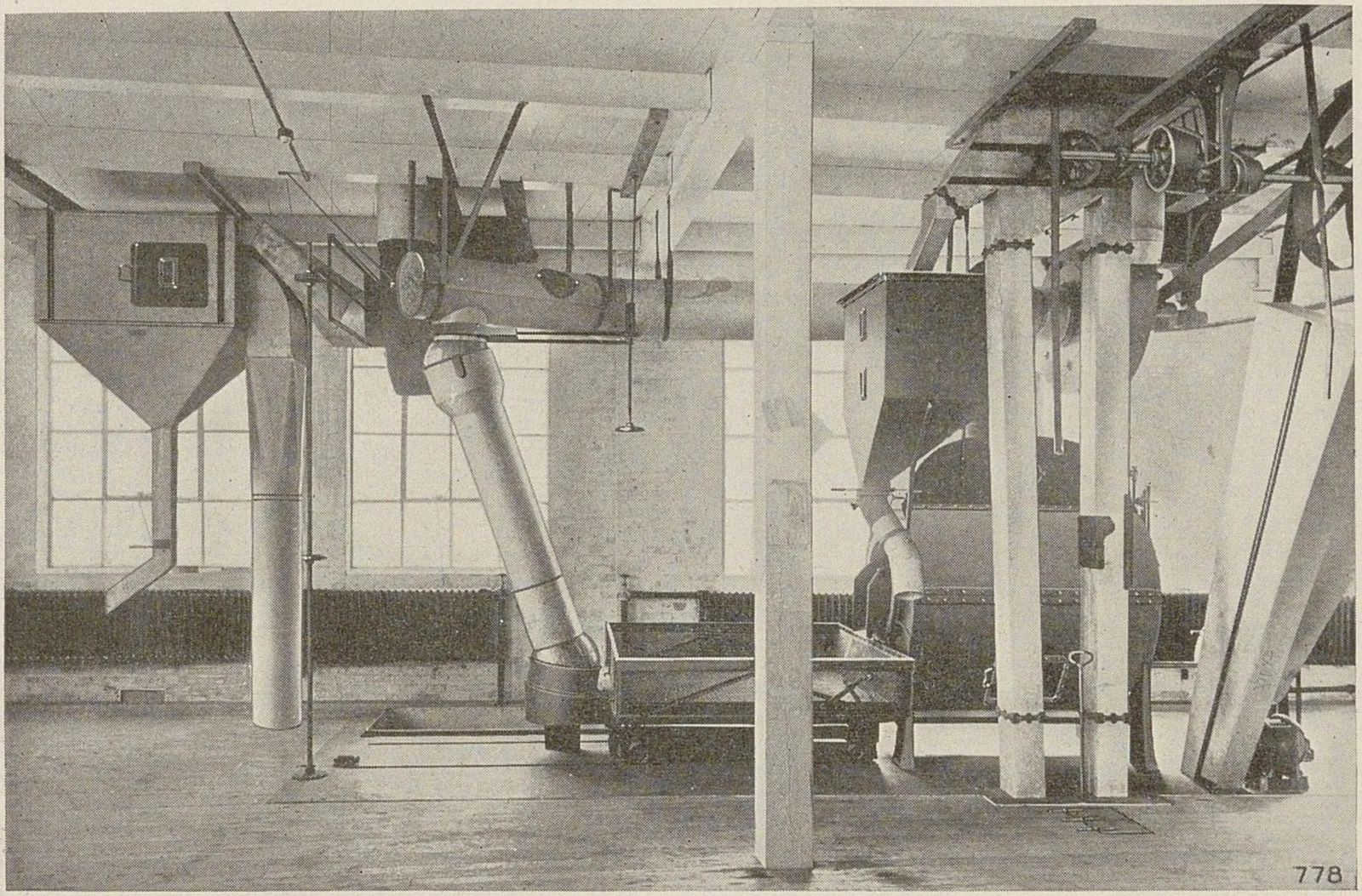
- Jabez Burns & Sons, New York (1864)
- 1864Founded at 107 Warren Street to make the patented roaster
- 1867cooler
- 1867-1874granulator
- 1881improved roaster
- 1883sample roaster
- 1900direct flame with swivel door
- 1908open perforated cylinder
- 1909gas or electric tilting sampler
- 1906incorporated
- 1908six-story factory on 43rd Street
- 1917doubled
- “the largest coffee-machine shop in the United States” in 1922. Arbuckle's Jumbos and the batteries of twenty-four Burns of the big New York houses come out of it.
- Probat, Emmerich (1868)
- Emmericher Maschinenfabrik und Eisengiesserei (van Gülpen, Lensing, von Gimborn)
- 1870sphere
- patent 1892, Perfekt in the early 20th century
- G series “groß” in 1930 (including a model dedicated to espresso)
- October 7, 1944factory destroyed
- 1949rebuilt
- 1950exports exceed domestic sales
- 1959Probat name
- tangential Jupiter in 1969 (trade press)
- 1985takeover of Bauermeister
- 2012R&D center
- 2018150 years
- May 2022industrial Neptune 1000
- 2022-2023electric range P01/P05 E/P12 E
- 2022hydrogen trials announced
- 2024acquisitions of A.C. Horn and Royal Duyvis Wiener
- 2025unified “Probat Group” brand
- Gothot, Mülheim an der Ruhr
Ukers cites the firm in 1922 for its fast roaster Ideal-Rapid, fired with coke or gas, and for its manual version Favour.
The model's name tells its era. This is the moment when “fast roasting” stirs the German trade, and Gothot sells speed as a catalog argument.
The machine outlived the manufacturer. Schwartzberg still cites, after Rothfus, a “Gothot Rapido Nova” with thermal afterburning consuming 2,680 kJ/kg. The figure is high, and the reason is not in the drum. Thermal afterburning, which burns the fumes at high temperature, is the most energy-hungry of the air treatments.
When Gothot was absorbed by Probat is not known. The date could not be verified in the sources consulted (see gray areas).
- Petroncini, Bologna then Ferrara (1919)
Ruggero Petroncini founds the firm as an artisan, and with a bias: convection. That is, heat carried by hot air, and not by contact with the wall of the drum. The choice is not theoretical. The less the bean touches the burning metal, the less risk of scorching.
The patented gears and the first 120 kg drum arrive between 1931 and 1937. Complete industrial installations follow from the 1980s. The head office moves to Sant'Agostino, near Ferrara, in the early 1990s.
In 2005 comes the TMR720, “the largest drum in the world,” 720 kg per batch. The trajectory fits in these two numbers: starting from an artisan's drum, the firm ended up claiming the largest batch on the market.
The outcome is also the end of independence. Petroncini is merged into the IMA group in 2017.
- Officine Vittoria, Italy
- Italian maker of artisanal and semi-industrial drums; neither the website nor the press consulted provided a verifiable founding date (see gray areas).
- Loring Smart Roast, Santa Rosa (1998-2003)
Single burner and recirculation: the principle is described above, in the technologies. The range is its variation, and its names read themselves. The number gives the capacity, from 7 to 70 kg, the bird gives the model: S7 Nighthawk, S15 Falcon, S35 Kestrel, S70 Peregrine.
Two additions surround the drum. The W70 weighing system brings the control back to the oldest measurement in the trade, the weight loss between green and roasted. The Roast Architect software, for its part, records the profile and calculates its rate of rise.
The fleet exceeds 60 countries, which is a lot for so young a manufacturer.
- Diedrich Roasters, Idaho
Gas infrared burners and indirect-heat drums; change of owners at the founders' departure in March 2016, new 7,400 m² headquarters in June 2020, DR-3 replacing the IR-1 and IR-2.5 in January 2022, all-electric DR3-E in April 2024, DR-280 (four bags) in December 2025.
- Giesen, Ulft (Netherlands)
Giesen builds gas drums from 1 to 60 kg. That is the whole scale of the trade, from the sample roaster to the small industrial unit, without ever going toward batches of several hundred kilos.
What follows matches the general movement. In June 2022 come the W6 Pro and the announcement of a 15 kg electric, at the very moment when electrification becomes the dominant fact in the sector. In February 2024 comes the Profiler 2.0 software, in-house, like Loring with Roast Architect and Aillio with RoasTime. In May 2025, the firm is renamed Giesen Roasting Solutions; in July, it announces the overhaul of its 6 and 15 ranges.
The founding date is missing. The sources that give it could not be consulted, and we prefer to leave the gap visible.
- IMF, Occhiobello (1994)
Indirect heat, “vortex” combustion chamber under PID control mixing ambient air and hot air, single burner serving as afterburner, recirculation claimed to save up to 30%; taken over by Alessandro Garbin in 2010; boutique and industrial ranges; ISO 9001 and 14001.
- Stronghold, Seoul
Stronghold heats with electricity, and by three means at once: hot air, halogen lamps and a hot plate. The trio covers exactly the three ways heat enters a bean, convection, radiation and conduction, described above.
What follows is a series of dates. December 2016: the S7 is presented for the United States. 2022-23: the S7 Pro becomes the official machine of the American championships. A competition machine must be repeatable enough for the competitors to be judged on their handling and not on their equipment.
On May 28, 2025 the 4.5 kg S8X and the compact S2 are unveiled. The S2 goes on worldwide sale in April 2026.
- Aillio
1 kg induction Bullet R1, presented in 2015 before its commercialization; update and announcement of the 2 kg Bullseye in 2019; 2 kg AiO in 2022; Bullet R2 and R2 Pro in July 2024, RoasTime software, Cropster and Artisan compatibility; showroom in Latin America (El Salvador) in August 2026.
- Ikawa, London
App-controlled fluidized-bed sample roasters:
- 2018Pro V3
- 2020Pro 3.0 app
- 2021Pro100 with doubled capacity
- 2022digital cupping form
- 2023Pro100x
- 2025Pro50X
- 2026Ikawa Go
- 2023partnerships Algrano (2020) and Bühler
- Bühler, Uzwil (Switzerland)
Food engineering group claiming more than fifty years of roasting; RoastMaster drums up to one tonne per hour with “Infinity Profile Control” regulation of the air/bean ratio; “ultra-low emissions” plant planned with Joh. Johannson (Norway) in 2018; Ikawa partnership in 2023.
- Neuhaus Neotec, Ganderkesee (1931)
The firm is born in Delmenhorst and begins by manufacturing under Burns license. The mills and continuous roasters patented in New York are thus built in Germany, under contract, before the German manufacturer develops its own principles.
For about thirty-five years, it has been developing the RFB, for Roasting by Fluid Bed, that is, fluidized-bed roasting brought to industrial scale: 30 to 240 kg per batch. The beans float in the hot air instead of rubbing against a wall.
It announces profiles from fast to slow. This is a response to the reputation of the process, which specialty coffee suspects of knowing only how to go fast. It also sells drums, for customers attached to long roasts. A manufacturer who sells both principles acknowledges that the debate is not settled.
Three earlier dates, one missing machine, and a source to handle with kid gloves
An article in the Book of Roast completes this section on three points of date and adds to it a machine that it lacks. First we must say where it comes from: it is signed by the marketing manager of Probat-Werke, and Probat is its hero from start to finish, from van Gülpen and the Emmerich workshops to the Lifter, the Quick Roaster, the Perfect, the double-wall drum, the Jupiter and the Saturn.
The catalog dates are probably exact; the selection is not. They can therefore be used for dated facts, not for the hierarchy it suggests between the firms.
The perforated drum, or the gesture that tipped the trade
The first contribution is not a date but a mechanism, and it bears directly on heat transfer. The perforated drum of Burns's Jubilee, in 1906, increases the share of convection compared with the solid cylinders that preceded it, whose conductivity was markedly higher, and makes it possible to come down to sixteen minutes of roasting and three batches an hour. The perforation of the drum is therefore the technical gesture that moves the trade from conduction to convection, and everything said today about the dominance of air dates from there.
The consequence arrives in its wake and is often told backwards: the fast drop becomes necessary not because residual cooking would have been discovered, but because transfer had accelerated to the point of making it a problem. A bean leaving a slow machine keeps cooking slowly; a bean leaving a fast machine keeps cooking fast. The suction cooling tray is a response to an acceleration, not progress coming from nowhere.
Two dates older than those on the plate
Antonio Scolari patents in 1957 a roasting machine using infrared lamps. The concept did not take, and that is precisely what makes it useful to know: infrared periodically returns in manufacturers' announcements as a novelty, and it is seventy years old.
The German company Caasen brings out a European fluidized bed in 1926, half a century before Sivetz. If the date is exact, it is the oldest in the corpus for a commercial air machine, and it seriously shifts the chronology that the plate gives. But it is put forward without a reference, in a manufacturer's article, and it is consequential enough to deserve checking elsewhere before being taken up without reservation.
The centrifugal roaster, absent from the plate
Probat presents in 1973 the first centrifugal roaster, the Saturn: a roasting bowl fitted with a ring of slats, in which the coffee circulates toroidally, that is, in a torus, turning around the axis of the bowl while rolling on itself. The design aims at a high share of convective transfer, which puts it on the side of air machines without being a fluidized bed. It is a whole family that the section ignores, and it has left industrial descendants.
Three details to check before reuse
The mention of a Jabez Burns aged twenty in 1864 does not agree with the dates usually held for him, and the article supports its own with no birth year.
The sentence according to which the design of Burns's inner cylinder is still used in all drums more than a hundred and fifty years after his patent employs an absolute that nothing supports, and that a single counterexample would be enough to undo.
The date of 1926 for Caasen's fluidized bed is given without a source, even though it is the most consequential claim in the article.
In this plateThe 19 sections
- 01What roasting does, and what it does not do
- 02From the brazier to the cylinder, 1200-1800
- 03Industrialization, 1824-1864
- 04Gas, the sphere and “fast roasting,” 1868-1922
- 05The physics: how heat enters the bean
- 06Five stages, two cracks
- 07The chemistry, stage by stage
- 08The technologies, one by one
- 09The manufacturers, one by one
- 10The tools
- 11The profile: charge, time, rate of rise, development time ratio, drop
- 12Colors and scales
- 13Roast defects
- 14Degassing, resting, freshness
- 15Espresso, filter, decaf
- 16Industrial versus artisanal: time, energy, emissions
- 17Roasting at origin
- 18Today
- 19Archive plates
The table of contents, with the first sentence of each section