What roasting does, and what it does not do
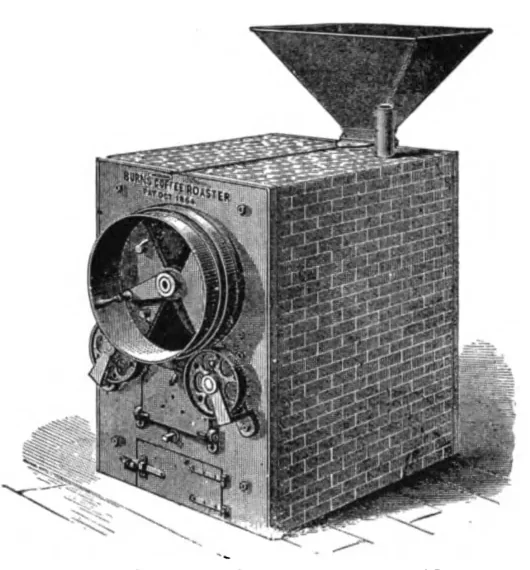
A green bean contains precursors, not aromas. In other words, it carries the raw materials of taste, not yet the molecules we will recognize in the cup.
The stock is known. Sucrose, 7.3 to 11.4% in arabica. Chlorogenic acids, 13.6 mg per fruit in arabica and 16.9 in canephora. Lipids, 7 to 17% of dry weight. Proteins and amino acids, caffeine (0.9 to 1.5%) and trigonelline.
Heat consumes this stock and makes molecules that did not exist, through the Maillard reaction and caramelization. The review by Yang et al. (2026) in fact treats roasting as the step that consumes the precursors accumulated upstream, and devotes no section to roast profiles.
The consequence is twofold. The farm sets the ceiling, since the roaster works only with what the green coffee has brought him: he can reveal it or spoil it, not increase it. And agronomic research stops at the green bean, whereas the final taste is decided afterward.
Yang et al., Agriculture, 2026, p. 12; Davis-Yang digest; LC ch. 16b and 17Physically, the process boils down to three movements: dry, react, cool. The bean, exposed to a hot gas or surface, first slowly loses its water (7 to 11% of its mass); then come hundreds of simultaneous reactions, hydrolysis, polymerization, reduction, oxidation, decarboxylation, which change color, structure and composition; finally it must be cooled quickly, with air or by water spray, because the end-of-roast reactions have become exothermic and would continue on their own. More than eight hundred volatile compounds appear; the bean loses 12 to 20% of its mass depending on the degree, nearly doubles in volume and loses half its density.
Vosloo 2017, § 2.2.1, p. 15-17, after Eggers and Pietsch 2001, Franca 2005, Schwartzberg 2002Eighty percent color, twenty percent time
There is in the professional corpus a single sensory measurement, that is, a single result obtained by having people taste coffees rather than by reasoning on curves. It is little cited, and it should be cited more, because if it holds, it shifts the question.
The result
In 2018, Davide Giacalone, Morten Münchow and others compared roast profiles varied by final color and profiles varied by time, then measured what explained the differences perceived in the cup. The final color explained about 80 percent of the sensory variation, the time about 20. Münchow writes elsewhere without detour: the roast degree is by far the factor with the greatest influence on taste.
We must take the measure of what this would mean. Rao's whole book is built on the shape of the curve, hence on time and on the way of getting there. Almost the whole professional conversation, the forums, the profile software, the debates on rate of rise and on the dip after charge, concerns this same half of the subject. Yet this split says that the heaviest variable is the one we talk about least, because it seems trivial: at what color we stop. Most of what roasters argue about would play out inside the 20 percent.
The reservations, and they are serious
This result is also the least well documented in the corpus, and Münchow is the one accountable for it. He is a coauthor, he reports it in an educational text intended for training, and he gives neither the number of coffees compared, nor the number of tasters, nor the range of the varied profiles. Yet these three elements decide the result: if the profiles compared were close in time and far apart in color, the split mostly measures the experimental design and not the reality of coffee.
A number of this importance deserves to be cited with its original reference, the published article, and not with the manual that summarizes it. This plate therefore gives it for what it is: the only controlled trial in the corpus, reported secondhand by one of its authors.
What the other camp opposes, and what it does not oppose
Rao does not dispute this result, he does not mention it. What he has on his side are twenty thousand batches tasted and no controlled comparison. The two positions are therefore not symmetrical: one rests on a poorly described experiment, the other on a long experience and on no experimentation. This is not a reason to prefer one, it is a reason to say which is which.
Münchow himself, moreover, does not draw the conclusion one would expect. He refuses to judge the roast degree in terms of right or wrong and refers it to the preference of a customer segment. In other words, the most powerful variable is also the one he holds to be the least technical: it would belong to commercial choice and not to know-how. If the 80 percent are a matter of market and the 20 a matter of craft, we understand better why the craft talks mostly about the 20, and why it would be wrong to believe that this proportion measures the importance of things.
A counter-indication, in Münchow himself
Münchow puts forward elsewhere a claim that runs against the idea that color would sum everything up: at equal final color, a fast roast will have swollen more than a slow one. He gives 50 percent expansion in volume for light roasts and up to a doubling for dark ones.
If the first claim is correct, two coffees of the same Agtron value would have neither the same density nor the same solubility, that is, neither the same ease in giving up their compounds to water. Color would then cease to be a sufficient summary of what will happen at extraction, and the 80/20 split would hold for the cup tasted under a fixed protocol, not for all preparations.
This claim is stated flatly, with neither measurement nor source. It is also the only one in the file that a roaster can verify alone, by weighing a known volume of beans from two profiles of the same color. It is the most accessible lead we have noted.
What the bean loses, and four figures that do not agree
Weight loss in roasting is the only figure on this plate that translates directly into money: a coffee bought green and sold roasted is paid for on the difference, and two points of gap on that difference change the margin on every bag. It is also, curiously, one of the places where the sources agree least.
Mass loss
The plate gives 10 to 13 percent for light, 14 to 16 for medium, 17 to 20 for dark, up to 22 for very dark. Münchow writes that light roasts lose about 15 percent and dark ones up to 20, and he draws from it a simple commercial rule: buy about 1.2 kilo of green to sell one kilo of roasted, which is 16.7 percent loss.
His figure for light therefore falls in the band that the plate reserves for medium, and his ceiling for dark is two points below that of the plate. Between 13 and 15 percent loss, there are two points of margin on each bag, which is not a nuance of wording. Nothing in the two sources says on what the figures were taken, nor on which coffees, nor at what starting moisture; yet the loss depends first of all on the water the green contained, which would be enough to explain the gap without either of them being wrong.
Residual moisture, and the gap is a factor of two
The plate gives 2.8 percent water in the roasted bean for a light roast and 1.4 for very dark. Münchow writes that specialty coffee contains between 1 and 1.5 percent water after roasting. Yet specialty coffee is mostly light: his figure for a light coffee is half that of the plate for the same coffee.
The two arithmetics nonetheless hold separately, and that is what makes the disagreement instructive rather than embarrassing. Starting from 12 percent water in the green and arriving at 1.3 gives about eleven points of water loss; arriving at 2.8 gives nine and a half. Both are compatible with a plausible total roast loss, the difference being carried over to the organic matter consumed.
The question is therefore which of the two values was measured, on what device and by what drying method, and neither source says. This is the point in the file where a measurement would settle things fastest: a moisture analyzer and ten light coffees would be enough.
The stakes are not only descriptive. Residual water governs the aging of the coffee and the speed at which it degasses, and a bean at 2.8 percent does not behave over time like a bean at 1.3.
Green coffee moisture: three targets, and above all three lines of reasoning
Münchow writes that the origin dries the coffee to about 12 percent, that specialty green should be between 9 and 11 percent on arrival, and that one should aim for 60 percent relative humidity in the storage room. Karen Foley gives the opposite rule: stay under 65 percent relative humidity, which lets the bean keep 12 percent moisture before roasting. The plate reasons in water activity and retains 0.45 to 0.55, which corresponds roughly to 10.5 to 11.5 percent.
The disagreement concerns less the number than what each is trying to protect, and that is where it becomes legible. Münchow justifies his lower limit by the integrity of the cell structure, which an overly dry green compromises. The plate justifies it by the death of the seed and by the flatness of the cup that follows. Foley gives no lower limit, simply because her article deals with the risk of mold, and from that point of view drier is always better.
Three authors, three different risks, three optima: there is no green moisture target in the absolute, there is one target per danger one wants to avert, and the danger must be named before the number.
One last point to add to the file, out of honesty: the notion of water activity, on which the plate rests this whole passage, is absent from the three books. Münchow and Foley reason in relative humidity of the room, and Rao treats it in a chapter that could not be read. The plate's material on this subject is therefore neither confirmed nor contradicted here.
Morten Münchow, Roasting Foundation, CoffeeMind, p. 10 for the moisture of green coffee and the room at 60 percent, p. 11 for the mass loss and the 1.2 kilo rule, p. 11 and p. 18 for the residual moisture of the roasted bean; Karen Foley, Banking Your Green: Proper Storage and Handling of Green Beans, in The Book of Roast, 2017, p. 87, for the 65 percent rule; Scott Rao, The Coffee Roaster's Companion, 2014, index p. 87 and 88, water activity referred to chapter 3, outside the viewable excerpt.In this plateThe 19 sections
- 01What roasting does, and what it does not do
- 02From the brazier to the cylinder, 1200-1800
- 03Industrialization, 1824-1864
- 04Gas, the sphere and “fast roasting,” 1868-1922
- 05The physics: how heat enters the bean
- 06Five stages, two cracks
- 07The chemistry, stage by stage
- 08The technologies, one by one
- 09The manufacturers, one by one
- 10The tools
- 11The profile: charge, time, rate of rise, development time ratio, drop
- 12Colors and scales
- 13Roast defects
- 14Degassing, resting, freshness
- 15Espresso, filter, decaf
- 16Industrial versus artisanal: time, energy, emissions
- 17Roasting at origin
- 18Today
- 19Archive plates
The table of contents, with the first sentence of each section