Parchment and husks: fuel, biochar, paper, cup
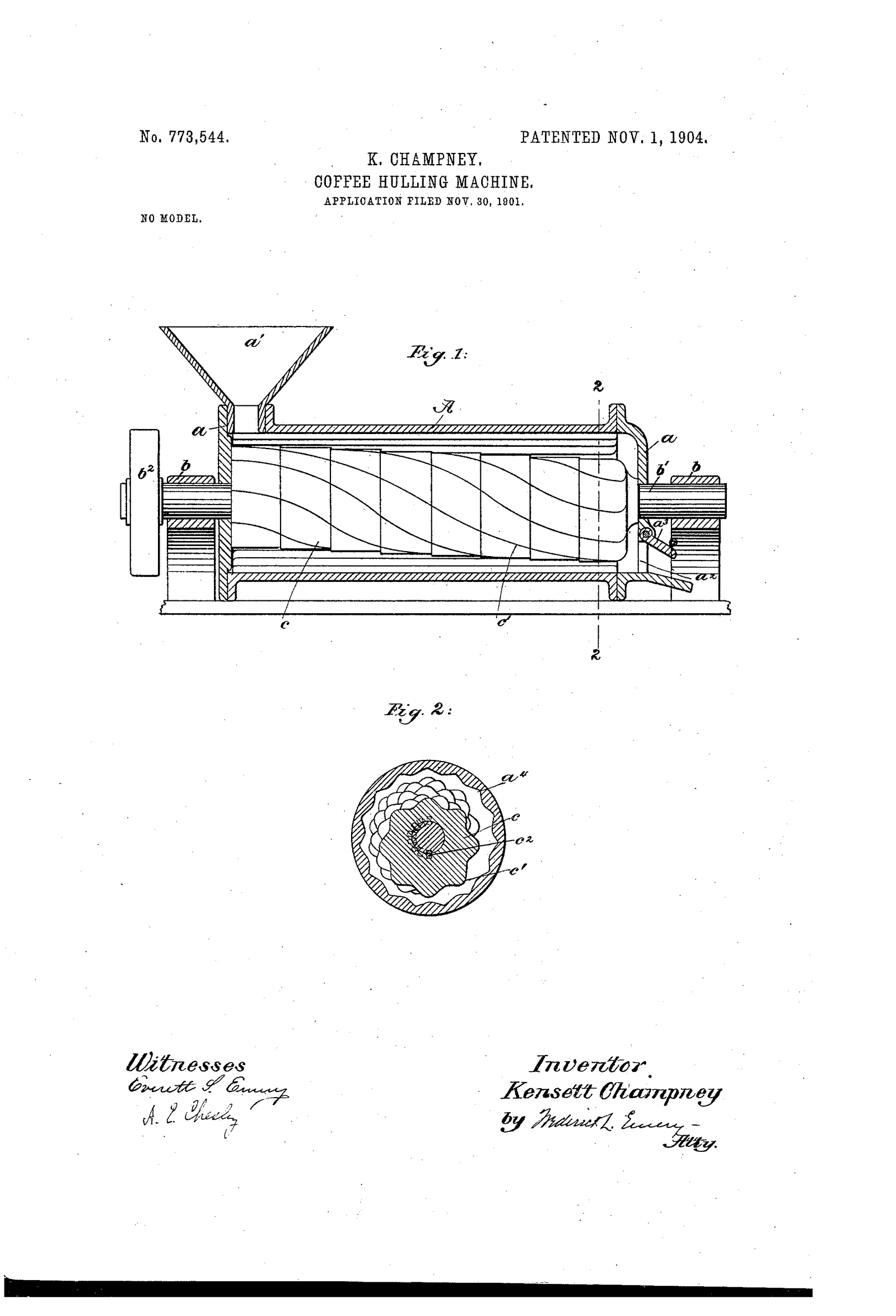
Under the mucilage, the endocarp, the hard straw-colored envelope that gives parchment coffee its name; 35 to 39% of the weight of the dried cherry, removed at hulling just before export. It is dry, light, stable and keeps for months under a shed, which leaves it time to find a buyer; this is why its uses are the most advanced of all the by-products at origin.
The first is energy: burned in controlled combustion, it supplies the heat that dries the coffee; pyrolyzed without oxygen, it gives biochar incorporated into soils. The ICO explicitly advises against open-air burning of dry waste because of its polluting emissions, and the difference between burning and recovering through combustion lies in the presence or absence of equipment. The other uses are material: biodegradable papers and packaging, filler in bricks and cements for thermal insulation, and reusable cups molded from a composite based on coffee husk, produced by the Australian company Huskee, which adds a cup exchange system between cafés (HuskeeSwap).
ICO 2024, p. 24-25, 58-60; huskee.co, accessed on 09/07/2026; LC ch. 20In the dry process, the whole cherry dries with its flesh and hulling removes in one go a single husk, skin, dried pulp and parchment together, about 45% of the starting weight. The husk contains 10.1% protein, 60% NDF fiber and 24 g of potassium per kilo of dry matter. Its uses overlap those of the pulp and the parchment: infusion, mulch, compost, biochar, pressed fuel briquettes (the ICO cites Dilla, in Ethiopia) and biosorbent for wastewater treatment, a porous material that captures dissolved pollutants. The husk is, with the pulp, the most common material in anaerobic digestion trials.
ICO 2024, p. 61-63; Feedipedia, sheet Coffee pulp and hulls; Chala et al. 2018In this plateThe 15 sections
- 01The mass balance, from cherry to drunk bean
- 02Three centuries of drinking the husk: qishr, kisher and Sultana's coffee
- 031922: pulp as fertilizer, alcohol and fuel
- 04Pulp: composition, toxicity and what can be done with it
- 05Cascara, from waste to “novel food”
- 06Mucilage and washing water
- 07Treating the water: lagooning, wetlands, biodigesters, BECOLSUB
- 08Parchment and husks: fuel, biochar, paper, cup
- 09Silverskin: the smallest item, the most industrialized
- 10Spent coffee grounds: composition, phytotoxicity, household uses
- 11Spent coffee grounds in cities: biofuel, logs, cosmetics, activated carbon
- 12Capsules
- 13The carbon footprint of a cup
- 14From line to circle: what blocks and what works
- 15Today (2023-2026)
The table of contents, with the first sentence of each section