Treating the water: lagooning, wetlands, biodigesters, BECOLSUB
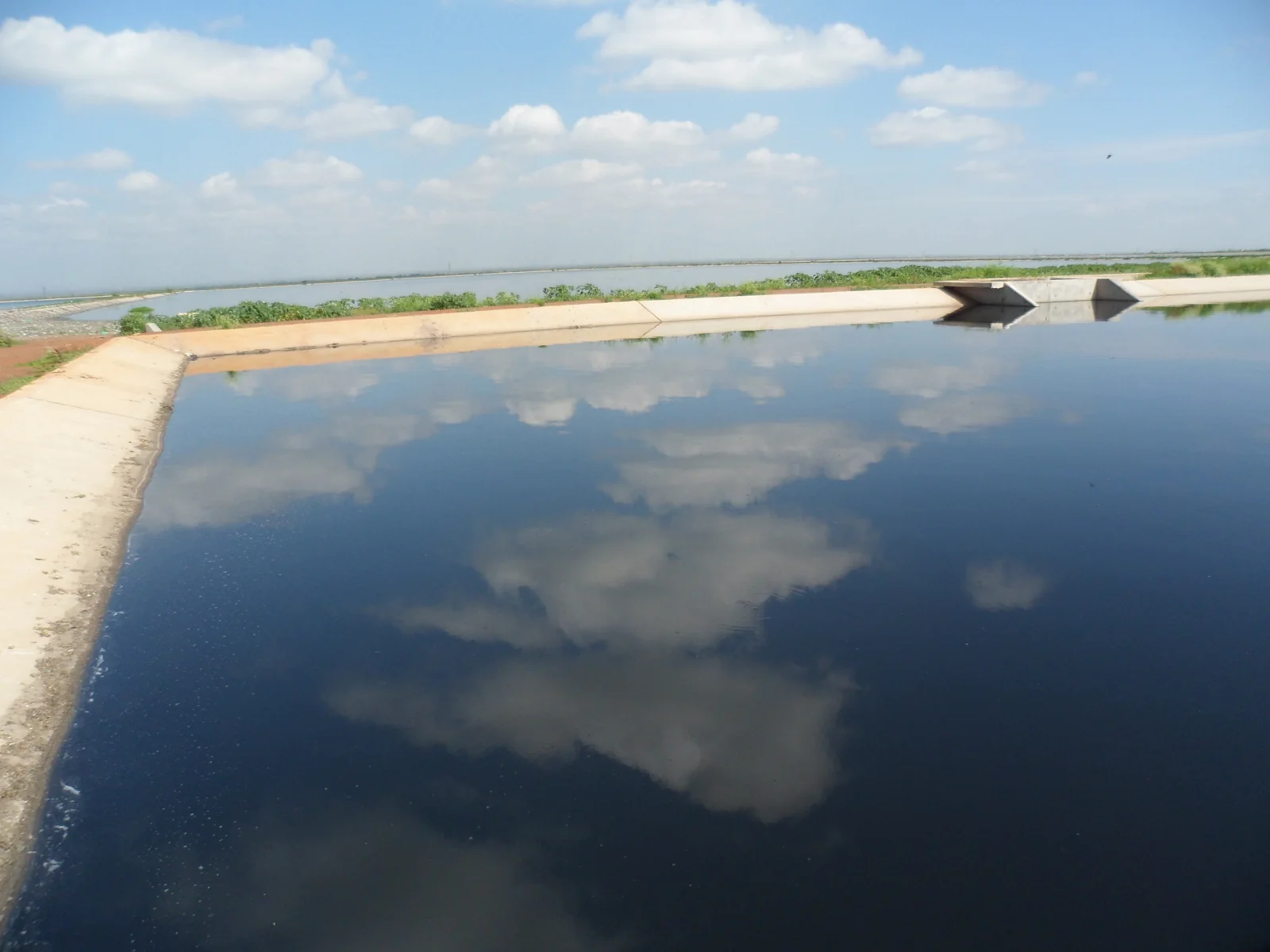
Four families of responses exist, from the most rustic to the most radical. Lagooning, a series of basins where the effluent settles and breaks down, is the dominant solution in Ethiopia and Central America; it costs only land, but with two basins and two days of residence time it treats almost nothing, as the Gidabo shows. Constructed wetlands, planted basins that filter biologically, and filtration by vetiver, a grass whose root system retains and breaks down part of the load, are the two field responses listed by the ICO; once treated, the liquid becomes a biofertilizer in turn.
Their yield depends on sizing: 16 to 20% removal on an undersized wetland in Sidama. Anaerobic biodigesters ferment the effluent and mucilage away from air, recover methane to dry the coffee or to cook, and remove a large part of the COD; Cenicafé designed a modular version of it (SMTA, modular anaerobic treatment system) intended for fermented mucilage, which represents 26% of the total contamination of the process.
The review by Rattan et al. also lists batch aeration as post-treatment, hybrid upflow reactors, chemical flocculation, advanced oxidation processes and co-digestion.
ICO 2024, p. 58; Genanaw et al. 2021; Ulsido et al. 2024; González-Freire & Martínez-Hernández 2022; Rattan et al. 2015The BECOLSUB process, for beneficio ecológico y manejo de subproductos, was developed by Cenicafé, the research center of the Colombian Coffee Growers Federation. Its originality is to take the problem at the source rather than treating the water afterwards.
Three steps make it up. Pulping is done without water. The mucilage, that sticky layer around the bean, is removed mechanically by a mechanical demucilager instead of being fermented then rinsed. And this mucilage is then mixed in a controlled way with the pulp, which absorbs it.
The results are spectacular. Water consumption falls to 0.7 to 1 liter per kilo of dry parchment coffee, against 40 liters in conventional washing, and even below 0.5 liter in the no-discharge version. More than 90% of the pollution generated by the process is retained in the pulp, and the discharged chemical oxygen demand falls by 77.5 to 83.8%.
Deployment follows, and that is what distinguishes BECOLSUB from a prototype: about 20,000 units are installed in Colombia.
They process some 291,000 tonnes of parchment coffee a year. The water that this tonnage would have drunk in conventional washing is simply no longer drawn. That makes 11.4 million m³ saved every year, that much river that stays in the river.
One drawback remains that tasters know well: without fermentation, the cup profile changes. Part of Colombian specialty coffee has refused the process for this reason alone, and it is a real trade-off between water and taste.
And a limit that must also be stated: the pulp loaded with mucilage must then be composted or digested. Without that, the pollution is not eliminated, it is only moved from the stream to the pile.
González-Freire & Martínez-Hernández 2022; patent WO2013114341A2 (modular wet treatment system without water pollution); IntechOpen, Past, Present, and Future of Coffee Crop Sustainability in Colombia; LC ch. 17bIn this plateThe 15 sections
- 01The mass balance, from cherry to drunk bean
- 02Three centuries of drinking the husk: qishr, kisher and Sultana's coffee
- 031922: pulp as fertilizer, alcohol and fuel
- 04Pulp: composition, toxicity and what can be done with it
- 05Cascara, from waste to “novel food”
- 06Mucilage and washing water
- 07Treating the water: lagooning, wetlands, biodigesters, BECOLSUB
- 08Parchment and husks: fuel, biochar, paper, cup
- 09Silverskin: the smallest item, the most industrialized
- 10Spent coffee grounds: composition, phytotoxicity, household uses
- 11Spent coffee grounds in cities: biofuel, logs, cosmetics, activated carbon
- 12Capsules
- 13The carbon footprint of a cup
- 14From line to circle: what blocks and what works
- 15Today (2023-2026)
The table of contents, with the first sentence of each section