From line to circle: what blocks and what works
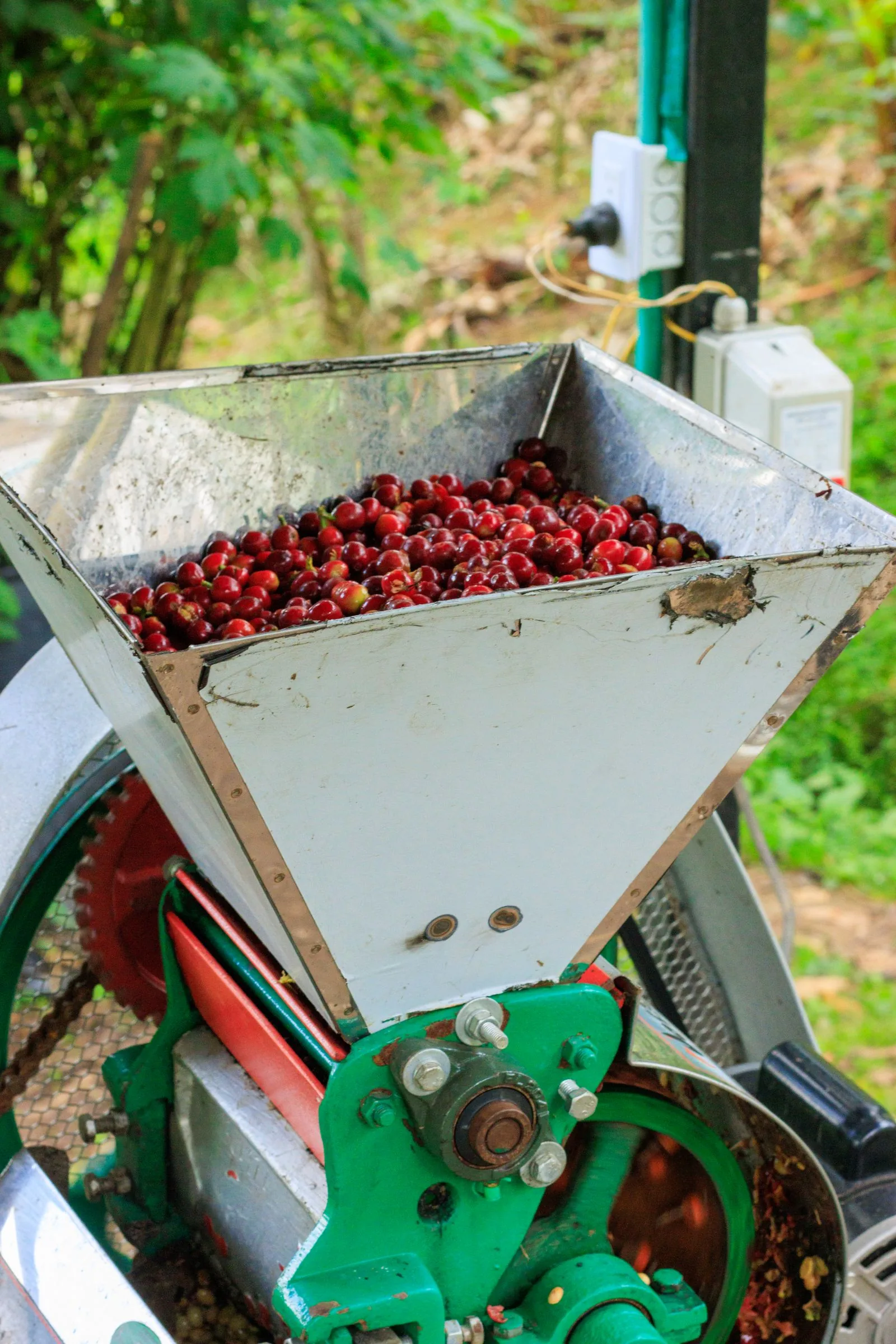
If all this is known, quantified, tested and sometimes commercialized, why does 86% of the weight of the world harvest still end up in piles? First the structure: the pulp comes out wet, in bulk, over a few weeks a year, in rural areas often at altitude, on 12.5 million farms of which 95% are smaller than five hectares, thousands of kilometers from the industries that could use it; one does not build a biomass value chain on a seasonal, perishable and atomized flow unless someone finances the intermediary.
Next the administration: the missing customs codes and the novel food rule. Finally the gap between buy-in and practice: in a sector survey cited by the ICO, out of 322 respondents, only 37% apply a circular practice although the value of the approach is a matter of consensus. Buying in costs nothing; applying costs drying, storage, transport, a partner and a lasting outlet. The Circularity Gap Report 2024 judges only 7.2% of the world economy circular: coffee is not behind, it is average.
ICO 2024, p. 16, 30, 79; ITC, The Coffee Guide, 4th ed. (2021), p. 2; LC ch. 20Where it works, no technical breakthrough is involved. What unblocks it is information, and proximity.
The SISSI project, in Trieste, a roasting city, applies territorial industrial symbiosis. The term covers a simple idea: the waste of one factory serves as raw material for its neighbor. The method has two stages. First the waste flows of a basin are mapped. Then the roasters, who produce silverskin, are linked to the papermakers, chemists or materials manufacturers located next door, who are looking for a plant filler.
The C4CEC in Turin plays on another lever, pooling. This center for the circular economy of coffee was created with the Lavazza Foundation and the Politecnico di Torino. It brings together more than 35 members in a so-called pre-competitive space, that is, a ground where competitors share the research done upstream of products. It is a co-author of the ICO report.
In both cases, what was missing was neither a process nor a machine. It was a list: who produces what, and who would need it.
The ICO presents the shift from the linear chain to the circle first as a source of income for producers. It is the only viable angle, because the producer is the one who would pay for the drying, storage and transport of this material. Without revenue on the other side, the producer has no reason to take it on.
The order of magnitude makes it concrete. A farm that sells two tonnes of green coffee produces eight to twelve tonnes of the rest. One truckload a year, in short, pushed behind the building and appearing on no paper (see the economics).
ICO 2024, p. 15-16, 33, 80; ico.org, presentation of the Coffee Development Report 2022-23, accessed on 09/07/2026; LC ch. 20In this plateThe 15 sections
- 01The mass balance, from cherry to drunk bean
- 02Three centuries of drinking the husk: qishr, kisher and Sultana's coffee
- 031922: pulp as fertilizer, alcohol and fuel
- 04Pulp: composition, toxicity and what can be done with it
- 05Cascara, from waste to “novel food”
- 06Mucilage and washing water
- 07Treating the water: lagooning, wetlands, biodigesters, BECOLSUB
- 08Parchment and husks: fuel, biochar, paper, cup
- 09Silverskin: the smallest item, the most industrialized
- 10Spent coffee grounds: composition, phytotoxicity, household uses
- 11Spent coffee grounds in cities: biofuel, logs, cosmetics, activated carbon
- 12Capsules
- 13The carbon footprint of a cup
- 14From line to circle: what blocks and what works
- 15Today (2023-2026)
The table of contents, with the first sentence of each section