Cascara, from waste to “novel food”
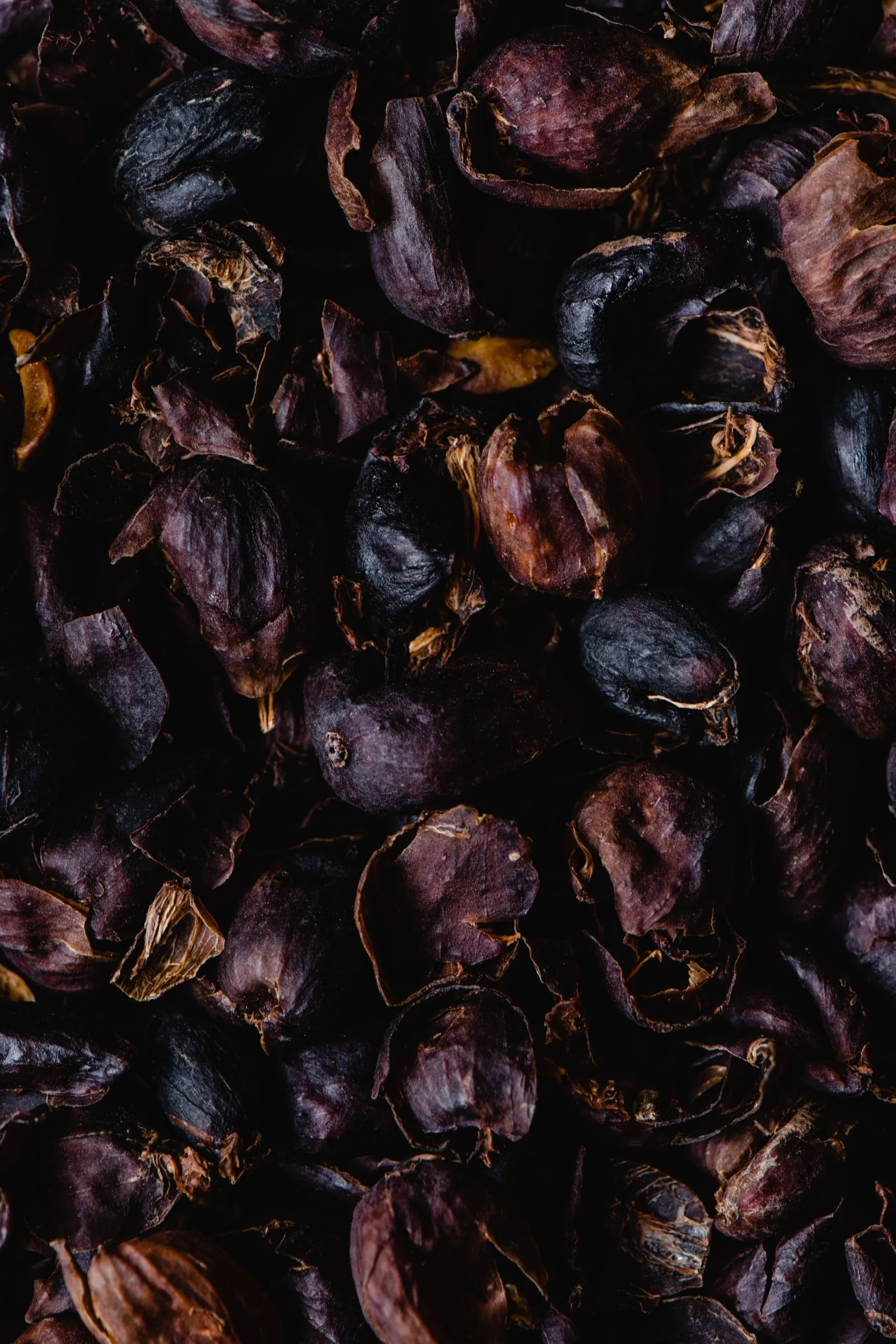
The Spanish word cáscara means the rind or husk. In coffee, it names the dried pulp of the cherry, that is, the material that the station regards as a co-product of processing and most often composts.
Drinking it requires a protocol, because the material is dry and whole. The one taught in professional training calls for 3 g of unground cascara, 5 minutes or more at 90 °C, in 100 ml of water. The pulp is not crushed: it steeps.
The result is amber and very sweet, with hibiscus and honey notes. It becomes sweeter as it cools, which also makes it suited to iced service: the cup does not degrade as it cools, it gains.
The document specifies the order of things, and it is the reverse of what one thinks. The drink was originally consumed in producing countries like Yemen. It became a coffee shop fashion only “recently.”
professional training document, La cáscara, p. 2The commercial turning point dates from January 10, 2017. Starbucks launched the Cascara Latte that day, made with espresso, milk and cascara syrup. It was its first new drink of the year, born from a barista competition held at the Reserve Roastery in Seattle in September 2016. The chain presents it as “the fruit of the coffee cherry.”
On the European market, the same drink ran into a regulatory wall. The EU Regulation 2015/2283 on novel foods sets a date rule: a product not significantly consumed in the Union before May 15, 1997 must be authorized before it is put on sale. Cascara fell into this case.
The authorization came with Implementing Regulation (EU) 2022/47 of January 13, 2022. It authorizes the placing on the market of dried cherry pulp of Coffea arabica and/or Coffea canephora, and of its infusion, as a traditional food from a third country.
This text does not come from nowhere: it follows two notifications from industry. That of the Société des Produits Nestlé dates from May 6, 2020, that of Luigi Lavazza from November 13, 2020. EFSA delivered technical reports on these files on May 27 and September 2, 2021, without identifying a risk.
What the regulation covers is broader than the pulp alone. It targets the skin, the pulp, the mucilage, the parchment and part of the silverskin. The authorized uses are infusions, coffee extracts and substitutes, and ready-to-drink non-alcoholic beverages.
The label is also regulated, for a simple reason: cascara contains caffeine. It must bear “coffee cherry pulp” or “cascara.” Above 150 mg of caffeine per liter, it must add the statement “High caffeine content, not recommended for children and pregnant or breastfeeding women.”
A second file followed the same path. A separate EFSA opinion, delivered in 2022 on the “dried coffee husk (cascara)” of arabica and filed by another applicant, also concludes that there is no safety concern.
Tea & Coffee Trade Journal, “Starbucks launches limited edition Cascara Latte,” January 2017; Implementing Regulation (EU) 2022/47 of 01/13/2022, OJEU, eur-lex.europa.eu/eli/reg_impl/2022/47; EFSA Journal 2022, 20, 7085, “Safety of dried coffee husk (cascara) from Coffea arabica L. as a Novel food”The paradox is twofold. First, a drink prepared for centuries in Yemen is classified as “new” by a regulation that dates novelty from its own territory; this is not an aberration, it is the definition, but the country with the oldest use of the product is the one that has the most trouble selling it. Next, the ICO notes that the application of the novel food rule to cascara varies greatly from one country to another, which makes export uncertain: the same bag is legal here, blocked there.
And there is no customs code dedicated to coffee by-products: parchment, skin and substitutes are drowned in the generic coffee code, so that no trade statistic builds up, no investor can measure the market and the market does not develop. The ICO recommends the creation of specific harmonized codes.
ICO 2024, box C.1, p. 79; LC ch. 20In this plateThe 15 sections
- 01The mass balance, from cherry to drunk bean
- 02Three centuries of drinking the husk: qishr, kisher and Sultana's coffee
- 031922: pulp as fertilizer, alcohol and fuel
- 04Pulp: composition, toxicity and what can be done with it
- 05Cascara, from waste to “novel food”
- 06Mucilage and washing water
- 07Treating the water: lagooning, wetlands, biodigesters, BECOLSUB
- 08Parchment and husks: fuel, biochar, paper, cup
- 09Silverskin: the smallest item, the most industrialized
- 10Spent coffee grounds: composition, phytotoxicity, household uses
- 11Spent coffee grounds in cities: biofuel, logs, cosmetics, activated carbon
- 12Capsules
- 13The carbon footprint of a cup
- 14From line to circle: what blocks and what works
- 15Today (2023-2026)
The table of contents, with the first sentence of each section