Spent coffee grounds: composition, phytotoxicity, household uses
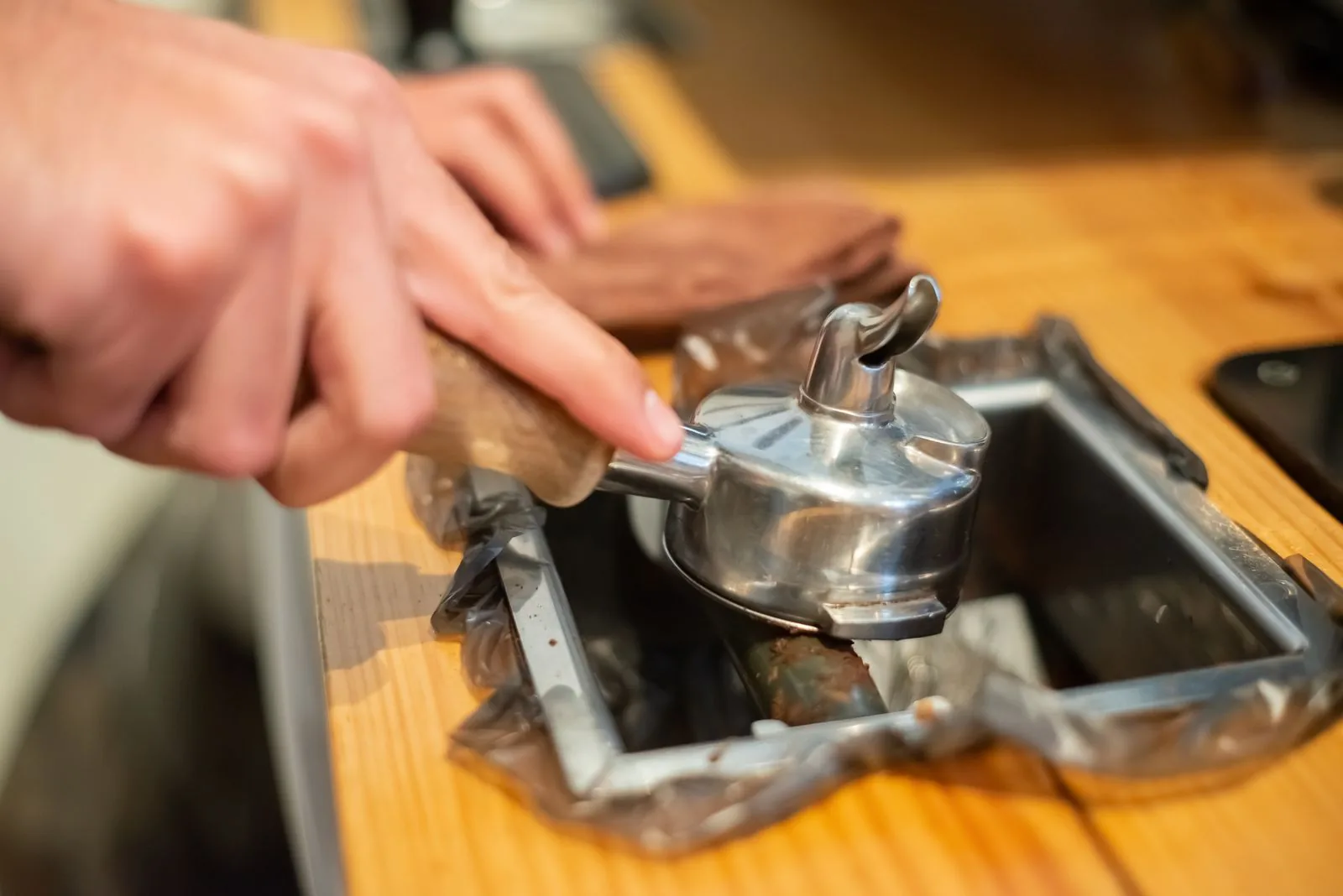
The spent coffee grounds no longer belong to the cherry but to this story. They are the residue of the last subtraction, that of extraction (see the cup): what the water has not dissolved stays in the basket.
How much does this deposit weigh? The two available figures do not match. The ICO puts it at 11.4 million tonnes a year. The review by Lee et al. (2023) uses 6 million tonnes, relying on the instant coffee industry. In that industry, each tonne of green coffee leaves nearly 650 kg of spent grounds, and each kilo of instant coffee more than 2 kg of wet grounds. Nothing here makes it possible to reconcile them.
Its composition, on a dry-matter basis, comes down to a few items.
- Lipids6 to 38.6%. Spent grounds from instant coffee or canephora keep less than espresso grounds from arabica.
- Cellulose8.6 to 13.3%.
- Hemicellulose30 to 40%.
- Lignin25 to 30%.
- Proteins11.5 to 18%.
- Caffeine0.02 to 0.4%, what remains after the water has passed.
All together this gives a calorific value of about 5,000 kcal/kg. It is this figure, and not fine chemistry, that gave rise to the log and pellet industries.
These values are not fixed. They vary with the extraction rate, the method, the roast profile and the residual moisture. The grounds of a tight espresso and those of a long filter do not contain the same thing, and whoever buys spent grounds therefore buys a variable material.
ICO 2024, p. 28, 71-73; Lee et al., Molecules 2023 (PMC10146170); Arya et al. 2021; LC ch. 20Fresh spent grounds are not a ready-to-use fertilizer. Their high carbon/nitrogen ratio means soil microorganisms consume nitrogen to break them down and make it temporarily less available; they are acidic; their chlorogenic acids inhibit germination and growth, and their caffeine and tannins degrade soil microbial activity when applied in bulk. Spread in a thick layer at the foot of a seedling, they do the opposite of what is expected.
Composted, or given to the worms of a vermicomposter, and in a low proportion in the mix, they work. The three uses transferable without equipment that the ICO explicitly cites are soil amendment after composting, oyster mushroom growing on substrate and raw exfoliant. Oyster mushrooms take advantage of a unique property of spent grounds: they come out of the coffee maker pasteurized, which removes the most energy-intensive step of the cultivation; GroCycle, founded in 2011 in Devon, claims more than 75,000 kg of spent grounds recycled into more than 20 t of mushrooms.
Lee et al. 2023; ICO 2024, p. 71-72; grocycle.com, “Growing mushrooms in coffee grounds,” accessed on 09/07/2026; LC ch. 20In this plateThe 15 sections
- 01The mass balance, from cherry to drunk bean
- 02Three centuries of drinking the husk: qishr, kisher and Sultana's coffee
- 031922: pulp as fertilizer, alcohol and fuel
- 04Pulp: composition, toxicity and what can be done with it
- 05Cascara, from waste to “novel food”
- 06Mucilage and washing water
- 07Treating the water: lagooning, wetlands, biodigesters, BECOLSUB
- 08Parchment and husks: fuel, biochar, paper, cup
- 09Silverskin: the smallest item, the most industrialized
- 10Spent coffee grounds: composition, phytotoxicity, household uses
- 11Spent coffee grounds in cities: biofuel, logs, cosmetics, activated carbon
- 12Capsules
- 13The carbon footprint of a cup
- 14From line to circle: what blocks and what works
- 15Today (2023-2026)
The table of contents, with the first sentence of each section