Pulp: composition, toxicity and what can be done with it
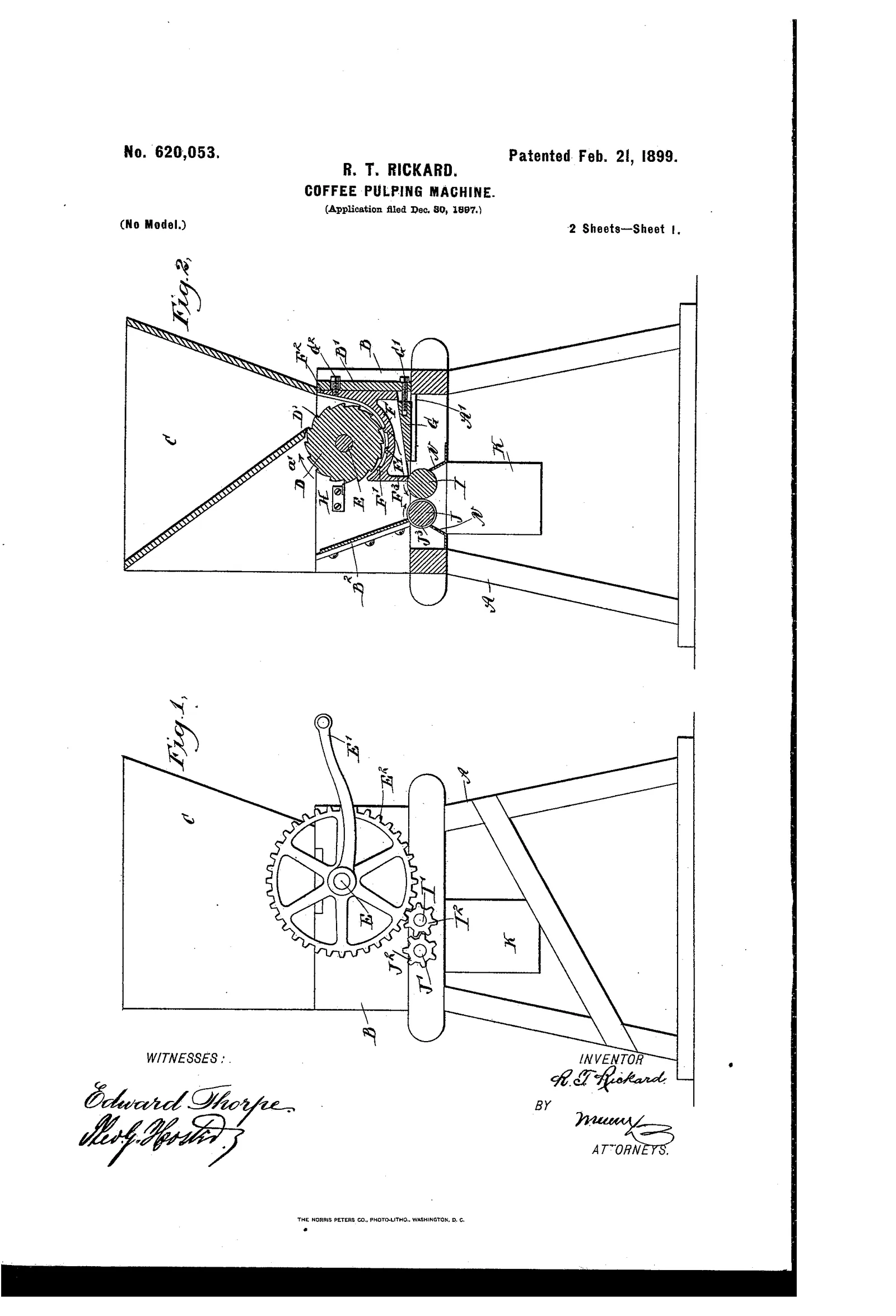
The pulp (exocarp and mesocarp) comes out wet, sugary, all at once during the weeks of harvest, and begins to ferment the same day; it is the biggest item and the hardest to handle. Dried, it contains about 10.6% crude protein and 48% NDF fiber on a dry-matter basis; modern analyses of arabica find 0.69 to 0.77% caffeine in it, chlorogenic acid as the dominant phenolic, and the agronomic literature adds tannins and polyphenols in variable amounts, as well as a lot of potassium.
Caffeine, tannins and chlorogenic acids are molecules that the plant makes to hinder its competitors and predators; spread fresh in a thick layer, the pulp inhibits germination, acidifies and immobilizes nitrogen for the time it takes to decompose. This is why all the routes begin with a degradation step: composting, ensiling, fermentation or anaerobic digestion.
Feedipedia (INRAE-CIRAD-AFZ-FAO), sheet Coffee pulp and hulls; Duangjai et al., Integrative Medicine Research 2016; Arya et al., Journal of Food Science and Technology 2021 (review); ICO 2024, p. 57-59Animal feed. The route has been documented since the work of INCAP in Guatemala. Then comes the synthesis by Braham and Bressani, published by Canada's International Development Research Centre in 1979, then taken up by Bressani in 1991. Feeding the pulp to livestock is therefore nothing new.
What limits the dose is not the nutritional value but the defensive chemistry described above. The inclusion rates retained by Feedipedia are capped by caffeine and tannins, and they vary a great deal from one species to another.
- Dairy cows15 to 25% of the concentrate.
- Heifers18%.
- Steers20 to 42% of the ration, the highest ceiling on the list.
- Pigs5 to 18% when growing, 9.5 to 20% when finishing.
- Broilers2.5% at most: beyond 5%, performance drops.
- Sheep15 to 25%.
To exceed these ceilings, the troublesome molecules have to be removed, and three detoxification routes are described. The physical route washes the pulp by percolation with water. The chemical route proceeds by extraction with alcohol. The microbiological route entrusts the work to microorganisms, by fermentation or ensiling.
If only one figure is kept, the ICO proposes 20% of the ration as an order of magnitude. Recent trials point the same way: in Pelibuey lambs in 2023, in goats in 2022, ensiled or dried pulp remains digestible at these levels.
Braham & Bressani, Coffee Pulp: Composition, Technology and Utilization, IDRC 1979; Bressani 1991; Feedipedia, sheet Coffee pulp and hulls; Munguía-Ameca et al. 2023 (PMC10668683); Maxiselly et al. 2022 (PMC9608610); ICO 2024, p. 58Compost and vermicompost. This is the most widespread route because it requires only an area and time: the pulp returns to the plot as a biofertilizer. Its advantage is to close the mineral cycle on the farm itself, where the nitrogen and potassium exported by the harvest are lacking; its drawback is leaching, an uncovered pile of pulp releasing in the rainy season an acid juice whose organic load joins that of the washing water. Biogas. Anaerobic digestion, fermentation without oxygen that recovers a fuel gas, applies to pulp, mucilage and husks; continuous-reactor trials on Ethiopian husks and pulp (2018) show that process stability depends on a supply of trace elements, the material alone being unbalanced. Mushrooms. The pulp, like the spent coffee grounds, serves as a substrate for oyster mushrooms: the reported biological efficiency ranges from 125 to 138%, sometimes 152%, and about 73% of the substrate is consumed, the rest becoming a soil amendment.
ICO 2024, p. 57-59; Chala et al., 2018 (PMC6999297); Murthy & Manonmani 2008 and Martínez-Carrera et al. 2000, cited by Arya et al. 2021In this plateThe 15 sections
- 01The mass balance, from cherry to drunk bean
- 02Three centuries of drinking the husk: qishr, kisher and Sultana's coffee
- 031922: pulp as fertilizer, alcohol and fuel
- 04Pulp: composition, toxicity and what can be done with it
- 05Cascara, from waste to “novel food”
- 06Mucilage and washing water
- 07Treating the water: lagooning, wetlands, biodigesters, BECOLSUB
- 08Parchment and husks: fuel, biochar, paper, cup
- 09Silverskin: the smallest item, the most industrialized
- 10Spent coffee grounds: composition, phytotoxicity, household uses
- 11Spent coffee grounds in cities: biofuel, logs, cosmetics, activated carbon
- 12Capsules
- 13The carbon footprint of a cup
- 14From line to circle: what blocks and what works
- 15Today (2023-2026)
The table of contents, with the first sentence of each section