Kenya and soaking
Why soak after washing?
Start the scene or choose a stage. The animation simplifies the mechanism; what follows gives the details and the available references.
The coffee is pulped, then ferments for 24 to 72 hours.
Read the stages without animation
- Ferment 24 to 72 hoursThe coffee is pulped, then ferments for 24 to 72 hours.
- WashThe washing carries away the mucilage that the fermentation has broken down, as in any washed process.
- Soak 12 to 24 hours in clean waterThen comes an additional soak of 12 to 24 hours in clean water. People speak of double fermentation, which is a stretch: the second phase is mostly a soak. It is said to remove the last mucilage residues and the by-products of the first fermentation, which is consistent with the Yunnan trials on soaking.
- Wait for room on the areasThe origin reported by the press and by traders is more prosaic: soaking is said to have been born to store washed coffee while waiting for room to free up on the drying areas.
To remember: A logistical constraint produces a gesture, the gesture a taste, the taste a national signature.
In history: The logistical origin of soaking has no decisive historical proof: press and traders, medium level.
Read the full article and its sources ↓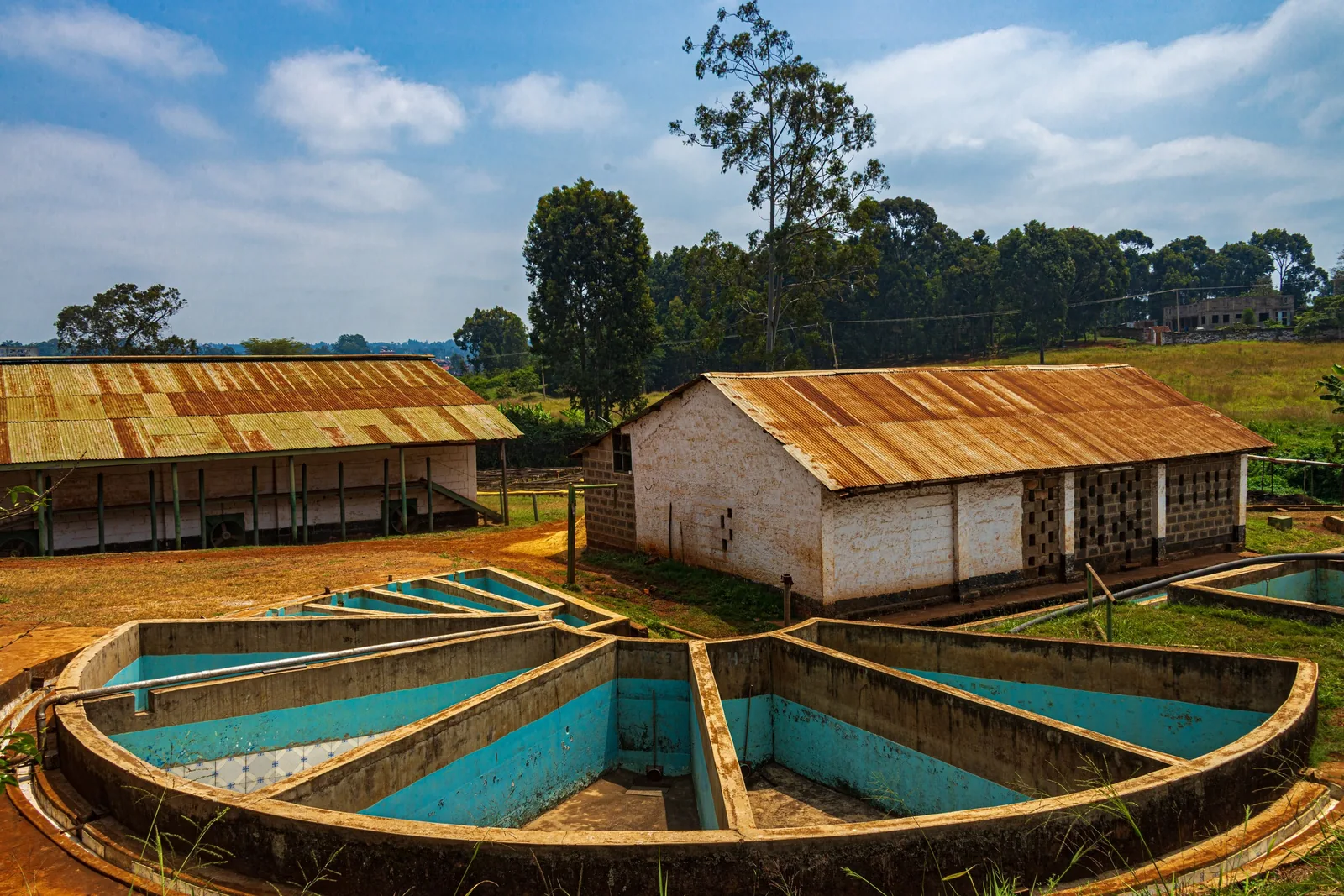
Pulping, first fermentation, washing, second short fermentation on the film of mucilage left on the bean, channel washing, then a 12 to 24 hour soak in clean water. People speak of double fermentation for the two tanks; counting the soak in it would be a stretch, since there is no mucilage left to ferment and the water is renewed. The justification claimed is the removal of the last mucilage residues and of the by-products of the first fermentation, hence the clarity and acidity of Kenyan coffees, which is consistent with what the Yunnan trials measure on soaking.
The origin reported by the press and by traders is more prosaic: soaking is said to have been born as a way of storing washed coffee while waiting for room to free up on the drying areas. A logistical constraint produces a gesture, the gesture a taste, the taste a national signature.
Trade press and traders, medium level; Zhang et al. 2019 for the effect of soaking; LC ch. 17b