Monsooned coffee, an accident turned into a requirement
Why re-moisten a bean that is already dry?
Start the scene or choose a stage. The animation simplifies the mechanism; what follows gives the details and the available references.
On the Malabar coast, the starting point is an already dry coffee, sorted into grades A or AA.
Read the stages without animation
- Start from an already dry coffeeOn the Malabar coast, the starting point is an already dry coffee, sorted into grades A or AA.
- Expose it to the monsoonIt is spread in layers ten to fifteen centimeters thick in large open sheds exposed to the winds of the southwest monsoon, from June to September: the opposite of a dryer. It is raked about every three hours, so that the whole pile takes in the humid air.
- The bean takes the water backThese winds are saturated with water: instead of continuing to dry, the bean climbs back to 14 or 15% moisture in about ten days.
- Bag, unbagThe complete cycle, with its repeated bagging and unbagging, lasts twelve to sixteen weeks, until the bean turns straw yellow, between 13 and 14.5% moisture.
To remember: The whole process consists of re-moistening, slowly and under control, a coffee that had been dried.
In history: Six months of crossing under sail are said to have moistened the coffee: a widespread story, backed by no primary source.
Read the full article and its sources ↓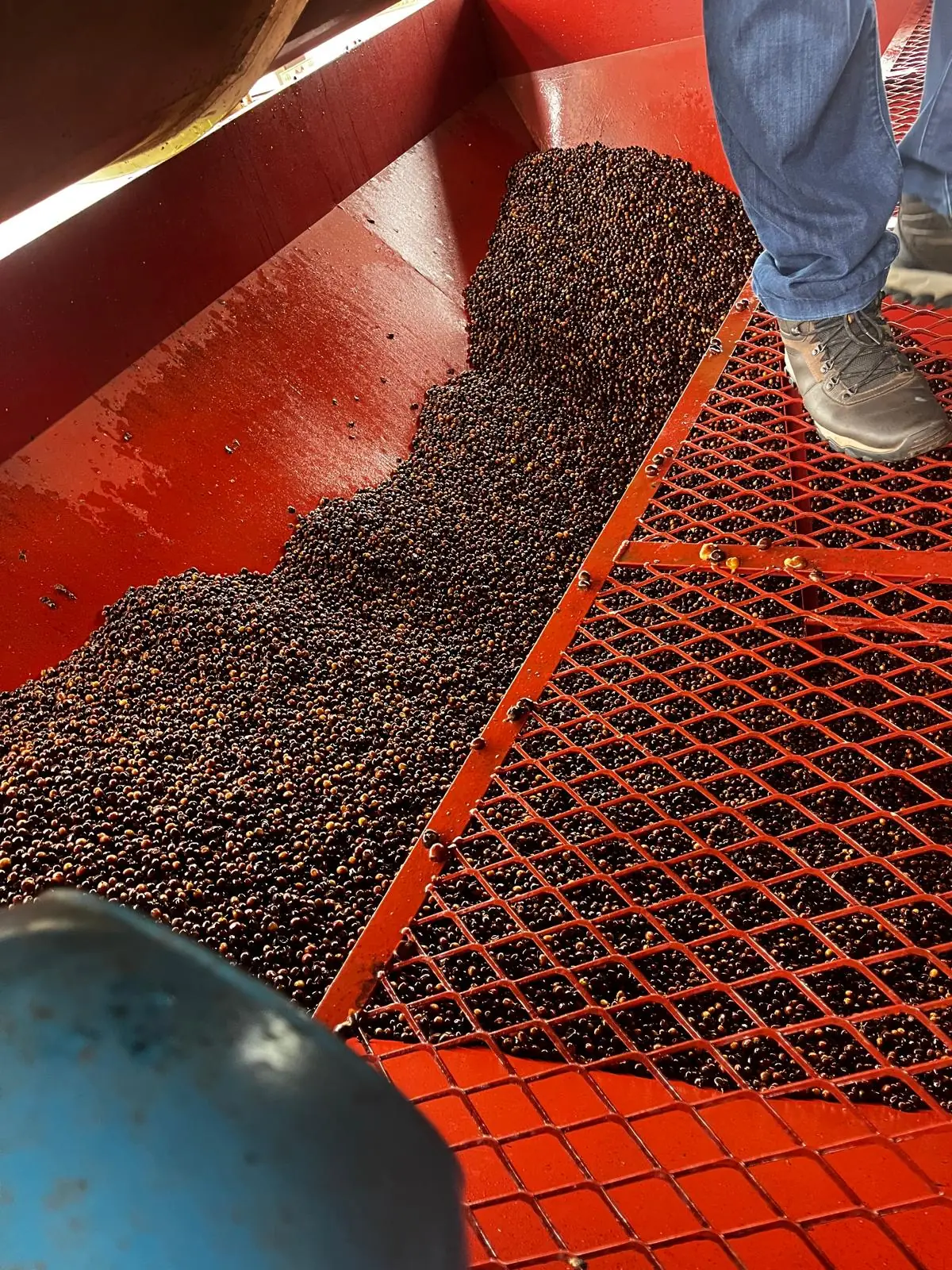
On the Malabar coast, already dry coffee, sorted into grades A or AA, is taken and spread in layers ten to fifteen centimeters thick. The place is not a dryer but its opposite: large open sheds exposed to the winds of the southwest monsoon, from June to September. It is raked about every three hours, so that the whole pile takes in the humid air and not only the surface.
These winds are saturated with water. Instead of continuing to dry, the bean therefore climbs back to 14 or 15% moisture in about ten days. The complete cycle, with its repeated bagging and unbagging, lasts twelve to sixteen weeks, until the bean turns straw yellow, between 13 and 14.5% moisture. The whole process consists of re-moistening, slowly and under control, a coffee that had been dried.
The product is protected by a geographical indication of Karnataka. Its official documentation could not be consulted directly, which leaves the values above without an institutional source.
What remains is the story, which circulates everywhere. Six months of crossing under sail are said to have moistened and discolored the coffee; the European buyers are then said to have refused the “normal” coffee that arrived by steamer, demanding the taste they knew. It is found word for word in catalogs, and it is backed by no primary source: no trader's correspondence, no register, no administrative report. An attractive hypothesis, unverified.
Its neighbor Old Brown Java, aged two to three years in a warehouse exposed to the same winds, is even worse off: it has only roasters' pages.
professional training document, monsooned coffee, p. 2-3; Indian geographical indication (not consulted); LC ch. 10 and 17b