Carbonic maceration
What distinguishes carbonic maceration?
Start the scene or choose a stage. The animation simplifies the mechanism; what follows gives the details and the available references.
Borrowed from the vinification of Beaujolais, carbonic maceration differs from an ordinary anaerobic fermentation by two things, not one. The first: the fruit stays whole, and that is the key of the mechanism.
Read the stages without animation
- Keeping the fruit wholeBorrowed from the vinification of Beaujolais, carbonic maceration differs from an ordinary anaerobic fermentation by two things, not one. The first: the fruit stays whole, and that is the key of the mechanism.
- Injecting CO₂ to drive out the airThe second: carbon dioxide is actively injected to drive out the oxygen, instead of being produced gradually by fermentation.
- The fruit ferments from the insideUnder an atmosphere of carbon dioxide, the cells of the fruit switch to an oxygen-free metabolism: it is the enzymes of the cell itself, with no microbe at all, that break down the sugars. Malic acid decreases, ethanol and higher alcohols appear. The values that circulate, 1.5 to 2% ethanol, are measured on grapes.
- Then the skin gives wayThe skin eventually gives way, and ordinary microbial fermentation takes over. This theory comes entirely from enology: on coffee, no peer-reviewed study documents this biochemistry. In the trade, the word often designates a lot that is simply anaerobic, with no injection and no whole cherry.
To remember: Active CO₂ injection and the whole fruit set it apart from an ordinary anaerobic fermentation; the fruit that ferments from the inside is a wine theory, not documented on coffee.
In history: Saša Šestić brought it to coffee with a Colombian lot at the 2015 world barista championship, which he won.
Read the full article and its sources ↓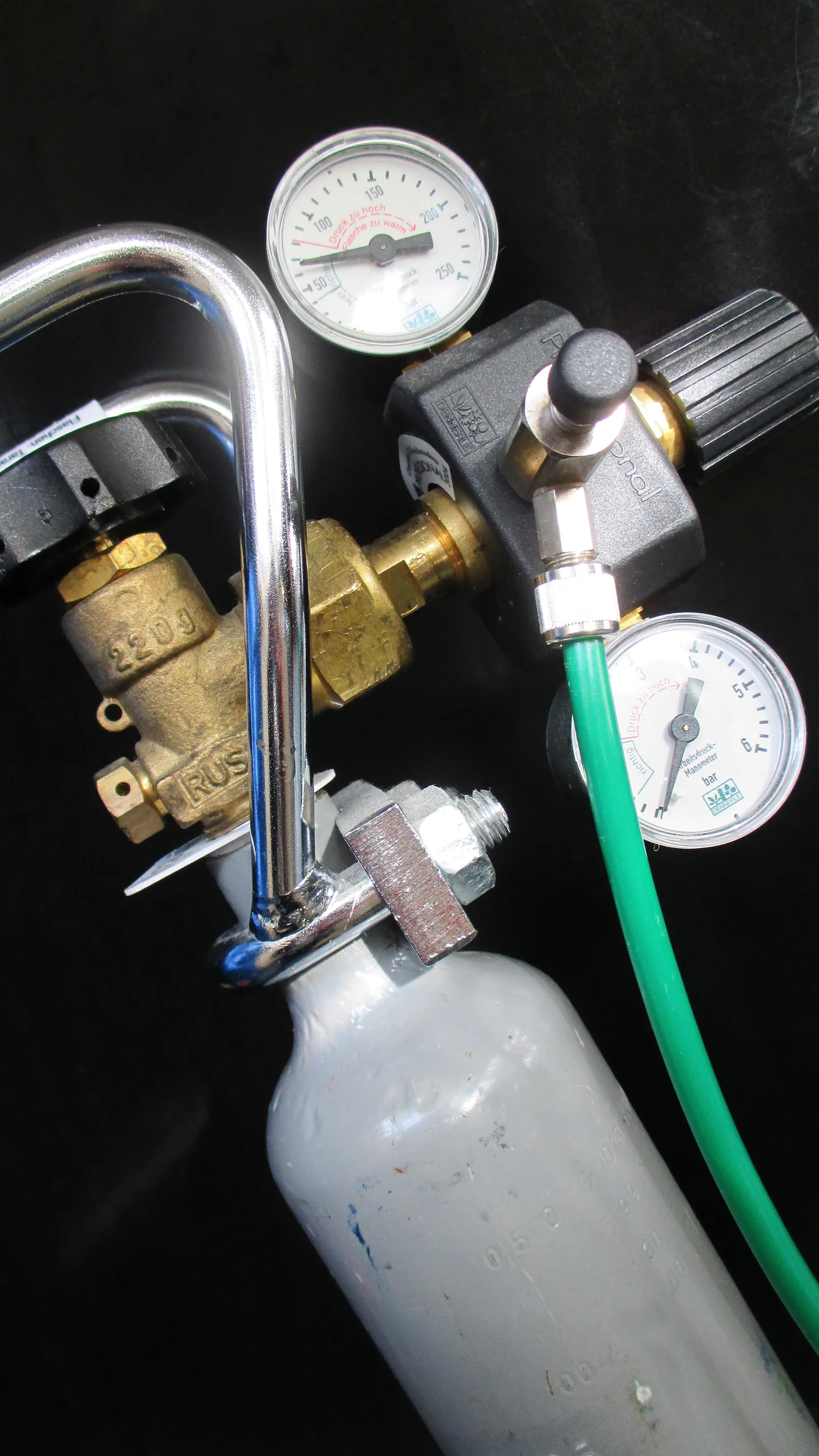
Borrowed from Beaujolais winemaking, brought to coffee by Saša Šestić with a Colombian lot at the 2015 World Barista Championship, which he won. It differs from an ordinary anaerobic process in two ways, not one: CO₂ is actively injected to drive out the oxygen instead of being produced by the fermentation, and the fruit stays whole.
The whole fruit is the key to the mechanism. Under a CO₂ atmosphere, the cells of the fruit switch to an intracellular anaerobic metabolism, without microbial intervention: it is the enzymes of the cell itself that break down the sugars. Malic acid decreases, ethanol and higher alcohols appear. Then the skin gives way, and ordinary microbial fermentation takes over.
This theory is solid and well described, but it comes entirely from enology. On coffee, no peer-reviewed study documents this intracellular biochemistry. The values that circulate, ethanol of 1.5 to 2% by volume, succinic, fumaric and shikimic acids, are measured on grapes.
In commercial practice, “carbonic maceration” moreover very often designates a simply anaerobic lot, without injection and without whole cherry. No body defines the term, so nothing prevents writing it.
Trade press on Šestić 2015 (medium level, consensual); enological literature for the mechanism; LC ch. 17b