Fine robustas and the CQI protocol
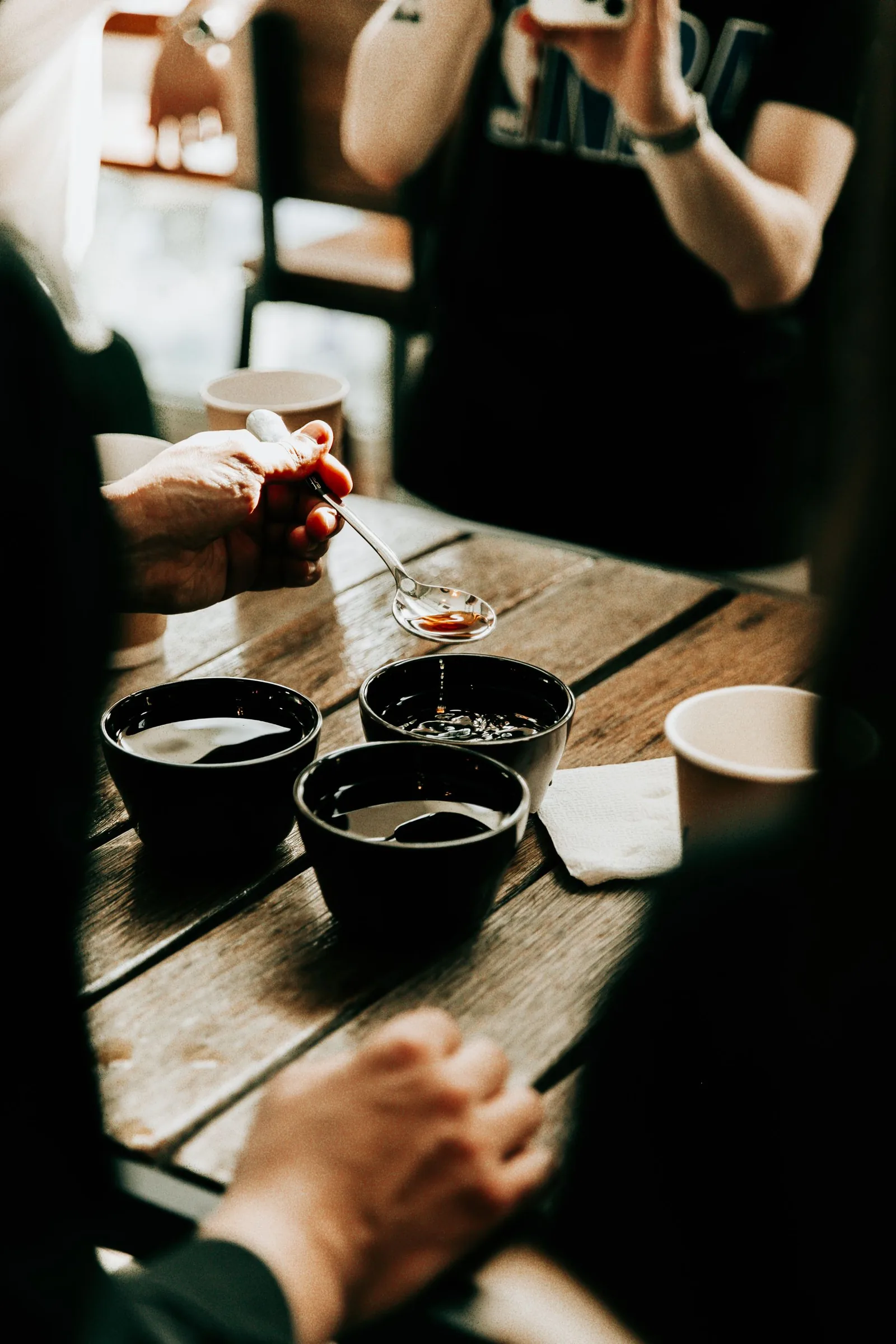
The idea that a canephora can be good is not new. The tastings by Viehoever and Lepper, in 1922, were already “clearly favorable,” and Cramer noted in Java that some preferred the Kouilou. What was missing was not taste, it was a grid: without a common scale, a well-worked lot sells at the price of a mediocre one.
In 2009, the Coffee Quality Institute convened a tasting symposium in Uganda. Kenneth Davids, who took part, describes what he finds in the cup. A “hazelnut neutrality.” Low acidity. Modest aromas of spice and chocolate. A fatty body.
He also tells where the operation came from. Ted Lingle, director of the CQI, set it up with the support of USAID “on behalf of canephora growers around the world.” The aim is stated bluntly: create criteria that reward work well done.
What follows is institutional. The first “Q Robusta” course, specialized in evaluating fine robustas, was held in Uganda in 2010 with the UCDA. The CQI-UCDA document “Fine Robusta Standards and Protocols” sets its rules. That all this happens in Uganda is no accident: it is the country that was already selling its high-altitude canephora at a premium.
Ukers 1922, ch. XV, p. 253-254; Kenneth Davids, “CQI Takes on the Robusta Taboo,” Coffee Review, October 26, 2009; CQI/UCDA, Fine Robusta Standards and Protocols (document accessed via Scribd, September 7, 2026)The protocol scores ten attributes out of 100 points. The “R Grader” sheet is not the arabica one. It adds two ratios specific to the species, salt/acid and bitter/sweet, and gives more weight to mouthfeel. The grid therefore follows what is particular about canephora, more bitterness and less sugar than arabica.
The thresholds are simple. From 80 to 84.99 points, you hold a Fine Robusta. From 75 to 79.99, a Premium Robusta. Below 70, a commodity coffee, that is, a coffee paid at the exchange price and not for its cup.
The green must be free of primary defects and have no more than five secondary defects in 350 grams. The roasted tolerates no more than three quakers in 100 grams, those beans that stayed pale in the roast because they were immature. These thresholds are those reproduced by professional and commercial pages: the original document is not freely accessible, and this is a limit that must be taken into account.
The institution, for its part, has changed hands. The CQI's Q Robusta program ended on September 30, 2025, with the Specialty Coffee Association taking over the Q Grader certification as of October 1st, 2025.
In the field, the grid has above all served as a benchmark for breeders, who finally had a score to aim at. The Brazilian BRS 2314 reaches 87.2 points, and the Incaper varieties of 2013 stand between 77.20 and 79.01. India, for its part, built its strategy on a shade-grown, intercropped canephora sold as a specialty. The Ugandan manual says it in its own way: well managed and well processed, canephora “can be a product for specialty markets.”
Hello5 Coffee, Origin Coffee Cambodia (September 3, 2026) and Helena Coffee, pages on the CQI/UCDA standard (level: commercial pages); WCR 2025, p. 105; Ferrão et al. 2020 via the Jequitibá sheet; Kawuki et al. 2026, § 2.2 and 2.6; UCDA 2019, § 2.0, p. 9In this plateThe 19 sections
- 01A species, not a variety
- 02Discovery and naming, 1880-1900
- 03Java, 1900-1919: rust paves the way for canephora
- 04The genome: diploid, allogamous, parent of arabica
- 05Two groups, then eight: genetic geography
- 06Selecting an allogamous plant: five strategies in a century
- 07Kouilou, Niaouli, Conilon: the Guinean and Atlantic lineage
- 08Uganda: the species on its native ground
- 09Coffee wilt disease, 1927-1993
- 10Agronomy: what the species requires
- 11Propagating, irrigating, cutting back: the grower's options
- 12Harvest and processing: Kiboko and washed
- 13A century of market share
- 14Vietnam since 1990
- 15Fine robustas and the CQI protocol
- 16Price: the 2024-2025 record
- 17The Timor Hybrid: what canephora gives arabica
- 18What changed, 2023-2026
- 19Archive plates
The table of contents, with the first sentence of each section