A species, not a variety
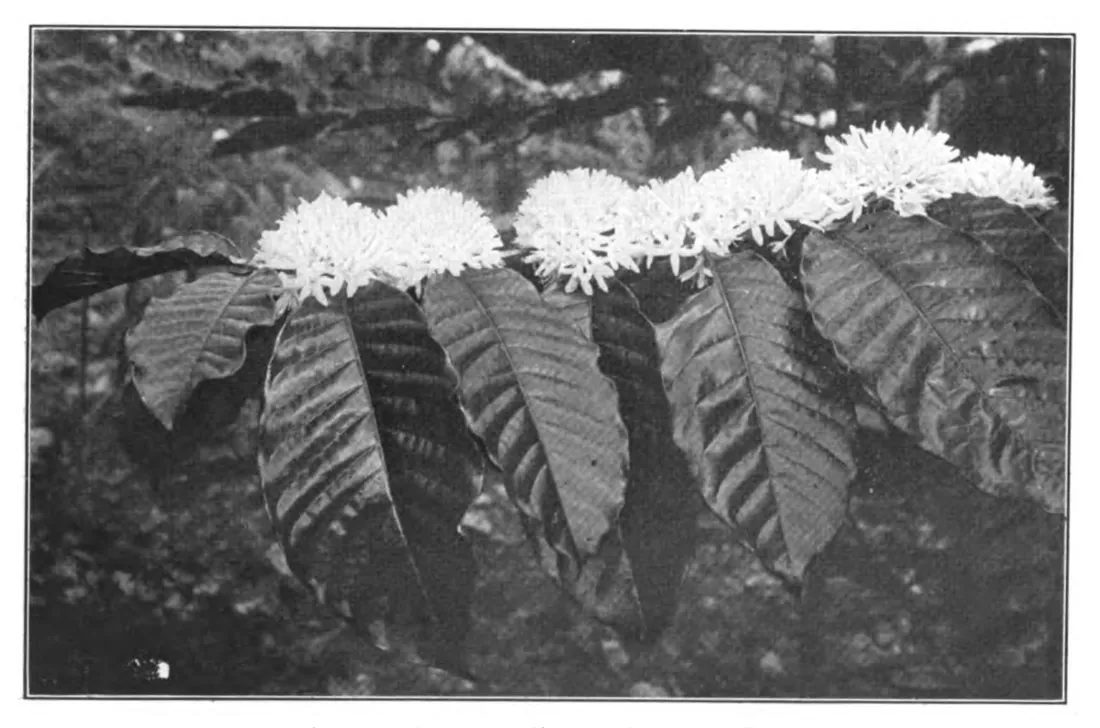
In trade, the word robusta designates all the production of Coffea canephora. In botany, it names only one of its groups, that of the Congo basin. The commercial word therefore covers far more than the botanical word.
The imprecision dates from the very birth of the name, because trade christened the plant before botany had ruled. As early as 1922, Ukers places half a dozen different forms under “robusta group.” The stations of Java exported them together, under a label that spoke of the embarrassment: “robusta-achtigen,” the “ones similar to robusta.”
The American pharmacognosist Viehoever came to no other conclusion: “the botanical origin is not entirely clarified,” and the classification of the varieties of the group “deserves further study.”
Coste puts things in order in 1955. He places canephora, arabica and congensis in a single subsection, the Erythrocoffea, a subsection gathering species held to be close relatives. And he notes that cultivated canephora comes under three names: Robusta, Kouillou and Niaouli.
Between arabica and canephora there is a species barrier, that is, the two do not cross freely. It rests on a count made by Piza in Brazil in 1929: 44 chromosomes in one, 22 in the other. Arabica carries twice as many.
Ukers 1922, ch. XV, p. 253-254 and ch. XXII, p. 371; Coste 1955, p. 20-22 and 331; LC ch. 4What everyday vocabulary reduces to an opposition of quality (the fine and the strong, the expensive and the cheap) therefore covers a difference of plant. Going from Bourbon to Typica is changing model within a species; going from arabica to canephora is changing species, chromosome number, mode of reproduction and bean composition. The rest of this plate rests on this distinction, and the atlas respects it: the variety map treats canephora as a species, with its Congolese, Guinean and Ugandan groups, the Conilon and the national clones.
LC ch. 4 and ch. 22 (glossary, entries “Canephora” and “Robusta”)In this plateThe 19 sections
- 01A species, not a variety
- 02Discovery and naming, 1880-1900
- 03Java, 1900-1919: rust paves the way for canephora
- 04The genome: diploid, allogamous, parent of arabica
- 05Two groups, then eight: genetic geography
- 06Selecting an allogamous plant: five strategies in a century
- 07Kouilou, Niaouli, Conilon: the Guinean and Atlantic lineage
- 08Uganda: the species on its native ground
- 09Coffee wilt disease, 1927-1993
- 10Agronomy: what the species requires
- 11Propagating, irrigating, cutting back: the grower's options
- 12Harvest and processing: Kiboko and washed
- 13A century of market share
- 14Vietnam since 1990
- 15Fine robustas and the CQI protocol
- 16Price: the 2024-2025 record
- 17The Timor Hybrid: what canephora gives arabica
- 18What changed, 2023-2026
- 19Archive plates
The table of contents, with the first sentence of each section