Selecting an allogamous plant: five strategies in a century
| Selection strategy | Since | Pros | Cons |
|---|---|---|---|
| Mass selection and progenies | Java 1907 | simple, inexpensive | segregation, unstable gain |
| Clonal (cutting) | Java 1920-40; Incaper 1993; KR 2009 | exact copy, doubled yield | clones to mix, narrow base, nurseries |
| Reciprocal recurrent Guinean × Congolese | CNRA, 1980s-90s | heterosis +16 to +140% | long cycles |
| Clone seed varieties | TRS1 (Vietnam), Conquista 2019 | accessible to smallholders | less consistent than the clone |
| Genomics | 2025 trials | shorten 20-year cycles | cost, no resulting variety yet |
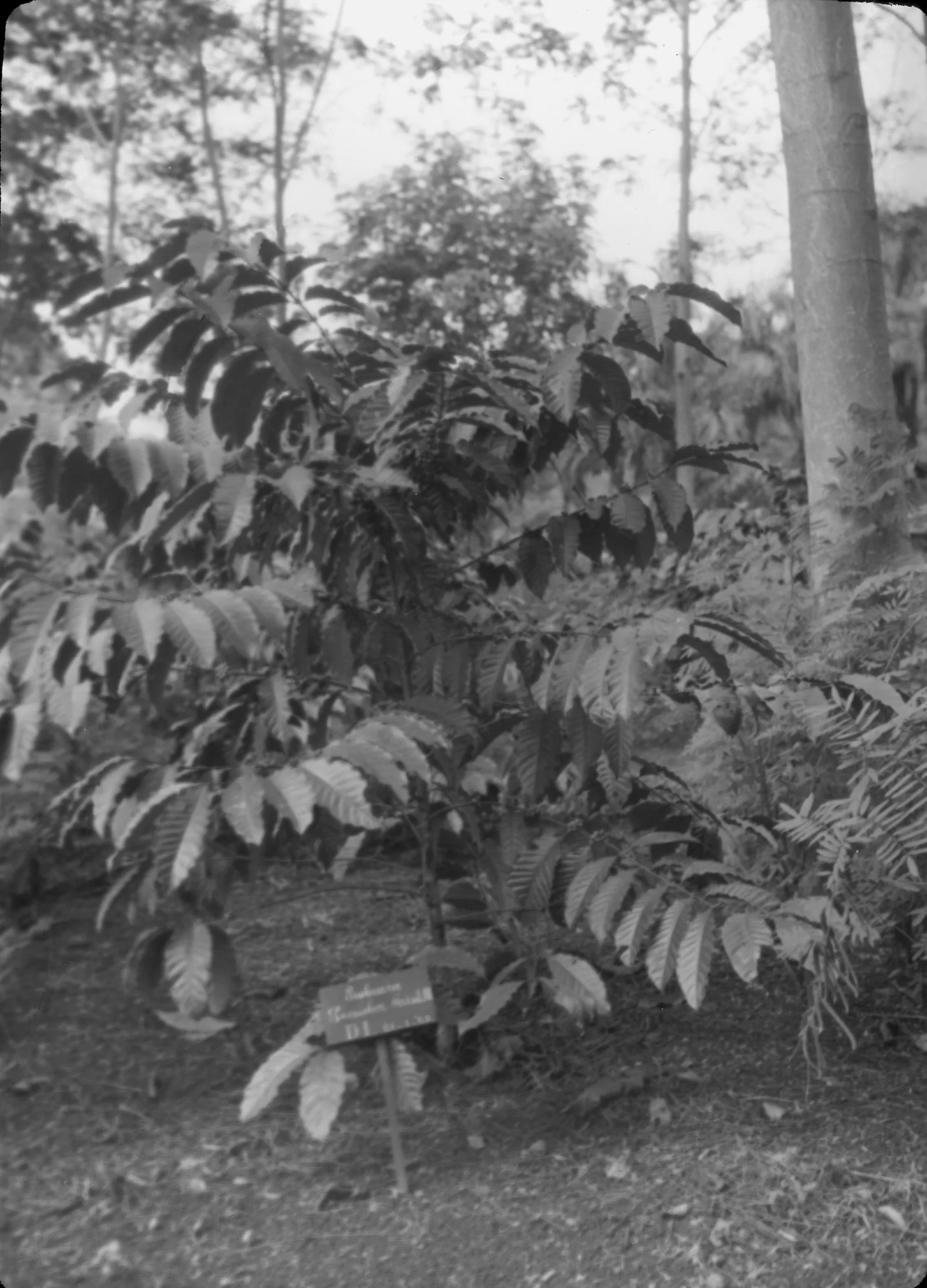
Because canephora does not fertilize itself, no lineage can be fixed by sowing as with arabica: every seed is a hybrid between two trees. Breeders have therefore tried five routes. Java's mass selection and progeny tests (1907-1930) keep the best mothers and sow their seed: simple, cheap, but the offspring segregate and part of the gain is lost with each generation; this is still the principle of the Ugandan “Elite” (1995), given at 2,000 kg/ha. Clonal selection, made possible in Java by cuttings and grafting and then generalized (BP and SA series 1920-1940, Emcapa 1993, KR 2009-2017, Vietnamese TR), copies a superior individual identically: doubled yield (3,000 to 4,000 kg/ha of marketable coffee in Uganda against 1,500 for seed), grouped ripening, sure resistances, but the obligation to plant several compatible clones, a narrow genetic base and costly nurseries. The reciprocal recurrent selection of Côte d'Ivoire (1980s and 1990s) crosses the Guinean and Congolese groups and exploits heterosis, +16 to +140% in Leroy (1997), at the price of long cycles. Seed varieties derived from intercrossed clones, TRS1 in Vietnam or Conquista (2019) in Brazil, seek to make genetic progress accessible to small farms that cannot buy cuttings. Genomic selection, finally, tested since 2025 to guide the pairing of parents and take advantage of hybrid vigor, promises to shorten cycles that Kawuki estimates at more than twenty years per variety. The Nestlé program (clones Roubi 1-10) illustrates the private route, with unpublished parentage.
Kawuki et al. 2026, § 2.1 to 2.6 and 2.8; UCDA 2019, § 3.1.7 and 3.2, p. 23 and 27, table 1; Tree Genetics & Genomes, 2025, “Genomic-assisted selection to guide mate allocation and leverage hybrid vigor in Coffea canephora” (title as recorded); WCR 2024, poster, p. 3 (Roubi)In this plateThe 19 sections
- 01A species, not a variety
- 02Discovery and naming, 1880-1900
- 03Java, 1900-1919: rust paves the way for canephora
- 04The genome: diploid, allogamous, parent of arabica
- 05Two groups, then eight: genetic geography
- 06Selecting an allogamous plant: five strategies in a century
- 07Kouilou, Niaouli, Conilon: the Guinean and Atlantic lineage
- 08Uganda: the species on its native ground
- 09Coffee wilt disease, 1927-1993
- 10Agronomy: what the species requires
- 11Propagating, irrigating, cutting back: the grower's options
- 12Harvest and processing: Kiboko and washed
- 13A century of market share
- 14Vietnam since 1990
- 15Fine robustas and the CQI protocol
- 16Price: the 2024-2025 record
- 17The Timor Hybrid: what canephora gives arabica
- 18What changed, 2023-2026
- 19Archive plates
The table of contents, with the first sentence of each section