Appendix to plate IX · section 03 of 06
The intermediate processes
THE PROCESS IN MOTION
What is kept between washed and natural?
Start the scene or choose a stage. The animation simplifies the mechanism; what follows gives the details and the available references.
Pulping
It starts as with the washed process: the cherry is pulped and the flesh goes. The bean keeps its parchment and the mucilage that covers it.
Read the stages without animation
- PulpingIt starts as with the washed process: the cherry is pulped and the flesh goes. The bean keeps its parchment and the mucilage that covers it.
- Keeping part of the mucilageInstead of removing everything, part of the mucilage is kept, more or less of it. Between washed and natural, that makes a whole spectrum.
- Drying with itThe coffee is then dried with this retained mucilage, which dries on the parchment instead of being washed off.
- Degrees, not processesHoney processes and the semi-dry route are not distinct processes: they are degrees of a single idea, depending on how much mucilage is kept.
To remember: The cherry is pulped, a larger or smaller share of the mucilage is kept, and the coffee is dried with it: a spectrum, not a list of processes.
Read the full article and its sources ↓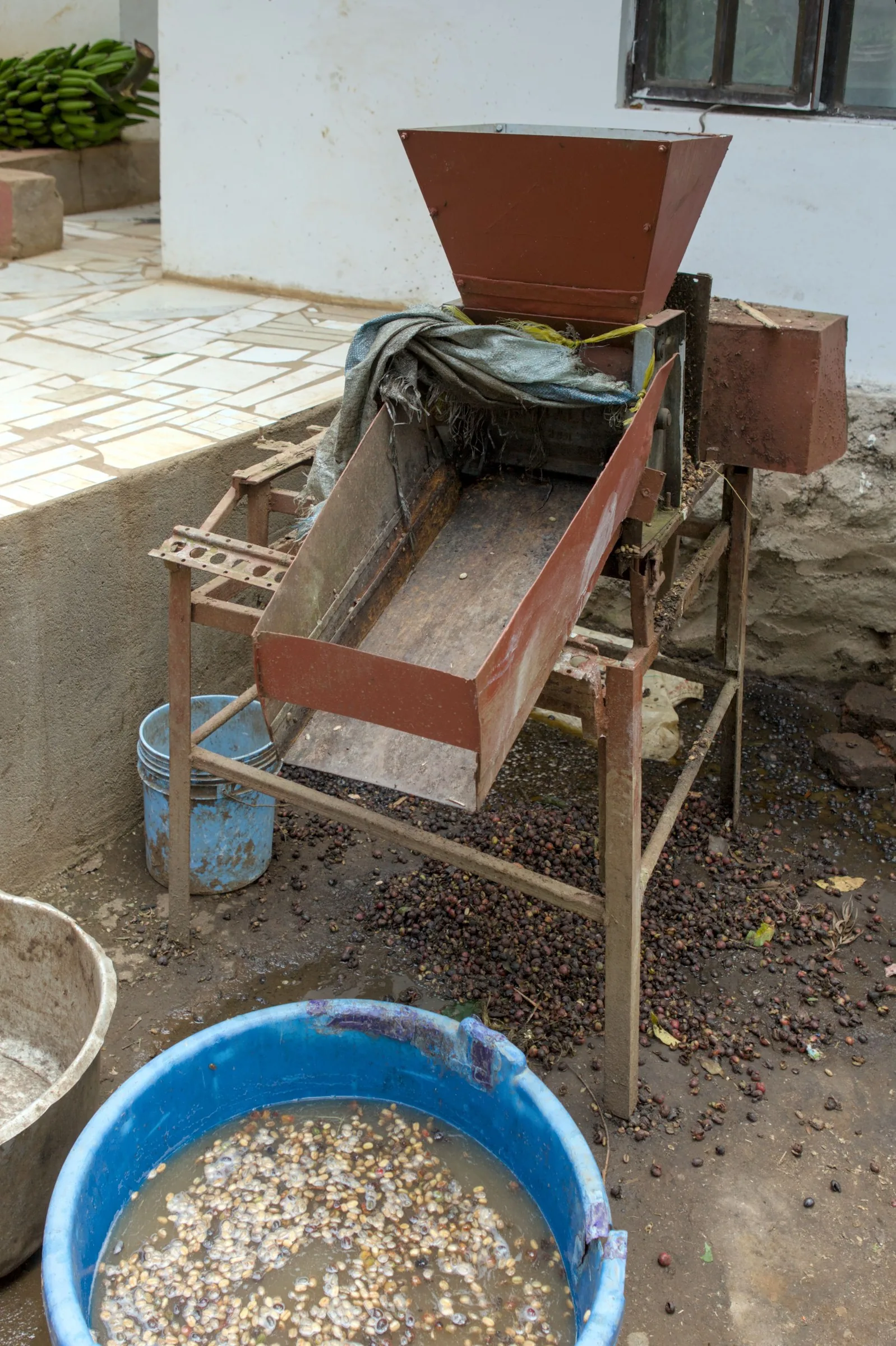
Between the two lies a whole spectrum: the cherry is pulped but a larger or smaller share of the mucilage is kept, and the coffee is dried with it. The honey processes and pulped natural are degrees of a single idea, not distinct processes.