Appendix to plate IX · section 02 of 06
The washed process
THE PROCESS IN MOTION
What does the washed process remove, and in what order?
Start the scene or choose a stage. The animation simplifies the mechanism; what follows gives the details and the available references.
Removing the flesh
Before drying, the flesh of the fruit is removed. The bean keeps its parchment, the hard, straw-colored shell that protects it, and whatever sticks to it.
Read the stages without animation
- Removing the fleshBefore drying, the flesh of the fruit is removed. The bean keeps its parchment, the hard, straw-colored shell that protects it, and whatever sticks to it.
- The mucilage stays stuckWhat sticks is the mucilage: the sweet, sticky flesh that surrounds the parchment.
- Breaking it down in a tankThe coffee goes into a tank where the mucilage is broken down. This page gives neither the duration nor the details: the chapter’s sheets describe them.
- WashingThe broken-down mucilage is then washed off: the water carries it away. That is what makes this route the one that uses the most water.
- Drying the parchmentWhat remains, the parchment coffee, goes off to drying. This is the route that gives the cleanest cups.
To remember: The flesh first, the mucilage next, everything before drying: the cleanest cups, and the most water used.
Read the full article and its sources ↓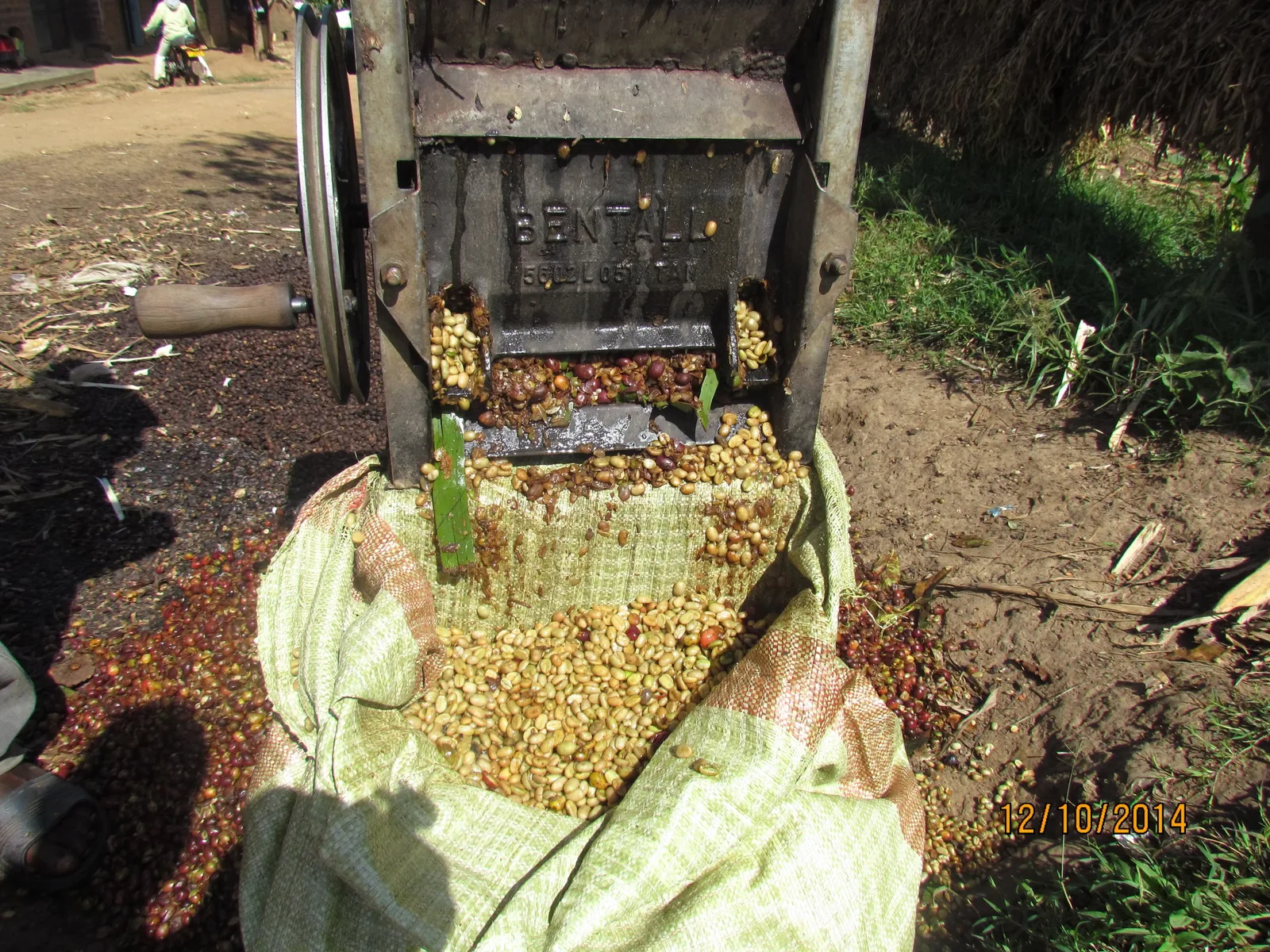
The flesh is removed before drying. The mucilage, the sticky layer stuck to the parchment, is broken down in a tank and then washed off. This is the route that gives the cleanest cups, and the one that uses the most water.