The substitute becomes an industry: Postum and the “cereal-fakers”
American law cleaned up the label, not the advertising. The substitute thus no longer had the right to pass itself off as coffee, but it kept the right to speak ill of coffee.
In 1895, in Battle Creek, C. W. Post, a student of the reformer John Harvey Kellogg, launched Postum. It was a drink of wheat bran and molasses, sold as a healthy alternative to coffee under the slogan “There's a Reason.” Instant Postum followed in 1911, and the character of Mr. Coffee Nerves embodied the ills attributed to caffeine.
Ukers, without naming him, describes the first offender: he sold his product as “coffee” before admitting that it contained not a single bean. Behind him, a hundred or so cereal-substitute firms ran a mendacious campaign against coffee.
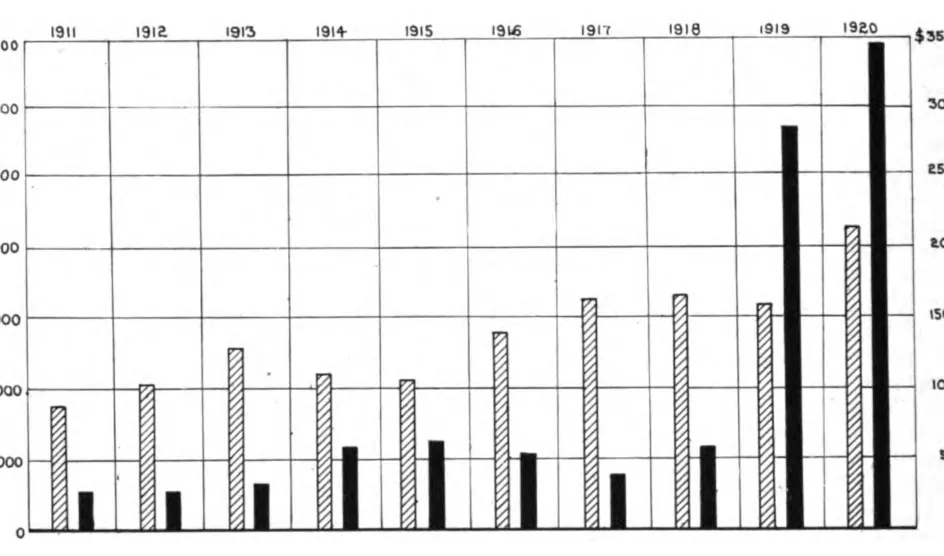
One figure gives the scale of the effort: 1,765,000 dollars spent in a single year to run down the national drink. Pseudo-doctors were lent to the cause. And the roasters who swore their brands innocent of the crimes charged against coffee aggravated the suspicion, because defending themselves amounted to acknowledging that there was a charge.
The cleanup came in two stages, and the second was late. The Pure Food Act reformed the label of cereals in 1906. It took the “truth in advertising” movement, nearly ten years later, for the newspapers to follow: in 1911, a major New York daily was still calling the product coffee.
From this war were born the National Coffee Roasters Association and the collective advertising campaign for coffee. Attacked as a product, coffee answered as an industry.
en.wikipedia.org/wiki/Postum, accessed September 7, 2026; Ukers 1922, ch. XXVIII, p. 435-441; Ukers 1922, preface, citing Harvey W. WileyIn this plateThe 17 sections
- 01What makes fraud possible
- 02Chicory, from Brunswick to the Continental Blockade
- 03The inventory of substitutes
- 04Dyeing, polishing, sweating: fraud on green coffee
- 05Molded fake beans
- 06Ground coffee: the thousand-pound formula
- 07Glazing and its patents
- 08The chemists: Accum, Hassall, the microscope and the oven
- 09The laws, country by country
- 10The substitute becomes an industry: Postum and the “cereal-fakers”
- 11Taste manufactured by habit
- 12Wartime ersatz: 1914, 1939, 1977
- 13Instant coffee and today's blends
- 14Modern fraud: the species, the origin, the vat
- 15Animal coffees, or rent-seeking on the story
- 16Today's detection tools
- 17Today
The table of contents, with the first sentence of each section