Chicory, from Brunswick to the Continental Blockade
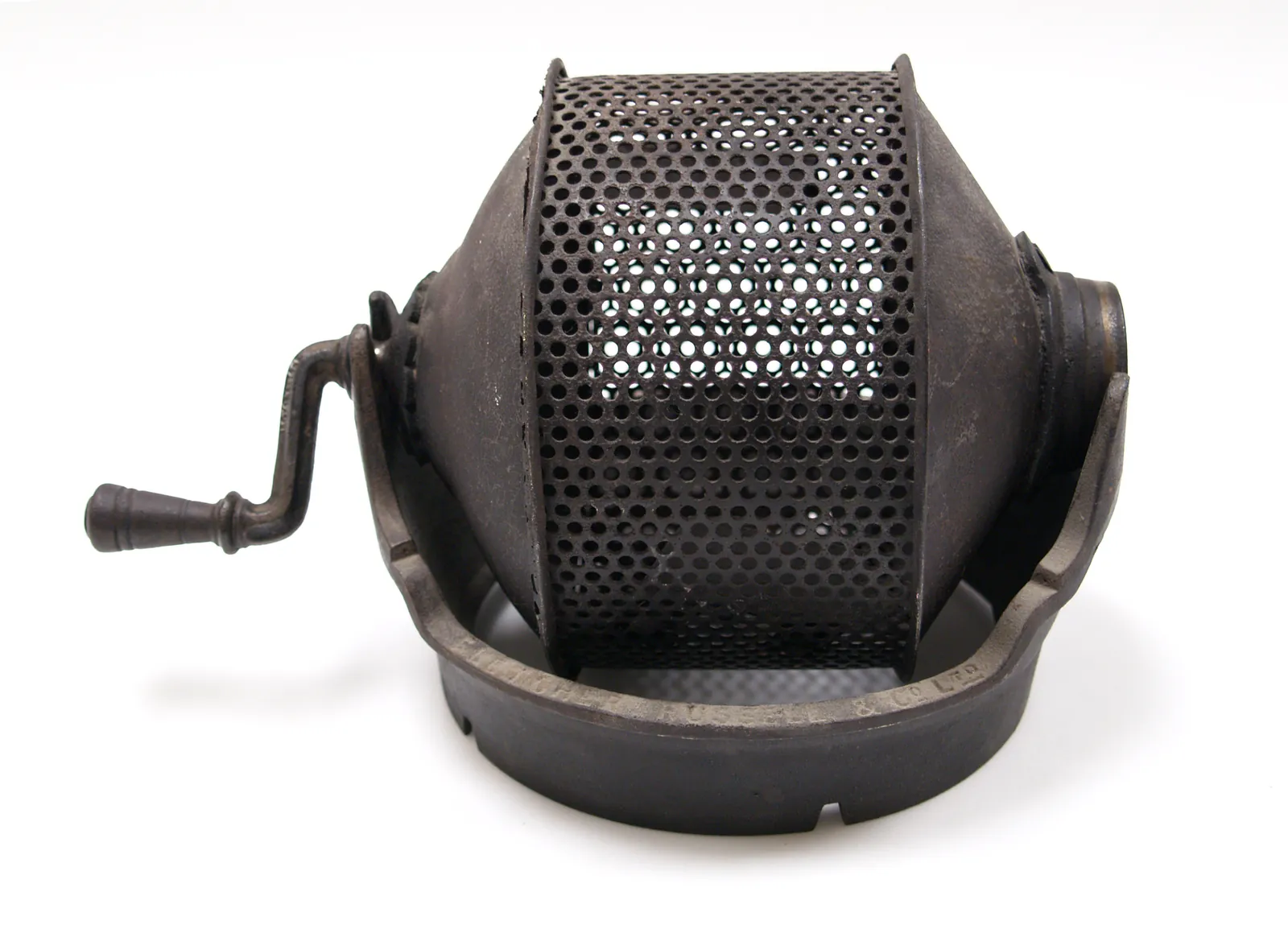
The substitute is almost as old as coffee: Ukers cites Scheuzer, according to whom Turks and Arabs were already drinking roasted barley flour in place of coffee. But chicory as an industry was born in Germany. The root of Cichorium intybus, cut into slices, dried in the oven and then roasted like coffee, often with a little fat, was used in Holland around 1750 according to Ukers, who elsewhere dates its first use mixed with coffee to 1770. In 1769-1770, Major Christian von Heine and the innkeeper Christian Gottlieb Förster obtained manufacturing licenses in Brunswick and Berlin; Brunswick had 22 to 24 factories in 1795, and the Bleibtreu manufactory, founded in 1781, went from workshop to mass production.
Ukers 1922, p. 13, p. 170 and chronology p. 725-737; de.wikipedia.org/wiki/Zichorienkaffee, accessed September 7, 2026Frederick II supplied the demand. Irritated by the money leaving Prussia for coffee, he published on September 13, 1777 a manifesto in favor of beer, the drink of his ancestors and his soldiers, then, prohibition having failed, created on January 21, 1781 a royal roasting monopoly: coffee could now be roasted only in state establishments, except under licenses granted to the nobility, the clergy and civil servants and refused to the common people.
Discharged soldiers, paid a quarter of the fine, followed the smell of roasting from house to house; the people nicknamed them coffee sniffers. The poor, writes Ukers, fell back on the many substitutes of barley, wheat, corn, chicory and dried figs that appeared at once. On February 17, 1784, the Elector of Cologne extended the ban to the Duchy of Westphalia on pain of a fine of one hundred dollars or two years in prison.
Ukers 1922, ch. V, p. 45-47The Continental Blockade of 1806 turned shortage into a regime. This blockade was the ban on Napoleonic Europe trading with Great Britain and its ships. Coffee arrives by sea. The bean thus became a rare and costly luxury throughout the Europe subject to Napoleon.
This is where chicory moved from stopgap to industry, above all in France. The root grows in the fields of the north, within reach of cities deprived of coffee, and the crop took root there for good.
The industry is still there. France remains the world's leading producer of the root, about 90,000 tonnes a year, the main processor being Leroux at Orchies. The shortage disappeared long ago; the habit did not.
The substitute also became a subject for patents, which is the sign that it had become a product in its own right and no longer an expedient. In 1837, François Burlet, in Lyon, filed the first French patent for a coffee substitute.
In the United States, the story begins earlier than one might imagine: Governor Bowdoin had introduced chicory into Massachusetts as early as 1785. The first American patent for a substitute was issued to E. Dugdale, of Griffin, Georgia, in 1873. That is the very year John Arbuckle launched Ariosa, the first national brand of packaged coffee. The two dates answer each other: the fake was industrialized at exactly the moment the real thing was.
fr.wikipedia.org/wiki/Chicorée_à_café and de.wikipedia.org/wiki/Zichorienkaffee, accessed September 7, 2026; Ukers 1922, p. 468, 470 and chronology p. 725-737In this plateThe 17 sections
- 01What makes fraud possible
- 02Chicory, from Brunswick to the Continental Blockade
- 03The inventory of substitutes
- 04Dyeing, polishing, sweating: fraud on green coffee
- 05Molded fake beans
- 06Ground coffee: the thousand-pound formula
- 07Glazing and its patents
- 08The chemists: Accum, Hassall, the microscope and the oven
- 09The laws, country by country
- 10The substitute becomes an industry: Postum and the “cereal-fakers”
- 11Taste manufactured by habit
- 12Wartime ersatz: 1914, 1939, 1977
- 13Instant coffee and today's blends
- 14Modern fraud: the species, the origin, the vat
- 15Animal coffees, or rent-seeking on the story
- 16Today's detection tools
- 17Today
The table of contents, with the first sentence of each section