Salts, and the hydrate trap
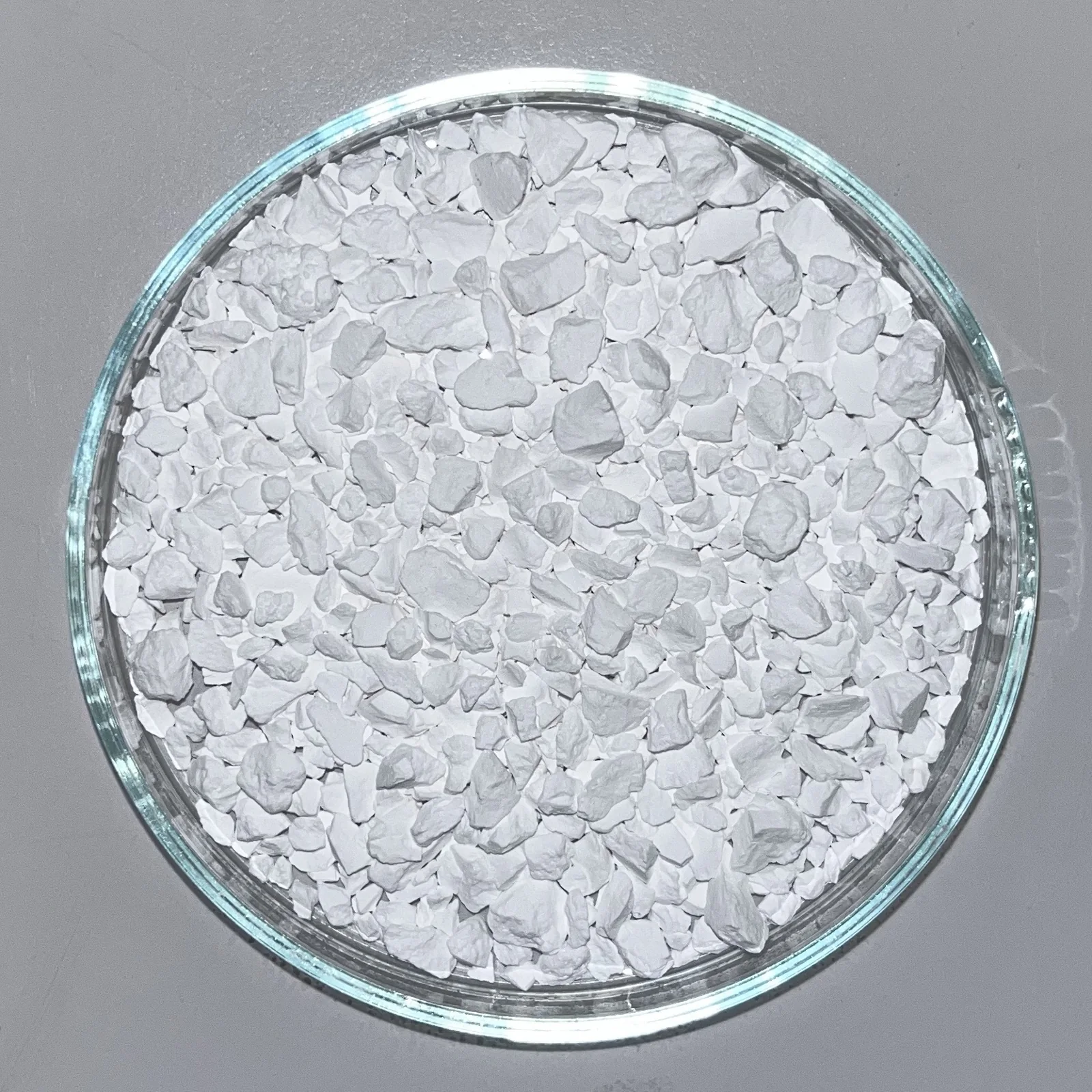
The minerals historically used are calcium chloride, magnesium sulfate, magnesium chloride, sodium bicarbonate and potassium bicarbonate; calcium carbonate, calcium sulfate and calcium citrate exist but are harder to find or to dissolve, the citrate acting on alkalinity through an anion different from bicarbonate. Food-grade minerals are required: laboratory grades, which are purer, may contain impurities unfit for consumption, heavy metals included.
And the hydrated form must be read on the label: a hydrate carries a fixed number of water molecules that weigh on the scale. Weighing calcium chloride believing it to be anhydrous when it is tetrahydrate seriously underestimates the calcium added. Calcium chloride is sold mostly anhydrous, as small white spheres; magnesium sulfate mostly heptahydrate, which is Epsom salt, transparent crystals like snow; magnesium chloride mostly hexahydrate, large milky flakes; the bicarbonates have no hydrate.
Three properties to set, alkalinity, hardness, magnesium-to-calcium ratio, and five ingredients: there are several combinations for the same water. The choice between magnesium sulfate and magnesium chloride is historical, it is not known whether the anion changes the taste; the choice between sodium and potassium bicarbonate may matter a little, since sodium can mark the profile slightly, far less than magnesium and calcium.
Gagné 2021, pp. 26-29| Salt | Common form | What it provides |
|---|---|---|
| Calcium chloride | CaCl₂ anhydrous, white spheres | calcium, chloride |
| Magnesium sulfate | MgSO₄·7H₂O, Epsom salt | magnesium, sulfate |
| Magnesium chloride | MgCl₂·6H₂O, milky flakes | magnesium, chloride |
| Sodium bicarbonate | NaHCO₃, no hydrate | alkalinity, sodium |
| Potassium bicarbonate | KHCO₃, no hydrate | alkalinity, potassium |
| Calcium carbonate | CaCO₃ | calcium and alkalinity, very poorly soluble in pure water |
In this plateThe 13 sections
- 01What water does, and why
- 02Alkalinity and hardness, and the words that mislead
- 03Units
- 04The standard, and the zones that do not coincide
- 05Salts, and the hydrate trap
- 06Getting pure water
- 07Making a concentrate
- 08Published recipes
- 09The profile calculator
- 10Measuring your water
- 11Water in machines
- 12Before chemistry: water in the old treatises
- 13Today
The table of contents, with the first sentence of each section