ATLASPanama
about 6,000 tonnes (FAOSTAT 2024, imputed value)In-depth dossier, atlas 2026In-depth dossier: the FAOSTAT series set against the other figures, the history, today’s sector and its gray areas, numbered sources. Region: Central America.
Panama had only one statistical landmark. This dossier completes it: the history of the sector, what it is today, and what remains uncertain, each paragraph referring to its sources, numbered at the foot of the page.
The FAOSTAT series remains displayed as is. The dossier says what it is worth, year by year when possible, and compares it with the other figures available.
- Geographic status
- country
- Name in FAOSTAT
- Panama
- Latest value
- about 6,000 tonnes in 2024
- Nature of the value
- value imputed by the receiving organization
- Start of the positive series
- 1961
- Series maximum
- 15,074 tonnes in 2001
Confirmed coverage: the FAOSTAT series, and a dossier of 19 sources that cross-checks the history, today’s sector and what remains uncertain.
History
Nobody knows exactly when the coffee tree entered the isthmus. An unsigned article in La Prensa, published in 2018 and citing no archive, has a first barrel of coffee arrive at Portobelo in 1742, on a ship from Cartagena, and dates the first recorded plantation to 1780: a settler, Pedro Antonio de Ayarza, supposedly tried it at Portobelo in the 1780s and 1790s before finding that the Caribbean coast was unsuitable, and cultivation supposedly spread to other parts of the country only from the 1810s. Ukers, in 1922, gives no introduction date for Panama. This chronology is therefore a story in circulation, not an established fact. [16][2]
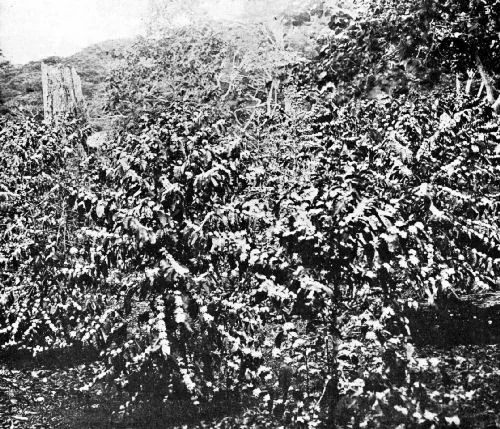
The picture Ukers draws in 1922 is that of a modest crop, turned toward the country itself. Chiriquí province, in the west, supplies most of it, about 4,000 100-pound bags a year, or roughly 180 tonnes, and everything then comes from the Boquete district, because the plantations of the Bugaba highlands, which he considers the best coffee land in the country, are still too young to produce. Coffee is grown there without shade, weeded three or four times a year, harvested from October to January, and the water of the torrents drives the machines. Production does not cover domestic demand: the country imports from its neighbors despite a duty of six dollars per hundred pounds, and Ukers ranks Panamanian coffee among those that carry no weight in trade. He notes nonetheless that the coffee of the Boquete valley is of fine quality, and attributes it to the care of the American and English planters who settled there. About forty pages further on, he writes that the country exports 200,000 to 250,000 pounds in some years: the two passages do not quite agree. [2]
The FAO series begins in 1961 at 5,000 tonnes of green coffee and stays between 4,300 and 5,500 tonnes until 1977. It then doubles in seven years, up to 10,750 tonnes in 1984, then holds a plateau of 10,000 to 12,000 tonnes through the 1990s. Its maximum, 15,074 tonnes in 2001, is an isolated point: 10,255 tonnes the year before, 11,390 the year after. None of the sources read explains either the rise from 1977 to 1984 or this peak, which may owe as much to an exceptional harvest as to a way of counting. From 2003 to 2010, the series holds between 11,600 and 13,800 tonnes. [1]
The break of those years cannot be read in the tonnes. Geisha seedlings that arrived in Boquete in the 1960s, from the CATIE collection in Costa Rica and for their tolerance of rust, long remain a low-yielding coffee, until Hacienda La Esmeralda, of the Peterson family, presents them separately at the 2004 Best of Panama. The path of this lineage, from Mount Gesha to Boquete, is traced in the Geisha profile of the variety map and on the plate on introduction routes, and is not repeated here. The competition itself is young: the Panamanian specialty coffee association, the SCAP, was born in 1997 and the Best of Panama in 1998. At the 2004 auction, La Esmeralda’s lot goes for 21 dollars a pound, whereas in 2005 the average auction price is only 3.28 dollars and in 2006 another Geisha from the same farm reaches 50.25 dollars. From then on, part of Panamanian coffee is no longer sold on the reference of the New York C contract, where Panama is nonetheless deliverable at par, but lot by lot, before buyers who bid against one another. [18][7][13][9][19]
The following decade is one of decline. From 12,470 tonnes in 2010, the FAO series falls to 7,096 tonnes in 2013. In April 2013, the Minister of Agricultural Development declares a phytosanitary emergency: rust, that is, the fungus Hemileia vastatrix that makes coffee leaves fall, affects 46 to 47% of production in his view, above all on trees more than twenty years old, in a country that then has about 19,500 hectares of coffee. The agricultural survey of the Contraloría, the public accounts oversight body that also produces the national statistics, then measures a harvest of 130,100 quintals of café pilado, that is, stripped of its parchment, hence green coffee, in 2016-2017, then of 111,100 quintals in 2017-2018, or about 5,040 tonnes. It attributes this fall of 14.6% to the rains and winds that knocked down the flowering at Renacimiento, to a month of drought when the fruit forms at Boquete, to rust and to the labor shortage. The FAO records a fall of 15.3% the same year, to 5,579 tonnes: the national measure and the international series point the same way. [1][6][4]
Since 2020, the series holds between 6,020 and 6,445 tonnes, after an isolated rebound to 8,371 tonnes in 2019. The last value, 6,318 tonnes for 2024, is not a figure transmitted by Panama: the FAO flags it as imputed, that is, calculated by it for lack of official data. It represents 42% of the 2001 maximum, and barely more than the 5,000 tonnes of 1961. [1]
Today
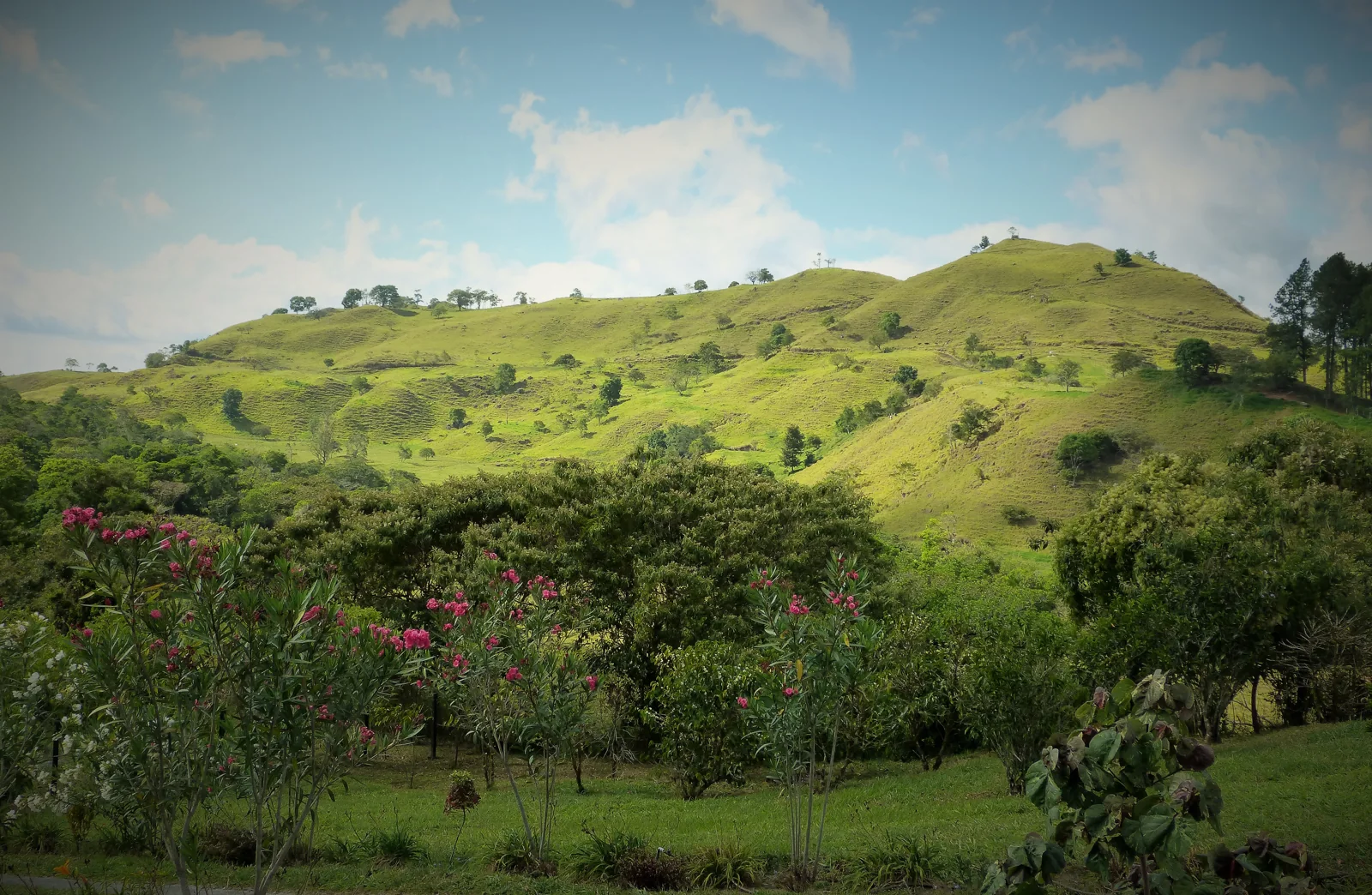
Coffee is grown in Panama in two worlds. The first is Chiriquí, in the west, around the Barú volcano, the country’s highest point at 3,474 meters, with three zones: Boquete, on the east slope; Tierras Altas, on the west slope, where the farm profiles published by the Tourism Authority place plots above 2,200 meters; and Renacimiento, farther west, between 600 and 2,500 meters. The Lamastus family lot that sold at the top of the 2024 auction comes from about 1,950 meters. In 2017-2018, Chiriquí supplied 74.2% of the national harvest measured by the Contraloría, Coclé province 13.8% and Colón province 5.2%. [13][17][10][4]
The second world is that of the lowlands, little known outside the country. According to the figures of the Ministry of Agricultural Development published in 2026, Coffea canephora occupies 6,512 hectares there held by 4,864 producers, out of a national total of 12,843.70 hectares and 6,213 producers, or roughly half the area and three quarters of the producers. Coclé has 2,500 hectares, Colón 1,081, West Panama 950, followed by Darién, East Panama, Veraguas, the Ngäbe-Buglé comarca, that is, the autonomous territory of the Ngäbe people, and Bocas del Toro. For the 2025-2026 season, the ministry estimates the total harvest at 170,708 quintals, of which 53,000 of canephora, or about 31%, with an average yield of 8.1 quintals per hectare for that species. This coffee goes mostly to the domestic market, and it is not enough: the country still imports 90,000 to 120,000 quintals a year for its industrial processing. [5][13]
In Chiriquí, the farms declare Caturra, Catuaí, Typica, Bourbon, Pacamara, Mundo Novo, Maragogype and Geisha. The World Coffee Research catalog, whose Panamanian partner is the Ministry of Agricultural Development, devotes to Panama’s Geisha a profile that describes it as tall, low-yielding, of exceptional quality at altitude, moderately resistant to rust and susceptible to coffee berry disease, and that warns that the name is often given to coffees that do not have its genetics. Java, an Ethiopian selection that passed through Cameroon, was also released in Panama. Finally, the country is home to a private collection: in 2016, the Crop Trust team visited in Boquete the roughly 400 accessions, that is, genebank entries, that Price Peterson, owner of Hacienda La Esmeralda, obtained from CATIE and planted in a trial field. [17][13][8][18][7]
Auction prices are the best-measured part of this coffee, because they are published lot by lot. The 2017 record, 601 dollars a pound for La Esmeralda, is beaten in 2018 by a natural Geisha from the Elida farm, of the Lamastus family, announced at 803 dollars a pound. In 2024, the auction sells 1,000 kilos in 50 lots, 18 natural Geisha, 18 washed Geisha and 14 other varieties, at an average price of 1,383.72 dollars a kilo, led by a natural Geisha from Elida at 10,013 dollars a kilo for 20 kilos. In August 2025, a washed Geisha from La Esmeralda scored 98 out of 100 goes for 30,204 dollars a kilo, for an average price of 2,861.20 dollars. In September 2026, 750 kilos in 50 lots of 15 kilos bring in 3,041,940 dollars, or on average 4,056 dollars a kilo; the top lot, a Geisha from Elida, makes 18,004 dollars, all the Geisha exceed 1,500 dollars and the other varieties range from 897 to 4,216 dollars. Chinese buyers account for 38% of the value, ahead of Japan, the United Arab Emirates and South Korea. The comparison with the other auctions is on the economics plates devoted to prices and microlots. [9][10][12][11]
Two institutions run the sector: the Ministry of Agricultural Development, which conducts coffee policy, and the SCAP, which organizes the Best of Panama; in 2024, the latter disqualified four coffees judged altered by additions, a decision detailed on the plate on co-fermentation. The government is a member of the International Coffee Organization, before which it proposed in September 2023 the creation of a working group on specialty coffee. For the United States Department of Agriculture, Panama produced 100,000 60-kilo bags in 2024-2025 and forecasts 80,000 in 2025-2026, for a ten-year average of 81,000. Picking depends on a mobile indigenous workforce: young people from the Ngäbe-Buglé comarca leave for the coffee zones of Chiriquí and, across the border, for Costa Rica, which regularized 38,207 agricultural workers in 2023, of whom 61% came from the comarca. [19][14][3][15]
- 2024 production (FAOSTAT)
- 6,318 t of green coffee, value imputed by FAO [1]
- FAOSTAT series maximum
- 15,074 t in 2001, isolated point between 10,255 t and 11,390 t [1]
- Production according to the USDA
- 100,000 60-kg bags in 2024-2025, 80,000 forecast for 2025-2026 [3]
- Areas and producers (MIDA, 2026)
- 12,843.70 ha and 6,213 producers, of which 6,512 ha and 4,864 producers in canephora [5]
- Species
- Coffea arabica at altitude in Chiriquí, Coffea canephora in the lowlands (Coclé, Colón, West Panama) [5]
- Arabica zones
- Boquete, Tierras Altas and Renacimiento, around the Barú volcano [13]
- Auction record
- 30,204 dollars a kilo, washed Geisha from La Esmeralda, Best of Panama, August 2025 [12]
- Harvest in 1922
- October to January, about 4,000 100-pound bags in Chiriquí [2]
Gray areas
Nobody knows exactly how much Panama produces. The FAO value for 2024, 6,318 tonnes, is imputed; those for 2022 and 2023 carry decimals that suggest a calculation too, but their year-by-year status could not be verified, the FAO data service being offline at the time of writing. The United States Department of Agriculture gives the equivalent of 6,000 tonnes for 2024-2025 and 4,800 for 2025-2026. The ministry announces 170,708 quintals for 2025-2026, or 7,743 tonnes if these are quintals of green coffee of 45.36 kilos, but the article that reports this figure does not say which quintal is meant, and a quintal of cherries or parchment gives much less green coffee. The areas agree no better: 19,500 hectares in 2013, 12,843.70 in 2026, with no source saying whether the gap measures a decline of the coffee farms or a change of method. The International Coffee Organization figure could not be consulted, its historical tables having changed address, and the 2001 peak of 15,074 tonnes remains unexplained. [1][3][5][6]
Part of the history of Panamanian coffee is a commercial story repeated without proof. The chronology of 1742 and 1780 comes from an unsourced press article. The foundations told in the Tourism Authority brochure, a Finca Don Pachi founded in 1873 by the matriarch of the Serracín family, a Finca Lérida created by a Norwegian canal engineer who supposedly patented a coffee sorting machine and opened exports to Germany, are supported there by no document. For the Geisha, the sources do not agree on the detail: the site dates to 1963 the arrival in Boquete by Don Pachi Serracín, the Crop Trust speaks of a distribution by CATIE in the 1960s and places the Peterson family’s first participation in the Best of Panama in 2005, against 2004 for the trade press and the auction reports. The same 2018 report gives 803 dollars a pound in its title and 830 in its text. And a competition born in 1998 does not quite celebrate its thirtieth anniversary in 2026, as the press announces. [16][17][18][7][9][13][11]
Auctions measure a price, not a sector. The 750 kilos sold in 2026 represent about one kilo in 8,400 of the production estimated by FAO for 2024; their price says nothing about that of the rest of the harvest or about the share of Geisha in the area, which nobody publishes. The only sale at 10,000 dollars a kilo that could be dated is that of the August 7, 2024 auction; the February 2025 sale at the same level, mentioned elsewhere on the site, remains undocumented, as the economics plate on sources already points out. Finally, nobody has measured, on the Panamanian side, how many Ngäbe pickers work in the coffee farms of Chiriquí or at what wage: the available figures are Costa Rican. [11][1][10][12][15]
Not covered: The production figure of the International Coffee Organization (its historical tables changed address and its PDFs would not open); the FAOSTAT status year by year (API offline, only the 2024 status is known); the INEC publications on the 2011-2012 to 2022-2023 harvests (server unreachable, figures seen only as search engine excerpts and therefore discarded); recent export volumes and values; the current harvest calendar; the share of Geisha in the area; the existence of a Boquete designation of origin (a project is mentioned by the press, no law found); picking wages; domestic consumption (a figure of 20 million kilos circulates without a source).
- Production: Crops and livestock products, Coffee, green (item 656), Panama, FAO, FAOSTAT, 2025, https://bulks-faostat.fao.org/production/Production_Crops_Livestock_E_ solid level
Annual series 1961-2024 as extracted in pays_producteurs_complement.json (version of December 23, 2025): 5,000 t in 1961, maximum of 15,074 t in 2001, 6,318.02 t in 2024 with status I (imputed value). Status of the other years not verified: the FAOSTAT API returned a 521 error on October 21, 2026. - All About Coffee, William H. Ukers, The Tea and Coffee Trade Journal Company, 1922, https://www.gutenberg.org/ebooks/28500 solid level
Chiriquí, about 4,000 100-pound bags, all from Boquete, Bugaba too young, no shade, harvest from October to January, imports despite a duty of 6 dollars per 100 pounds (p. 235); occasional exports of 200,000 to 250,000 pounds and imports mostly from the United States (p. 280); Boquete quality attributed to American and English planters, “not a commercial factor” (p. 348 and 361, from the index); preparation in the French and American manner (p. 692). Pages 235, 280 and 692 verified on the library PDF. - Production, Panama, USDA Foreign Agricultural Service, 2026, https://www.fas.usda.gov/data/production/pn solid level
Coffee: 100,000 60-kg bags in 2024-2025, 80,000 in 2025-2026 (-20%), 2016-2025 average of 81,000 bags. Page accessed on October 21, 2026 in the browser, automated access being refused. - Producción cafetalera cayó 14.6% durante el período agrícola 2017-2018, Mirta Rodríguez P., La Estrella de Panamá, from the Contraloría General de la República (Encuesta agrícola de café y caña de azúcar, November 2018), 2019, https://www.laestrella.com.pa/economia/6-14-cayo-produccion-cafetalera medium level
130,100 quintals pilados in 2016-2017, 111,100 in 2017-2018 (-14.6%); Chiriquí 82,400 (74.2%), Coclé 15,300 (13.8%), Colón 5,800 (5.2%); causes: rain and wind at Renacimiento, a month of drought at Boquete, rust, labor shortage. - Café robusta: el 'oro negro' que busca impulsar la producción cafetalera de Panamá, Mirta Rodríguez P., La Estrella de Panamá, from the MIDA Dirección Nacional de Agricultura, 2026, https://www.laestrella.com.pa/economia/cafe-robusta-el-oro-negro-que-b medium level
Canephora: 6,512 ha and 4,864 producers, broken down by province; total arabica and canephora: 12,843.70 ha and 6,213 producers; 2025-2026 estimate of 170,708 quintals of which 53,000 of canephora, 8.1 quintals per hectare; imports of 90,000 to 120,000 quintals of canephora a year. The type of quintal is not specified. - Panamá emprenderá renovación de plantas ante alerta por roya, AFP, published by Telemetro, 2013, https://www.telemetro.com/nacionales/2013/04/04/panama-emprendera-reno medium level
April 4, 2013: phytosanitary emergency declared by Minister Óscar Osorio, rust on 46 to 47% of production, above all on trees more than 20 years old; about 19,500 ha of coffee, mainly in Chiriquí, and about 180,000 quintals a year. - Global Conservation Strategy for Coffee Genetic Resources, Crop Trust and World Coffee Research, 2017, https://www.croptrust.org/ solid level
Geisha registered at CATIE in 1953 under number T2722 and distributed in Panama by CATIE in the 1960s for its tolerance of rust; the Peterson family’s participation in the Best of Panama dated 2005 (p. 37); private collection of just over 400 CATIE accessions at Price Peterson’s, Hacienda La Esmeralda, visited in 2016 (p. 44). Read in the library copy (Varietes_et_genetique). - Coffee Varieties Catalog, World Coffee Research, 2025, https://varieties.worldcoffeeresearch.org/ solid level
Panama is among the catalog’s countries, with MIDA as partner (p. 5 and 6); Geisha profile (Panama): tall stature, low yield, exceptional quality at altitude, intermediate resistance to rust, susceptible to coffee berry disease, name often applied to other genetics (p. 38). - Natural Geisha Breaks Best of Panama Auction Record at $803 Per Pound, Nick Brown, Daily Coffee News, 2018, https://dailycoffeenews.com/2018/07/20/natural-geisha-breaks-best-of-p medium level
2018 record of a natural Geisha from Elida (Lamastus), 803 dollars a pound in the title and 830 in the text; previous prices: 21 dollars in 2004 (La Esmeralda), average of 3.28 dollars in 2005, 50.25 dollars in 2006, 601 dollars in 2017; 49 lots; organizer, the SCAP. - A US$10.000 por kilo: así se vendió café geisha de Panamá en subasta, Bloomberg Línea, 2024, https://www.bloomberglinea.com/latinoamerica/panama/a-us10000-por-kilo medium level
Best of Panama auction of August 7, 2024: Elida Geisha Natural Torre at 10,013 dollars a kilo for 20 kilos, buyer Saza Coffee, about 1,950 m; 1,000 kilos in 50 lots (18 natural Geisha, 18 washed Geisha, 14 varieties), average price 1,383.72 dollars a kilo. - Subasta de 750 kg de café de Panamá recauda más de US$3 millones, EFE, published by Revista E&N, 2026, https://www.revistaeyn.com/centroamericaymundo/subasta-de-750-kg-de-ca medium level
Article of September 25, 2026: 50 lots of 15 kilos (40 Geisha, 10 varieties), 3,041,940 dollars, 83 bidders from 21 countries; top lot Elida Geisha Torre at 18,004 dollars a kilo (JD.com); all Geisha above 1,500 dollars, varieties from 897 to 4,216 dollars; China 38% of the value, Japan 16%, Emirates 13%, South Korea 10%; “30 years” of the event. - Coffee economics, plates 12 and 13 (records, auctions and microlots) and plate 16 (sources), PXL Roasters, from UPI (August 8, 2025) and Global Coffee Report (August 2025), 2026, https://www.pxlroasters.com/economie.html medium level
Best of Panama of August 2025: washed Geisha from La Esmeralda, 98 points, 30,204 dollars a kilo; average 2,861.20 dollars a kilo over 50 lots; the sale at 10,000 dollars a kilo in February 2025 is not documented (plate 16). Internal cross-reference, sources verified on the plate. - Una guía del café especial en Panamá, Manuel Otero, Perfect Daily Grind Español, 2020, https://perfectdailygrind.com/es/2020/11/23/una-guia-del-cafe-especial medium level
SCAP founded in 1997, Best of Panama in 1998; three zones of Chiriquí: Boquete, Tierras Altas, Renacimiento; Barú volcano at 3,474 m; canephora in the lowlands (Coclé, West Panama, Colón and others) mostly consumed in the country; varieties Catuaí, Caturra, Maragogype, Pacamara, Mundo Novo; 2020 record of 1,300.50 dollars a pound (Finca Sophia). - ED 2443/23, Communication from the Government of Panama, International Coffee Organization, 2023, https://www.ico.org/documents/cy2022-23/ed-2443e-communication-panama- solid level
September 20, 2023: the government of Panama proposes to the International Coffee Council, meeting in Bengaluru on September 28 and 29, the creation of a working group on specialty coffee. The annex is not legible as text. - Migrants, indigenous peoples and citizens: Ngäbe Buglé youth, Alicia Del Aguila, International IDEA, 2026, https://www.idea.int/news/migrants-indigenous-peoples-and-citizens-nga medium level
Migration of young people from the comarca to the coffee zones of Chiriquí and Costa Rica; in 2023, 38,207 agricultural workers regularized in Costa Rica, of whom 61% (23,306) came from the comarca (SISTLAM); more than 50% of the workers on the Los Santos coffee farms come from the comarca (Varas, 2009). - Una breve historia del café, La Prensa (Panamá), unsigned article, 2018, https://www.prensa.com/impresa/mosaico_dominical/breve-historia-cafe_0 low level
Unsourced chronology: barrel of coffee at Portobelo in 1742, first recorded plantation in 1780, trial by Pedro Antonio de Ayarza at Portobelo in the years 1780-1790, extension to other regions in the 1810s. - El Circuito del Café, Autoridad de Turismo de Panamá, 2025, https://www.atp.gob.pa/wp-content/uploads/2025/03/7-El-Mejor-Cafe_espa low level
Tourist brochure: Boquete on the east slope of the Barú, Tierras Altas on the west slope with farms above 2,200 m, Renacimiento between 600 and 2,500 m; varieties declared by the farms; founding stories (Finca Don Pachi in 1873, Finca Lérida) with no supporting document. - The variety map, Geisha profile; The introduction routes; The chronicle (1963, 2004), PXL Roasters, 2026, https://www.pxlroasters.com/carte.html?v=geisha medium level
The site’s position: Geisha T2722, Lyamungu, CATIE 1953, Boquete in 1963 with Don Pachi Serracín, separate presentation by La Esmeralda at the 2004 Best of Panama; distribution of Java in Panama. Internal cross-reference, sources (WCR 2025 p. 38, Salojärvi 2024) on the profile. - The processes, co-fermentation; ICE Futures US, C contract rules (origins deliverable at par), PXL Roasters, from ICE Futures US and Daily Coffee News (June 28, 2024), 2026, https://www.pxlroasters.com/process-co-fermentation.html medium level
Panama is deliverable at par on the C contract; in 2024, the SCAP disqualifies four coffees judged altered by additives at the Best of Panama. Internal cross-reference.