Climate, the EUDR and the cost of compliance
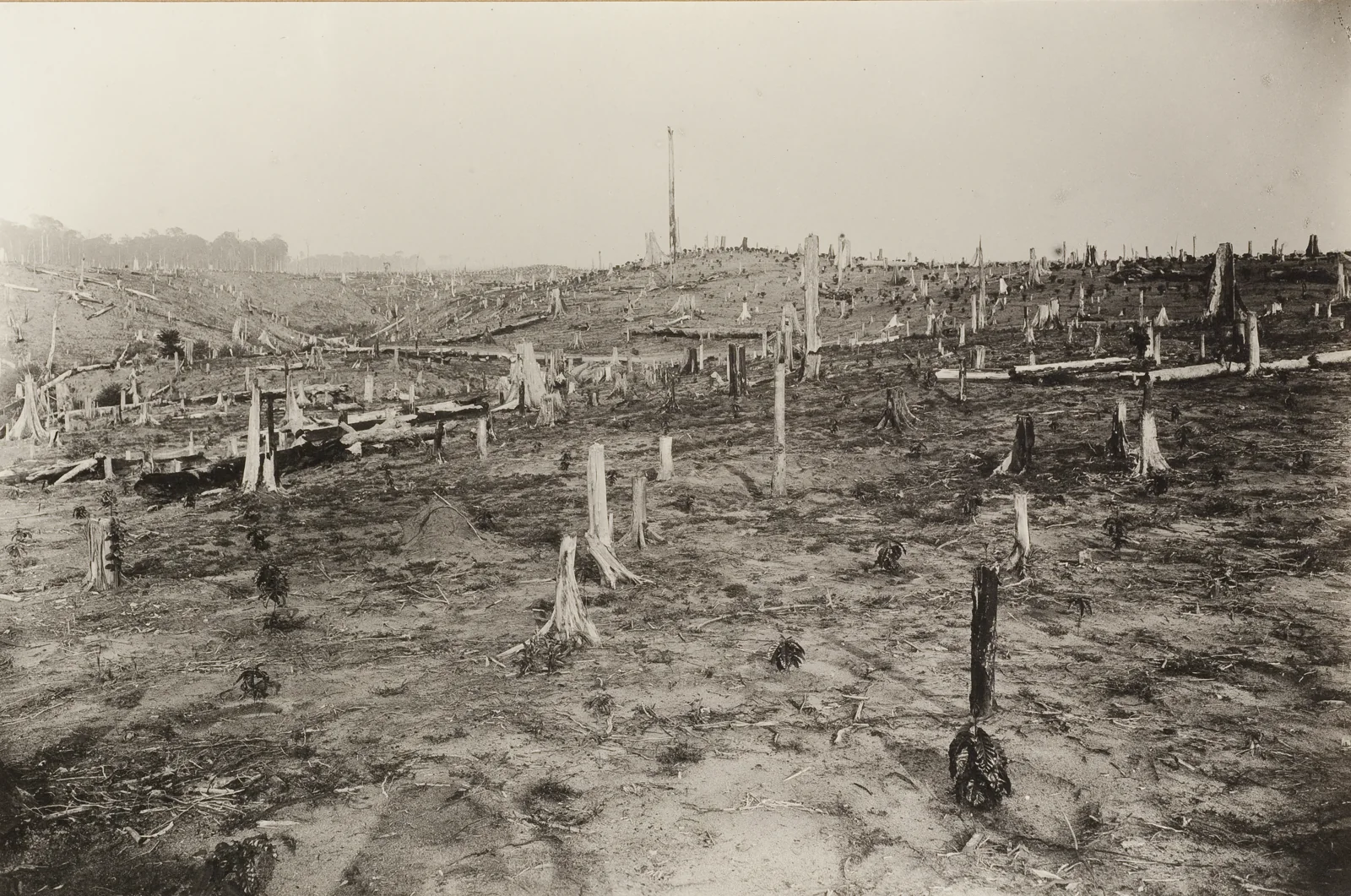
On climate, the studies all say the same thing in direction, and rarely the same thing in magnitude. It is necessary to understand why before citing a figure, otherwise one picks the one that suits.
Bunn and his coauthors, in 2015, project a reduction in the areas suited to arabica by 2050, in the main producing regions of Africa, Mesoamerica and South America. A suitable area is an area whose climate still allows the species to grow.
Magrach and Ghazoul, the same year, put a number on this loss: 56% of suitable areas, and up to 85% in Brazil.
Grüter and his coauthors, in 2022, take the problem from the other end. Instead of starting from the areas cultivated today, they start from what the plant needs in order to grow. They do find an overall decline in suitability, greatest at low altitude and in Brazil, but with possible gains in East Africa.
That is where the gap comes from. A model that looks at where coffee grows today cannot see the places where it could grow tomorrow; a model that starts from the plant's needs sees those places, but assumes that planting will happen there. Neither is wrong. They do not answer the same question.
World Coffee Research adds a drier estimate: arabicas grown in intensive monoculture could lose up to 25% of yield in the coming decades.
And on the market, all of this reads as risk premiums, that is, money paid in advance against the fear of running short. In July 2026, the American Climate Prediction Center gave a 97% probability to an El Niño persisting until spring 2027, and 81% to a very strong event in October-December 2026. Within the month, the composite index of the International Coffee Organization jumped 15.4%.
Bunn et al., PLOS ONE (2015); Magrach and Ghazoul, PLOS ONE (2015); Grüter et al., PLOS ONE (2022); BASIC 2018, pp. 4, 12; ICO, Coffee Market Report, July 2026, pp. 1, 4-5; see diseases- The EU Deforestation Regulation (EUDR, Regulation 2023/1115) requires the operator, the one who places coffee on the Union market for the first time, to provide geolocation of the plots and a due diligence statement proving the absence of deforestation after December 31, 2020; since Regulation (EU) 2025/2650, the downstream operator and the trader keep only the references of their suppliers and of their customers. Its application
- December 30, 2024scheduled
- was postponed a first time to December 30, 2025, then
- November 26, 2025by the revision voted by the European Parliament
- December 23, 2025approved by the Council on December 18 and published in the Official Journal
- to December 30, 2026 for large companies and June 30, 2027 for micro and small companies, with simplified obligations. The cost of geolocation and documentation falls back on the origin, a producer without plot coordinates risks being pushed out of European supply chains
- and this is one of the arguments that weighed in the postponements. The ICO ranked the November 2025 postponement among the factors that brought prices down.
In this plateThe 11 sections
- 01Before the exchange: Mocha, the brokers and the right not to come
- 02The century of kings: Arnold, the syndicate and the crash of 1880-1881
- 03The exchange and its panics: New York 1882, Le Havre, Hamburg, London
- 04Brazilian valorization and wartime controls, 1906-1944
- 05The International Coffee Agreement, 1962-1989, and its breakdown
- 06The 2001 crisis
- 07Green coffee traders, cooperatives and the institutions of origin
- 08Incoterms
- 09The industrial roasters
- 10Climate, the EUDR and the cost of compliance
- 11Archive plates
The table of contents, with the first sentence of each section