Green coffee traders, cooperatives and the institutions of origin
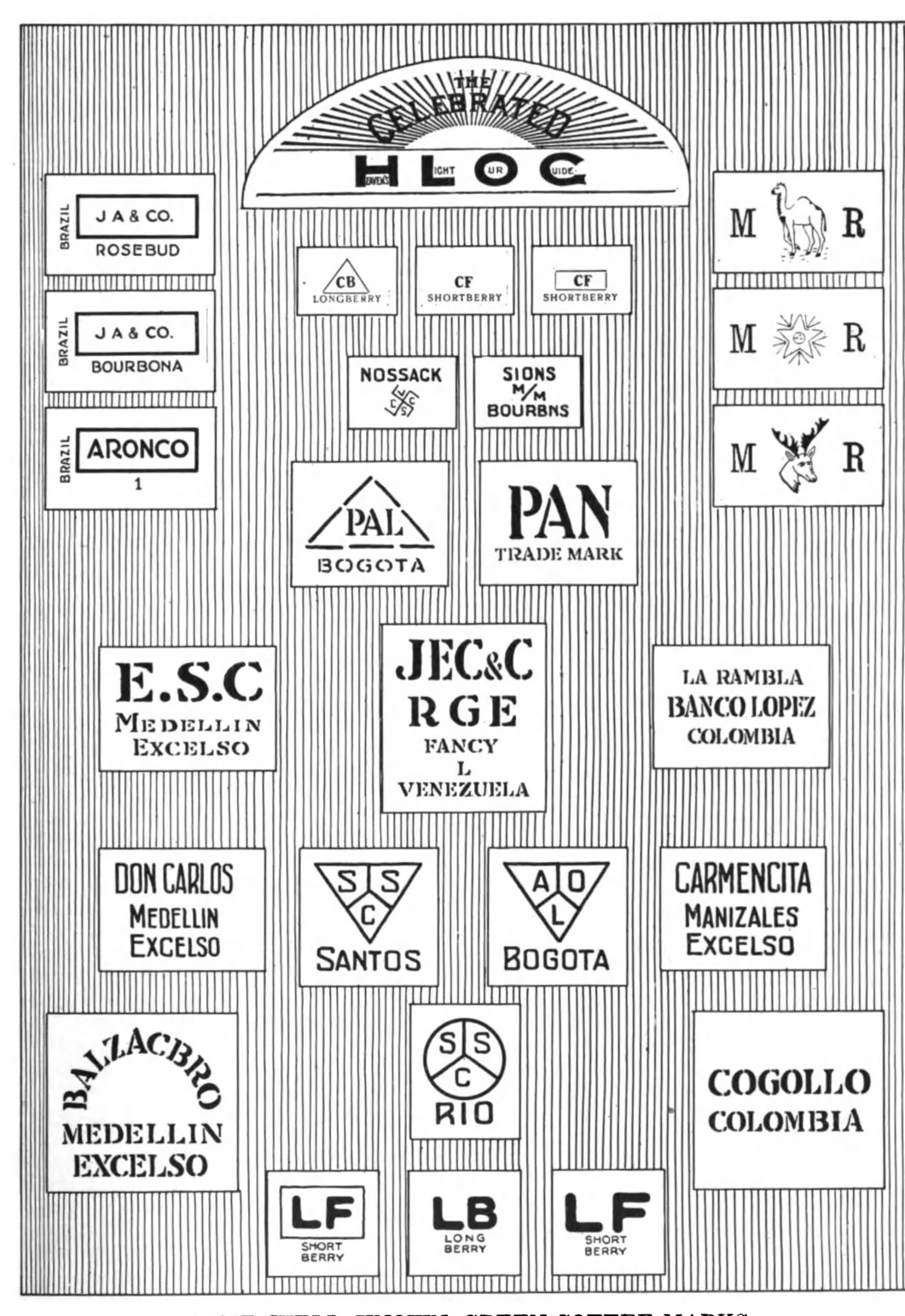
Between the one who exports and the one who roasts, there is a trade the public has never heard of and without which nothing would arrive: trading. A handful of houses finance the harvest, store it, hedge it against price swings and transport it. The German syndicate of 1873 and the committee of seven of 1908, met above, are their direct ancestors.
Today's names, and the city from which each works:
- Neumann Kaffee GruppeHamburg
- VolcafeWinterthur, in the ED&F Man group
- ofiSingapore, the former Olam
- SucafinaGeneva
- Louis Dreyfus Companybetween Rotterdam and Geneva
- ECOMPully
Reread the list of cities: not one is in a producing country.
How much do they weigh exactly? This was long unknown, for lack of named figures, that is, volumes attached to a specific house rather than to a whole country.
An analysis by Trase gives them for the first time. Trase is an organization founded by the Stockholm Environment Institute and Global Canopy. It published these figures in September 2026, from customs data for 2020: it is this passage through customs that makes it possible to go down from the country to the company.
On the export side, here are the shares of world volumes:
- ofi and Olam7.6%, in the lead
- Louis Dreyfus4.1%
- Neumann3.4%
- Sucafina3.0%
On the import side, the order changes, and a roaster slips in among the green coffee traders:
- Neumann6.8%
- Nestlé5.5%
- Olam4.6%
And here are the two figures to remember. The top ten companies control 35% of world exports, the top thirty 55%. The 2018 BASIC study already estimated that in 2013 the five largest green coffee traders handled nearly 40% of the green coffee trade.
Trase, report on coffee exports and imports by company, summarized by Daily Coffee News, Sept. 2, 2026 (accessed Sept. 7, 2026); BASIC, Étude sur la durabilité de la filière café, summary (Oct. 2018), p. 7The green coffee trader is the only actor who sees the entire chain, from the differential negotiated at origin to the price delivered to the roaster; he is also the only one, with the big roasters, to make massive use of hedging on the C contract. What La Roque described of the broker of Bayt al-Faqih applies to him: he sells information, and this information is complete only with him. This is not an accusation, it is the description of a function without which millions of bags would find no buyer; it is also the reason why the distribution of value upstream of the port is the least documented point of the supply chain.
LC ch. 6 and 18 (analysis); ITC 2021, ch. 6 (futures markets and hedging)Between the producer and the port, two models of organization have tried to take back some of the power to set the terms. The first is the cooperative, which pools pulping, drying, sorting, export and sometimes credit; it makes it possible to sell by the container rather than by the bag, to obtain a certification (Fairtrade certifies only organizations of small producers, not individuals), to negotiate a differential and to keep the first processing step, hence the quality and the price that goes with it.
Its limits are documented by the BASIC study: governance, insufficient cash to pay on the spot at harvest against intermediaries who, for their part, pay immediately, dependence on a few buyers, and the cost of renewing audits. The second model is the national institution. The Federación Nacional de Cafeteros de Colombia, founded in 1927, financed by a levy on every pound exported paid into the Fondo Nacional del Café, publishes an internal reference price every day and guarantees the purchase of any standard-quality coffee at that price by its cooperatives: on September 4, 2026, 2,080,000 pesos per 125 kg load of parchment coffee, adjusted according to the distance to the purchase point, or 16,640 pesos per kilo of parchment.
It is this public intervention that explains, according to BASIC, why the Colombian producer captured 16% of the consumer price in 2017 against 10% in Peru and Ethiopia.
BASIC 2018, pp. 9-11, 20-21; Federación Nacional de Cafeteros, precio interno de referencia of Sept. 4, 2026 (federaciondecafeteros.org, accessed Sept. 7, 2026); Fairtrade International, small producers' standardEthiopia chose another path in April 2008 with the Ethiopia Commodity Exchange, created at the instigation of the economist Eleni Gebre Medhin: a national physical exchange through which most of the coffee was to pass, with grading by warehouse and quotation by category. The expected advantage was a transparent market price for hundreds of thousands of small producers; the drawback noted by specialty buyers was the loss of traceability, the coffee of a washing station being blended into a regional category.
Later reforms have reopened direct sale for vertically integrated exporters; the balance between price transparency and lot identity has no single solution. Who wins in a national exchange: the anonymous seller of a standard coffee, who obtains the price of his category without negotiating. Who loses: the producer whose lot was worth more than its category.
Ethiopia Commodity Exchange (2008), after the reference entry accessed Sept. 7, 2026; LC ch. 18 (traceability analysis)In this plateThe 11 sections
- 01Before the exchange: Mocha, the brokers and the right not to come
- 02The century of kings: Arnold, the syndicate and the crash of 1880-1881
- 03The exchange and its panics: New York 1882, Le Havre, Hamburg, London
- 04Brazilian valorization and wartime controls, 1906-1944
- 05The International Coffee Agreement, 1962-1989, and its breakdown
- 06The 2001 crisis
- 07Green coffee traders, cooperatives and the institutions of origin
- 08Incoterms
- 09The industrial roasters
- 10Climate, the EUDR and the cost of compliance
- 11Archive plates
The table of contents, with the first sentence of each section