The extracted caffeine: which of the two is the by-product?
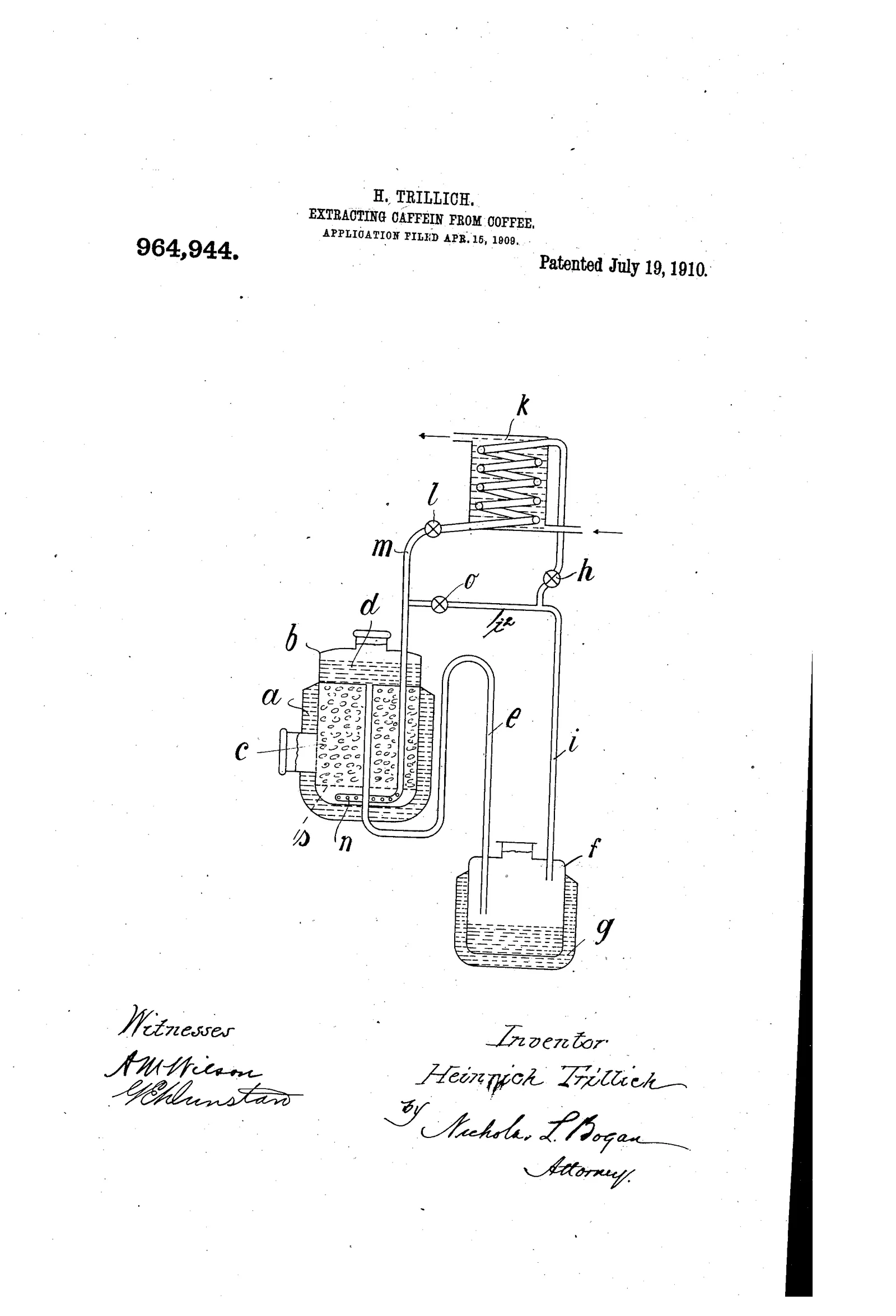
The question is not rhetorical, it served as the title of a scientific article, and the answer is less obvious than it seems.
The caffeine removed from the beans is not thrown away. It is purified and sold. It goes to three customers: cola-type sodas, the pharmaceutical industry, cosmetics. The lion's share goes to beverages, around 80 to 90% of the caffeine extracted from green coffee. In other words, the caffeine you do not drink in your decaf, someone else drinks in their soda. It has not disappeared from the world, it has changed bottles.
The reversal comes next. The demand for caffeine from these industries is far greater than what decaffeination produces, while decaf accounts for only about 10% of the world coffee market. Caffeine drawn from the bean is therefore not enough, by a wide margin: most of the caffeine added to consumer products is in fact synthetic caffeine, made chemically, at a cost beyond comparison.
Count on about 5 to 10 dollars a kilo for synthesis against 50 to 100 dollars for a natural extract. China is said to produce about 80% of world supply.
Which answers the question in the title, and the answer is instructive. There was a time when manufacturers were suspected of decaffeinating mainly to recover the molecule and sell the tired bean on top of it. Judging by the prices, it is the reverse: natural caffeine is too expensive to interest a soda maker who can buy it ten times cheaper in a flask. The real product is indeed the coffee. Caffeine is the by-product, and a by-product that one is glad to sell, but which does not pay for the plant by itself.
Which is the by-product: caffeine or decaf coffee? (ResearchGate); NCBI Bookshelf, Caffeine, Coffee, Tea, Maté, Methylxanthines (IARC monograph); LabAlley, Caffeine uses and applications; Proper Wild, How is caffeine made, accessed on 09/18/2026In this plateThe 14 sections
- 01The problem comes down to one sentence of chemistry
- 02Decaf: from Bremen to Sanka
- 03What caffeine-free coffee built in Bremen
- 04Why decaf coffeepots are orange
- 05The processes, one by one
- 06The processes specialty coffee is inventing
- 07The methylene chloride quarrel
- 08What the bean really loses, and what is attributed to it
- 09Roasting it: three landmarks that jump all at once
- 10Who decaffeinates, and where: a handful of plants worldwide
- 11What it costs, and why decaf is more expensive
- 12The extracted caffeine: which of the two is the by-product?
- 13The other route: coffee plants that make none
- 14The questions people ask most often
The table of contents, with the first sentence of each section