The other route: coffee plants that make none
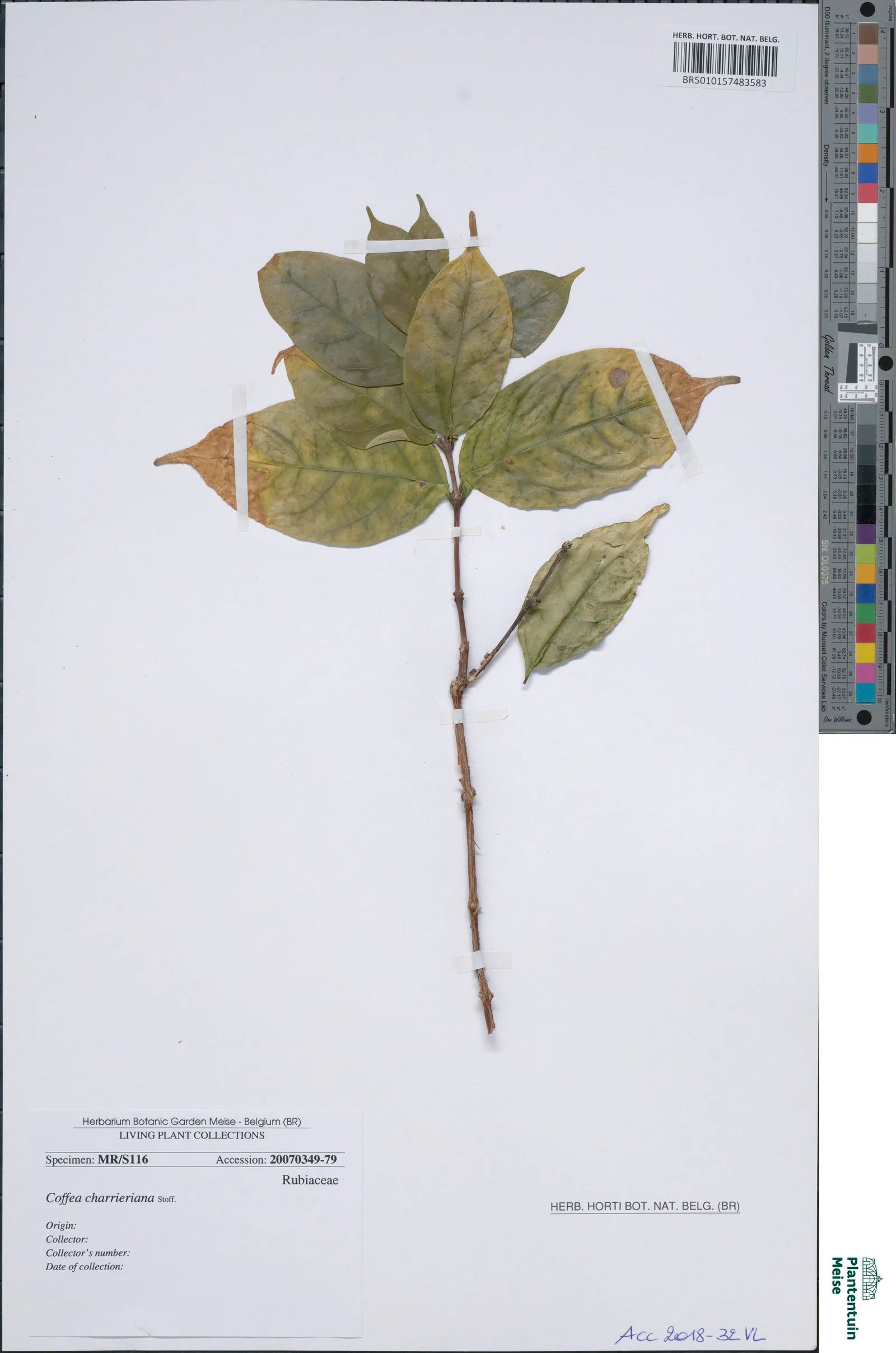 Coffea charrieriana
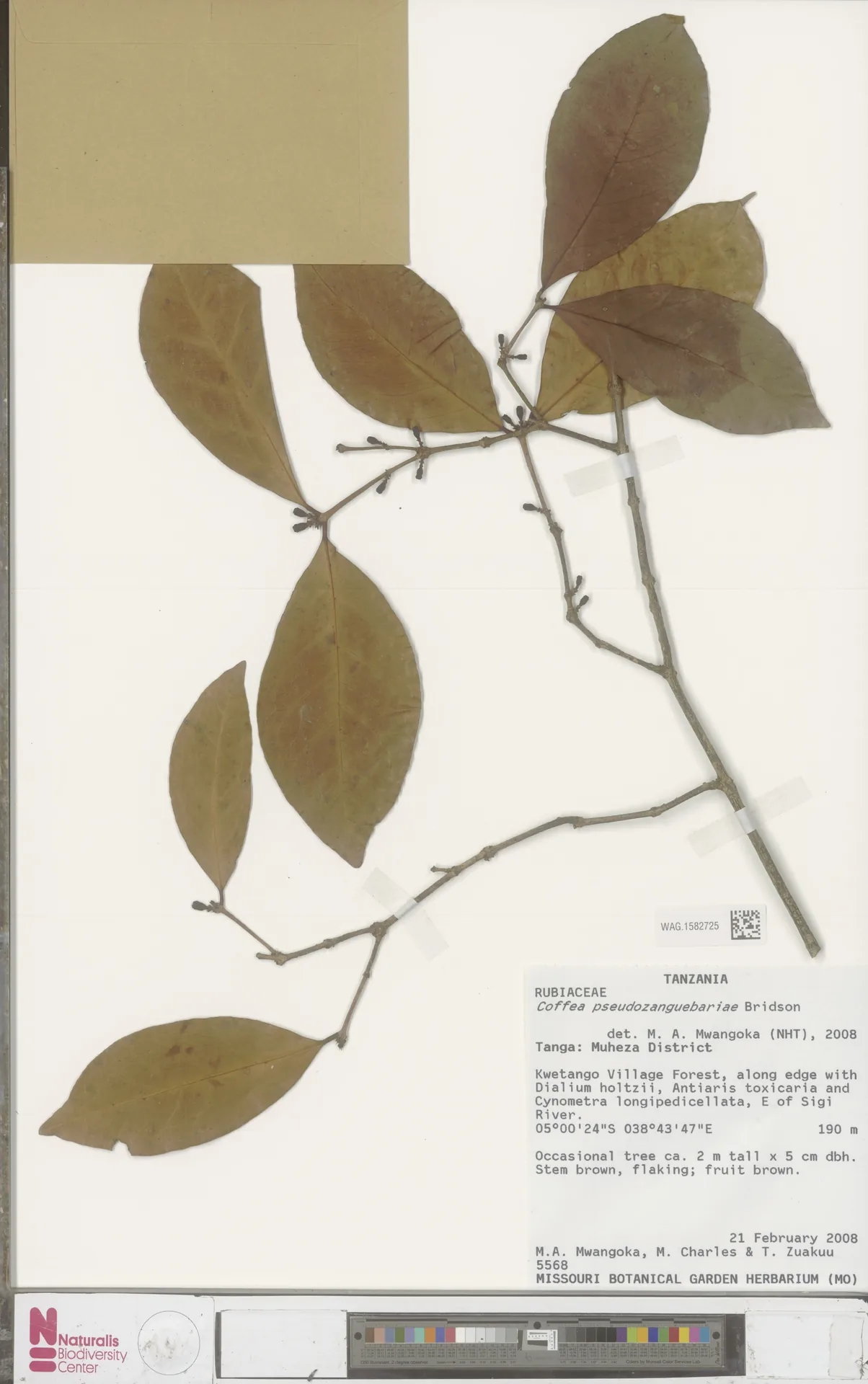 Coffea pseudozanguebariae
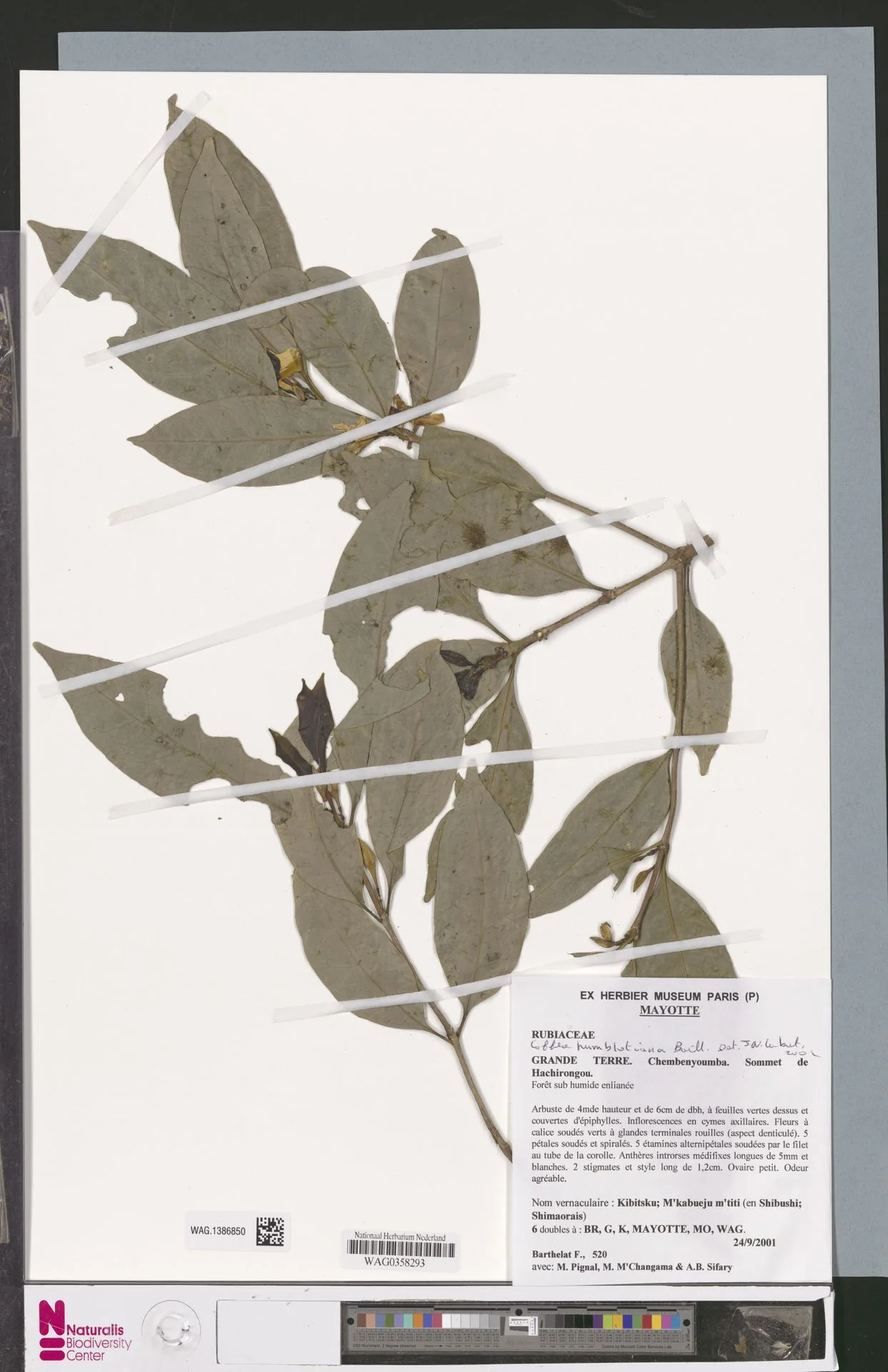 Coffea humblotiana
Since the problem is removing the caffeine, the elegant solution would be to grow a coffee plant that makes none. Several exist. None is in your cup, and it is worth understanding why, because the reason is not technical.
The most promising event dates from 2004. A team from the Agronomic Institute of Campinas, in Brazil, published in Nature a note of a few paragraphs: by screening three thousand Ethiopian coffee plants representing three hundred lineages, they found three arabica trees almost devoid of caffeine. The mechanism is known: they lack caffeine synthase, the enzyme that turns theobromine into caffeine; they therefore accumulate theobromine, the molecule of cocoa, and stop there.
A crucial detail: they are arabicas. It is therefore a matter of crossing an arabica with an arabica, which is infinitely simpler than marrying arabica to a wild species. The commercial name Decaffito was registered in Brazil on that prospect.
Silvarolla, Mazzafera and Fazuoli, A naturally decaffeinated arabica coffee, Nature 429 (2004), p. 826Twenty-two years later, nothing is on the market. No Decaffito coffee is sold. The lesson is that of all coffee breeding, and this plate is not the first to give it: a trait found on one tree is not a variety. Between the two, the lineage must be fixed over several generations, yield, disease resistance and cup must be checked, then the plants multiplied and distributed.
On a plant that bears fruit after three or four years, each generation costs half a decade. The Ethiopian Gera coffee hybrid 1, for comparison, took forty years between the collection of its parents and its release.
The other leads are even more remote. Coffea charrieriana, collected in Cameroon and described in 2008, is caffeine-free but critically endangered, known from a single locality. The Mascarocoffea of Madagascar have no caffeine but a bitter principle that makes the infusion undrinkable. And the only cultivated variety that is really low in caffeine, Laurina or Bourbon pointu, tops out at half that of an ordinary arabica, which is very far from the regulatory 0.1%, and is paid for in fragility and yield. The detail of these species is in the caffeine plate.
What remains is genome editing, which could switch off the caffeine synthase gene directly. Technically, it is today the shortest route. Commercially, it is the longest: a coffee from an edited plant would have to face, on a pleasure product sold on its authenticity, exactly the debate awaiting genetically modified organisms in Europe. Nobody in the trade seems in a hurry to open it.
In this plateThe 14 sections
- 01The problem comes down to one sentence of chemistry
- 02Decaf: from Bremen to Sanka
- 03What caffeine-free coffee built in Bremen
- 04Why decaf coffeepots are orange
- 05The processes, one by one
- 06The processes specialty coffee is inventing
- 07The methylene chloride quarrel
- 08What the bean really loses, and what is attributed to it
- 09Roasting it: three landmarks that jump all at once
- 10Who decaffeinates, and where: a handful of plants worldwide
- 11What it costs, and why decaf is more expensive
- 12The extracted caffeine: which of the two is the by-product?
- 13The other route: coffee plants that make none
- 14The questions people ask most often
The table of contents, with the first sentence of each section