Jabez Burns & Sons
Production drums, New York, United States.
History
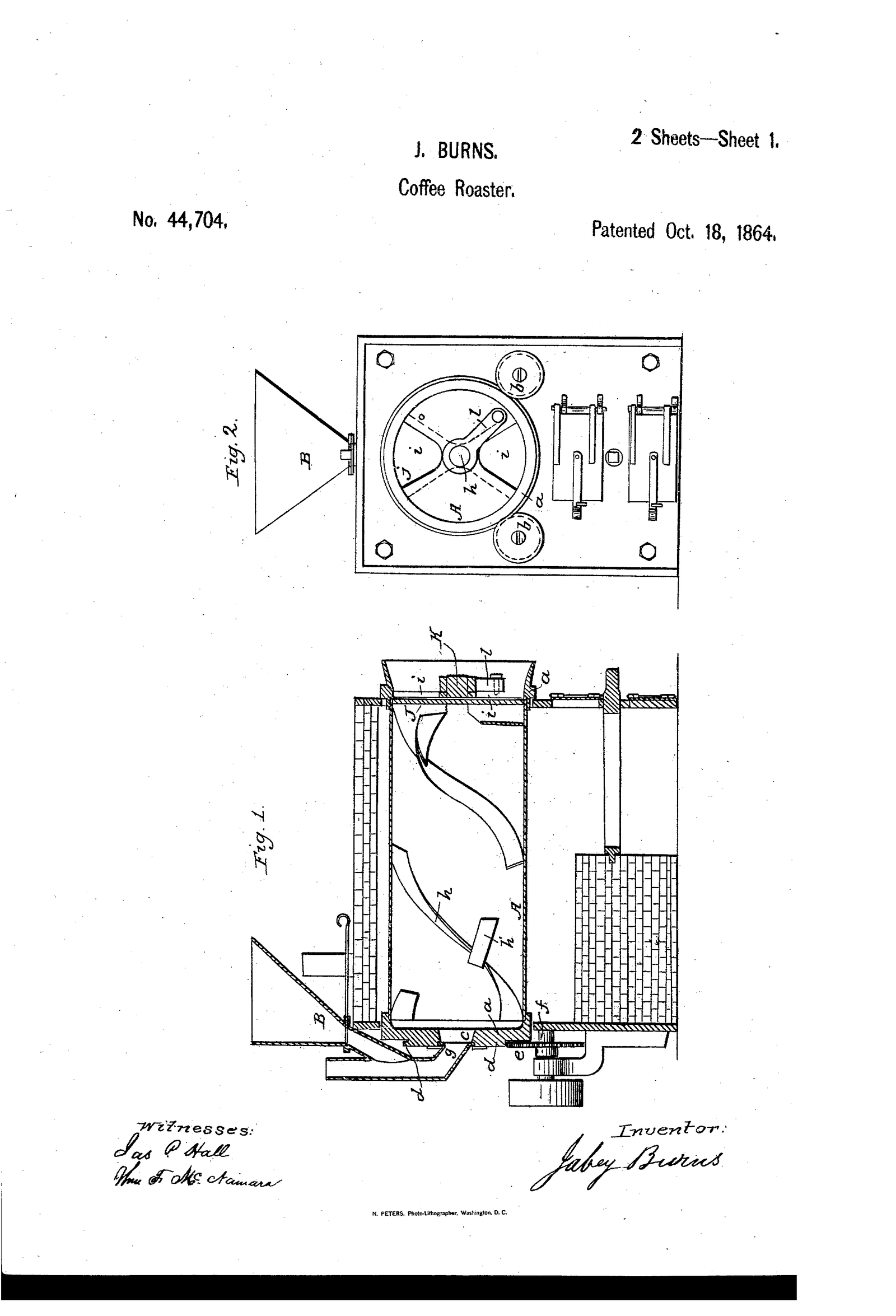
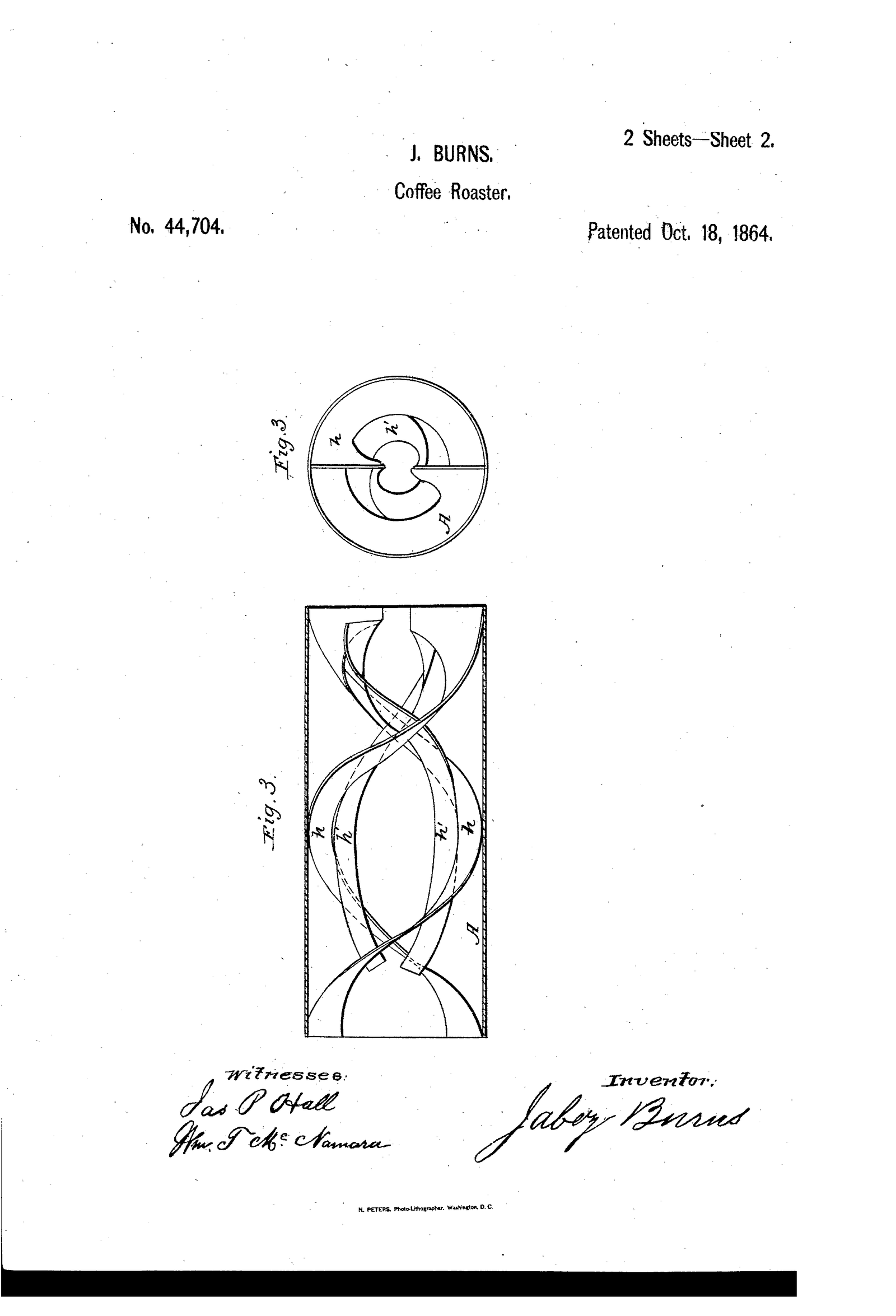
In 1864 Jabez Burns filed the patent that changed the trade: a drum that can be emptied without taking it out of the fire. Until then, each batch meant unhooking the burning cylinder. The firm set up at 107 Warren Street to make it.
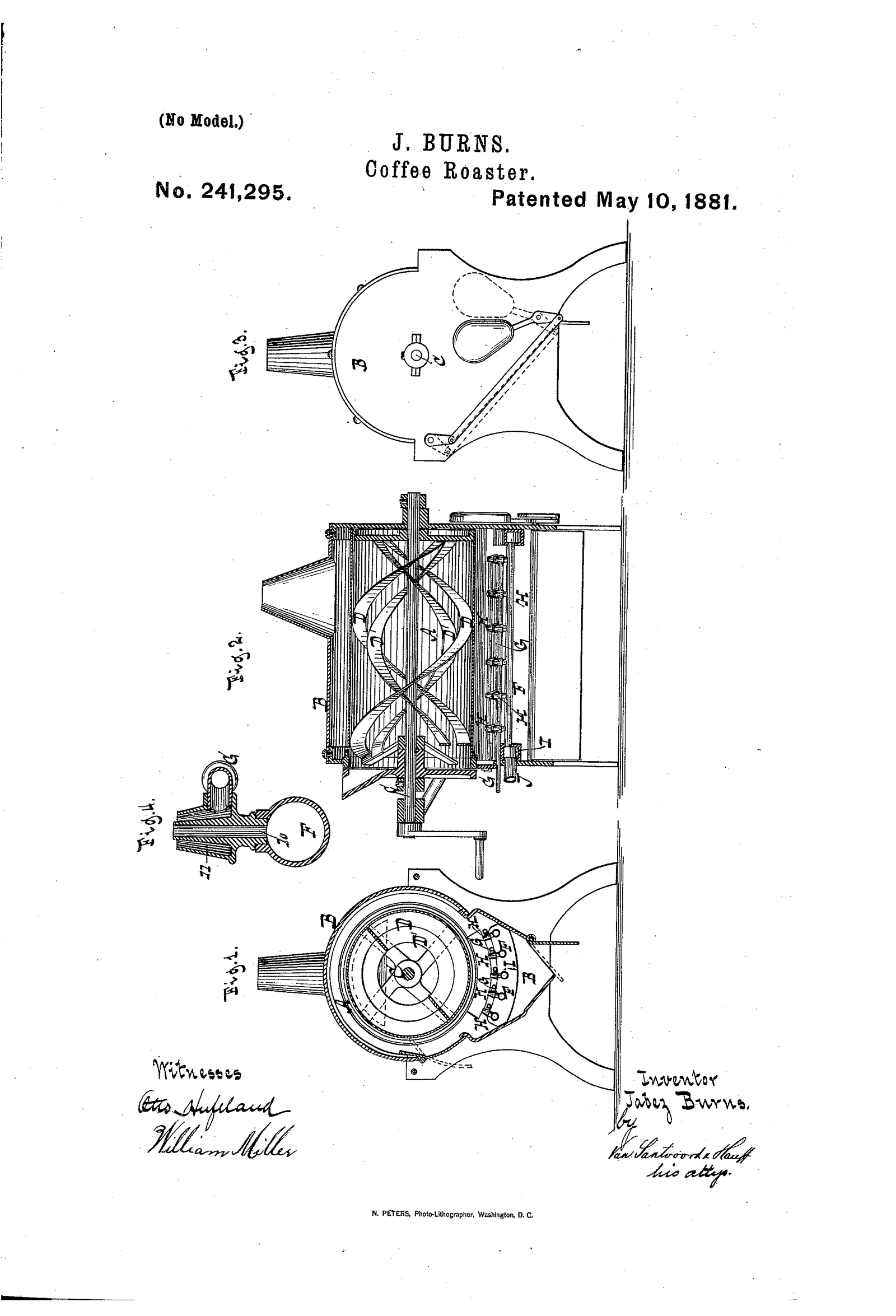
Next came the cooler in 1867, the granulator between 1867 and 1874, an improved roaster in 1881, the first sample roaster in 1883, the direct flame with a pivoting door in 1900, the open perforated cylinder in 1908, the gas or electric tilting sampler in 1909. Burns published the Spice Mill from 1878 and died in 1888.
The 1864 patent expired, Abele copied it in 1882 under the name Knickerbocker, and Burns's reply was a new patent rather than a lawsuit. The company was incorporated in 1906, moved into a six-story factory on 43rd Street in 1908, doubled its floor area in 1917, and Ukers described it in 1922 as “the largest coffee machinery shop in the United States.” The Arbuckle Jumbos and the batteries of twenty-four Burns roasters of the big New York houses came out of it.
What it makes
Direct-flame drums, and the machinery that goes around them: coolers, granulators, samplers. It is the firm that industrialized American roasting.
The models
The name survived through several takeovers and the current range could not be established with certainty here. Old machines, for their part, are resold and restored: a Burns from the 1920s still works in several shops.
What you gain
Direct flame gives a responsiveness that indirect heating does not: a rise is corrected in a few seconds. The mechanics are simple, repairable, and the parts can be remade on a lathe.
What you lose
Direct flame burns the surface of the bean if the charge is too small or the rise too sharp, and it demands an operator who knows what he is doing. On the old models, no reliable probe and no recording: everything rests on the eye, the ear and the trier.