Growing without burning
what really changes when the scale changes, in either direction
In this text
- The image we like to tell, and what it hides
- The slide you don't see coming
- The stage that doesn't make anyone dream
- Packaging, the ceiling you don't see
- The machine, symbol or tool
- Buying more changes everything
- Holding the cup as volume rises
- The other quality, the one you don't taste
- The payroll, a change of regime
- Learning to pass on, rather than carrying everything
- Saying no, perhaps the most underrated skill
- Staying small, growing, or both: a matter of coherence more than size
- The temptation of the second line
- Not to conclude
- Photo credits
Evolving is never just a question of kilos or machines. At each stage, the trade changes in nature. A journey through the silent stages of a roasting business, from the garage to the factory that dreams of specialty.
We all have this image in mind. A workshop, a machine turning gently, the smell of coffee coming out of the hopper, someone tasting, adjusting, telling the story. A trade you can see, touch, smell. For many of us, it is this image that made us want to start. And honestly, it has something true in it. The problem is that it tells only part of the story.
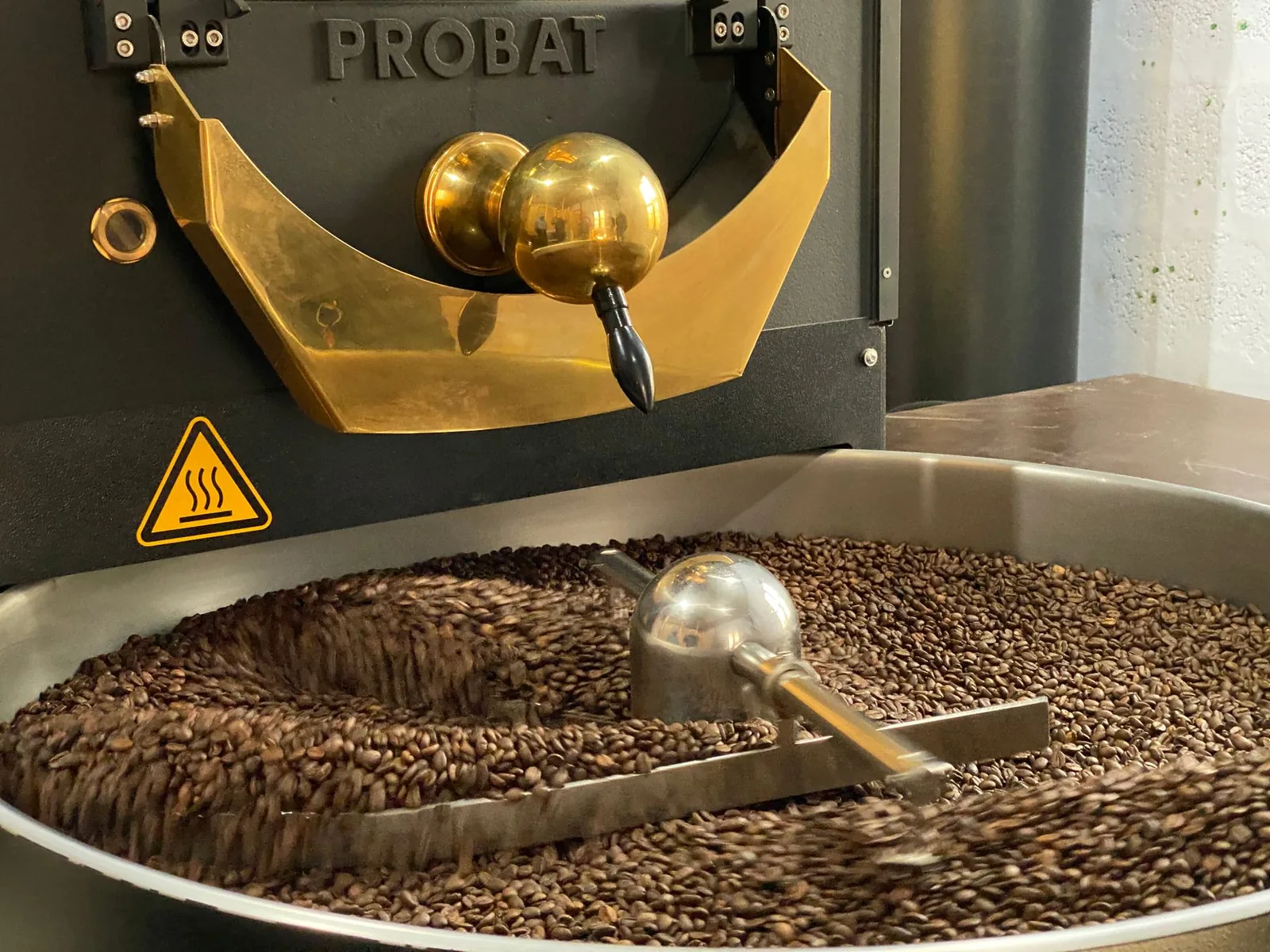
At the other end of the spectrum, another scene plays out, sometimes almost at the same time, in very different offices. A production line that has been running for years, comfortable volumes, an organization with little left to prove. And, in a meeting room, an idea ends up emerging: specialty coffee is taking up space, its image appeals, why not get into it too, with a second line, smaller, finer, set up next to the big one? On paper, it seems simple. A smaller roaster in a corner of the factory, one or two people who know their stuff, and the job is done.
What is troubling is that these two scenes, which seem to belong to different universes, ask almost the same question. In one case, you start from a garage and wonder what you will have to build for it to hold as it grows. In the other, you start from an already solid structure and wonder what you will have to change to make something smaller and more fragile than what everything was designed for hold up inside it.
In both cases, the temptation is the same: to believe that the change comes down to the size of a machine, when in reality it touches everything around it.
Behind this first image, the garage, there is often a more tiring reality than you imagine at the start. Hours you don't count, because you no longer even know where they begin and end. Packing that takes longer than expected. Stock you manage a bit by feel. And above all, one person who becomes, almost without realizing it, roaster, salesperson, delivery driver, community manager, accountant and repairer, sometimes on the same day. We call it versatility. We could just as well see in it an accumulation of roles we never really chose.
Behind the second image, that of the big structure looking toward specialty, the underestimated reality is in a way reversed. The problem does not come from a lack of means. It comes from the abundance of everything that was built for another logic. Flows designed for regularity, not for variation. Teams trained for efficiency, who suddenly have to learn constant adjustment. And decision circuits that make sense at large scale, but crush everything that needs to move fast, try things, and sometimes get it wrong.
In both cases, at some point, something changes. Not brutally. Rather in silence. For the one who starts small, the problem at the beginning was selling enough. It then became producing without burning out, then producing regularly, holding a constant quality, financing the equipment, thinking about a team, and perhaps, one day, learning to refuse certain things. For the one who starts big and looks toward small, the path is different, but the principle remains the same: each stage reveals a new mismatch between what we want to do and what the structure, as it exists, really allows us to do.
So this text does not aim to say how to “scale” a roasting operation, nor how to go back on an industrial line, if those words mean anything. The real question, the one we sometimes avoid, is different: how do we evolve, in either direction, without losing what made us start, or what gives strength to what we have built? Mastery, meaning, people, the freedom to choose what we do and what we refuse.
To give an idea of what we will go through together, we will mostly start from the best-known path, that of a small structure that grows, because it is the simplest to tell step by step. We will talk about the machine, of course, because it is often the symbol around which everything else crystallizes. We will also talk about things you don't necessarily expect in a text about roasting: the real packing capacity, which is very often the first real ceiling, well before the machine; the moment when hiring someone changes the financial nature of the company, not only its organization chart; everything to do with food safety and with a regulation on the origin of products that keeps evolving, unrelated directly to taste, but capable of closing one day a door we thought was open.
And at the end, we will come back to the second scene, that of the big structure and its specialty line, to see what this whole path allows us to shed light on about it.
These are perhaps the most silent stages of all, the ones you never talk about when roasters get together, whether you are moving up or stepping back down a notch, until the day you run into them, and it costs a lot not to have seen them coming.
The image we like to tell, and what it hides
At the start of a roasting project, we often give in to a rather gentle kind of fantasy. We imagine the place, the machine, the coffees we are going to choose. We imagine customers who understand everything the first time, a community that builds itself naturally, a bright workshop where everything breathes coherence. This image is seductive, and it is not false in itself. It is simply incomplete.
What we often forget are the invoices, the lead times, the standards, the cash flow. And that customer, very pleasant by the way, who explains that they want “a coffee that isn't acidic, but still fruity.” We could laugh about it, and in fact we do. But it reveals something important: many projects start from the product, from what we like, from what we feel like roasting. Very few really start from the customer, from what they are ready to buy, at what price, with what regularity.
Nothing dramatic about that. Simply, at some point, we need to ask ourselves a few questions, not to get discouraged, but to move forward with a little more lucidity. Why do we want to roast? For whom? With what clear proposition? Do we have product skills, sales skills, or do we secretly hope both will build themselves along the way?
The first stage, which we might call the “garage,” has something precious about it. You learn fast. You test coffees, you come up against reality, you build an identity, often without even realizing it. Mistakes cost little there, and that's just as well, because you make a lot of them. The freedom is total.
This stage also has its limits, and they come sooner than you think. Consistency becomes difficult as soon as everything rests on one person. The separation between personal life and the business blurs. The real costs, those of cleaning, sorting, losses, the time spent packing, stay vague. And we tend, I think we have all done it at some point, to multiply the number of coffees on offer to feel legitimate, to “do specialty.” As if a wide range proved something.
How do you know this stage is coming to an end? Perhaps when orders, which should be good news, start to create stress rather than joy. When cleaning is constantly put off. When you work all the time, without it translating into real progress. At that point, a question deserves to be asked honestly: do we stay small because it's our choice, or because we haven't yet structured enough to move to the next stage? The nuance is not slight, it changes a great deal.
The slide you don't see coming
This trade has this particularity: moving from one stage to the next changes not only the amount of work. It changes the very nature of what we do. What worked at twenty kilos a week can become downright toxic at two hundred kilos. What seemed alive and artisanal can become disorganized, exhausting, fragile. Conversely, what looks more structured, more squared away, is not necessarily a betrayal of craft. We sometimes tend to forget that.
When you start to have a real clientele, when consistency becomes visible, something tips. You are no longer in the testing phase. The brand promise, even if you never put it in those words, starts to commit you to something. Mistakes cost more. The customer comes back, and comes back with an expectation.
That is when things have to start appearing, without it becoming heavy or administrative: a slightly more legible range, coffee sheets that hold up, profiles you can reproduce and not only get right once by luck, a minimum of lot tracking, a pricing logic that stands up, cupping routines, even simple ones.
This is also when the trap of the range that is too wide can become real. We have all come across, or been, that roaster who offers fifteen different origins to sell forty kilos a month. Too many microlots, too many losses at the end of stock, too many profiles to maintain, too many stories to tell each customer. I say “can become real” deliberately, because there are also roasters who make this diversity, precisely, their identity, and who manage it very well.
The question is perhaps not the breadth of the range in itself, but whether it is chosen and organized, or whether it has piled up over time out of whims without anyone noticing.
Then there remains this question, which we don't much like to ask but which always ends up coming back: is this coffee profitable, or just sold? Between the purchase price of the green, the roasting loss, packaging, energy, selling time, administrative time, trade discounts, unsold stock, the samples given away without really counting them, there is often a gap between what we think we earn and what we really earn. Not out of dishonesty. Simply because we never took the time to look.
The stage that doesn't make anyone dream
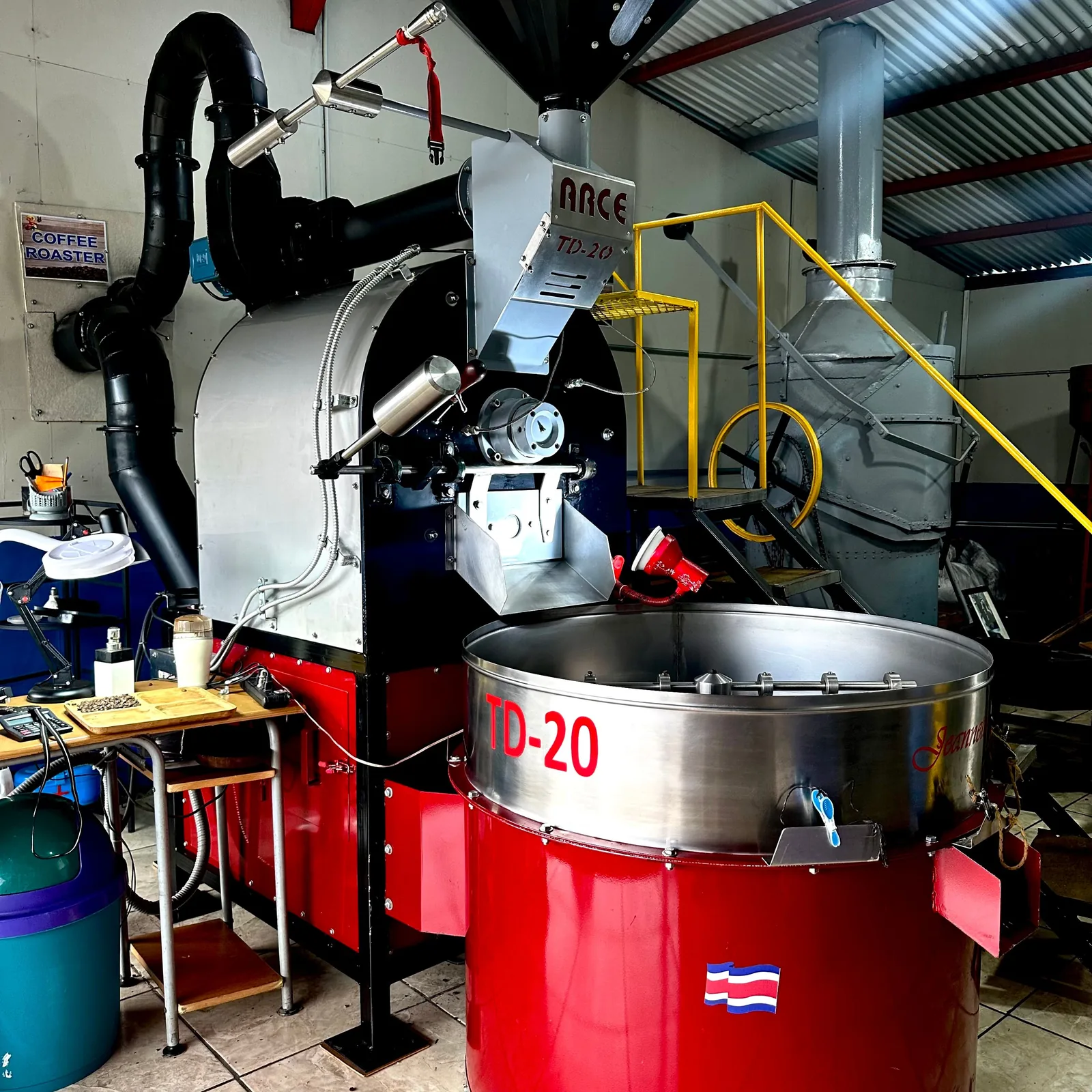
No stage is less appealing to talk about than profitability. It doesn't get told on social media. It talks about margin, pace, packing tables, schedules. It breaks the romanticism of the trade a bit. And yet, without it, everything else stands on sand.
We tend to set profitability against quality, as if one came at the expense of the other. I think the opposite is often true, provided we specify which kind of structure we are talking about. A business that is self-financed, with no outside funding, generally ends up cutting into quality if it isn't profitable: it buys less well because it has no choice, it trains less, it maintains its equipment less, it wears people out, it accepts customers it should never have accepted because it needs the revenue, it postpones the investments that would have changed everything.
For a structure financed otherwise, by a partner, by another activity, by an investor, things can go differently for a while. “For a while” is the important phrase. Profitability is not the betrayal we sometimes imagine. It is rather a condition for being able to continue, over time, however we are financed at the start.
The difficulty comes mostly down to this: many costs remain invisible. Handling, batch changeover times, cleaning, packaging, labeling, order preparation, shipping, after-sales service, cupping, samples, maintenance, losses of green coffee and after roasting, coffee given away, time spent explaining for free, time spent repairing an organization that was never designed. Taken separately, each of these items seems anecdotal. Added up, they often tell a different story.
This is also when the first real trade-offs arrive. Should we shrink the range? Raise prices, and how do we explain it? Stop working with certain trade customers who cost more than they bring in? Buy a little bigger to secure the terms? Create minimum orders, even if it seems a bit rigid at first? These are uncomfortable questions, because they touch on decisions we often made by default, without really choosing them.
One last idea is worth keeping in mind: “I'm selling more, so things are going better” is not always true. More volume can degrade cash flow. More customers can increase service costs. More orders can saturate packaging. More wholesale can bring down the average margin. You can very well grow and, at the same time, drift a little further every month from the balance you were looking for.
Packaging, the ceiling you don't see
There is a subject we rarely bring up for its own sake, and which nevertheless deserves a pause: it is probably the first real production ceiling you meet, well before the machine.
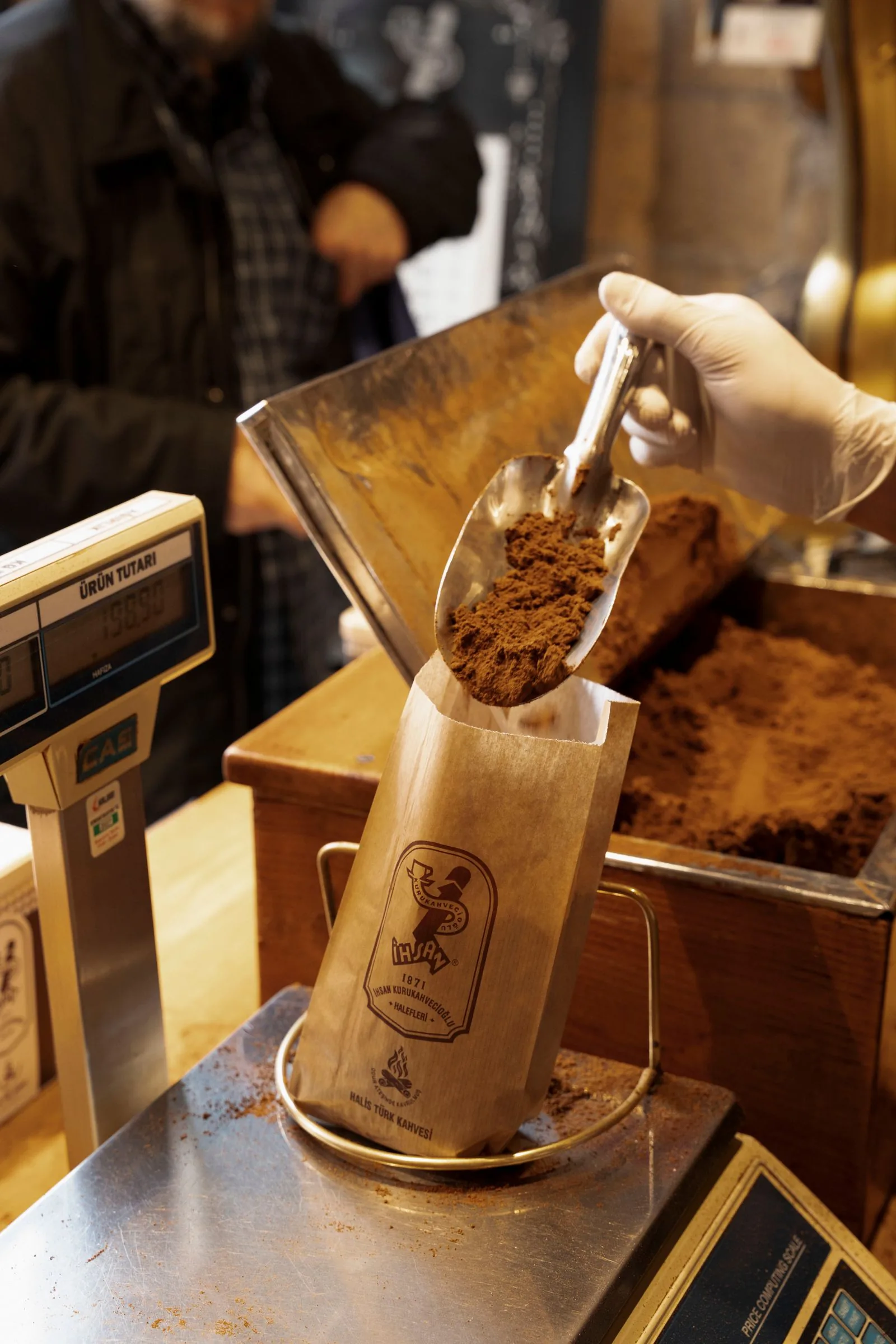
At small volume, roasting and packing are the same person, in the same stretch of time, with no clear boundary between the two. You roast a bit, wait for it to cool, weigh, bag, label, roast again. It all flows together, and since one person does everything, you never perceive packaging as a separate step. It's just “the rest of the work.”
The problem is that these two activities do not have the same capacity logic. A machine can very well be capable of producing, over a week, far more than what one person can pack in the same time. Weighing, opening a bag, dosing, closing, fitting a degassing valve if you use one, labeling, putting away. Each of these actions takes a few seconds, but multiplied by the number of bags, it quickly becomes most of the working time.
You can quite well end up with a machine that is largely underused, because the roasted coffee piles up waiting to be packed, and this waiting stock takes up space, ages, and ends up posing a freshness problem of its own.
It is a strange situation to live from the inside. You feel you lack production capacity, when in reality you lack packing capacity. The natural temptation, in that case, is to buy a bigger machine, which solves nothing and can even make things worse, since there will be even more roasted coffee waiting.
A few concrete questions, which don't require heavy calculations, can help you see where you really stand. How many kilos can you actually pack in a day, with the current organization? Does the roasted coffee wait long before being bagged, and if so, how long, and can you taste it in the cup? Does the roasted coffee storage space regularly overflow? Do order peaks, which we should nevertheless welcome with pleasure, create a bottleneck precisely at the moment of packing and shipping?
What is interesting is that this ceiling is often less costly to move than you think. A slightly faster sealer, a scale that makes dosing easier, a different organization of the workstation, sometimes simply one more person a few hours a week, and the ceiling recedes significantly. A bigger machine, for its part, commits you for years. Before asking whether the machine is the right investment, the first question, the most humble, is probably whether it isn't simply the packing table that is defining, without our knowing it, the real size of the workshop.
The machine, symbol or tool
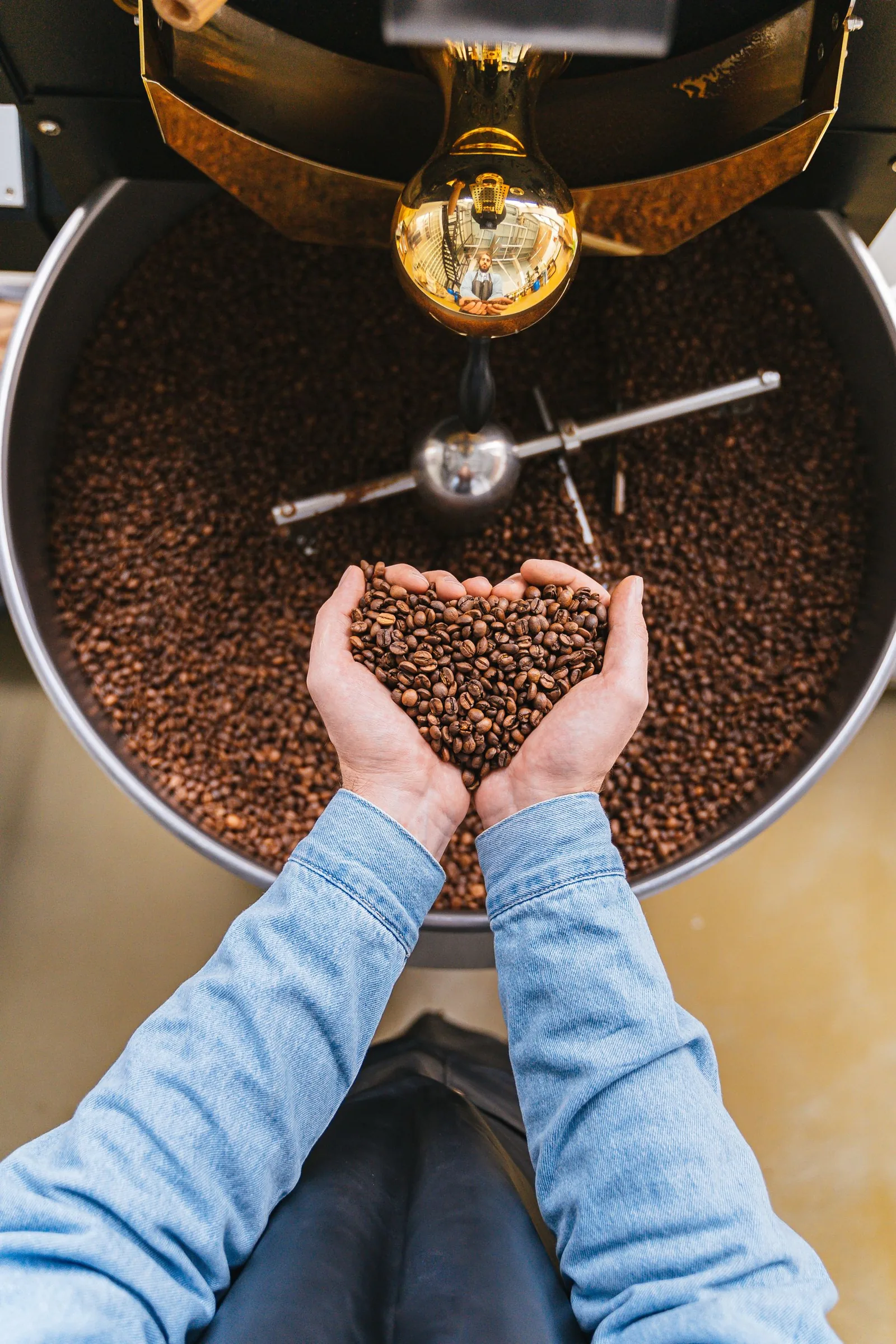
For many roasters, there comes a moment when the idea of a new machine becomes almost obsessive. It is understandable: a bigger machine is reassuring, it also impresses a little, it has to be said, and it gives the impression of moving on to the next stage, of becoming “serious.” The problem is that a bigger machine never solves an organization that works badly. It even tends to reveal its flaws, on a larger scale, and we have just seen that packaging is often the first of those flaws.
Before investing, a series of questions is worth asking, really asking, not just skimming. Is the current machine truly the bottleneck? How many production hours are actually used in a week? Is storage, green as well as roasted, keeping up? Is air extraction keeping up? Can the cash flow absorb a monthly payment, including during the quieter months?
We often talk about undersizing, and it's true that it is uncomfortable: a space that is too small, borderline cooling, a sacrificed resting period for the coffee, a team under permanent strain. We then compensate with bodies, fatigue, hours. We talk less, on the other hand, about oversizing, which is just as real, and perhaps more insidious. A machine that is too big, a workshop that is too heavy, debts that weigh, and above all, that almost unconscious pressure to “fill the equipment.”
We sometimes end up adapting our range to the machine, rather than the other way around. The tool starts dictating the vision, and that we don't always notice right away.
A machine, moreover, is never more than one element among others. Around it, the hopper, the cooling, the smoke exhaust, odor treatment, green and roasted storage, weighing, bagging, the sealer, labeling, the tables, workstation ergonomics, noise, maintenance, the neighbors. A workshop is not sized around a machine. It is sized around a complete flow. And this flow, does it move forward naturally, or does the coffee cross the same space three times, a bit like on a route that was never really thought through at the start?
Buying more changes everything
When you buy in small quantities, you have a rather comfortable kind of freedom. You order from an importer, you diversify, you turn over references quickly, the risk of dormant stock is low. The price is higher, certainly, but flexibility often makes up for this extra cost.
Then the volume grows, and everything gets a little more complicated. You start needing to secure volumes, sign contracts, make projections, sometimes several months ahead. Terms improve, but the financial commitment becomes heavier. The risk of dormant stock is no longer theoretical. The coherence of the range becomes a real subject: a coffee you buy in larger quantity has to be able to find its place, durably, in what you offer.
This is also where you discover, or rediscover, how technical sourcing is: differentials, incoterms, logistics, lead times, moisture, density, water activity, screen size, homogeneity, aging, certifications, traceability, and a regulation on the origin of products that keeps evolving. None of that was really an issue when you were buying ten kilos of five different origins.
A trap, rarely discussed, concerns somewhat fantasized “direct trade.” Going to origin is a wonderful experience, I will never say otherwise, and for certain coffees, it truly changes the game, for the better. But it is not enough, in itself, to buy better, and it does not guarantee it either. Buying directly does not automatically mean a balanced relationship.
The logistics can become complicated, sometimes even painful in their delays and surprises. The quality risk does not disappear. The financial risk, for its part, goes up. And the need for skill, to manage all this properly, becomes far more important than you imagined at the start. Nothing prevents you from jumping in, provided you do it knowingly rather than with blind trust.
Another idea would deserve to be better recognized than it is, that of the “foundation coffees.” Regular, profitable, legible coffees, which don't necessarily make you dream on a product sheet, but which pay the bills, finance experimentation, and ultimately protect the vision rather than endanger it. A rare and spectacular microlot is perhaps not much use if nobody besides us understands why it is there.
Holding the cup as volume rises
At small volume, we correct a lot by intuition. We taste, adjust, start again, and it works, because one person carries all the sensory memory of the product. But as volume increases, intuition alone is no longer enough, not that it gets worse, but because it can no longer be everywhere at once.
What must then be monitored gets broader: green coffee on receipt, moisture, density, smell, visible defects, roasting yield, color, profile, resting time, cupping, but also tasting in the final use. An espresso coffee must be validated as espresso. A filter coffee, as filter. A coffee intended for milk, tasted with milk. A coffee for automatic machines, tested in that real use. Cupping is a precious tool, but it is not the experience the final customer will have, and we sometimes forget that.
There remains a reality we don't always like to look in the face: same coffee, new lot, it can shift. Same lot, different weather conditions, it can shift too. Same profile on a bigger machine, the result is not guaranteed identical. Data, at this stage, does not serve to replace judgment. It serves to help it, to link what happens on the green coffee, in the heating, and what we find in the cup, without falling into the opposite trap, that of confusing a pretty profile on a graph with a roast that is truly successful.
What changes above all is that, at some point, quality can no longer depend on the memory of one person. At first, a notebook and regular cupping are enough. Then come lot sheets, profiles, customer feedback, then a real control routine, and further on still, a documented quality plan, traceability, retained samples. It is less about bureaucracy than about transmission, and therefore, in a way, about trust.
The other quality, the one you don't taste
Everything we have just seen is the quality we know, that we love, that we learned by tasting, by failing, by starting over. But there is another “quality,” which has nothing to do with taste, and which roasters talk about much less, perhaps because it is less rewarding, or because it seems distant to us, until the day it no longer is.
This other quality is that of food safety and regulation. The trap is that it doesn't progress at the same time as the rest, gradually. It stays invisible for a long time, because at small volume, nobody really looks at it. No inspection, no customer asking for a file, no audit. Then, at some point, often linked to the type of customer more than to the volume itself, it becomes unavoidable, all at once.
Concretely, what are we talking about? First, a logic often called by its acronym, HACCP, but which, behind the acronym, is fairly simple to understand. It means going back over each step of your activity, from receiving the green coffee to shipping the finished product, and asking yourself, at each step, what could go wrong from the point of view of product safety.
A foreign body in the green coffee. Cross-contamination if you roast flavored coffees next to plain ones, or if you work with allergens in the same space. A cleanliness problem in a storage area. Good will is not in question, we all have good working hygiene day to day. What changes is the need to document: to be able to show, in writing, that you have identified these points, and that you have put actions in place to control them.
These points, where, if you do nothing, the risk becomes real, also have a name, CCPs, critical control points. A question, which we rarely ask before being obliged to, deserves to be asked here: do we know, without thinking, which are the two or three places in our workshop where, if something goes wrong, it could have a real consequence on the safety of the product, and not only on its taste?
Then comes traceability, but a traceability a little different from the one we usually talk about. The one we tell on our coffee sheets, the producer's name, the altitude, the process, is a storytelling traceability, which serves the brand and which is beautiful. Regulatory traceability serves something else: being able, if a problem is identified on a lot, to trace precisely which bags were made with that lot, and to whom they were sold, so you can act fast if needed. These are two different logics, which can coexist, but which are not to be confused.
Labeling, for its part, has its own rules, on allergens, net weight, dates, origin, and it evolves regularly. Depending on the sales channels you choose, certifications are also added which are not imposed by law, but which become so through the market. Some retail chains, some big foodservice accounts, some export markets, require recognized food safety certifications, with regular audits, before agreeing to work with a supplier.
Nothing mandatory in the legal sense, in many cases. But in practice, without it, certain doors remain closed, whatever the quality of the coffee.
Why am I spending time on this subject, when it apparently has nothing to do with coffee itself? Because it is exactly the kind of thing we don't know that we don't know. You can be an excellent roaster, with an impeccable cup, and find yourself blocked cold by a customer who asks for a file you have never started to put together, or by an inspection that reveals you never formalized what, in practice, you already do correctly, but without documenting it.
The cost, in that case, is not measured in percentage of margin. It is measured in delay, in missed opportunity, sometimes in bringing yourself into compliance in a rush, under pressure, and therefore badly.
The good news, if we can call it that, is that this quality is built progressively, like the other. You don't need, in a garage, a complete documentation system. But you may be well advised to ask the question early, not to put everything in place immediately, but to know where you stand, and what awaits you if you grow in one direction or another. Do you know, even informally, the sensitive points of your process from a food safety point of view? Would you be able, today, to find to whom a specific lot was sold if you needed to? Do the channels you are aiming for tomorrow, mass retail, export, large foodservice accounts, have requirements you haven't even looked at yet?
The payroll, a change of regime
We mentioned it a bit earlier as one cost among others, the cost of labor, in the long list of expenses. But I think it deserves to be treated separately, because this cost is not just one more line in the table: it marks a change of regime.
Before the first employee, the company is us. Our time has no fixed price, we can work fifteen hours one day and three hours the next, we can decide, overnight, to slow down because the month is quiet. This flexibility, which we don't even notice as long as we have it, is in reality an enormous resource.
The first hire changes that deeply. First, the cost itself is often underestimated: in France, the payroll charges added to the gross salary represent a substantial share, on the order of several tens of percent on top. So it is not only the salary we see on the pay slip that we must be able to finance each month, it is that salary plus those charges, and that, come rain or shine, whether the orders are there or not.
And this is where it connects directly to the question of profitability and cash flow we discussed above. A variable cost, like buying green coffee, can be modulated: we buy less if we sell less. A salary cannot be modulated from month to month. It is a commitment. And the more employees we have, the more the share of fixed costs in the company grows, which means that low periods become riskier, even if, over the year, the figures remain good.
A dimension we rarely anticipate concerns thresholds. In French labor law, beyond a certain number of employees, new obligations appear: staff representation, mandatory training, occupational health, and others depending on the thresholds. I don't want to give precise figures here, because these thresholds can change, and the risk, in quoting them wrongly, would be to replace an uncertainty with a false certainty.
But the principle remains: these obligations do not arrive gradually, they arrive in steps, at the moment we cross a certain headcount, and it is better to anticipate them than to discover them.
Finally there is a more human dimension, which we almost never address in these discussions, but which counts just as much. Hiring someone also means taking responsibility for that person's life. It changes the way we decide. We can no longer tell ourselves “if it doesn't work, I stop and I'm just left with myself.” From now on we think for two, or for five, or for ten. This makes some decisions harder to take, and others, paradoxically, easier, because we no longer have the choice of putting them off indefinitely.
The different threads come together here. Packaging, which we saw above, is very often the first concrete reason to hire. Not to roast, but to pack, label, prepare orders. So the first hire is not only a question of “who is going to help me”, it is also, whether we like it or not, the moment when the company changes in financial nature, with fixed costs that did not exist before, and the obligations that come with them.
Learning to pass on, rather than carrying everything
At some point, the founder can no longer do everything: production, sales, administration, training, delivery, sourcing, quality in the broad sense, communication, maintenance, development. Continuing to carry everything then becomes a brake, and not a proof of high standards, even if that is often how we experience it.
The first hire is rarely simple, and we have just seen that it is not financially neutral. But beyond money, there is the question of the role. When to hire? To do what exactly? Production, packaging, shop, sales, communication, quality, administration? A fairly common mistake is to hire someone “versatile” to fill an organization that, in reality, mostly lacks clarity. We call it flexibility. It is sometimes just an elegant way of saying we haven't yet defined the roles.
Training does not mean cloning. Passing on the intention behind a decision, explaining why we do things this way, giving sensory landmarks, showing the gestures, letting the person do it, correcting kindly, accepting that the other will not reproduce exactly our way of doing things. It is probably one of the hardest exercises in the trade, because it asks us to let go of some control, precisely when we most want to keep it.
Questions of responsibility also deserve to be asked clearly, even if they seem obvious at the start. Who roasts? Who validates? Who tastes, and who decides whether a lot is held back? Who contacts the customer in case of a problem? Who tracks the stock, who triggers maintenance, who decides when there is a disagreement? And now that we have talked about the other quality, that of food safety, we can add: who makes sure the sensitive points are controlled, and that this stays written down somewhere, even simply?
There remains the human question, perhaps the most delicate of all. When these questions have no clear answer, everything ends up going back through the same person. The founder then becomes the limit of their own company. Not for lack of competence, but because everything, literally everything, is waiting for their green light.
Saying no, perhaps the most underrated skill
We talk a lot about what you have to do to grow. We talk much less about what you have to know how to refuse. And yet I think it is one of the most important subjects, and one of the most uncomfortable.
Saying no to certain customers, the ones who negotiate everything, who pay late, who don't respect the product, who ask for a lot for very little volume, or who degrade quality in extraction and then come back to us blaming the coffee. Saying no to certain coffees too, the ones that are too expensive for our target, the ones whose story goes far beyond what you find in the cup, the ones we bought a bit out of ego, let's be honest, it happens to everyone.
Saying no to certain volumes, when they saturate the workshop, weaken cash flow, or make us dependent on a single customer to the point of changing our model without having really chosen it. Saying no to certain investments, a machine that is too big, a space that is too expensive, a shop project that arrives too early. Saying no, sometimes, to a customer who demands a certification we don't have, and accepting that this customer, for now, will not be us, rather than getting into compliance in a rush and badly.
And perhaps the hardest, saying no to one's own ego. Wanting to look bigger, wanting to be recognized, wanting to post the photo of the new machine, wanting to do “like everyone else,” wanting to prove we are succeeding, to the point of confusing speed with solidity.
I have the impression, without being able to prove it with figures, that many roasteries do not disappear for lack of ideas. They disappear, or they wear themselves out, through an inability to choose, and through discovering too late everything we have just talked about: the packaging that hits a ceiling, the payroll that becomes a fixed weight, the regulation that closes a door we thought was open.
Staying small, growing, or both: a matter of coherence more than size
Staying small, deliberately, is not a failure. It is a model in its own right, with its own conditions: prices that are owned, a clear target market, low fixed costs, a short range, a strong brand, a loyal clientele, rigorous management. But it also means accepting certain risks: a strong dependence on the founder, an income ceiling, difficulty paying yourself properly, taking vacations, investing when needed.
And even when staying small, some of the questions we have seen, packaging, basic food safety, do not disappear completely. They are just simpler to manage.
Growing, for its part, is not in itself a betrayal. In specialty coffee, we sometimes associate volume too quickly with a drop in quality, structure with a loss of soul, as if process could only be a form of industrialization. But a small workshop can very well make bad coffee, and a larger structure can have a perfectly real standard of excellence.
Quality, in both its senses, the one we taste and the one we document, does not depend on size alone. It depends on the model, the choices, the tools, the people, the culture we build around it.
Growing can make it possible to buy better, train better, pay people better, stabilize quality, create jobs, reach more people, sometimes even improve everyday coffees, the ones we look down on a little but that millions of people drink every morning. The real danger is not in growth itself. It is in growth we did not really choose, that we endure more than we steer, and that makes us discover, at the worst moment, constraints we could have anticipated.
And between the two there are all the hybrid models, very common, often necessary, but which demand a particularly demanding internal clarity. The point is not to do everything at once. The point is to know what each channel really brings, what it costs, and what it imposes in return, including what it imposes outside the cup.
The temptation of the second line
So we come back to that second scene mentioned at the very beginning. There is a situation we are beginning to see more and more, and which goes almost in the opposite direction from everything we have just said. So far, we have talked about structures that grow, and that discover, stage after stage, what it asks of them. But there is also a parallel movement, observed in several brands, without it being useful to name any: structures already well established, with a substantial production line, that decide to open a second line, smaller, finer, to make specialty or premium coffees.
It is fairly easy to see why. The main line, by dint of growing, has calibrated itself for regularity, large volumes, homogeneous lots. That is precisely what makes it efficient at what it does. But that same efficiency makes it poorly suited to rarer, more variable coffees, which call for small lots, fine adjustments, and a tolerance for irregularity that the main tool was designed precisely to eliminate.
So the idea of a second line, smaller, almost artisanal, becomes seductive. It makes it possible to reach another market, to restore a closer image, sometimes even to give meaning back to part of the team, the people who have a real feel for the product and who feel a bit cramped on the big line.
The risk is to think that this second line comes down to buying a smaller roaster, set up in a corner of the factory. Everything we have talked about so far, the flow, packaging, organoleptic quality, the other quality, the payroll, was designed and built around the logic of the big line. Making a second logic coexist, on a smaller scale, in the same building, with the same teams or nearly, is not an addition. It is a superposition of two systems that do not obey the same rules, and that can get in each other's way in rather unexpected ways.
On the side of the other quality, for example, two lines often mean two traceability logics to make coexist without confusing them, and sometimes new critical points to identify, simply because there are now two different product flows in the same space, with risks of crossover that did not exist before. On the packaging side, a line designed to go fast, with long runs, does not naturally lend itself to frequent short runs, with changes of reference, small formats, sometimes different packaging. You can adapt to it, but that often takes more than a simple machine adjustment.
A less material but equally real dimension comes into play here. The big structure has, out of necessity, built decision circuits suited to its scale: validations, processes, lead times, which make sense for it. The small line needs the opposite, being able to test, adjust, change its mind quickly, accept a little more uncertainty. Making this agility live inside a structure whose strength, precisely, is not to be agile, is an exercise in its own right, one that is not solved with an organization chart.
The human question, finally, is perhaps not the least. How do those who run the line that generates most of the revenue live alongside those who look after the smaller line, “nobler” in appearance, but which weighs far less in the figures? Depending on how it is presented and experienced internally, this can be a source of shared pride, or on the contrary a source of rather muffled tension, where part of the team feels it is doing the work “that counts” while another does the work “that shows.”
I am not saying it is impossible. Solutions exist, I am sure of it. Some structures really separate the spaces, with dedicated teams, sometimes even a different brand or entity. Others prefer not to do everything in-house, and form partnerships with smaller, better-suited structures, rather than superimposing two logics under the same roof. None of these options is free, neither in money nor in organization.
So the question is perhaps not “can we open a second line,” but rather: what are we ready to change, beyond the machine, so that this second line really has the conditions to work as what it claims to be, and not merely as a showcase set on top of a structure that remains designed for something else?
Not to conclude
I don't know whether there is a right answer to all these questions. I'm not even sure that is the point. What seems more accurate to me is that at each stage, there is a form of courage at the start, of rigor afterward, of organization, then of money, then of passing on, then of renunciation. And all along, lucidity.
A healthy roasting business is not necessarily big. It is not necessarily small either. It is sized to its project, it knows why it exists, it knows its limits, and it knows what it refuses. And perhaps, above all, it knows its own blind spots, or at least, it has tried to know them.
So perhaps the real question, the one we should ask ourselves from time to time, is not “how to grow.” It is rather: what, in my workshop today, works because I chose it, and what works just because I never had the time to rethink it? What is, in my process, the point I never look at, because it has never caused a problem, until now? And if tomorrow I had to change stage, would it be to serve my project, or to answer a pressure I have never really named?
We are not obliged to grow. But we are probably obliged to ask ourselves these questions, again and again, at every stage, including those that have nothing to do with coffee.
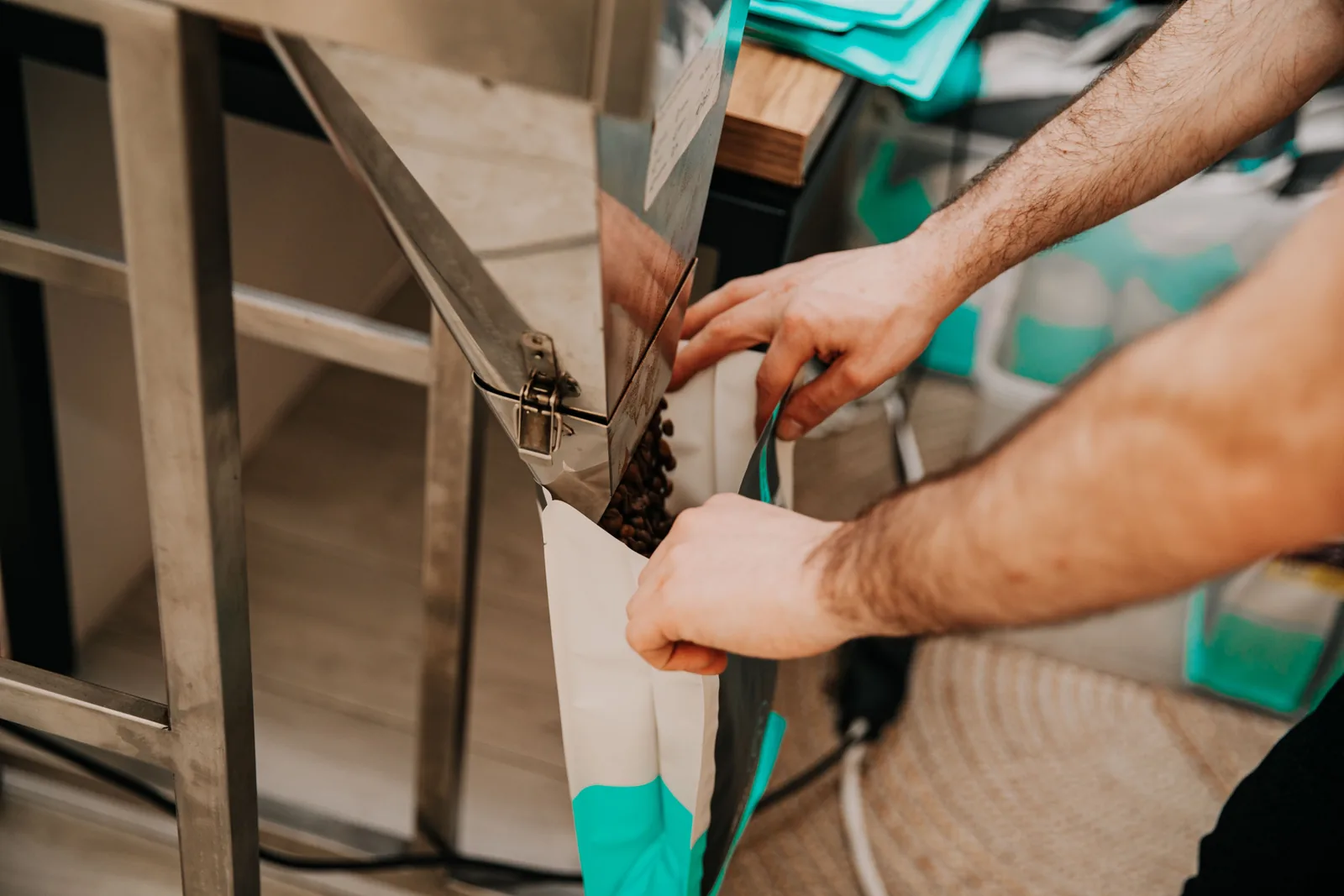
Photo credits
All images are published under a Creative Commons license and used in accordance with its terms (attribution). No brand is named in the body of the article.
- Photo: antony_mayfield, “King size coffee roaster,” Flickr, CC BY 2.0 license (source)
- Photo: mckaysavage, “Colombia - Coffee Triangle - coffee beans,” Flickr, CC BY 2.0 license (source)
- Photo: AndreasPoike, “Coffee beans and a scoop,” Flickr, CC BY 2.0 license (source)
- Photo: avlxyz, “Espresso Coffee Machine,” Flickr, CC BY-SA 2.0 license (source)
- Photo: _-0-_, “Barista Tools,” Flickr, CC BY 2.0 license (source)