36Vietnam
~ 20 million bagsIn-depth country profile: production, varieties, classification, history, current situation and points that remain uncertain. Region: Asia.
Vietnam's entry into the world market upset all the other producers: between 1975 and 2000, its production was multiplied by a hundred, raising it to second place worldwide behind Brazil. The first plants date from 1857, however; it was the “green revolution” of the 1970s that changed everything.
The system is very intensive, in monoculture, with many state plantations leased out in small plots. The country is massively canephora, but a few thousand hectares of arabica (often Bourbon, more aromatic) are worked, sometimes organically. The big companies invest continuously in technology and quality.
- Botanical species
- Canephora (90%), Arabica (10%)
- Harvest
- Canephora: manual, non-selective (stripping); Arabica: manual, selective (picking)
- Processing
- Canephora: dry process (90%) and wet; Arabica: mainly wet process for export
- Preparation
- Manual sorting
- Harvest period
- September to March
- Packaging
- 60-kg bag
Recent volume 31.7 million bags in 2025-2026USDA FAS, June 2025
The grade is the main criterion. Since 2001, new criteria make comparison with the Indonesian grades easier. Five grades exist, for arabica as for canephora (max defects by equivalence on 300 g).
Arabica
| Grade | Screen | Max defects |
| Special grade | 16/18 | 15 |
| Grade 1 | 14/16 | 30 |
| Grade 2 | 12/14 | 60 |
| Grade 3 | 10/12 | 120 |
| Grade 4 | < 10 | 150 |
| Grade 5 | < 10 | Not specified |
Canephora
| Grade | Screen | Max defects |
| Special grade | 16/18 | 30 |
| Grade 1 | 12½/16 | 60 |
| Grade 2 | 12/12½ | 90 |
| Grade 3 | 10/12 | 150 |
| Grade 4 | < 10 | 250 |
| Grade 5 | < 10 | Not specified |
Some superior lots (fewer defects or higher screen) are simply noted in addition to the grade in the purchase description.
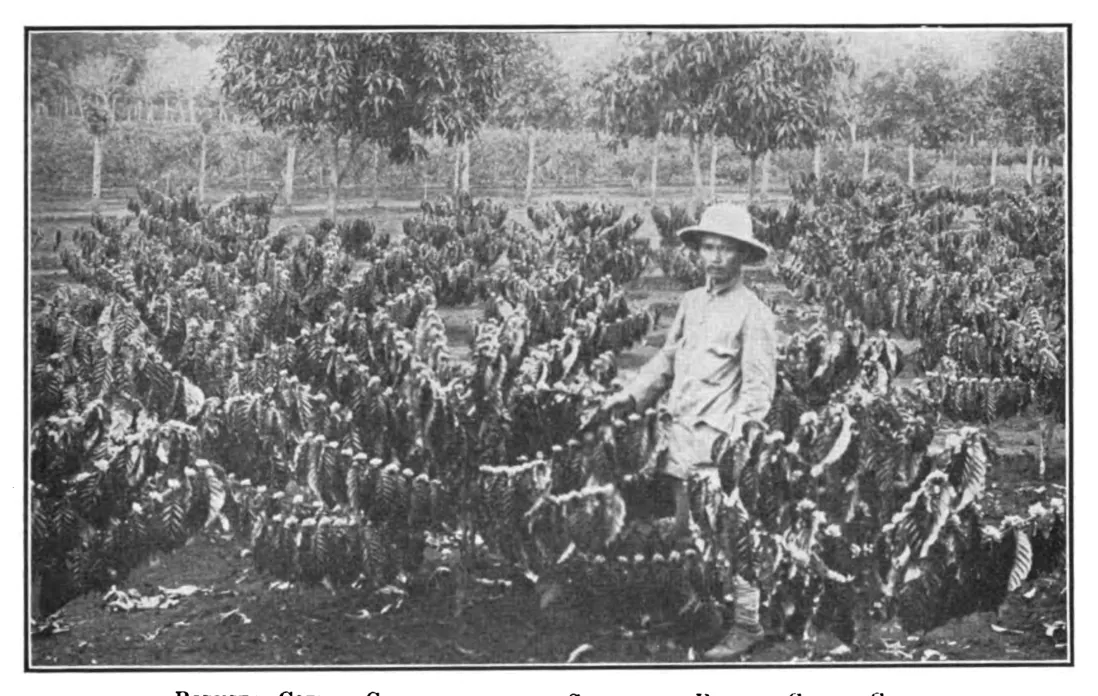
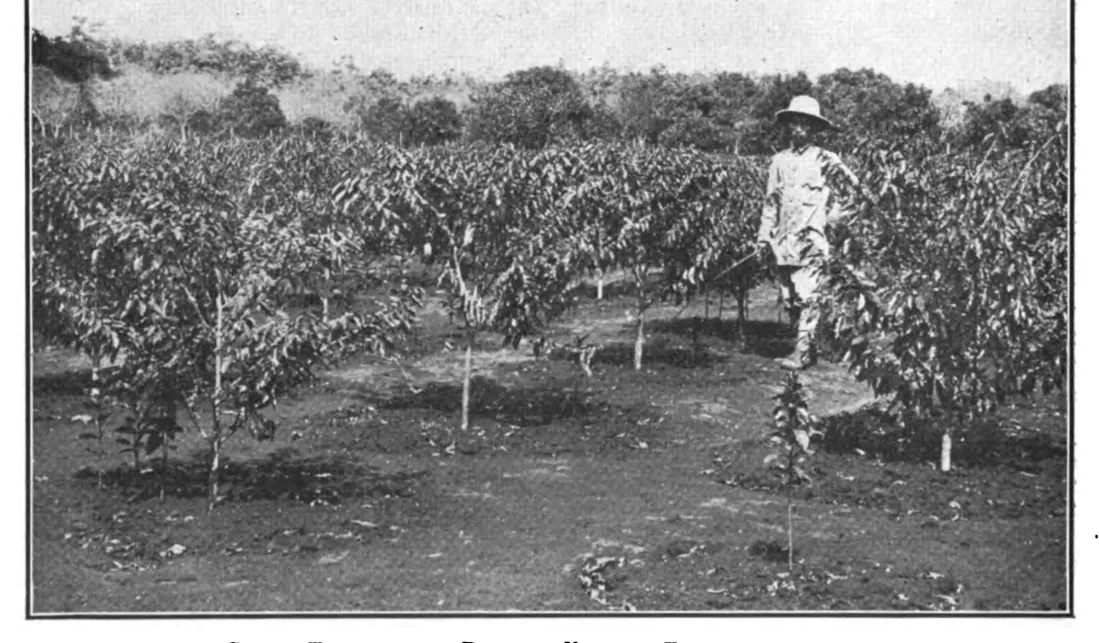
History
Ukers dates the introduction of coffee to Indochina by the French, in Tonkin, to 1887; the profile traces the first plants back to 1857. The two dates are not incompatible (missionary trials first, colonial planting afterward), but no source consulted connects them. In 1918, French Indochina exported 79,145 pounds of coffee: almost nothing.
Ukers, All About Coffee (1922), ch. II, p. 5-10; Ukers 1922, ch. XXII, p. 289-291 (exports of the producing countries), p. 290; Country Profiles, Marco De Sousa Rosa, 2026- Then came the event that upset the world market. Between 1990 and 2000, Vietnam multiplied its production by fifteen, almost all of it canephora
- 2001and became the world's second-largest producer behind Brazil. The profile speaks of a multiplication by a hundred between 1975 and 2000. This arrival coincides with the collapse of the quotas in 1989 and prepares the crisis
- 1997when the ICO indicative price fell to a third of its value
Today
The profile gives about 20 million bags; the USDA reports 31.7 for 2025-2026. The system is intensive, in monoculture, with many state plantations leased out in small plots. Canephora dominates, harvested by stripping and processed 90% by the dry process; a few thousand hectares of arabica, often Bourbon, Typica, Caturra and Mundo Novo, are worked by picking and the wet process for export.
Country Profiles, Marco De Sousa Rosa, 2026; USDA FAS, June 2025The country has also built its own clones: TR4 and the other TRs are selected by the WASI, the agroforestry institute of the Central Highlands, from mother trees spotted in open-pollinated cultivated populations, then multiplied by propagation by cuttings. The large companies invest continuously in technology and quality.
World Coffee Research, Coffee Varieties Catalog 2025, TR4, TR9, TR11 profiles; Country Profiles, Marco De Sousa Rosa, 2026Gray areas
- The dates of 1857 (profile) and 1887 (Ukers) are not reconciled by the sources consulted.
- The multiplication “by a hundred between 1975 and 2000” cited by the profile and the multiplication “by fifteen between 1990 and 2000” cited by McCook do not cover the same period; no annual series was checked here.
- The exact role of Vietnamese public policies in the boom (credit, internal migration, guaranteed prices) is documented by no source in the corpus.
- The area actually planted in arabica in Vietnam is not quantified by the available sources.