ATLASCentral African Republic
about 325,000 tonnes (FAOSTAT 2024, imputed value)In-depth dossier, atlas 2026In-depth dossier: the FAOSTAT series compared with the other figures, the history, today's sector and its gray areas, numbered sources. Region: Africa.
The Central African Republic had only one statistical landmark. This dossier completes it: the history of the sector, what it is today, and what remains uncertain, each paragraph referring to its sources, numbered at the foot of the page.
The FAOSTAT series remains displayed as is. The dossier says what it is worth, year by year when possible, and compares it with the other figures available.
- Geographic status
- country
- Name in FAOSTAT
- Central African Republic
- Latest value
- about 325,000 tonnes in 2024
- Nature of the value
- value imputed by the receiving organization
- Read with caution
- This value is imputed, that is, estimated by FAOSTAT without a national report, and the series ranges from 9,050 to 324,923 tonnes over ten years, with no other source describing a sector of that size. The landmark is shown because it is in the database, not because it is established.
- Start of the positive series
- 1961
- Series maximum
- about 325,000 tonnes in 2024, imputed value
Confirmed coverage: the FAOSTAT series, and a dossier of 21 sources that cross-checks the history, today’s sector and what remains uncertain.
History
The first coffee tree that science attaches to Central African territory was not planted there: it grew there. Auguste Chevalier discovered it in 1902 in Ubangi-Shari, the colonial name of the country, in the Upper Chari basin, and named it Coffea excelsa. Coste takes up Chevalier’s description in 1955: a tree of 6 to 15 meters, sometimes 20, very robust and drought-resistant, but slow, since it reaches full production only at eight or ten years, and so variable that its fruits ripen unevenly, which complicates the preparation of the bean. Ukers, in 1922, places it in the region of the Chari River, not far from Lake Chad, and ranks it among the forms of liberica, a classification that lasted: for decades, excelsa was only a variety, called dewevrei, of Coffea liberica. A genomic study published in Nature Plants in 2025 made it a species again, under the name Coffea dewevrei, older and therefore taking priority under the rules of nomenclature; its natural range covers Central Africa, the Central African Republic included. The site discusses it in its liberica profile and in its glossary [12][13][15][21].
Colonial cultivation starts from very low. Ukers’s export table credits all of French Equatorial Africa, of which Ubangi-Shari is only a part, with 48,060 pounds of coffee in 1916, or about 22 tonnes. The planters of the interwar period bet on excelsa and its relatives, which Coste calls the excelsoids, and it is on them that coffee wilt disease falls, that is, a disease caused by a fungus, Gibberella xylarioides, which blocks the tree’s vessels and makes it die of thirst. Observed as early as 1927, judged alarming in 1938, it had almost completely destroyed 15,000 hectares of excelsoids in 1942, without any local laboratory having been able to give the cause in time: it is the Belgian plant pathologist Steyaert who identifies the fungus, and Saccas, at the Boukoko laboratory, who studies it. Canephora, the region’s other species, had been introduced from the Belgian Congo in 1921 according to the national control office; it is canephora that takes its place. The site tells this episode in its plate on coffee wilt disease [12][13][4][19].
Research settles in Lobaye. The Boukoko experiment station, created in 1939 near M’Baïki, works in the 1950s on two fronts: finding canephora and excelsa resistant to coffee wilt disease, of which two plants, B 10 and A 445, then raise serious hopes, and understanding the “Nana coffee tree.” This one grows spontaneously in the gallery forests, that is, the strips of forest that follow watercourses, of the Nana River, a sub-tributary of the Sangha, in the Carnot region. First classed with Coffea congensis, then brought closer to a Guinean variety of canephora, it remains in 1955 a “presumed variety” of that species, with small beans, fairly drought-resistant since the rainfall of its habitat falls some years below 1,000 millimeters, but which cannot do without shade; it is cultivated only in the Carnot and Bouar regions. Twenty years later, in 1975, a survey mission of ORSTOM and IRCC collects wild coffee trees in the Central African Republic, including Coffea congensis along the Ubangi, around Bangui and on Louma island, replanted in a collection in Côte d’Ivoire from 1976. The site places the wild Central African canephora in the Congolese genetic group, whose atlas profile includes the CAR in the area of origin [13][16][17][20].
Independence, on August 13, 1960, does not change coffee’s place: second agricultural export product after cotton, a crop that touches directly or indirectly more than a third of the population according to the government, it brings in 1986 a little over 5 billion CFA francs to families and more than a billion a year to the state in export duties. The country joins the International Coffee Organization in 1962, within an African and Malagasy group. From 1978 to 1999, three donor-financed projects follow one another: the ADECAF for family coffee growing in Lobaye, Mambéré-Kadéï, Sangha-Mbaéré and Bimbo, then the PDRCS, then the PAPAAV in the southeast. Over the period, exports fluctuate between 8,000 and 22,000 tonnes of green coffee a year, areas go from 39,000 hectares in 1980 to 65,000 in 1998 and the number of planters from 24,000 to 70,000. The peak lies at the end of the 1980s: 362,000 60-kilo bags exported in 1988-1989 according to the control office, a production of 362,000 bags in 1988 according to the USDA, and 24,482 tonnes, an official figure, in FAOSTAT the same year [4][5][7][1].
The decline begins with the century. The end of the projects, liberalization, the withdrawal of the state, political instability and the price collapse of 2001-2002 bring controlled exports down to 3,927 tonnes in 2003-2004, then 1,500 tonnes in 2005-2006; they rise again to 7,000 tonnes in 2006-2007 and hold around 5,000 tonnes in 2008-2010. The industrial plantations have disappeared, the planters of 2013 are those who started before or during the 1970s, and the Minister of Rural Development reports that year the return of coffee wilt disease in the east, on more than 400 hectares. The taking of Bangui by the Seleka, in March 2013, opens a crisis in which coffee becomes a resource of war: in the southeast, around Bambari, the control office records only 47 tonnes sold and taxed in 2013, then the armed group UPC imposes keeping half, then 60%, of the tax, and part of the harvest leaves for Sudanese traders along routes held by the armed groups, or for the Democratic Republic of the Congo across the Ubangi. A report of the United States Institute of Peace estimates at 2.75 million dollars a year what the armed groups draw from the coffee market [5][9].
The FAOSTAT series follows this account until 2017, then breaks away from it. From 1961 to 2010, its values are almost all official figures, between 1,500 and 24,482 tonnes; those of 2001 and 2003 to 2008 are flagged as unofficial, and those of 2011 to 2013, imputed, that is, calculated by FAO for lack of a report. From 2014 to 2017, it hovers around 10,000 tonnes. It then goes to 89,979 tonnes in 2018 and 202,753 tonnes in 2019, two imputed values, then to 289,283 tonnes in 2020, this time as an official figure, and climbs to 324,923 tonnes, imputed, in 2024. None of the other sources read sees this rise: they describe a country that produces at most a few thousand tonnes and exports between 400 and 2,500 a year over the same period. The gray area below takes up the series year by year [1][3][6].
Today
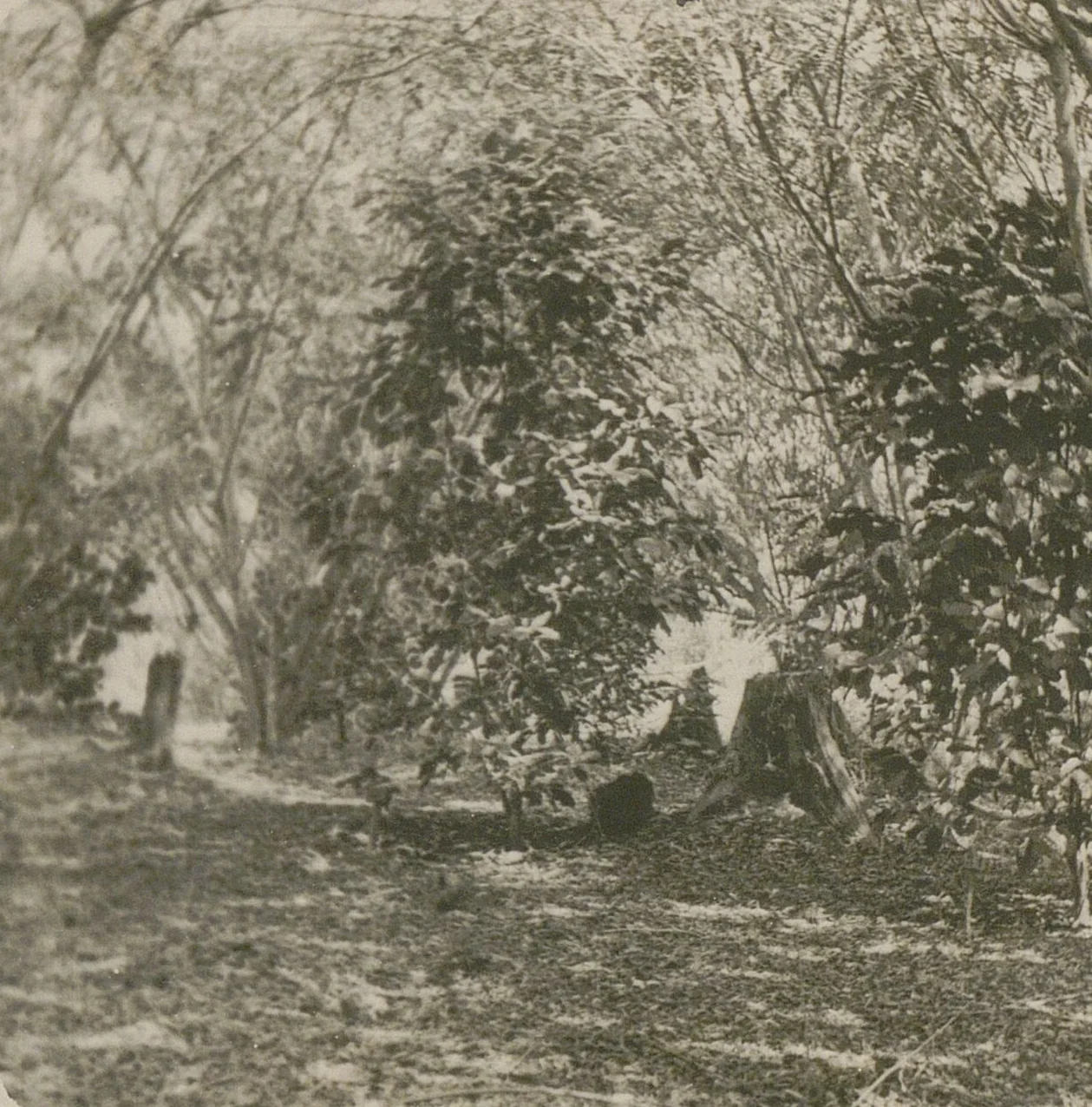
Central African coffee grows in the forest, in two bands in the south. In the west, from the southwest of Bangui to Berbérati: Lobaye and the south of Ombella-M’Poko had 23,000 hectares of family farms, Mambéré-Kadéï and Sangha-Mbaéré 11,000 hectares. In the east, from Bambari to the Congolese border: the south of Ouaka and Basse-Kotto 18,000 hectares, Mbomou and the west of Haut-Mbomou 8,500 hectares. To these were added 4,700 hectares of industrial plantations, all abandoned. These figures come from the sheet that the control office gave the International Coffee Organization in 2008, which holds 65,000 hectares in total in 1996; no more recent census was found. The coffee farms lie between 400 and 600 meters of altitude [4][9].
The cultivated species is canephora, and the International Coffee Organization places the country only in that category. The coffee trees flower from December to March, picking runs from November to January and the coffee is prepared by the dry process, that is, the cherry is dried whole before being hulled. The first shipments leave in January or February and the export period runs until August. Grading counts defects on a 300-gram sample, from Extra Prima, with 1 to 15 defects, marked with five discs, to the Limite grade, with 90 to 140 defects, marked with just one; the coffee leaves in new 60-kilo jute bags. The government publishes in February an indicative purchase price, which opens a selling season from February to April [4][9][2].
Three institutions run the sector. The Office de réglementation de la commercialisation et du contrôle du conditionnement des produits agricoles (ORCCPA), created in 1991, weighs the coffee, checks its quality and taxes it in the production zones. The Institut centrafricain de recherche agronomique (ICRA) has a center at Boukoko, on the site of the former station: for an FAO project run from late 2016 to early 2019, it produced there 34,200 young coffee trees and planted a 0.85-hectare budwood garden, that is, a garden of mother plants from which cuttings are taken. The Agence centrafricaine de développement agricole trains the planters. This project reached 4,560 households in 228 villages of Lobaye, Mambéré-Kadéï and Sangha-Mbaéré; it started from a yield of 300 kilos of coffee cherry per hectare, aimed at 1,000 kilos, and could not measure the final coffee yield [9][11].
Exports recorded by the Bank of Central African States come to a few thousand tonnes, then a few hundred: 3,000 tonnes in 2015, 4,800 in 2016, 1,000 in 2017, 2,500 in 2018, 2,000 in 2019, 1,000 in 2020, 400 in 2021, 1,400 in 2022, then 1,000 tonnes in 2023 and in 2024, paid 806.5 CFA francs a kilo in 2024 against 489.2 in 2021. The coffee goes down from Bangui or Berbérati to the port of Douala, in Cameroon, for Europe, and to the post of Am Dafok, on the Sudanese border, for Sudan. For 2025, the Ministry of Finance counted a production of 1,145 tonnes. In August 2026, the government announced a revival program that makes 601,000 hectares available for coffee, aims at 25,000 tonnes a year and provides for seven regional collection centers; no assessment of it exists yet [6][4][10].
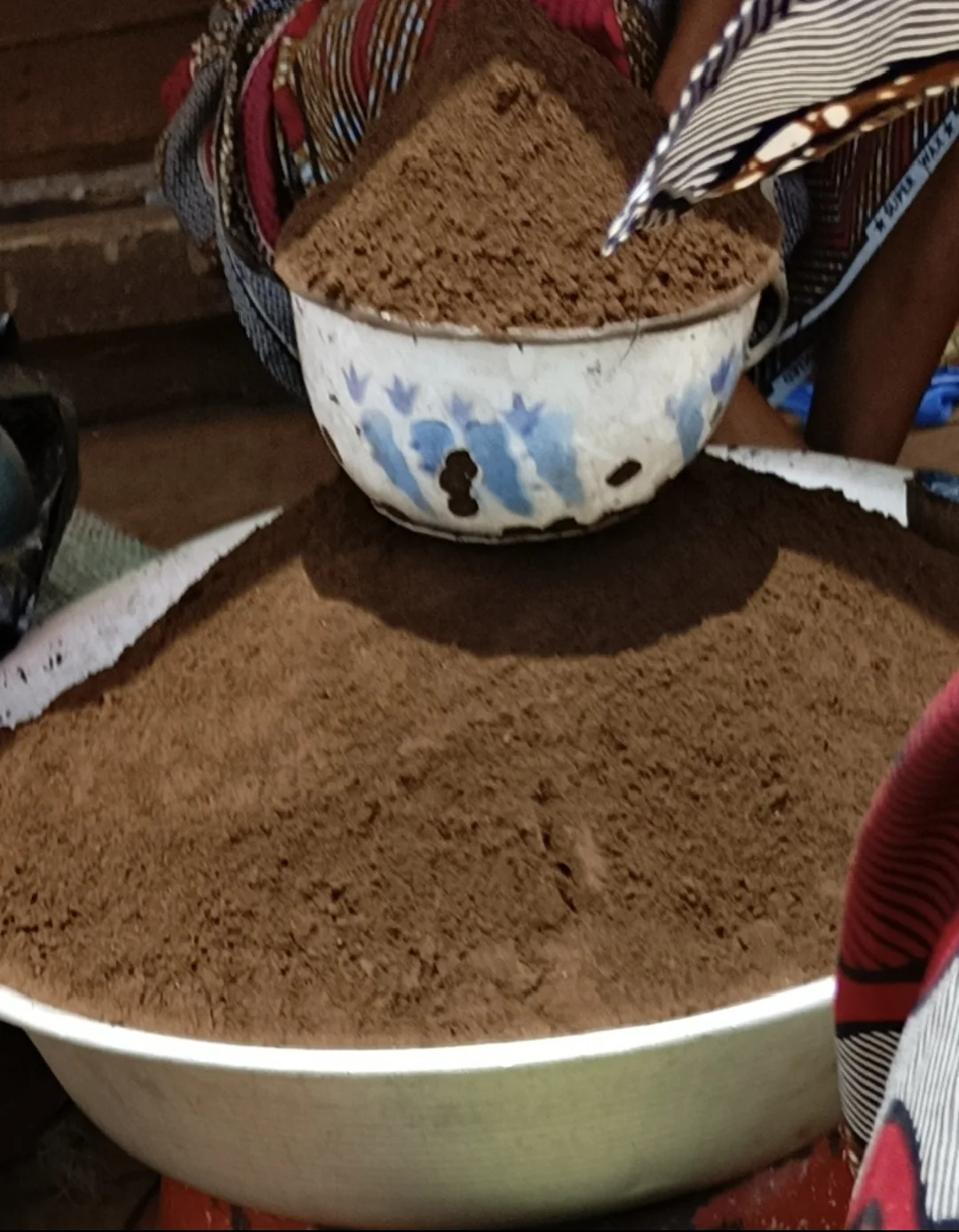
Part of the coffee stays in the country, ground. The same FAO project trained 158 women ground-coffee sellers in processing and selling, and the ORCCPA organized them into groups at M’Baïki, Boda, Nola and Berbérati; its inventory of facilities covered hulling units, drying yards, warehouses and roasting units. The government already said in 2008 that it wanted to encourage domestic processing and consumption to ensure an outlet for the planters [11][4].
- Species grown
- Coffea canephora, introduced from the Belgian Congo in 1921 according to the control office [4]
- Wild coffee trees
- Coffea dewevrei (excelsa), Coffea canephora and Coffea congensis [15]
- Growing zones
- Lobaye, Ombella-M’Poko, Mambéré-Kadéï and Sangha-Mbaéré in the west; Ouaka, Basse-Kotto and Mbomou in the east [4]
- Altitude
- 400 to 600 m [4]
- Harvest and processing
- picking from November to January, dry process [4]
- Exports 2024
- 1,000 tonnes (BEAC) [6]
- 2024 production (FAOSTAT)
- 324,923 tonnes, imputed value (I), unrelated to the other counts [1]
- Control body
- ORCCPA, created in 1991 [9]
Gray areas
The FAOSTAT series for the years 2018 to 2024 does not describe Central African coffee. The raw file gives the status of each year: production imputed in 2018 and 2019, official from 2020 to 2023, imputed in 2024, and the same goes for areas, 298,752 then 622,257 hectares, both imputed, then 717,420 hectares, official, in 2020. The four official years betray a calculation rather than a measurement: the yield stays at 403.2 kilos per hectare there and the area grows by exactly 3% each year, up to 783,944 hectares in 2023, then 943,748 hectares, imputed, in 2024. That is eleven times the 65,000 hectares of the 1998 peak and more than the 601,000 hectares that the government makes available in 2026 for planting. The recorded yield exceeds the one the FAO project took as a field reference at the same period, 300 kilos of coffee cherry per hectare, whereas FAOSTAT counts green coffee, lighter than cherry. The other counts are sixty to three hundred times lower: 55,000 bags, or 3,300 tonnes, for the 2019-2020 coffee year according to the International Coffee Organization, against 202,753 tonnes in FAOSTAT for 2019; 1,000 tonnes exported in 2020 according to the Bank of Central African States, against 289,283 tonnes; 1,145 tonnes produced in 2025 according to the Ministry of Finance. With its 324,923 tonnes for 2024, FAOSTAT makes the country the ninth-largest producer in the world, and the third by area harvested. The figure is already circulating: a journal article published in 2026 ranks the Central African Republic among the top five producing countries, in a ranking that matches FAOSTAT’s areas. None of the documents read explains where the official values for 2020 to 2023 come from [1][3][6][10][11][18].
The serious sources do not agree with one another either, on a more modest scale. The International Coffee Organization revised its own figures: 58,000 and 60,000 bags for 2018 and 2019 in the 2021 ITC guide, 37,000 and 55,000 bags in its table consulted in 2024. The USDA records only 2,000 bags in 2018 then zero since 2019, which means it stopped tracking the country rather than the country no longer producing. The control office’s records at Bambari, 4,000 tonnes a year in 2014 and 2015, exceed the national production that the USDA gives for those years, 6,000 and 8,000 bags. In the United Nations Comtrade database, since 2012, importing countries report only a few tens to a few hundred tonnes of green coffee from the Central African Republic, nothing in 2023 or 2024, and the Central African declarations themselves give impossible prices, 50 tonnes for 1,320 dollars in 2024. Part of the gap comes from channels that nobody counts, toward Sudan and toward the Democratic Republic of the Congo, and another part from transit through Cameroon, which the sources read do not make it possible to quantify. Finally, the business press sometimes presents as production what the Bank of Central African States publishes as exports [2][3][7][8][9][10].
The early history has its own blurs. The historian McCook writes that coffee wilt disease brought the production of Ubangi-Shari down in the 1930s from 20,000 tonnes to a few hundred; no other source read gives a production figure for this period, and 20,000 tonnes would equal the peak of the 1980s, which seems a lot for the 15,000 hectares of excelsoids destroyed according to Coste. The same passage places Ubangi-Shari in French West Africa, whereas it belonged to French Equatorial Africa. The discovery of excelsa is dated 1902 by Coste and 1905 by Ukers, who probably retains the year of publication. The Nana coffee tree, finally, has never been given a clear place: a “presumed variety” of canephora in 1955, it appears in no recent genetic study read here, and the site’s atlas has no profile in its name [14][12][13].
Not covered: The source of FAOSTAT’s official values for 2020-2023: no document read says which department reported them or on what basis, and the national questionnaire sent to FAO is not public. The International Coffee Organization’s figures after 2019-2020: its historical table stops there in the copy consulted. The colonial statistics of Ubangi-Shari between 1920 and 1960 (production, areas, share of settlers and African planters): neither Ukers, nor Coste, nor the searches carried out give any, and Éric de Dampierre’s article on coffee and cotton in Upper Ubangi (1960) could not be opened. The share of coffee that passes through Sudan, the DRC and Cameroon outside the official counts: nobody measures it. The current producer price by region and the cup quality: no dated source found. To my knowledge, no USDA GAIN report exists for this country.
- FAOSTAT, Production: Crops and livestock products, Coffee, green (code 656), Central African Republic: production, area harvested, yield and status of each year, Food and Agriculture Organization of the United Nations (FAO), 2025, https://bulks-faostat.fao.org/production/Production_Crops_Livestock_E_ solid level
Bulk archive already extracted on disk (%TEMP%/faostat-production-extract). Production A from 1961 to 2000 except 1981 and 1983 (E), X in 2001 and from 2003 to 2008, A in 2002, 2009 and 2010, I from 2011 to 2013, A from 2014 to 2016, E in 2017 (9,989.67 t), I in 2018 (89,979.42 t) and 2019 (202,752.73 t), A from 2020 to 2023 (289,283.3; 297,961.8; 306,900.66; 316,108 t), I in 2024 (324,922.99 t). Old official peak: 24,482 t in 1988. Areas: 44,000 to 45,052 ha (A) in 2014-2016, 298,752 and 622,257 ha (I) in 2018-2019, 717,420 to 783,944 ha (A) in 2020-2023, that is exactly +3% per year, 943,748 ha (I) in 2024. Yield 403.2 kg/ha (A) from 2020 to 2023. Ranks calculated: 9th world producer in 2024 (2.9% of the total), 3rd by area harvested. - The Coffee Guide, fourth edition, table 5 (p. 87), International Trade Centre (ITC), from the International Coffee Organization, 2021, https://www.intracen.org/resources/publications/the-coffee-guide-fourt solid level
Copy from the local library, row reread by word coordinates (PyMuPDF) because of the pdftotext misalignment. Central African Republic classed as (R), October-September coffee year, 63, 100, 37, 60, 58 and 60 thousand 60-kg bags for 2014 to 2019. - Total production by all exporting countries, table 1a (coffee years 1990-1991 to 2019-2020), International Coffee Organization (ICO), 2024, http://web.archive.org/web/20240415232356/https://ico.org/historical/1 solid level
Internet Archive copy of April 15, 2024, already downloaded by another dossier. CAR row (R), in thousands of bags: 175 in 1990-1991, 250 in 1994-1995, 241 in 1999-2000, 43 in 2003-2004, 23 in 2005-2006, 114 in 2006-2007, 112 in 2009-2010, 23 in 2012-2013, 90 in 2013-2014, then 63, 100, 37, 60, 37 and 55 from 2014-2015 to 2019-2020. - Políticas cafeteras nacionales: comunicación de la República Centroafricana (ICC 100-7), with the annex “General information on the Central African coffee sector”, Government of the Central African Republic and ORCCPA, International Coffee Council document, 2008, https://ico.org/documents/icc100-7c.pdf solid level
Coffee prefectures (Lobaye, Sangha-Mbaéré, Mambéré-Kadéï, Bimbo, south of Ouaka, Basse-Kotto, Mbomou) and areas by zone; 65,000 ha in 1996, 70,000 planters; canephora introduced from Congo Léopoldville in 1921; ADECAF (1978-1990), PDRCS (1989-1994), PAPAAV (1994-1999) projects; exports of 8,000 to 22,000 t, 39,000 ha in 1980 and 65,000 in 1998; 1,500 t in 2005-2006; altitude 400 to 600 m, flowering, picking, dry process, export calendar, grading by defects, 60-kg bags, caffeine 2.32%; 362,000 bags exported in 1988-1989, 41,000 since 2002-2003; routes to Douala and Am Dafok; desire to promote domestic consumption. - National coffee policy of the Central African Republic: statement by Mrs Marie-Noëlle Koyara, Minister of State for Rural Development (ICC 111-21), Government of the Central African Republic, International Coffee Council document, 2013, https://www.ico.org/documents/cy2012-13/icc-111-21e-statement-car-coff solid level
ICO accession in 1962 through the OAMCAF; coffee the second agricultural export product after cotton, more than a third of the population concerned; 5 billion CFA francs of family income in 1986 and more than a billion a year for the state; exports of 3,927 t (2003-2004), 2,503 t (2004-2005), 1,500 t (2005-2006), 7,000 t (2006-2007), 3,000 t (2007-2008), about 5,000 t (2008-2010); disappearance of the industrial plantations; aging of the planters; coffee wilt disease in the east on more than 400 ha. - Les monographies économiques: Centrafrique, editions 2019, 2022 and 2024, table of main products and producer purchase prices, Banque de France, from the Bank of Central African States (BEAC) and national administrations, 2025, https://www.banque-france.fr/system/files/2025-12/CMAF_CEMAC_Centrafri solid level
Coffee exports in thousand tonnes: 3.0 (2015), 4.8 (2016), 1.0 (2017), 2.5 (2018), 2.0 (2019), 1.0 (2020), 0.4 (2021), 1.4 (2022), 1.0 (2023), 1.0 (2024). Price per kilo: 725.2 (2018), 693.5 (2019), 584.5 (2020), 489.2 (2021), 633.8 (2022), 709.9 (2023), 806.5 CFA francs (2024), called export price in the 2022 edition and producer purchase price in the 2024 edition. Other editions: https://banque-France.fr/system/files/2023-08/Banque%20de%20France%20%E2%80%93%20cmaf-2019_centrafrique.pdf and https://www.banque-france.fr/system/files/2023-12/CEMAC_Centrafrique2022.pdf. - Production, Supply and Distribution (PSD), coffee, Central African Republic, United States Department of Agriculture (USDA), Foreign Agricultural Service, 2026, https://apps.fas.usda.gov/psdonline/downloads/psd_coffee_csv.zip solid level
File of July 22, 2026, in thousands of 60-kg bags: production 362 in 1988, 350 in 1990 and 1991, 200 in 1992, 10 in 2008, 30 in 2009, 7 in 2012, 6 in 2013 and 2014, 8 in 2015, 5 in 2016, 3 in 2017, 2 in 2018, then 0 from 2019 to 2026, which marks the end of tracking. - UN Comtrade, public interface, HS code 090111 (green coffee, not decaffeinated), exports declared by the CAR and imports declared by its partners, 2008-2024, United Nations Statistics Division, 2026, https://comtradeapi.un.org/public/v1/preview/C/A/HS solid level
Imports declared from the CAR: 1,974 t in 2008, 1,257 t in 2010, 1,054 t in 2011, 283 t in 2012, 37 t in 2014, 492 t in 2016 (of which 269 t to Sudan), 194 t in 2018, 256 t in 2019, 55 t in 2020, 190 t in 2021, 20 t in 2022, nothing in 2023 and 2024. Exports declared by the CAR: 2,142 t in 2010, 568 t in 2012, 18 t in 2013, 50 t for 1,320 dollars in 2024. Reliable base by construction, but visibly incomplete declarations for this country; 2016 query on the CAR side failed. - The “Green Diamond”: Coffee and Conflict in the Central African Republic, Special Report 464, Fiona Mangan, Igor Acko and Manal Taha, United States Institute of Peace, 2020, http://web.archive.org/web/2021id_/https://www.usip.org/sites/default/ medium level
Report based on interviews, including the ORCCPA in June 2017, and on USDA data. Two growing zones, about 65,000 ha; ORCCPA created in 1991, buying season from February to April after publication of an indicative price; in Bambari, 47 t taxed in 2013, 4,000 t a year in 2014-2015, about 5,000 t in 2016, 900 t in 2017; sharing of the tax with the UPC (50% then 60%); channels to Sudan and the DRC; up to 2.75 million dollars a year for the armed groups. Read on the Internet Archive copy, the original address redirecting elsewhere. - Centrafrique : le gouvernement ouvre 601,000 ha pour relancer la filière café en déclin, Laurent Onguene, Ecomatin, 2026, https://ecomatin.net/centrafrique-le-gouvernement-ouvre-601-000-ha-pou medium level
Article of August 19, 2026: pilot program launched on August 14, 601,000 ha, target of 25,000 t a year, seven collection centers, steered by a consulting firm; production of 1,145 t in 2025 according to the Ministry of Finance; takes up the BEAC figures, calling them production. - Appui à la relance de la culture associée café-vivriers en République centrafricaine en période post-conflit, rapport final du projet TCP/CAF/3602, Food and Agriculture Organization of the United Nations (FAO), 2020, https://openknowledge.fao.org/server/api/core/bitstreams/526e1185-9b6f solid level
Project from December 1, 2016 to February 28, 2019, 473,000 dollars; partners ACDA, ICRA, ORCCPA; 4,560 households in 228 villages of Lobaye, Mambéré-Kadéï and Sangha-Mbaéré; baseline yield of 300 kg of coffee cherry per hectare, target of 1,000 kg, final yield not determined; 34,200 plants and a 0.85-ha budwood garden produced by the ICRA at Boukoko; 158 women ground-coffee sellers trained and organized at M’Baïki, Boda, Nola and Berbérati. - All About Coffee, ch. XV (botany: Excelsa) and ch. XXII (table of exports of the producing countries), William H. Ukers, The Tea and Coffee Trade Journal Company, 1922, https://www.gutenberg.org/ebooks/28500 solid level
Local full text. Excelsa “discovered in 1905 by Aug. Chevalier,” in the region of the Chari River, not far from Lake Chad, classed in the liberica group; French Equatorial Africa: 48,060 pounds exported in 1916, five-year average of 47,046 pounds. - Les caféiers et les cafés dans le monde, tome I: Les caféiers (p. 26-27, near p. 61, p. 217-218 and 348), René Coste, with the collaboration of P. Vayssière and of Barat for the diseases, 1955, https://horizon.documentation.ird.fr/exl-doc/pleins_textes/divers20-12 solid level
Excelsa discovered by Chevalier in Ubangi-Shari in 1902, spontaneous in the Upper Chari, full production at eight or ten years; Nana coffee tree (Nana River, Carnot region, cultivated in the Carnot and Bouar regions, study by Borget and Drouillon, 1954); coffee wilt disease observed in 1927, 15,000 ha of excelsoids destroyed in 1942, Steyaert and Saccas; Boukoko station created in 1939 near M’Baïki, plants B 10 and A 445. Copy from the local library and IRD copy. - Coffee Is Not Forever: A Global History of the Coffee Leaf Rust (p. 131-132), Stuart McCook, Ohio University Press, 2019, https://ohioopen.library.ohio.edu/oupress/96/ solid level
Copy from the local library. Coffee wilt disease in Ubangi-Shari in the 1920s and 1930s; production fallen from 20,000 tonnes to a few hundred; INEAC conference in 1956. The passage places Ubangi-Shari in “French West Africa.” - Genomic data define species delimitation in Liberica coffee with implications for crop development and conservation, Aaron P. Davis and coauthors, Nature Plants 11, 2025, https://www.nature.com/articles/s41477-025-02073-y solid level
Division of C. liberica into three species, C. liberica, C. dewevrei (excelsa) and C. klainei, according to nomenclatural priority; C. dewevrei native to Central Africa, including the Central African Republic; excelsa adapted to lower annual rainfall than liberica. - La diversité génétique de l'espèce Coffea congensis Froehner : évaluation en Côte d'Ivoire de caféiers sauvages originaires de République centrafricaine, F. Anthony and D. Le Pierrès, Café Cacao Thé, vol. XXXI, n° 4, 1987, https://horizon.documentation.ird.fr/exl-doc/pleins_textes/divers20-05 solid level
1975 survey in the CAR (Berthaud and Guillaumet, 1978) in the ORSTOM-IRCC program; C. congensis collected along the Ubangi, on Louma island and in the Bangui region; plantings in collection at Divo in 1976, 1978 and 1979. - Global Conservation Strategy for Coffee Genetic Resources, Crop Trust and World Coffee Research, 2017, https://www.croptrust.org/saving-coffee/ solid level
Copy from the local library. 1975 collecting mission in the CAR, material kept in Côte d’Ivoire and in the CAR; natural ranges of C. canephora and C. congensis including the CAR. - From Germplasm to Cup: A Comprehensive Review of the Genetic, Environmental, and Postharvest Determinants of Coffee Quality and Their Interactions, Agriculture 16, 739, p. 2, Gui-Bing Yang and coauthors, MDPI, 2026, https://doi.org/10.3390/agriculture16070739 solid level
Peer-reviewed journal article, copy from the local library: “FAO statistics for 2024,” 12.48 million hectares harvested and 11.28 million tonnes worldwide, and “Brazil, Indonesia, the Central African Republic, Ethiopia, and Colombia” as the top five producers, exactly the first five harvested areas in FAOSTAT in 2024, in the same order; Vietnam, second in tonnage, is not among them. Cited as proof of the spread of the aberrant figure, not for its content on the CAR. - Site plates: Coffee wilt disease: from the Ubangi to Uganda (diseases, section 13) and Coffee wilt disease, 1927-1993 (canephora, section 09), PXL Roasters, from Coste 1955, Rutherford 2006 and UCDA 2019, 2026, https://www.pxlroasters.com/maladies-13.html solid level
Source inherited from the site: first observation in 1927 in Ubangi-Shari on excelsa, 15,000 ha of excelsoids destroyed in 1942, Boukoko and plants B10 and A445; second page: https://www.pxlroasters.com/robusta-09.html. - Site plate Two groups, then eight: genetic geography (canephora, section 05) and Robusta profile (Congolese group) of the atlas, PXL Roasters, from Montagnon 2000, Gomez 2009, Cubry 2013 and Kawuki 2026, 2026, https://www.pxlroasters.com/carte.html?v=rob_congo solid level
Source inherited from the site: subgroups B and C of the Congolese group of canephora attached to the CAR and Cameroon; profile rob_congo, origin “Congo Basin, Cameroon, CAR.” Plate: https://www.pxlroasters.com/robusta-05.html. - C. liberica profile of the atlas, glossary (Excelsa) and the plate The future, section 09, PXL Roasters, 2026, https://www.pxlroasters.com/carte.html?v=liberica solid level
Source inherited from the site: excelsa long classed as the dewevrei variety of liberica, reinstated as a species by a genomic study in 2025, slow to come into production. Pages: https://www.pxlroasters.com/glossaire.html and https://www.pxlroasters.com/avenir-09.html.