ATLASJamaica
6,521 tonnes (FAOSTAT 2024)In-depth dossier, atlas 2026In-depth dossier: the FAOSTAT series set against other figures, the history, today's industry and its gray areas, with numbered sources. Region: Caribbean.
Jamaica had only a statistical reference point. This dossier completes it: the history of the industry, what it is today, and what remains uncertain, with each paragraph pointing to its sources, numbered at the foot of the page.
The FAOSTAT series remains displayed as is. The dossier says what it is worth, year by year when possible, and compares it with the other figures available.
- Geographic status
- country
- Name in FAOSTAT
- Jamaica
- Latest value
- 6,521 tonnes in 2024
- Nature of the value
- official figure
- Start of the positive series
- 1961
- Series maximum
- 15,117 tonnes in 2007
Confirmed coverage: FAOSTAT series, and a dossier of 18 sources that draws together the history, today's industry and what remains uncertain.
History
The coffee tree reached Jamaica with the English in 1730. This is the date Ukers gives several times, in his chapter on propagation, in the one on cultivation and in his chronology, and it is also that of the World Coffee Research catalog, which specifies that the plant came from Martinique and that it was Typica, the lineage descended from the Java plant that passed through Amsterdam and Paris. The trial seemed promising enough that in 1732 the British Parliament lowered, for the coffee of its American plantations alone, the inland duty from two shillings to one shilling six pence per pound. Other sources, including the World Intellectual Property Organization, give 1728 and attach the introduction to the name of Nicholas Lawes; the two dates and what they are worth are discussed below, in the gray areas [1][2][8][9].
Growth was slow, then sudden. Ukers notes about 60,000 pounds exported in 1752, or 27 tonnes, 1,800,000 pounds in 1775, then 22,000,000 in 1804 and 34,045,000 in 1814, that is, nearly 15,400 tonnes: Jamaica was then taking a part of the market that Saint-Domingue lost with the revolt of 1791, as the site's chronicle and its account of the escapes recount. The fall came afterwards. Ukers attributes it to the floods of 1815 and to the gradual exhaustion of the best lands; in 1861, exports were no more than 6,700,000 pounds, and they stabilized around 9 to 10 million pounds a year from 1874 [1].
At the beginning of the 20th century, cultivation had retreated into two worlds. On one side, a few estates in the Blue Mountains, the range in the east of the island; on the other, the cultivation of the “settlers,” that is, small farmers established on their own plots, in the same districts but lower down. Ukers counts 24,865 acres of coffee in 1900 and 20,280 in 1917, with Manchester, in the center of the island, leading the parishes. Trade already distinguished two classes, the high-altitude, washed Blue Mountain, and the ordinary coffee of the lowlands, whose natural coffees, dried in their cherry, went off to dark roasting in the French style. France was moreover the leading customer: before the war of 1914, it bought nearly 4,000,000 pounds, more than half the crop [1].
The State took the industry in hand from the Second World War. In 1944, under British administration, a central clearing house received, cleaned and graded all the coffee intended for export. The 1948 law on the regulation of the coffee industry founded the Coffee Industry Board, installed on June 2, 1950, which issued licenses, set quality standards and long remained the sole exporter of green coffee. The link with Japan was formed in 1967, with a first large shipment on January 9. It became financial in 1984: a Japanese development aid loan of 5,941 million yen was to create 3,500 acres of plantations in Portland parish, north of the Blue Mountains, with pulperies, that is, the workshops where the pulp is removed from the cherry [4][5][7][8].
Disasters punctuated the end of the century. Coffee leaf rust, the orange-colored fungus Hemileia vastatrix, was reported in Jamaica in 1986. In September 1988, Hurricane Gilbert wiped out two thirds of the 600 acres already planted by the Japanese project, and the Minister of Agriculture then estimated at 60% the share of the Blue Mountain crop destroyed. The volumes processed by the Coffee Industry Board fell from 381,611 boxes of cherries in 1987-1988 to 209,919 in 1989-1990. In January 1998, floods in Portland reduced the project's area to 2,250 acres. In the meantime, the industry had moved toward altitude: Blue Mountain accounted for 15.5% of boxes processed in 1987-1988 and 61.9% in 1996-1997, because producers are paid about twice as much for it. The Board split in 1999 into a regulatory branch and a commercial branch, the industry was deregulated in 2000, and its functions passed on January 1, 2018 to the Jamaica Agricultural Commodities Regulatory Authority, JACRA [4][5][15][16].
The FAOSTAT green coffee series tells two stories that do not connect. From 1961 to 2004, it stays between 958 tonnes (1979) and 3,300 tonnes (2003), which agrees with the Coffee Industry Board's volumes: the 477,026 boxes processed in 1997-1998 give about 1,950 tonnes of green coffee at nine pounds of bean per box, against 1,740 tonnes entered for 1998. Then the series jumps to 8,897 tonnes in 2005, peaks at 15,117 tonnes in 2007 and has stayed since between 5,300 and 8,200 tonnes; the 2024 value, 6,521 tonnes, carries official-figure status. This jump is not a harvest, and the most likely reason is set out in the gray areas [3][4][10].
Today
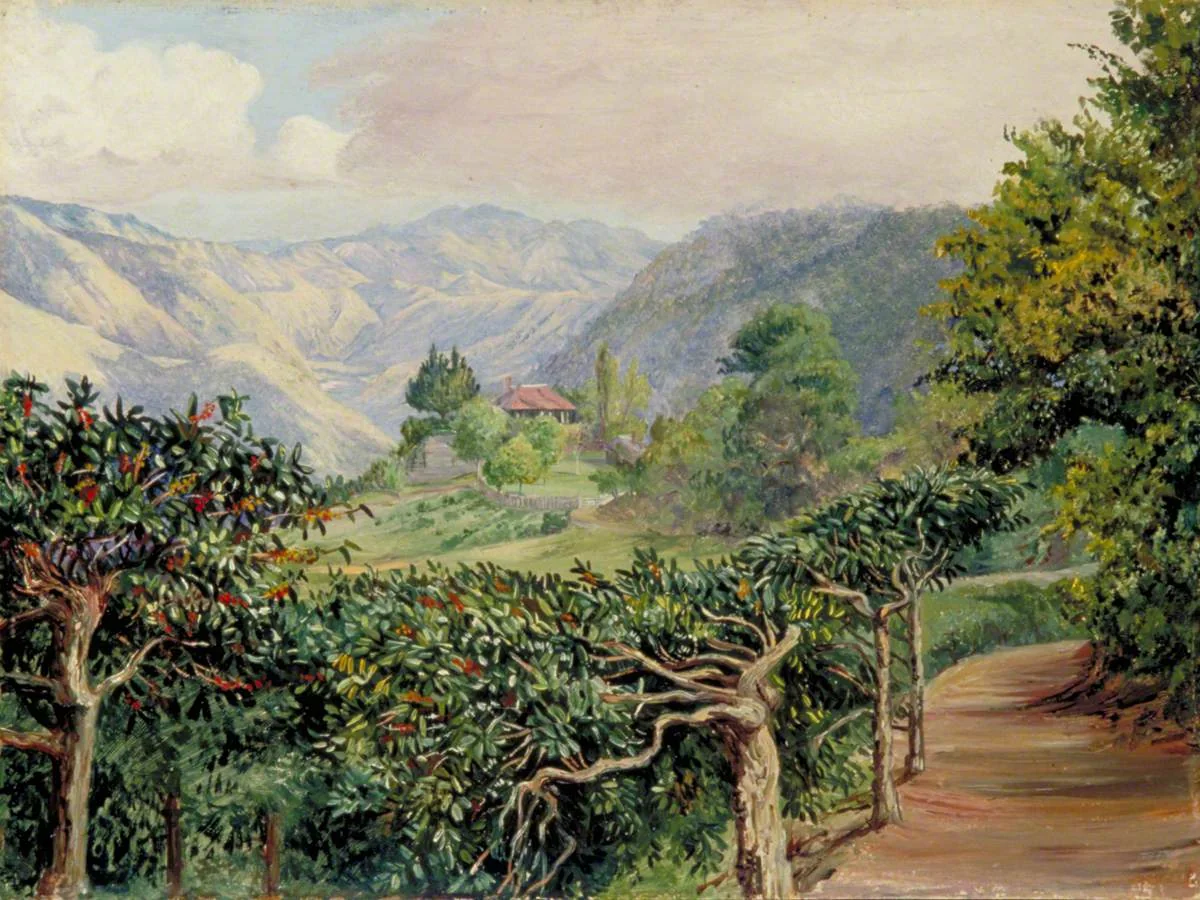
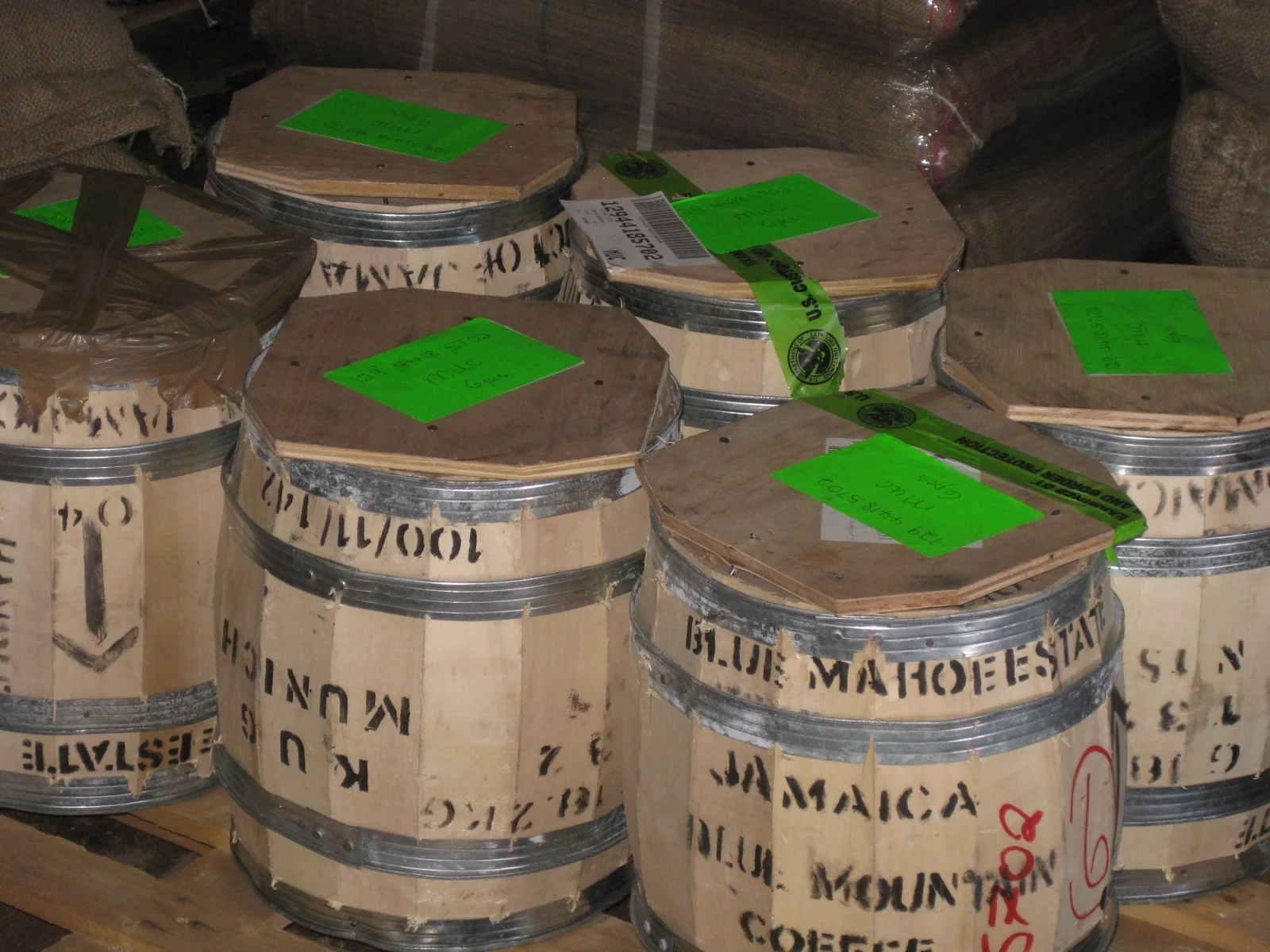
Blue Mountain is first of all a place and a control. The zone where a coffee so named may grow is fixed by regulations made under the 1948 law; JACRA describes it as covering the parishes of Saint Thomas, Saint Andrew and Portland, and WIPO adds Saint Mary, with an altitude between 3,000 and 5,500 feet, or 914 to 1,676 meters. Higher grades grown outside this zone bear the name Jamaica High Mountain. The name itself is protected abroad: in the United States as a certification mark, that is, a mark that its owner does not affix itself but grants to those who comply with its product specification, and in the European Union and the United Kingdom. These marks belong to Coffee Marks Limited, a subsidiary of the regulator, and only coffee that has passed the checks receives the certificate. According to JACRA, nearly 90% of the island's production comes from the Blue Mountain region [5][6][8][11].
The plant, for its part, is Typica. JACRA names it as the dominant variety, and World Coffee Research notes that Jamaica is one of the last countries in the Americas, with Peru and the Dominican Republic, where it remains widely planted, whereas it has been replaced almost everywhere by the more productive Bourbons. Two uses of the same word need to be separated here. In the World Coffee Research catalog, “Blue Mountain” is a synonym of Typica, and a lineage that came out of the island has given selections elsewhere, such as Pop3303/21 in Rwanda, or served as a parent of the Brazilian Siriema. A coffee tree declared Blue Mountain in Burundi or Malawi, as the site's dossiers note, therefore designates an ancestry, not the appellation, which depends on the place of cultivation and on certification [2][6][18].
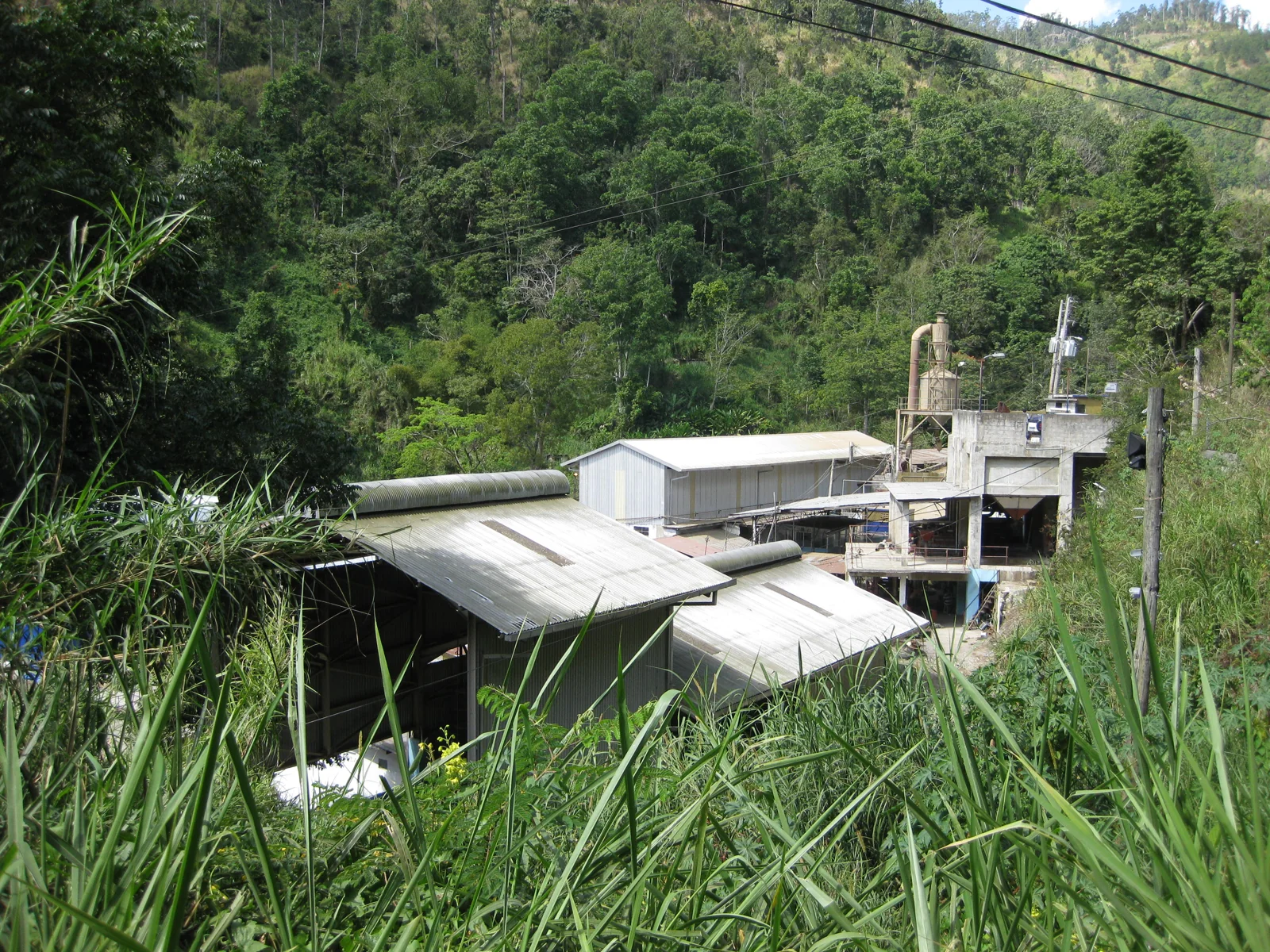
The industry counts in boxes of cherries, not in bags of green coffee. The box weighs 60 pounds, about 27 kilos, according to the 2002 Japanese evaluation, and 62 pounds according to JACRA. The Blue Mountain region yielded 248,151 boxes in the 2021-2022 season and 300,000 in 2023-2024; High Mountain, 11,260 boxes at the end of April 2023. A box used to yield nine pounds of green coffee, and only seven and a half after the latest hurricanes, so that 300,000 boxes represent on the order of 1,000 to 1,200 tonnes of bean. The season closes in July, and the bulk of picking takes place in October and November. Processing goes through the pulpery, where the cherry is pulped, then through the finishing workshops, and the final sorting is done by hand [4][6][8][10][11].
Japan remains the leading customer, but its share is hard to read from one source to another. In 2019, it bought 7 million dollars out of the 15 million dollars of coffee exported by the island, and its purchases had fallen by 21% in five years; in 2023, the Jamaican press credits it with about 70% of the crop, then a third of that of 2024, ahead of the United States with a quarter and China with 8%. Since 2019, a motion by Japanese importers, taken up by the Tokyo government, has made January 9 Jamaica Blue Mountain Day, in memory of the 1967 shipment. The balance has nonetheless tightened: in 2025, the island exported 23.6 million dollars of coffee and imported 4.4 million, a quarter of it from the United States, then from Mexico and Colombia: an exporter explains that he uses it for his own coffees and to blend ordinary coffee with high-grade coffee [7][10][11][12].
The hurricane season sets the rhythm of the industry. After Beryl in 2024, Melissa made landfall in the west of the island on October 28, 2025 as a category 5, with winds estimated at 160 knots, nearly 300 km/h. The first readings published by the government report about 35% damage in the coffee industry, and JACRA distributed in December 5,000 bags of fertilizer and inputs worth 35 million Jamaican dollars, as well as 15,000 plants for the Blue Mountain region and 10,000 for the High Mountain one. The president of the exporters expects a drop of 138,000 boxes in the 2025-2026 season, nearly half of a normal crop [10][13][14].
- Arrival of the coffee tree
- 1730, from Martinique (Ukers, World Coffee Research); 1728 according to WIPO [1]
- Dominant variety
- Typica (Coffea arabica) [6]
- Parishes of the Blue Mountain appellation
- Saint Thomas, Saint Andrew, Portland; Saint Mary in addition according to WIPO [6]
- Altitude of the appellation
- 914 to 1,676 m (3,000 to 5,500 feet) [8]
- Certification body
- JACRA since January 1, 2018, after the Coffee Industry Board founded in 1950 [5]
- Harvest unit of account
- the box of cherries, 62 pounds according to JACRA [6]
- Blue Mountain harvest 2023-2024
- 300,000 boxes of cherries, or about 1,000 to 1,200 t of green coffee [10]
- FAOSTAT value 2024
- 6,521 t, official figure, probably in cherry weight [3]
Gray areas
FAOSTAT's figures since 2005 are quite likely cherry weights entered as green coffee. The calculation is simple: 300,000 boxes of 60 to 62 pounds make 8,160 to 8,440 tonnes of cherries, and the series shows 8,152 tonnes in 2023; the roughly 259,000 boxes of 2021-2022, Blue Mountain and High Mountain combined (the latter estimated from the 8% rise announced the following year), make 7,000 to 7,300 tonnes of cherries, against 7,064 tonnes entered for 2022. Expressed as green coffee, these harvests weigh seven to eight times less. The status A of the 2024 value means that the figure comes from the authorities, not that it measures well what it claims to measure. The 2007 maximum, 15,117 tonnes, would then be a conversion artifact and not the summit of modern cultivation, which in green coffee remains far from the 15,400 tonnes exported in 1814. No FAOSTAT note explaining the 2005 change was found, and the hypothesis remains to be confirmed with the FAO or the ICO. The unit confuses even the local press: a 2023 article had to correct kilos to boxes, and the exported volume it gives exceeds the harvest it announces [3][4][6][10][11].
The date of introduction and its hero rest on no primary source consulted. Ukers and World Coffee Research give 1730, without the name of any person; WIPO gives 1728, likewise without a name. The account that attributes the introduction to Governor Nicholas Lawes, on his Temple Hall estate, runs up against a simple chronology: according to the Legacies of British Slavery database, Lawes governed Jamaica from 1717 to 1722 and died on June 17, 1731. In 1728, then, he was no longer governor. The site elsewhere repeats the date of 1728 and the title of governor while attributing them to Ukers, who says 1730 and does not name Lawes: the chronicle, the account of the escapes and the Blue Mountain profile on the map deserve a correction. Ukers is also silent on slavery, whereas the boom of 1752 to 1814 and the decline that follows bracket the abolition of 1834 to 1838; no source consulted here measures what this change did to Jamaican coffee [1][2][8][9].
The appellation itself is described in several ways. JACRA cites three parishes, WIPO four; WIPO places cultivation between 3,000 and 5,500 feet, the Japanese evaluation between 2,000 and 4,500 feet for the same region, and Ukers put the best height at about 4,500 feet; the text of the 1948 regulations could not be read. Japan's share varies from more than 80%, a figure from an online encyclopedia that points to a 2017 embassy page, to a third in 2024, without the sources saying whether they count the harvest, the volumes or the value. As for counterfeits, the site's plate on adulteration ranks Blue Mountain among the rare origins targeted by fakes, but no source consulted measures the share of fake Blue Mountain in circulation [1][4][6][8][17].
Not covered: The FAOSTAT statuses year by year (only that of 2024 appears in the site's file) and the methodological note that would explain the jump of 2005; the ICO series, not consulted; the text of the 1948 regulations that fix the zone and altitude; the primary source of the Nicholas Lawes account, the academic article that reports it having refused access; the number of producers and the current area, for lack of a dated official figure; the effect of the abolition of slavery on coffee; the real share of fake Blue Mountain.
- All About Coffee, William H. Ukers, The Tea and Coffee Trade Journal Company, 1922, https://www.gutenberg.org/ebooks/28500 solid level
Introduction by the English in 1730 (pp. 9, 74, 233 and chronology p. 728); 1732 law lowering the duty on British plantation coffee (p. 74); exports from 1752 to 1919 (p. 281); floods of 1815, areas of 1900 and 1917, parishes, altitude (p. 233); French purchases (p. 193); Blue Mountain and Settlers' classes (pp. 191, 350, 362). Read in the library copy, pages checked against the PDF. - Coffee Varieties Catalog, World Coffee Research, 2025, https://varieties.worldcoffeeresearch.org/ solid level
Typica introduced from Martinique to Jamaica by the English in 1730 and still widely planted in Jamaica (p. 9); “Blue Mountain” synonym of Typica (p. 84); Pop3303/21, Rwandan selection of Blue Mountain Jamaica (p. 69); JACRA a partner of the catalog (p. 6). - FAOSTAT, Production: Crops and livestock products, Coffee, green, Jamaica (edition of December 23, 2025), FAO, 2025, https://www.fao.org/faostat/en/#data/QCL solid level
Series from 1961 to 2024 as reproduced in pays_producteurs_complement.json: 2,546 t in 1961, 958 t in 1979, 2,400 t in 2004, 8,897 t in 2005, maximum of 15,117 t in 2007, 6,521 t in 2024 with status A. Statuses year by year not consulted. - Jamaica, Blue Mountain Coffee Development Project, ex-post evaluation, JBIC / JICA, 2002, https://www.jica.go.jp/english/our_work/evaluation/oda_loan/post/2002/ solid level
Loan of 5,941 million yen (April 1984 agreement) for 3,500 acres in Portland; Gilbert in September 1988 destroys two thirds of 600 acres; floods of January 1998; boxes processed by the Coffee Industry Board from 1987-1988 to 1997-1998; box of 60 pounds, about 27 kg; Blue Mountain producer price about double; split of the Board in 1999; region between 2,000 and 4,500 feet. - Coffee Division, Background, Jamaica Agricultural Commodities Regulatory Authority (JACRA), accessed in 2026, https://jacra.org/divisions/coffee/background/ solid level
Coffee Industry Board established on June 2, 1950 under the 1948 law; deregulation in 2000; takeover of its functions by JACRA on January 1, 2018; the Board was the sole exporter of green coffee. - Coffee Division, About Coffee, Jamaica Agricultural Commodities Regulatory Authority (JACRA), accessed in 2026, https://jacra.org/divisions/coffee/about-coffee/ solid level
Typica dominant variety; Blue Mountain zone on Saint Thomas, Saint Andrew and Portland; High Mountain for higher grades outside this zone; box of 62 pounds of cherries. - Jamaica Blue Mountain Coffee Day, Jamaica Agricultural Commodities Regulatory Authority (JACRA), 2019, https://jacra.org/jamaica-blue-mountain-coffee-day/ solid level
First large shipment to Japan on January 9, 1967; January 9 day proposed by Japanese importers and recognized by the Japanese government, first edition in 2019. - In Search of a Perfect Cup (IP Advantage), World Intellectual Property Organization (WIPO), 2010, https://www.wipo.int/en/web/ip-advantage/w/stories/in-search-of-a-perf solid level
Introduction dated 1728, no name; clearing house of 1944; zone defined by the regulations of the 1948 law, four parishes, 3,000 to 5,500 feet; marks in the United States (no. 1,414,598), in the European Union and the United Kingdom, held by Coffee Marks Limited; certificate of authenticity; manual sorting; Japan the leading importer. - Sir Nicholas Lawes, entry in the Legacies of British Slavery database, University College London, accessed in 2026, https://lbs.ucl.ac.uk/lbs/person/view/2146652865 solid level
Lawes (1652-1731) governor from 1717 to 1722, died on June 17, 1731, owner of one half of Temple Hall (Saint Andrew); the entry does not mention coffee. - Jamaica's premium coffee industry runs on $700m of imported beans, Luke Douglas, The Gleaner, 2026, https://jamaica-gleaner.com/index%2Ephp/article/business/20260617/jama medium level
300,000 boxes of Blue Mountain in 2023-2024; expected drop of 138,000 boxes in 2025-2026; nine pounds of green per box, 7.5 today; Hurricanes Beryl (2024) and Melissa (2025); exports of 23.6 and imports of 4.4 million dollars in 2025; breakdown of the 2024 harvest among Japan, the United States and China. - Coffee exports up by 30%, production climbs in 2023, The Gleaner, 2023, https://past.jamaica-gleaner.com/article/lead-stories/20230616/update- medium level
248,151 boxes of Blue Mountain in 2021-2022, 257,475 and 11,260 boxes of High Mountain at the end of April 2023; nearly 90% of production in the Blue Mountain region according to JACRA; Japan about 70%; season closing in July, peak of harvest in October and November; unit correction from kilos to boxes. - Jamaica coffee commanding smaller share of Japanese market, Steven Jackson, The Gleaner, 2020, https://past.jamaica-gleaner.com/article/business/20201122/jamaica-cof medium level
7 million dollars sold to Japan in 2019 out of 15 million in exports, according to ITC data; decline of 21% in five years. - JACRA Commences Handover Of Agricultural Inputs To Support Coffee Farmers' Post Hurricane Recovery, Chris Patterson, Jamaica Information Service, 2025, https://jis.gov.jm/jacra-commences-handover-of-agricultural-inputs-to- medium level
About 35% damage in the coffee industry according to the first figures; 5,000 bags of fertilizer and inputs worth 35 million Jamaican dollars; 15,000 plants for Blue Mountain, 10,000 for High Mountain. - Hurricane Melissa Discussion Number 30, National Hurricane Center (NOAA), 2025, https://www.nhc.noaa.gov/archive/2025/al13/al132025.discus.030.shtml solid level
Eye of Melissa over western Jamaica around 17h UTC on October 28, 2025, winds estimated at 160 knots; operational figures, the final report not having been consulted. - Jamaica struggles to rebuild, Gayle Young, The Christian Science Monitor, 1988, https://www.csmonitor.com/1988/1003/ojam.html medium level
Estimate by the Minister of Agriculture: 60% of the Blue Mountain crop destroyed by Gilbert, five years to recover. - Global Conservation Strategy for Coffee Genetic Resources, Paula Bramel and coauthors, Crop Trust and World Coffee Research, 2017, https://www.croptrust.org/ solid level
Arrival of coffee leaf rust in Jamaica in 1986; Jamaican Blue Mountain among the cultivars from the first programs (p. 17 of the library PDF). - Jamaican Blue Mountain Coffee, English Wikipedia, accessed in 2026, https://en.wikipedia.org/wiki/Jamaican_Blue_Mountain_Coffee low level
Only the origin of the figure of more than 80% for Japan, which points to a page of the Jamaican embassy in Tokyo archived in 2017. - Article on the relatedness of Brazilian arabica cultivars, Crop Science 53, pp. 1237-1247, Setotaw and coauthors (Embrapa, UFV), 2013, https://doi.org/10.2135/cropsci2012.09.0541 solid level
The Siriema of the Fundação Procafé (2000) has as parents Coffea racemosa and C. arabica Blue Mountain; read in the library copy.