18Guatemala
3,500,000 bags (ICO 2009)In-depth country profile: production, varieties, classification, history, current situation and points that remain uncertain. Region: Central America.
Guatemala is the country of highland coffees par excellence. Introduced by the Jesuits, developed by German immigrants, coffee there has become a strategic sector, and the country ranks among the world's top exporters of arabica. A multitude of producer families and a mosaic of micro-terroirs are found there.
Nearly all plantations grow under shade, and the wet process dominates. The real work in recent years has been to map the terroirs: the eight Guatemalan regions are now designations of origin, all classified Strictly Hard Bean.
- Botanical species
- Arabica
- Soil type
- Volcanic
- Altitude
- 700 to 2,000 m
- Shade
- Fruit and forest trees
- Harvest
- Manual and selective
- Processing
- Wet process; natural sun drying
- Sorting
- Mechanical, electronic and manual
- Harvest period
- August to April
- Packaging
- 69 kg bag
Production region
Naming one of the 8 regions is increasingly common to showcase the diversity of the coffees.
Quality: defects / bean size
| Preparation | Criteria |
| European (EP) | 100% > screen 15 (5% tolerance screen 14); 8 defects max/300 g; no major ones |
| American (USP) | 100% > screen 13; 23 defects max/300 g |
Altitude (linked to bean density)
| Description | Altitude |
| Good Washed (GW) | 700 m |
| Extra Good Washed (EG) | 700-850 m |
| Extra Prime Washed (EP) | 900-1,100 m |
| Semi Hard Bean (SH) | 1,100-1,200 m |
| Hard Bean (HB) | 1,200-1,400 m |
| Fancy Hard Bean (FHB) | 1,500-1,600 m |
| Strictly Hard Bean (SHB) | 1,600-1,800 m |
The higher the altitude, the better the quality (liveliness and persistence). SHB is by far the best quality in the country.
History
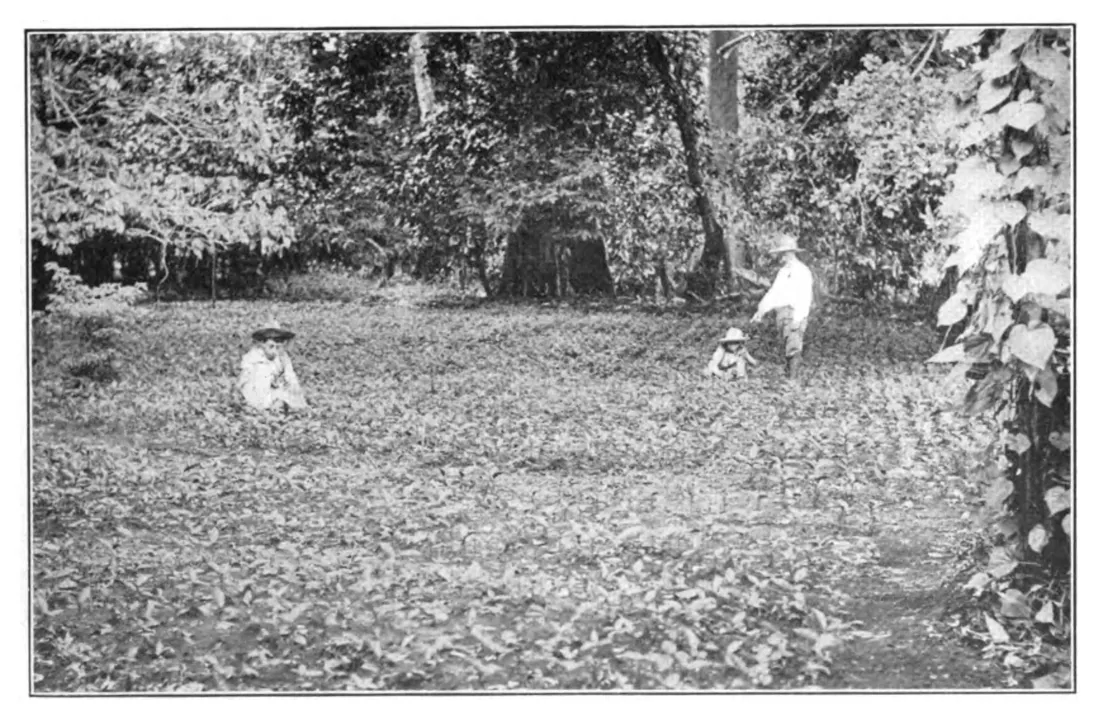
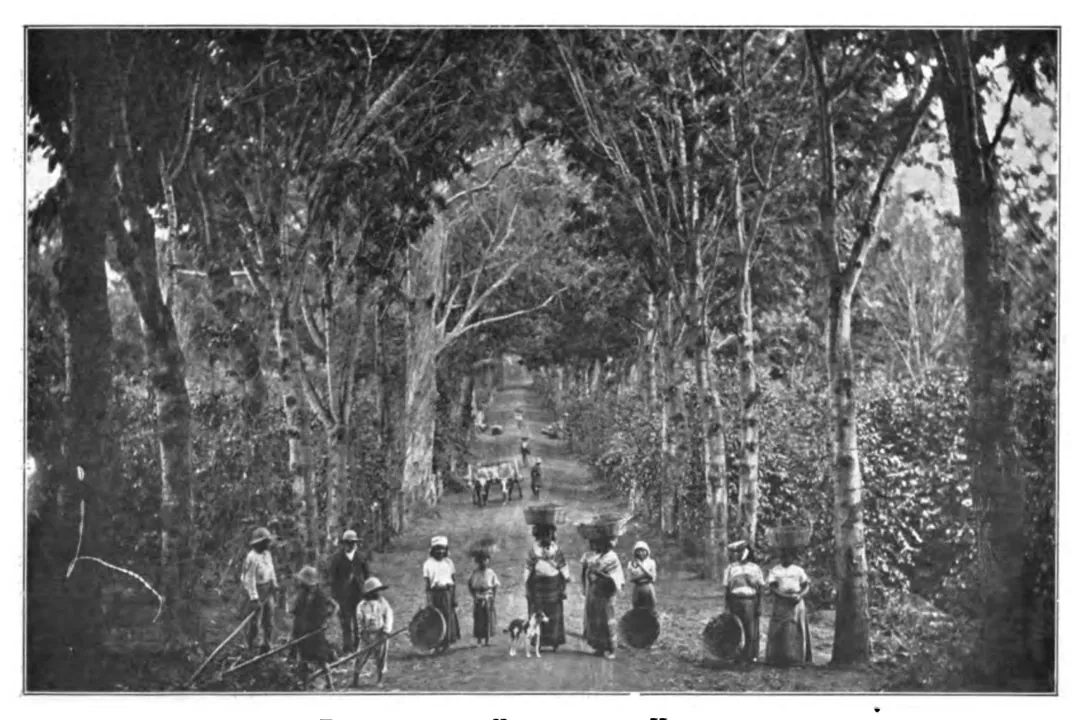
Ukers places the introduction of coffee in Guatemala around 1750-1760. The profile attributes it to the Jesuits, then its development to German immigrants, which trade figures confirm: in 1900 Germany bought 44,416,064 pounds of Guatemalan coffee, and 53,232,910 in 1913. In 1920, after the war, it bought only 452,206. No other origin in Ukers's table suffers so abrupt a reversal.
Ukers, All About Coffee (1922), ch. II, p. 5-10; Ukers 1922, ch. XIX, p. 190-206, p. 196; Country Profiles, Marco De Sousa Rosa, 2026The civil war of the second half of the twentieth century marked the country and its sector.
The most recent coffee event, however, is phytosanitary, that is, it comes from a disease of the coffee plant. It is the Big Rust of 2008-2013, the rust episode that swept the region.
The regional toll is heavy. Central America taken as a whole lost 16% of its production in the 2012 and 2013 seasons. PROMECAFÉ, the regional coffee research organization, also counts 373,585 displaced workers.
It is this crisis that launched the search for new material. Guatemala is then one of the three countries of pre-commercial F1 hybrid trials.LC ch. 16; PROMECAFÉ, cited in LC ch. 16
LC ch. 16; PROMECAFÉ, cited in LC ch. 16Today
The volume at the head of the profile, 3,500,000 bags, is that of the profile (ICO 2009).
The varieties declared are Caturra (30%), Catuai (30%), Bourbon (20%) and Typica (5%). To these are added Maragogype and Pacamara, with no quantified share.
The orchard spreads between 700 and 2,000 meters. This gap of thirteen hundred meters matters, since the Guatemalan scale classifies lots precisely by altitude, from Good Washed to Strictly Hard Bean.
Nearly all plantations grow under shade. Harvesting is manual and selective, processing is by the wet process, and drying is natural, in the sun.Country Profiles, Marco De Sousa Rosa, 2026
Country Profiles, Marco De Sousa Rosa, 2026The national association, ANACAFÉ, released the variety Anacafé 14 in 2014. It thus came out in the wake of the Big Rust.
It is a Catimor crossed again with Pacamara, dwarf in habit with large beans.
The structuring work of recent years has been quite different: mapping the terroirs. The eight Guatemalan regions are now designations of origin, all classified Strictly Hard Bean.
Naming the region changes how coffee is sold. A lot is then negotiated on its terroir, and no longer only on its grade.World Coffee Research, Coffee Varieties Catalog 2025, Anacafé 14 profile; Country Profiles, Marco De Sousa Rosa, 2026
World Coffee Research, Coffee Varieties Catalog 2025, Anacafé 14 profile; Country Profiles, Marco De Sousa Rosa, 2026Gray areas
- The attribution of the introduction to the Jesuits comes from the profile; Ukers gives a range of dates with no named actor.
- No Guatemalan production volume after 2009 could be sourced.
- Guatemala's own production loss during the Big Rust is not isolated in the sources: only the regional figure and those of El Salvador, Mexico and Peru are.
- The effect of the civil war on Guatemalan coffee growing is not quantified by any source consulted.