17Costa Rica
1,460,000 bags (ICO 2009)In-depth country profile: production, varieties, classification, history, current situation and points that remain uncertain. Region: Central America.
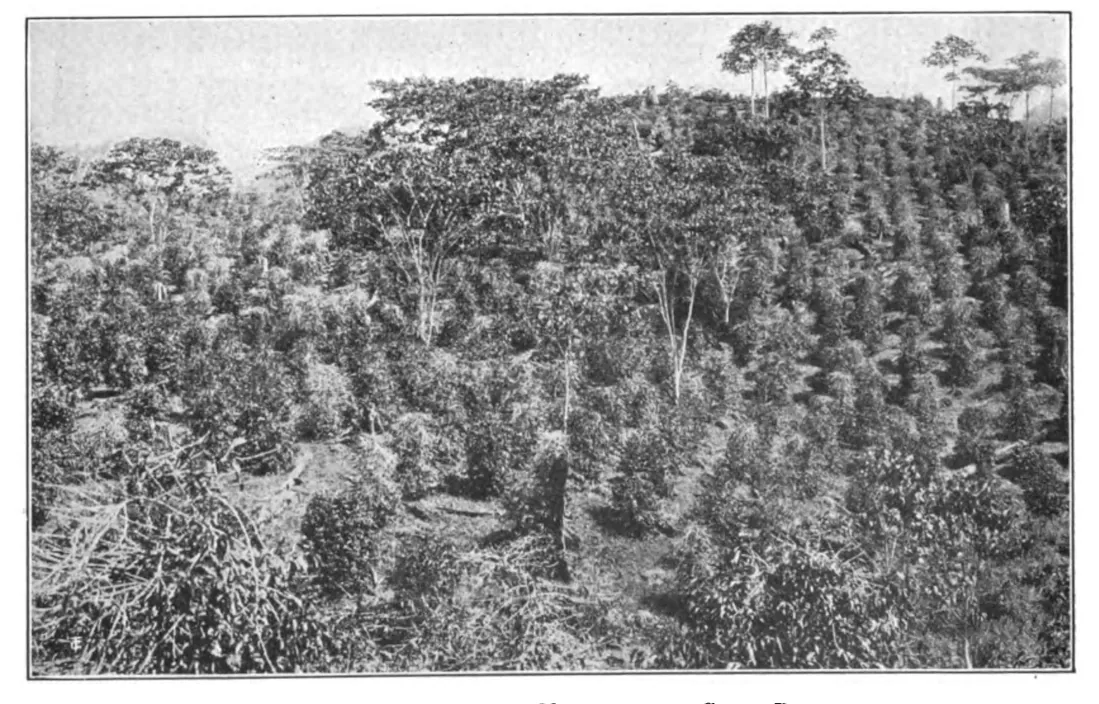
Costa Rica was the first Central American country to launch into commercial coffee production, and it has kept a head start from it: very early, it bet on science, agronomy and shade. To the point of serving as a model for its neighbors.
Here, the law prohibits canephora: it is arabica, and nothing else. Since the 1990s, the coffee institute has imposed social and environmental requirements that raise the cost of production somewhat. The great terroirs (Tarrazu foremost) yield fine coffees, readily compared with the best origins in the world.
- Botanical species
- Arabica exclusively (Canephora prohibited by law)
- Varieties
- Caturra, Catuai, Catimor, Villa Sarchi, Mundo Novo
- Altitude
- Up to 1,650 m
- Shade
- Fruit and forest trees
- Harvest
- Manual and selective
- Processing
- Wet process (mainly) and semi-wet; pulping at the washing station
- Sorting
- Electronic (European prep) and mechanical (US prep), sometimes by hand
- Harvest period
- November to March
- Packaging
- 69 kg bag
Production region
The former “Pacific” / “Atlantic” system (according to the port of shipment) has been replaced by the mention of the production region, the most renowned being Tarrazu.
Quality: number of defects
| Preparation | Defects |
| European (EP) | ≤ 4 defects, no major defect |
| American (USP) | ~ 12 defects |
Altitude (linked to bean density)
| Description | Altitude |
| Hard Bean (HB) | 800-1,100 m |
| Strictly Hard Bean (SHB) | 1,200-1,700 m |
SHB quality is the most sought after: the higher the altitude at which the coffee is grown, the denser, more intense and more complex the bean.
History
Ukers attributes the introduction of coffee to Costa Rica to the Spanish traveler Don Francisco Xavier Navarro. He is said to have brought it from Cuba in 1779.
The country was then the first in Central America to launch into commercial production. This head start gave it a lead that it has never lost.
The lead is not only a matter of date, because the country bet very early on agronomy, science and shade. It has come to serve as a model for its neighbors.Ukers, All About Coffee (1922), ch. II, p. 5-10; Country Profiles, Marco De Sousa Rosa, 2026
Ukers, All About Coffee (1922), ch. II, p. 5-10; Country Profiles, Marco De Sousa Rosa, 2026Costa Rica produced two major lineages, and each answers a specific constraint of the terrain.
Villa Sarchí is a dwarf mutation of Bourbon, spotted in Sarchí in the 1950s. Its wind tolerance makes it useful on exposed plots. It became the parent of the whole Sarchimor family.
The national coffee institute, ICAFE, released Costa Rica 95 in 1995. It is a Catimor selected for hot zones and acid soils, in other words for the least comfortable plots in the country.
Costa Rica is also one of the three sites of the pre-commercial F1 hybrid trials conducted after the Big Rust, with Peru and Guatemala.World Coffee Research, Coffee Varieties Catalog 2025, Villa Sarchí and Costa Rica 95 profiles; LC ch. 16
World Coffee Research, Coffee Varieties Catalog 2025, Villa Sarchí and Costa Rica 95 profiles; LC ch. 16Today
The volume at the head of the profile, 1,460,000 bags, is that of the profile (ICO 2009).
The law prohibits canephora: it is arabica and nothing else. A Costa Rican lot is therefore arabica by construction, without any need to check.
The varieties are Caturra, Catuai, Catimor, Villa Sarchí and Mundo Novo, up to 1,650 meters.
Harvesting is manual and selective. Processing is by the wet or semi-wet process, with pulping in washing stations (beneficios, in Spanish), where the cherry is stripped of its skin.Country Profiles, Marco De Sousa Rosa, 2026
Country Profiles, Marco De Sousa Rosa, 2026Since the 1990s, the coffee institute has imposed social and environmental requirements that raise the cost of production. The great terroirs, Tarrazu foremost, yield fine coffees that are compared with the best origins in the world. One useful contradiction deserves noting for the reader: chlorogenic acids fall with altitude in Ethiopia, and rise with altitude in Costa Rica. Altitude has no universal effect.
Country Profiles, Marco De Sousa Rosa, 2026; LC ch. 17Gray areas
- The date of 1779 and the name of Navarro come from Ukers, who does not cite his primary source.
- No Costa Rican production volume after 2009 could be sourced.
- The exact content and the date of the law prohibiting canephora are not documented by the sources in the corpus.
- The share of the Costa Rican orchard that has moved to F1 hybrids is not quantified.