Toper
Production drums, Izmir, Turkey.
History
In 1954, Nurettin Karakundakoğlu opened a 33-square-meter workshop in Izmir and built there the first bulgur mill in Turkey. The second generation trained in the 1970s, Ramazan Karakundakoğlu joined in 1979 and today runs a company in its third generation. The export breakthrough began in the early 1990s on the Yugoslav market, then after 1995 toward Italy, Romania, the United States and Canada; two research projects with TÜBİTAK, the Turkish research council, in 1997 and 2001; the Cafemino in 2010; a presence announced in 146 countries.
Izmir is, outside Northern Europe, the world hub of this trade: Özturk since 1944, Garanti since 1951, Has Garanti since 1954, Besca, Kuban, Kraffe, Fabrica. Toper remains the most exported company there.
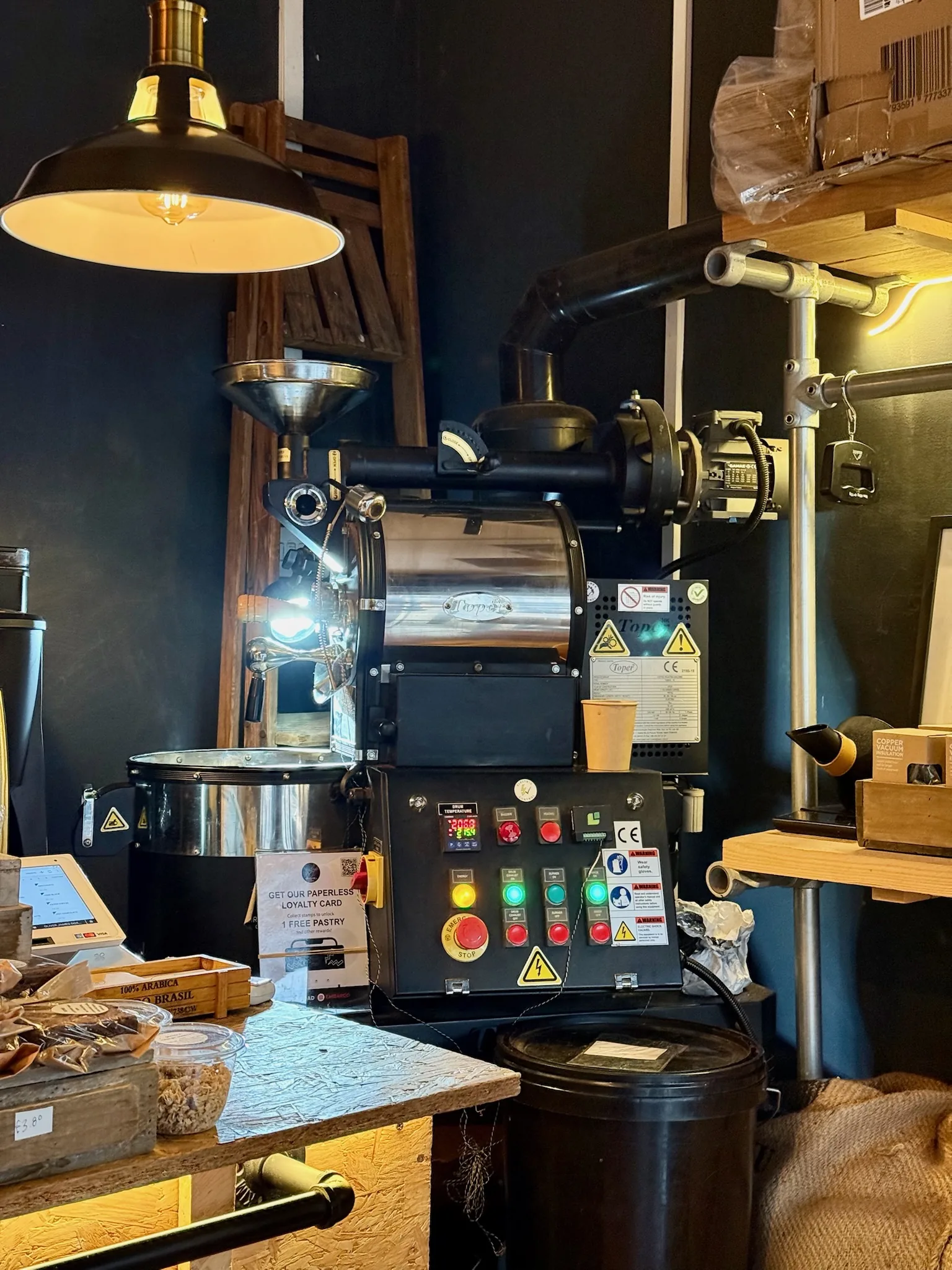
What it makes
Double-wall drums, heating by heat transfer and convection, flame height control, variable extraction and drum speed, three thermocouples, on natural gas, LPG or electricity; cooling announced in under three minutes; Cropster and Artisan across the range.
The models
- TKM SX-LAB: 50 to 500 g
- Cafemino TKM-SX 1G: 150 g, up to 6 kg/h
- boutique TKM-SX: 3, 5, 10, 15, 20
- industrial TKM-SX 30 to 500 kg
- TKM-X series from 5 to 240 kg
The difference between the SX and X series is not published
What you gain
The double wall puts a layer of air between the flame and the metal in contact with the coffee, which dampens peaks and reduces spot scorching. Three thermocouples and an adjustable extraction provide the levers of profiling. And the price: at equal capacity, often half that in Germany, which makes it, for a workshop that is starting out, the only possible way in.
What you lose
The double wall adds inertia and slows corrections during a batch. The finish and consistency of the series are not at the level of the top of the range, resale is poor, and the comparative judgments available come from forums. These are machines you buy to work with, not to pass on.