SAMIAC
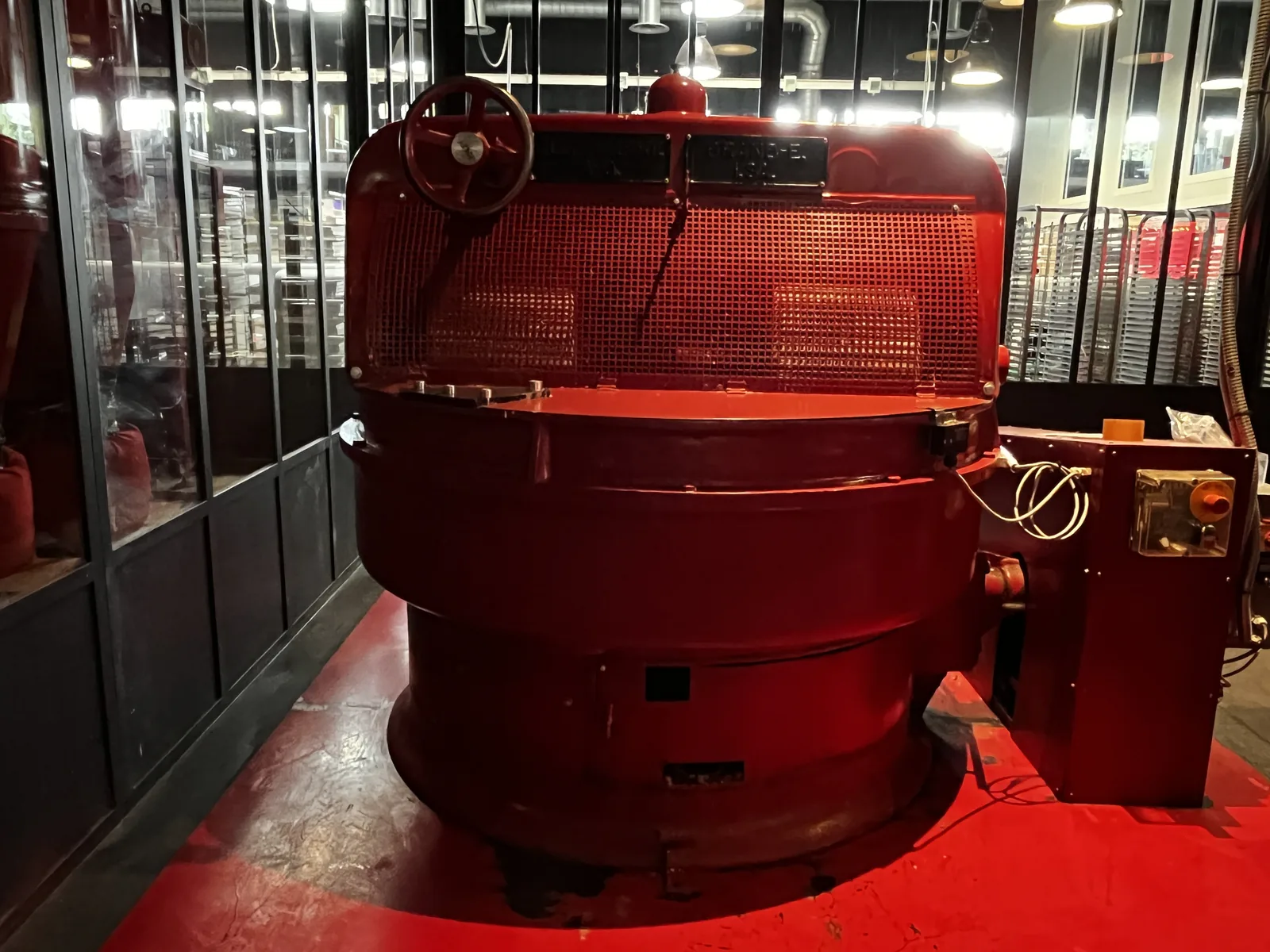
Production drums, Le Cateau-Cambrésis, France.
History
“The only French creator and manufacturer of roasters, since 1919”: that is what the brand says of itself, and the nuance matters. The continuity is that of the name, not of the company. The roasting business was taken over in 1986 by SASA, the Société d'Application des Silicones Alimentaires du Cateau-Cambrésis, created in 1978 and known today for its silicone molds. The 1919 entity and the meaning of the acronym are established nowhere.
SASA Industrie enters the Second Marché in December 1996, announces in 2008 the end of roaster manufacturing and closes the department at the end of 2009 to refocus on bakery. A terse letter reassures customers about after-sales service, and the specialist press concludes that independent French roasters will now have to source from Germany or Italy. The installed base, for its part, endures: these “extremely robust” machines still run, maintained by third-party workshops.
What it makes
Drums with a perforated bottom heated directly from below, by gas, fuel oil or electric elements: paddle stirring in a star pattern, drum on bearings driven by a gear motor, combustion gases passing through the beans then exhausted through the chaff collector. No separate chamber, no recirculation, no fluid bed.
The models
GE series, gas or electric: GE 3 kg (3.65 kW), GE 5/7 kg (12 kW), GE 10 kg (25 kW). GM series, gas or fuel oil: GM 20, 30, 60, 90, 150, 240 and 300 kg per “broche,” the traditional word for a batch; the GM 60 weighs 1,600 kg. Also spice and cocoa roasters, tunnel ovens, and exclusive distribution of Mahlkönig grinders in France.
What you gain
A burner under a perforated drum heats by three routes at once, contact, radiation and gas passing through the bed: powerful transfer, quick response to the flame, which is why direct flame is “the most used in the artisanal sector.” A construction in welded mechanical steel, insulated with ceramic fiber, which explains decades of service.
What you lose
The same direct contact exposes the bean to tipping and scorching, the spot burning of the bean against an overly hot wall, and demands a steady hand. The real weak point is dated: the original control is a pyrometric controller with an end-of-cycle bell, with no recorded curve, no rate of rise, no air control. An original SAMIAC is a machine of tradition, not of profiling; and no part has been made since 2009.