Loring Smart Roast
Production drums, Santa Rosa, California.
History
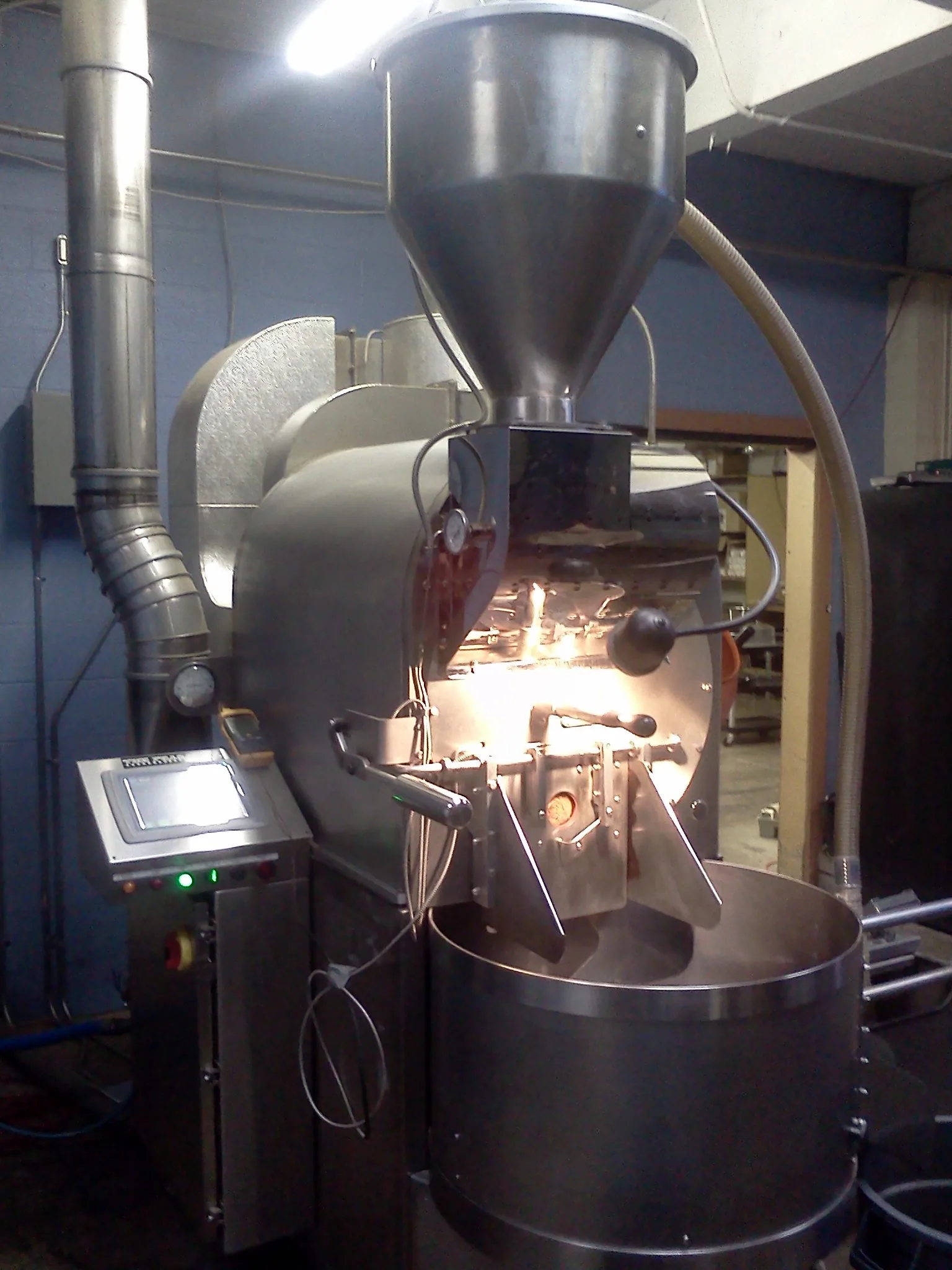
Around the turn of the 2000s, Mark Ludwig filed a patent on a principle that is simple to state and hard to achieve: a single burner both to heat the bean and to burn the fumes. On a conventional machine, the burner heats and a second device, the afterburner, destroys the volatile organic compounds; the hot air goes up the stack. At Loring, the air is recycled in a loop and passes back through the flame.
The company, founded in Santa Rosa, has become in twenty years the benchmark for specialty roasting in the United States, in a market where the energy argument and the emissions argument have become commercial ones.
What it makes
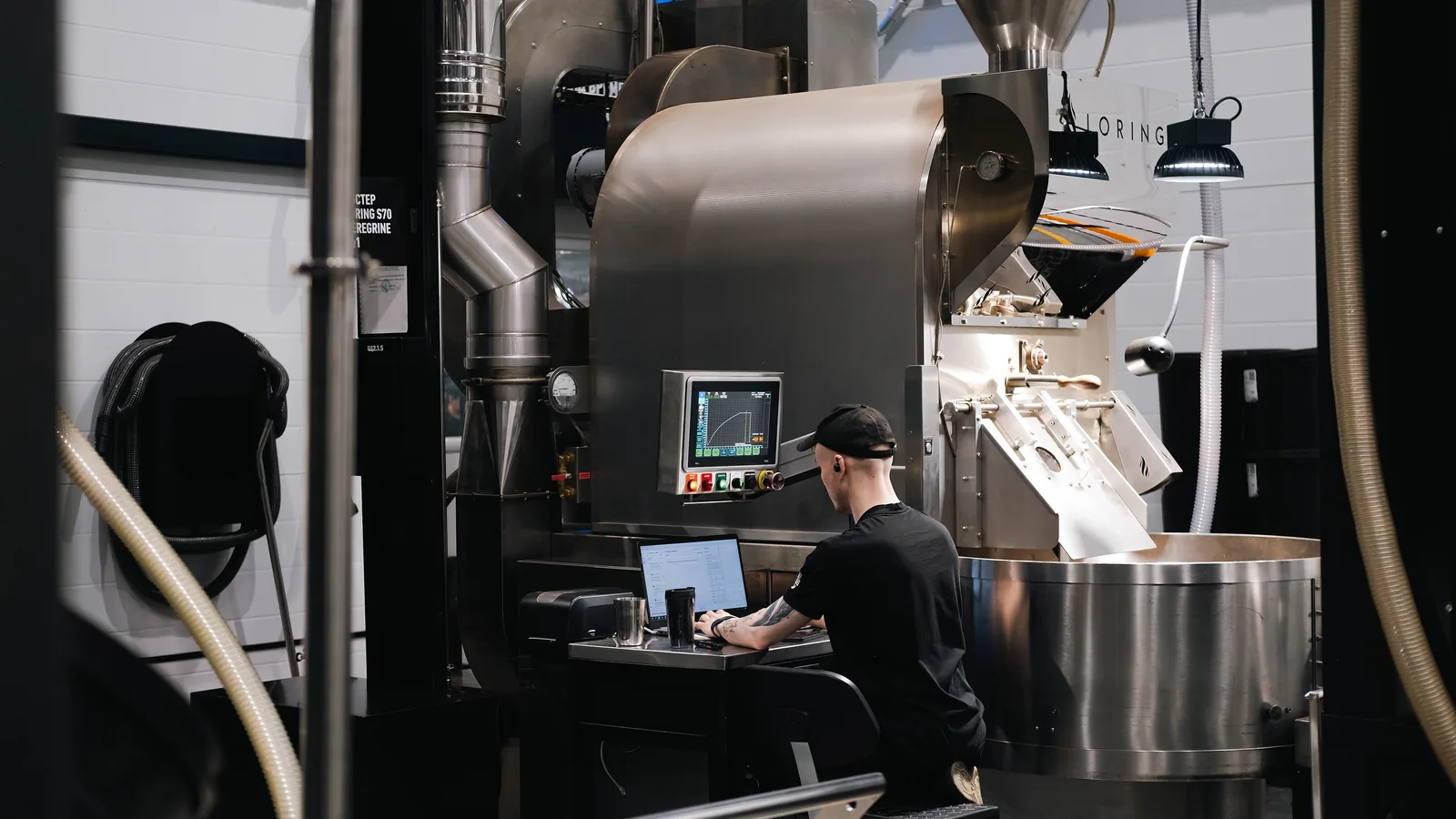
Recirculating single-burner drums, from 7 to 70 kg, with weighing and software control.
The models
- S7 Nighthawk: 7 kg
- S15 Falcon: 15 kg
- S35 Kestrel: 35 kg
- S70 Peregrine: 70 kg
- W70 weighing system
- Roast Architect software
Present in more than sixty countries
What you gain
Energy savings are not a brochure argument, they are measured. On an average roast of 600 seconds, a recirculating drum with catalytic afterburning consumes 1,621 kJ per kilo of green coffee, against 3,426 kJ for the same machine with thermal afterburning: more than double. Field measurements confirm the order of magnitude, 1,245 kJ/kg on a catalytic 250 kg drum. With no fume stack, the installation goes where a conventional afterburner would require a permit. Repeatability is excellent because the incoming air is always at the same temperature.
What you lose
The purchase price is high and payback comes from energy, therefore from volume: at a few batches a week, the numbers do not work out. Conduction is weak, which gives a clean cup, sometimes judged less full-bodied than a conventional drum, and which unsettles roasters coming from a direct-flame machine. The system is more closed: you repair less yourself.
Loring, Our story; Schwartzberg, Batch coffee roasting (UMass), table 1 and § Comparisons; Dorfner and Rothfus measurements cited by Schwartzberg