ATLASVenezuela
about 58,000 tonnes (FAOSTAT 2024, imputed value)In-depth dossier, atlas 2026In-depth dossier: the FAOSTAT series set against the other figures, the history, today's sector and its gray areas, numbered sources. Region: South America.
Venezuela had only a statistical reference point. This dossier completes it: the history of the sector, what it is today, and what remains uncertain, each paragraph referring to its sources, numbered at the bottom of the page.
The FAOSTAT series remains displayed as is. The dossier says what it is worth, year by year when possible, and compares it with the other figures available.
- Geographic status
- country
- Name in FAOSTAT
- Venezuela (Bolivarian Republic of)
- Latest value
- about 58,000 tonnes in 2024
- Nature of the value
- value imputed by the receiving organization
- Start of the positive series
- 1961
- Series maximum
- 91,877 tonnes in 2001
Confirmed coverage: the FAOSTAT series, and a dossier of 27 sources that cross-checks the history, today's sector and what remains uncertain.
History
The coffee tree reaches Venezuela by way of the Antilles, and late. Ukers dates the introduction to 1784: a priest, José Antonio Mohedano, sows near Caracas seeds from Martinique, and the first export leaves five years later, 233 bags, or about 30,000 pounds or 14 tonnes. Thurber, in 1881, already attributed to a Catholic priest, in the same year, the plant's arrival in the Maracaibo region. Walsh, in 1894, keeps 1784 but names another man, Bartholomew Blandin, who opens a plantation in the Chacao valley, a league from Caracas, followed by a Doctor Sligo around Maracaibo. The country's tradition brings these names together: an address given in 2025 at the Central University of Venezuela evokes the “first cup” drunk in 1786 at the Blandín hacienda in Chacao. Accounts that have the plant arrive with missionaries as early as the 1730s also circulate, without a primary source; they are discussed in the gray areas [1][2][3][27].
The 19th century is the century of growth. According to Ukers, production goes from about 11,500 tonnes in 1830-1831 to nearly 38,000 tonnes in 1850-1851, then slows, at around 43,000 tonnes in 1881-1882 as in 1889-1890; plantations cover 8,900 acres in 1839, or 3,600 hectares, and 168 million coffee trees on 346,000 acres in 1888, or 140,000 hectares. Thurber records 33,400 tonnes exported on average in 1875 and 1876, a production estimated by the authorities at 50,000 tonnes and domestic consumption on the order of 30%, and he blames political instability and the lack of capital and labor for holding the crop back. From the 1850s, German trading houses settle in Maracaibo and control the chain from the financing of the harvest to shipment: five of them ship 77% of the coffee leaving through that port, and the planter delivers his crop to them to settle his accounts. A study published by Cenicafé around 1990 places Venezuela, in the last decade of the century, second among the producers of the Americas, with 7% of world production [1][3][4][5].
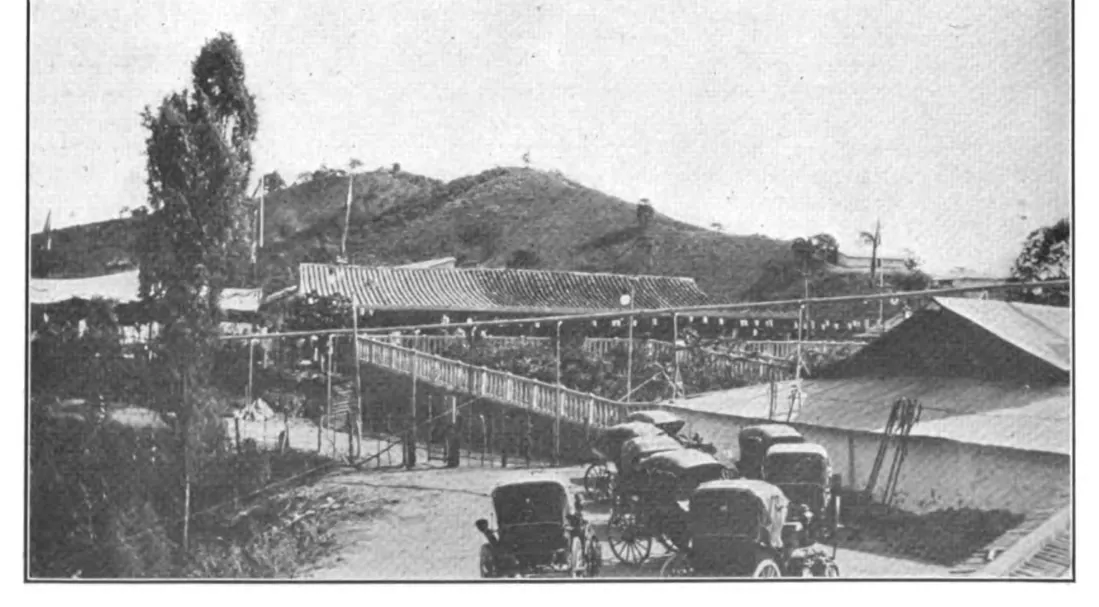
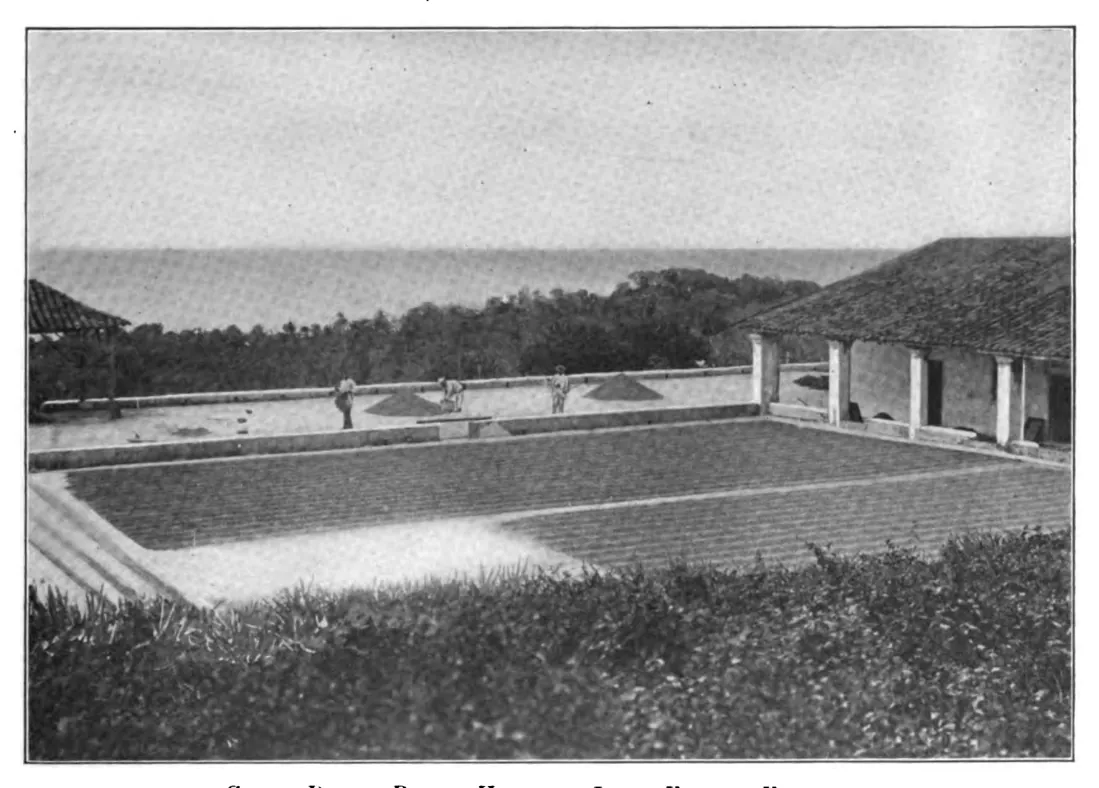
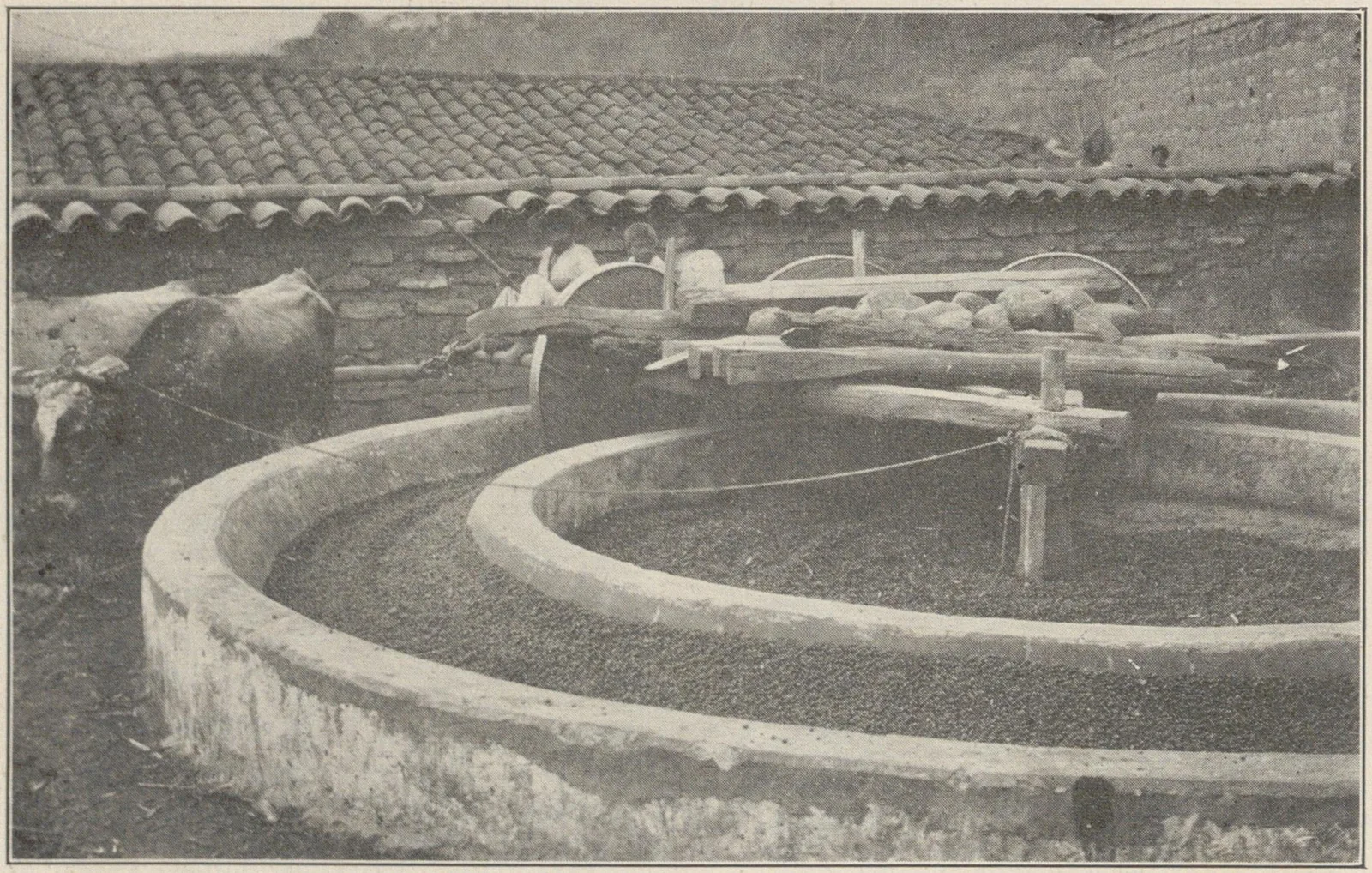
Around 1920, Venezuelan coffees bear the name of their port. La Guaira covers the surroundings of Caracas and Cumaná, Puerto Cabello the center, and Maracaibo the western Andes, where Ukers ranks the Mérida coffees first, grown higher up, then the Táchira coffees, whose Rubio section gives the best washed coffees, before the Tovar, Trujillo and Boconó. Andean coffee comes down by mule to the railway, then by steamer on the Catatumbo and across Lake Maracaibo. The Táchira was still sold shortly before under the name Cúcuta, after the neighboring Colombian town, whose coffee also leaves through Maracaibo and is ranked among the Maracaibo coffees. Most of the crop is trillado, that is, coffee dried in the cherry then hulled, often in a circular trough where wooden wheels drawn by oxen crush the dried cherries; picking runs from November to March. Ukers counts nearly 250,000 acres, or 101,000 hectares, in more than 33,000 plantations, with an average yield of 4 ounces per tree, about 113 grams. The labor force, of Indian and African origin, comes partly from Colombia for the harvest; the residents live under peonage, that is, labor held by debt to the hacienda store [1].
The war of 1914 breaks this trade. In 1913, the country exports 142 million pounds, about 64,400 tonnes, shared mostly among France, the United States and Germany; the German houses, like Kolster, stop their shipments to Hamburg, the bags pile up in the ports, and their release raises exports in 1919 to 81,400 tonnes before a fall to 33,400 tonnes in 1920. The Cenicafé study places the export record in 1918, with more than 1,373,000 bags, then a long decline while oil takes the leading role. The historian Lorena Puerta Bautista gives the causes: little investment in cultivation, producers indebted to the trading houses, a Banco Agrícola y Pecuario created in 1928 without sufficient means, then the crisis of 1929, which hits export agriculture in an economy already turned toward oil. In 1934, the State pays 10 million bolivars to 34,402 coffee and cocoa producers among the poorest in Trujillo, Mérida and Táchira, while oil equipment pours toward Lake Maracaibo. In 1955, Coste still cites these three states as the country's coffee regions [1][4][5][6].
In the second half of the century, coffee remains an important crop but becomes a domestic matter. FAOSTAT records 57,050 tonnes in 1961 on 340,000 hectares harvested, or 168 kilos per hectare. According to the series of the United States Department of Agriculture (USDA), production hovers around a million 60-kilo bags, but green coffee exports fall to 17,000 bags in 1981, because the country's consumption absorbs almost everything. The Fondo Nacional del Café, Foncafé, created as an autonomous body in May 1975 with its seat in San Cristóbal, in Táchira, buys the harvest, allocates it among the roasters according to their history, sets the exportable surplus, mostly in lavado fino and lavado bueno, and in practice holds the monopoly on green coffee. The consumer sale price is capped until March 1989. In 1988, coffee weighs no more than 0.24% of the country's exports, for 9,823 tonnes of green; the 1984-1985 census counts 78,505 farms, Typica occupies 72% of the area, and coffee leaf rust, the fungus Hemileia vastatrix, is confirmed in October 1984 near San Cristóbal [4][7][10].
Price control returns in 2003: coffee then enters the list of basic commodities whose price the government of Hugo Chávez sets. An AP dispatch reports a seizure of about 330 tonnes from wholesalers near Caracas and a producer price set at 1.31 dollars a pound of bean, for a cost after roasting of 1.58 dollars and an imposed sale price of 1.57 dollars. In August 2009, the State occupies for three months the plants of Fama de América and Café Madrid, the two largest roasters according to Chávez, accusing them of exporting illegally to Colombia, where coffee sells for more; the companies deny it. In November, the Minister of Food announces a joint venture with a public majority for Café Madrid and the expropriation of Fama de América. Imports of green coffee, which had never exceeded 191,000 bags according to the USDA, go from 310,000 bags in 2009 to 685,000 in 2014, and Reuters writes in March 2015 that they exceed the country's production for the first time: part comes from Nicaragua, paid for in oil under Petrocaribe, and coffee exports were banned in August 2014. The FAOSTAT series keeps almost no trace of this collapse: its lowest value, 49,987 tonnes in 2015, is only 12% below that of 1961 [7][10][14][15][16][17][18].
Today
No recent official breakdown of production by state was found. In July 2025, the government said coffee was grown in 21 states and named some of them, including Lara, Portuguesa, Táchira, Mérida, Trujillo, Zulia, Falcón, Barinas, Yaracuy and Sucre. The last measurement found dates from around 1990: 80% of plantations above 800 meters, 44% of coffee trees in the Andes of Trujillo, Táchira and Mérida, 24% on the piedmont, that is, the foothills, of Portuguesa and Lara, with a shift of cultivation toward Lara, Portuguesa and Anzoátegui, at the expense of Táchira. The shipments announced in 2026 leave from the dry port of Lara and Portuguesa, and the specialty coffees promoted by the press come from Mérida, the Páramo de Mariño, Guaraque or Santa Cruz de Mora. FAOSTAT records 166,792 hectares harvested in 2023, for a yield of 351.5 kilos per hectare [4][7][23][24][25].
The country declares only arabica: the International Coffee Organization classes it as arabica, and the USDA records zero for Coffea canephora across its whole series. Around 1990, Typica still covered 72% of the area. The World Coffee Research catalog lists two varieties specific to the country: Caripe, a large-bean Typica selection from Monagas State, in the northeast, due to Gustavo Buonafina Parra, and Monte Claro, a compact Sarchimor from the Instituto Nacional de Investigaciones Agrícolas (INIA), derived from the cross of Timor Hybrid 832/2 and Villa Sarchí CIFC 971/11, tolerant of rust and of aluminum-rich soils; both have their profile in the site's atlas. INIA keeps living coffee collections in Monagas, 51 accessions, and in Táchira, 254. A Caracas coffee brand also cites Castillo, yellow Catuaí and Maragogipe on its farms in Mérida [4][8][10][12][13][25].
Ukers placed picking from November to March; Fedeagro, the confederation of agricultural producers, says it is concentrated today in October and could move up to September in 2025 because of the climate. Foncafé's exports consisted mainly of washed coffees, and the New York exchange's “C” contract still accepts washed Venezuela with a discount of 100 points, or one cent per pound, from the base price, like Burundi, India and Rwanda. Recent specialty lots are processed as washed, as honey, that is, dried with part of the mucilage, or as natural: a Monte Claro grown at 1,770 meters is sold after thirty days of drying in the cherry [1][4][11][21][25].
The market is first of all domestic. The country's consumption goes, according to the International Trade Centre, from 716,000 bags in 2000 to 1,077,000 in 2010 and 1,293,000 in 2015, or from 43,000 to 77,600 tonnes; in 2015, that is more than all the estimates of the year's production. Exporting has resumed recently. In March 2023, the Ministry of Foreign Affairs announces a first sale of specialty coffee to Japan, to the importer Coffee Rumba, without giving the volume. In August 2025, Fedeagro puts sales abroad at about 110,000 quintals, or 5,000 tonnes at 46 kilos to the quintal, 10% of production and nearly 30 million dollars a year, for an expected harvest of 1,400,000 quintals; in September 2026, it announces 1,800,000 for 2026-2027, after a floor of 350,000 quintals in 2020. The Ministry of Agriculture declares 4,000 tonnes exported in the first quarter of 2026, including 140 tonnes from Lara to the United States and about a hundred tonnes from Portuguesa to China [11][20][21][22][24].
The Colombian border governs part of the sector, and the direction of the flow follows the price gap. Around 1920, Colombian coffee from Cúcuta left through Maracaibo. In 2009, the government accused the roasters of passing Venezuelan coffee into Colombia, where it fetched a higher price. The Cenicafé study already noted, around 1990, informal exchanges of coffee with Colombia, little stimulated as long as prices stayed close. In 2021, then in July 2023, the governor of Táchira, Freddy Bernal, on the contrary attacks smuggled Colombian coffee flooding the shops of his state, targeting two low-priced brands that he says are made of pasilla, the reject bean, broken or defective, which export excludes; the Sundde, the price-control agency, has it pulled from shelves [1][4][16][19].
- Arrival of the coffee tree
- 1784, seeds from Martinique sown near Caracas (Ukers) [1]
- Declared species
- Coffea arabica only, no canephora production recorded [10]
- Main regions around 1990
- Andes (Trujillo, Táchira, Mérida) 44% of coffee trees, piedmont (Portuguesa, Lara) 24% [4]
- Altitude
- 80% of plantations above 800 m around 1990 [4]
- Unit of account
- the 46 kg quintal of green coffee [4]
- Varieties specific to the country
- Caripe (Typica selection, Monagas) and Monte Claro (INIA Sarchimor) [12]
- Production according to the ICO, 2020
- 500,000 bags of 60 kg, or 30,000 t [9]
- FAOSTAT value 2024
- 58,268 t, value imputed by the FAO (status I) [7]
Gray areas
Current production is known only to within a factor of three. FAOSTAT records 58,268.29 tonnes for 2024 with status I, a value imputed by the FAO itself: 166,453 hectares imputed, multiplied by an estimated yield of 350.1 kilos, which almost carry over the 58,625 tonnes of 2023. All the other years, from 1961 to 2023, carry status A, official figure, and the values for 1988 agree with those of the authorities published around 1990, 273,000 hectares and more than 70,000 tonnes: FAOSTAT copies the country, it does not measure it. Yet the other counts diverge. The International Coffee Organization gives 500,000 bags for 2015-2016 and for 2020, or 30,000 tonnes, whereas FAOSTAT records 49,987 and 54,242, 67 to 81% more; the USDA carries over 500,000 bags every year since 2021, with consumption equal to production and zero trade, which amounts to no longer tracking the country; Fedeagro speaks of a floor of 350,000 quintals in 2020, about 16,000 tonnes; and the government announced 4,325,420 quintals for 2024, nearly 200,000 tonnes at 46 kilos to the quintal. The recent sources do not define their quintal; the 46-kilo one comes from the Cenicafé study, and it is the only one that reconciles Fedeagro's 1,400,000 quintals with the “million bags” it sees there. The FAOSTAT maximum, 91,877 tonnes in 2001, is not the ICO's either, which places its own in 1998-1999 with 1,597,000 bags, about 95,800 tonnes, and the series loses 31% of its area between 1994 and 1995 without losing production, a break that no note consulted explains [4][7][8][9][10][21][22][23].
Neither exports nor smuggling are measured. In 2023, the Ministry of Foreign Affairs presents the sale to Japan as the first coffee export since 2001, whereas the USDA records 270,000 bags exported in 2002, 225,000 in 2007 and still 30,000 in 2015; a 2025 article instead cites a USDA report according to which no official export had been recorded since 2004 during certain periods. The 2009 accusation against Fama de América and Café Madrid was followed by no public figure in the sources consulted, and the minister himself assured in November that raw material was not lacking; an 80% market share attributed to these two companies circulates without a verifiable source and is not taken up here. The Colombian coffee denounced in Táchira in 2023 is no better documented, and the volumes announced for 2025 and 2026 all come from the government or the producers, with no published customs series. Already around 1920, Ukers noted that the Colombian coffee shipped through Venezuela made the exports of the two countries hard to establish [1][10][15][17][19][20][25].
Several common accounts do not hold up against the sources. No source makes Venezuela the world's leading exporter: in Ukers, Brazil already exports 64 million pounds in 1830 when Venezuela produces 25 million, the Cenicafé study places it second among only the producers of the Americas in the 1890s, and Reuters calls it the third-largest exporter in the world two centuries ago, according to certain estimates that it does not name. As for the arrival, the three authors of the turn of the century agree on 1784 but not on the man: Mohedano in Ukers, Blandin in Walsh, a nameless priest in Thurber; tradition retains 1786 for the first cup, and accounts without a primary source have the plant come with missionaries as early as the 1730s. The site's chronicle writes that coffee reaches Venezuela, Colombia and Cuba in 1748, citing Ukers's chronology, which gives that year only for Cuba and dates the arrival in Venezuela to 1784: the entry deserves a correction. Ukers also asserts that no law of peonage or slavery ever existed in Venezuela, whereas slavery was abolished there by a proclamation of José Gregorio Monagas in March 1854; no source consulted measures what the coffee haciendas owed to slave labor before that date. Lastly, controlling the price of coffee is not an invention of the 2000s: it existed under Foncafé until March 1989, and the public monopoly on green coffee dates from 1975 [1][2][3][4][18][26][27].
Not covered: The USDA annual report on Venezuelan coffee (fas.usda.gov pages refused, Wayback archive out of service during the session); a recent official series by state, by area or by number of producers; the definition of the quintal in the Fedeagro and government figures; the possible share of Coffea canephora, which no statistic counts; the current state of Fama de América and Café Madrid after 2015; the real volumes of smuggling in either direction; a primary source dating precisely the moment oil overtook coffee in exports; the place of slavery in the haciendas before 1854; the effects on the sector of the political change of 2026, known here from a single weak source; cafeteria recipes and consumption uses, without a solid source.
- All About Coffee, William H. Ukers, The Tea and Coffee Trade Journal Company, 1922, https://www.gutenberg.org/ebooks/28500 solid level
Introduction in 1784 by Mohedano with seeds from Martinique and first export of 233 bags five years later (p. 9, chronology); production from 1830-1831 to 1889-1890 and exports from 1904 to 1920, domestic consumption (pp. 276-278); areas of 1839 and 1888, plantations and yield (pp. 212-213); trillado, fermentation, peonage, Colombian labor, ox-driven huller (p. 263); picking from November to March; transport by mule, Catatumbo and Lake Maracaibo (p. 308); exports by destination 1906, 1913 and 1920 and effects of the war (p. 300); commercial classification, Táchira sold as Cúcuta (pp. 348-349, 364-365); Colombian coffee shipped through Venezuela. Read in the library's text copy, pages taken from the book's index. - Coffee: Its History, Classification and Description, Joseph M. Walsh, 1894, https://www.biodiversitylibrary.org/bibliography/33348 medium level
Plantation of Bartholomew Blandin in the Chacao valley in 1784, then of a Doctor Sligo around Maracaibo; producing districts and ports; La Guaira polished and sold as Rio; Venezuela supplies about a tenth of the coffee consumed in the United States. Read in the library PDF (Pepites_historiques_et_scientifiques), OCR text layer. - Coffee: From Plantation to Cup, Francis B. Thurber, 1881, https://www.biodiversitylibrary.org/item/115824 medium level
Exports of 1875 and 1876 (average of 33,401,773 kg), production estimated by the authorities at 50,000,000 kg, domestic consumption of about 30%; introduction in 1784 by a priest in the Maracaibo region; shade made necessary by the long dry season; political anarchy and lack of capital and labor. Read in the library PDF. - Evaluación de las consecuencias de la suspensión del régimen de cuotas del Convenio Internacional del Café en la economía de Venezuela (Venezuela y el Acuerdo Internacional del Café), Alfredo Van Kesteren, published by Cenicafé (Ensayos sobre Economía Cafetera), doi 10.38141/10788/006-1-9, around 1990, https://publicaciones.cenicafe.org/index.php/ecc/article/download/996/ solid level
Coffee the pillar of the economy from the end of the 18th century to the 1920s; second producer in the Americas and 7% of world production in the 1890s; record of more than 1,373,000 bags exported in 1918; 80% of plantations above 800 m, 44% of coffee trees in the Andes, 24% in Portuguesa and Lara; production of more than 70,000 t, quintal of 46 kg; 273,000 ha harvested in 1988; coffee at 0.24% of exports and 9,823 t exported in 1988; 78,505 farms (1984-1985), 72% Typica; Foncafé created in May 1975 in San Cristóbal, green coffee monopoly, consumer price capped until March 1989; rust confirmed in October 1984; informal exchanges with Colombia. Year inferred from the text, which reasons about 1989 and 1990. - La inversión extranjera en Venezuela: de las casas comerciales a las compañías petroleras (1850-1975), Tiempo y Espacio no. 63, pp. 15-33, Lorena Puerta Bautista, Universidad Pedagógica Experimental Libertador, 2015, https://ve.scielo.org/pdf/te/v25n63/art02.pdf solid level
German houses in Maracaibo from the 1850s, five of them exporting 77% of the port's coffee, credit tied to the harvest (p. 18); halt in shipments by the Kolster house during the war; lack of investment, Banco Agrícola y Pecuario of 1928, crisis of 1929 in an economy already oriented toward oil, aid of 10 million bolivars to 34,402 coffee and cocoa producers of Trujillo, Mérida and Táchira in 1934 (pp. 23-24). - Les caféiers et les cafés dans le monde, volume I, René Coste, 1955, https://horizon.documentation.ird.fr/exl-doc/pleins_textes/divers20-12 solid level
Táchira, Trujillo and Mérida cited among the coffee regions of Venezuela (p. 62 of the book). Read in the library PDF. - FAOSTAT, Production: Crops and livestock products, Coffee, green, Venezuela (Bolivarian Republic of), edition of December 23, 2025, FAO, 2025, https://www.fao.org/faostat/en/#data/QCL solid level
Production, area and yield from 1961 to 2024 with their statuses year by year, read in the complete file already extracted on the machine: 57,050 t and 340,000 ha in 1961, 71,040 t and 273,230 ha in 1988, maximum of 91,877 t in 2001, 49,987 t in 2015, 58,625 t in 2023, 58,268.29 t in 2024; status A for all productions from 1961 to 2023, I for 2024 (area I, yield E). - Total production by all exporting countries, crop years 1990/91 to 2019/20 (table 1a), International Coffee Organization (ICO), 2020, http://web.archive.org/web/20240415232356/https://ico.org/historical/1 solid level
Production of Venezuela, classed as arabica, from 1990-1991 to 2019-2020 in thousands of 60 kg bags: 1,122 in 1990-1991, maximum of 1,597 in 1998-1999, 1,571 in 2006-2007, 932 in 2008-2009, 500 in 2015-2016, 650 in 2019-2020. Read in the Wayback capture of April 15, 2024, rows reconstructed from the position of the words. - Crop year production by country (Table 1), International Coffee Organization (ICO), 2020, http://web.archive.org/web/20240724002100/https://www.ico.org/prices/p solid level
Venezuela: 572, 578, 550 and 500 thousand bags for the crop years starting in 2017, 2018, 2019 and 2020. Wayback capture of July 24, 2024. - Production, Supply and Distribution Online, coffee file (psd_coffee_csv), USDA, Foreign Agricultural Service, 2026, https://apps.fas.usda.gov/psdonline/downloads/psd_coffee_csv.zip solid level
Series for Venezuela from 1960 to 2026 in thousands of bags: arabica production only (canephora at zero), bean exports fallen to 17 in 1981, 270 in 2002, zero since 2018; imports from 310 in 2009 to 685 in 2014; consumption from 1,133 to 1,305 from 2010 to 2018; fixed value of 500 from 2021 to 2026 with consumption equal to production. File downloaded on October 21, 2026. - The Coffee Guide, 4th edition, International Trade Centre (ITC), 2021, https://www.intracen.org/resources/publications/the-coffee-guide-fourt solid level
Consumption of Venezuela of 716,000 bags (2000), 1,077,000 (2010) and 1,293,000 (2015) (table 9); 2014-2019 production according to the ICO (table 5); washed Venezuela deliverable on the C contract at minus 100 points. Read in the library PDF. - Coffee Varieties Catalog, World Coffee Research, 2025, https://varieties.worldcoffeeresearch.org/ solid level
Caripe, large-bean Typica selection from Monagas, breeder Gustavo Buonafina Parra (p. 24); Monte Claro, compact Sarchimor from INIA, Timor Hybrid 832/2 x Villa Sarchí CIFC 971/11, tolerant of soil aluminum (p. 56). - Global Conservation Strategy for Coffee Genetic Resources, Paula Bramel and coauthors, Crop Trust and World Coffee Research, 2017, https://www.croptrust.org/fileadmin/uploads/croptrust/Documents/Ex_Sit solid level
Ex situ collections of INIA in Monagas (51 accessions) and Táchira (254 accessions) (p. 69 of the library PDF). - Coffee crisis brews in Venezuela, Natalie Obiko Pearson, Associated Press, reprinted by Revista Cafeicultura, date not shown, after 2003, https://revistacafeicultura.com.br/coffee-crisis-brews-in-venezuela/am medium level
Coffee price control since early 2003; seizure of about 330 t from wholesalers in Yaguara and Guacara; producer price of 1.31 dollars a pound, cost of 1.58 dollars after processing, sale price set at 1.57 dollars. - Chavez: Coffee plants to be expropriated, Associated Press, on NBC News, 2009, https://www.nbcnews.com/id/wbna32302761 medium level
August 5, 2009: announcement of the expropriation of Fama de América and Café Madrid, presented as the two largest processors, occupied since the start of the week; investigation into illegal shipments of coffee to escape price control; denial by the companies; shortage in the preceding weeks. - Venezuela to take permanent control of seized coffee companies, Latin American Herald Tribune, reprinted by Semana, 2009, https://www.semana.com/venezuela-to-take-permanent-control-of-seized-c medium level
Minister Elías Jaua mentions a parallel market and smuggled Venezuelan coffee sold in Colombia, where prices are higher than in Venezuela. - Café Madrid será empresa mixta y Fama de América nacionalizada, Agencia Bolivariana de Noticias (ABN), reprinted by Rebelión, 2009, https://rebelion.org/cafe-madrid-sera-empresa-mixta-y-fama-de-america- medium level
November 2009: the Minister of Food Félix Osorio announces a joint venture with a public majority for Café Madrid and the expropriation of Fama de América, and states that raw material is not lacking. - Venezuela Swaps Oil to Import Beans as Coffee Output Sinks, Reuters, reprinted by Voice of America, 2015, https://voa.pangea-cms.com/preview/en-US/a/reu-venezuela-coffee-output medium level
March 6, 2015: according to the USDA, record imports of 685,000 bags and, for the first time, higher than production; nearly 70,000 Nicaraguan bags in the last quarter of 2014 at 2.21 dollars a pound, paid for by Petrocaribe; leaf disease, low retail prices, ranchers abandoning coffee; export ban in August; 550,000 bags exported in 1998-1999; third-largest exporter in the world two centuries ago according to some estimates. - Venezuela recomienda evitar consumo de café colombiano que llega al país por contrabando, NTN24, 2023, https://www.ntn24.com/noticias-actualidad/venezuela-recomienda-evitar- medium level
July 11, 2023: the governor of Táchira Freddy Bernal denounces smuggled Colombian coffee, two brands that he says are made of pasilla, withdrawals by the Sundde; similar campaign in 2021. No volume. - Venezuela comienza la exportación de café de especialidad a Japón, EFE, reprinted by Finanzas Digital, 2023, https://finanzasdigital.com/venezuela-comienza-la-exportacion-de-cafe- medium level
March 31, 2023: the Ministry of Foreign Affairs announces a sale of specialty coffee to Coffee Rumba (Japan), presented as the first coffee export since 2001, with no volume or amount. - Exportación de café venezolano 2025: producción e ingresos, Finanzas Digital, from Vicente Pérez (Fedeagro) on Unión Radio, 2025, https://finanzasdigital.com/exportacion-cafe-venezolano-2025-produccio medium level
August 24, 2025: about 110,000 quintals exported, 10% of production, nearly 30 million dollars a year; expected harvest of 1,400,000 quintals, “more than a million bags”; picking concentrated in October, possibly moved up to September. - Producción de café en Venezuela recupera niveles históricos, Finanzas Digital, from Fedeagro and Fedecámaras Radio, 2026, https://finanzasdigital.com/produccion-cafe-venezuela-recupera-niveles medium level
September 30, 2026: projected harvest of 1,800,000 quintals for 2026-2027; floor of 350,000 quintals in 2020. - Maduro ponderó aumento de producción de café en Venezuela, Prensa Latina, 2025, https://www.prensa-latina.cu/?p=1601339 medium level
July 17, 2025: government figures of 1,670,000 quintals in 2018 and 4,325,420 in 2024, unit not defined; coffee grown in 21 states, including a partial list; outlets announced toward Turkey, India, China and Russia. - Il Venezuela ha esportato quattromila tonnellate di caffè verde nel primo trimestre del 2026, Assocamerestero, contribution of the Cámara de Comercio Venezolano-Italiana, 2026, https://www.assocamerestero.it/notizie/venezuela-ha-esportato-quattrom medium level
May 27, 2026: 4,000 t exported in the first quarter according to the Ministry of Agriculture (Julio León Heredia); 140 t from the dry port of Lara to the United States; about a hundred tonnes from Portuguesa to China; 90 containers sold from Lara to the United States, the Emirates and Italy. - Tributo Café: A Homage To Venezuela's Coffee Past, And A Search For A New Future, Rafael Tonon, Sprudge, 2025, https://specialprojects.sprudge.com/?p=793 medium level
October 23, 2025: farms in Mérida (Páramo de Mariño, Guaraque, Santa Cruz de Mora); Monte Claro at 1,770 m dried thirty days in the cherry; Castillo, yellow Catuaí, Maragogipe; washed, honey and natural processes; 86,000 quintals exported in the first half of 2025, unsourced; citation of a 2015 USDA report on the absence of official exports since 2004. - Monagas, José Gregorio (1791-1858), Encyclopedia of Latin American History and Culture, Winthrop R. Wright, on Encyclopedia.com, accessed in 2026, https://www.encyclopedia.com/humanities/encyclopedias-almanacs-transcr medium level
Abolition of slavery by presidential proclamation on March 25, 1854. - Discurso de Diplomado de Café, Universidad Central de Venezuela, Noticiencias, 2025, https://noticiencias.ucv.ve/wp-content/uploads/2025/08/Discurso-de-Dip low level
Only the tradition of a first cup of coffee drunk in 1786 at the Blandín hacienda in Chacao, and coffee presented as the leading export product in the 19th century until oil. End-of-course address, without references.