24Puerto Rico
300,000 bags (2009)In-depth country profile: production, varieties, classification, history, current situation and points that remain uncertain. Region: Caribbean.
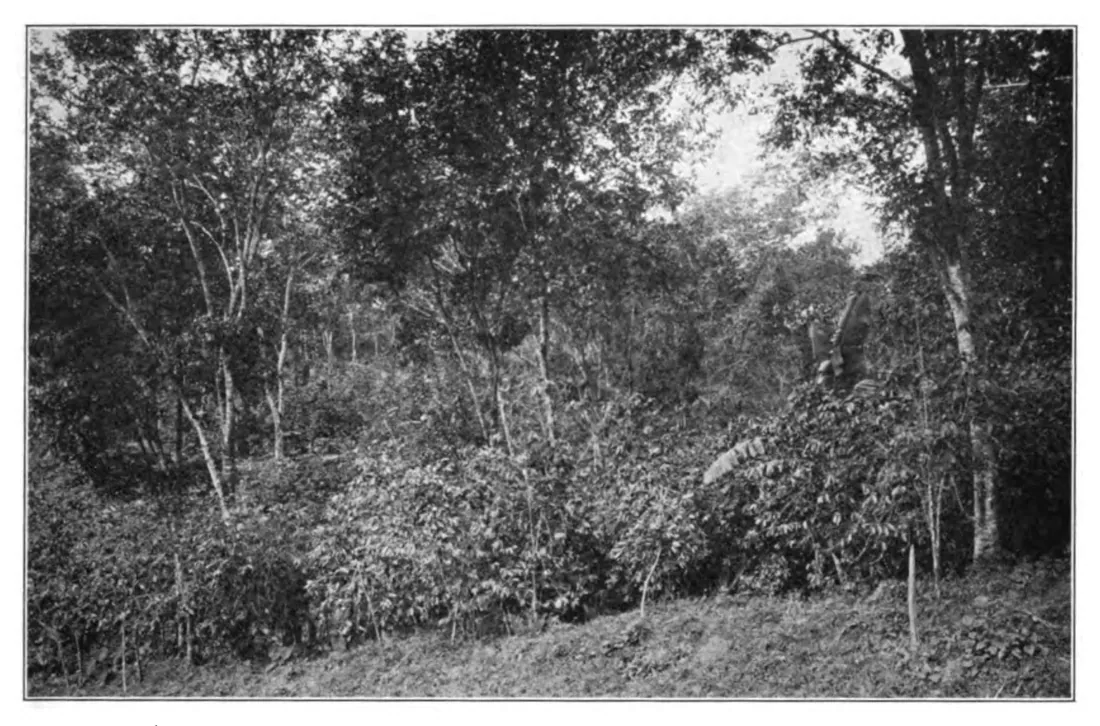
Coffee was introduced to Puerto Rico in 1736, and the arrival of immigrants in the Yauco region, in the 19th century, transformed the sector: new methods, new equipment, export contacts. By the end of the century, the island was even the world's sixth-largest exporter.
Annexation by the United States in 1898 then tipped the economy toward industry, pushing coffee into the background. Today, production remains modest and very little is exported, but the mountainous Yauco region gave its name to a prestigious cru, the “Yauco Selecto.”
- Botanical species
- Arabica
- Altitude
- 200 to 1,100 m
- Type of cultivation
- Under shade
- Harvest
- Manual
- Processing
- Wet process; natural sun drying
- Preparation
- Mechanical sorting
- Harvest period
- August to January (3 passes)
- Packaging
- 45 kg bag
Coffee is designated by its bean size (1 screen = 0.4 mm).
| Grade | Screen |
| AA | Screen 17 |
| A | Screen 16 |
| PB | Peaberry |
Producers are increasingly developing high-end estate coffees: the terroir and the name of the plantation then become full qualifying elements.
History
Puerto Rico begins growing coffee around 1755 according to Ukers, whereas the profile gives 1736. The two dates coexist without any source deciding between them.
The island became a leading exporter in the nineteenth century. The arrival of immigrants in the Yauco region has a lot to do with it: they brought new methods, new equipment and export contacts.
The measure of the period comes from a tax survey, which explains its precision. For the fiscal year 1915-1916, Ukers counts 167,137 acres planted in coffee. The best zones he cites are the Sierra de Luquillo, Yauco, Utuado, Lares and Ciales.
Ukers, All About Coffee (1922), ch. II, p. 5-10; Ukers 1922, ch. XX, p. 216-244, p. 235-236; Country Profiles, Marco De Sousa Rosa, 2026The island holds an anomaly that no one has ever reproduced: in 1903, Puerto Rico eradicated coffee leaf rust. Not contained, not limited: the fungus disappeared from the island. It is the only case of eradication to have entered the literature, and it held for at least half a century, since Barat could still write in 1955 that rust was absent from the Antilles. Brazil, with national budgets, was unable to repeat it in 1970.
McCook 2019; Barat, in Coste 1955; LC ch. 12 and 13Today
The volume at the head of the profile, 300,000 bags (2009), is that of the profile. Ukers gives an older benchmark: the island exported 29,967,879 pounds in 1921.
What made coffee decline did not come from the field. Annexation by the United States in 1898 tipped the economy toward industry, and the bean therefore moved into the background.
Production remains modest and very little is exported. It takes place between 200 and 1,100 meters, in Typica, Bourbon, Mundo Nuevo, Caturra and Pacas, by the wet process with natural sun drying.
Country Profiles, Marco De Sousa Rosa, 2026; Ukers 1922, ch. XXII, p. 289-291 (exports of the producing countries), p. 290The island left two traces in the global genealogy of varieties. Its production is modest today, but its planting material has traveled.
The first trace is a Bourbon. In the 1930s the Mayagüez station supplied Rwanda and Burundi with Bourbon Mayaguez 139, which still makes up the orchard of the Great Lakes.
The second is a Sarchimor, that is, a lineage derived from the cross between Villa Sarchí and the Timor Hybrid. Puerto Rico produced its own, Limani, little documented.
The island's prestigious name, however, is not that of a variety but of a cru: the “Yauco Selecto,” from the mountainous Yauco region.
World Coffee Research, Coffee Varieties Catalog 2025, Bourbon Mayaguez 139 and Limani profiles; Country Profiles, Marco De Sousa Rosa, 2026Gray areas
- The introduction dates diverge: around 1755 according to Ukers, 1736 according to the profile.
- The mechanism of the 1903 eradication is not explained in the literature: the fact is recorded without a reproducible recipe.
- No recent Puerto Rican production volume could be sourced.
- The exact route of Bourbon Mayaguez 139 from Puerto Rico to the Africa of the Great Lakes is not documented.