ATLASCuba
6,000 tonnes (FAOSTAT 2024)In-depth dossier, atlas 2026In-depth dossier: the FAOSTAT series set against other figures, the history, today's industry and its gray areas, with numbered sources. Region: Caribbean.
Cuba had only a statistical reference point. This dossier completes it: the history of the industry, what it is today, and what remains uncertain, with each paragraph pointing to its sources, numbered at the foot of the page.
The FAOSTAT series remains displayed as is. The dossier says what it is worth, year by year when possible, and compares it with the other figures available.
- Geographic status
- country
- Name in FAOSTAT
- Cuba
- Latest value
- 6,000 tonnes in 2024
- Nature of the value
- figure from an external organization
- Start of the positive series
- 1961
- Series maximum
- 52,206 tonnes in 1962
Confirmed coverage: FAOSTAT series, and a dossier of 24 sources that draws together the history, today's industry and what remains uncertain.
History
The coffee tree arrived in Cuba in 1748. Ukers says so twice, in his chapter on propagation and in his chronology: that year, Don José Antonio Gelabert introduced the crop on the island with seeds from Saint-Domingue. The World Coffee Research catalog gives the same date and the same origin, and specifies that it was Typica, the lineage descended from the Java plant that passed through Amsterdam and Paris, which reached Saint-Domingue in 1735. According to the Cuban historian Francisco Pérez de la Riva, cited by the island's press, the first cafetal, that is, the first coffee plantation, was founded on a Gelabert property near Wajay, south of Havana. Cuba then became a point of departure in its turn: Ukers has the coffee of Costa Rica come from the island in 1779, as the site's dossier on that country recalls, and that of El Salvador in 1852 [1][2][15].
The real start came from elsewhere, and from a revolt. After the slave uprising in Saint-Domingue in August 1791, French colonists and Creoles born in the colony fled to the east of Cuba, and arrivals continued until 1803. They brought know-how: according to UNESCO, the wet process, in which the cherry is pulped and the bean fermented before being dried, was developed in this region by the French, with its cisterns, aqueducts and mills. The agency IPS, relying on the Cuban historians of this immigration, counts about 100,000 coffee trees in the region in 1803 and four million in 1807, on 191 plantations worked by 1,650 enslaved people. What the site's chronicle describes as the coffee center of gravity shifting to Cuba, Jamaica and then Brazil thus has a precise place here, the foothills of the Sierra Maestra, and a labor force: the historian Stuart McCook notes that Cuba is the only place in the Antilles where the slave coffee plantation survives the crisis of the 1790s to 1830 [4][5][6].
This landscape was inscribed on the World Heritage list in 2000 under the name Archaeological Landscape of the First Coffee Plantations in the South-East of Cuba. It covers 81,475 hectares in the provinces of Santiago de Cuba and Guantánamo and brings together the remains of 171 cafetales, with the master's house, the secaderos, that is, the terraced drying floors, the workshops where the bean was hulled and roasted, the workers' quarters, and the mule tracks that carried the bean to the ports. UNESCO states bluntly that these owners, mostly of French and Haitian origin, exploited the mountain “by the sweat and blood” of their African slaves. The estate of La Isabelica, which belonged to the colonist Prudencio Casamayor, became a museum in the 1960s. That these ruins have survived so well is because the region was largely abandoned in the early 20th century, when its techniques could no longer compete with those of the rest of Latin America [4][5].
In the 19th century, Cuba was among the great exporters, then vanished from the market. Ukers gives 50,000,000 pounds exported on average per year in the 1840s, or nearly 22,700 tonnes, and 2,067 plantations “a century ago”; Thurber, in 1881, speaks of more than 25,000,000 pounds a year between 1830 and 1840 and of 15,710 tons in 1842. The two authors agree on what followed. Hurricanes, unfavorable legislation, the rise of Brazil and above all sugar, which was more profitable, drove coffee out, and Walsh wrote in 1894 that the island no longer even produced enough to drink. In 1907, 1,411 plantations and 3,662,850 coffee trees remained, yielding 6,595,700 pounds, barely 3,000 tonnes. Cuba was then an importing country and a heavy drinker: in 1920 it bought nearly 40,000,000 pounds, about 18,100 tonnes, a large share of it from Puerto Rico, and each inhabitant consumed 13.79 pounds a year, or 6.3 kilos, the second-highest figure in the world behind Sweden. The preparation Ukers describes is a cold extract: the fine grind is poured into a flannel bag through which cold water is passed several times, and the extract is then used for café au lait or black coffee [1][7][8].
Cultivation recovered in the 20th century, since the country exported more than 20,000 tonnes a year in the mid-1950s, mostly to the Netherlands and Germany, at prices above the market; an Instituto Cubano del Café then appears among the research bodies that Coste listed in 1955. The peak followed the revolution of 1959: the Cuban press reports a record of 60,330 tonnes in 1961, with a yield of 0.36 tonne per hectare. The decline that followed was long and is documented by the US Department of Agriculture. The Sierra Maestra, the first coffee region, had been the theater of the guerrilla war; to this were added the nationalization of coffee farms, the departure of technicians, the exodus of workers to the cities and a lost bet on plantations near Havana, picked by volunteers from the capital. By the end of the 1960s, production had returned to the level of the 1930s, and in the 1970s to that of the 1920s. The site's chronicle recalls the other side of this story: the international coffee agreement of 1962 was also designed to keep the producing countries away from Cuban influence [9][10][11].
The FAOSTAT series for green coffee starts at 37,000 tonnes in 1961 and peaks at 52,206 tonnes in 1962. It then oscillates between 14,807 tonnes (1978) and 34,246 tonnes (1967), climbs back to 28,920 tonnes in 1989 thanks to plantings decided in the 1980s, then slides after the collapse of the Soviet bloc, which deprived agriculture of fertilizer and fuel and emptied the mountains of pickers. The 6,000 tonnes of 2024 are eight to nine times less than the 1962 peak. But the series changes in nature along the way. Its first 29 values, from 1961 to 1989, are official figures; since 1990, 30 values out of 35 carry status X, “unofficial figure from an external organization,” three are imputed by the FAO (2014 to 2016) and only two are official (9,100 tonnes in 2021, 6,252 in 2022). The harvested area, which falls from 170,000 hectares in 1961 to 17,801 in 2024, is never an official figure after 1989. What these statuses mean is discussed in the gray areas [3][9].
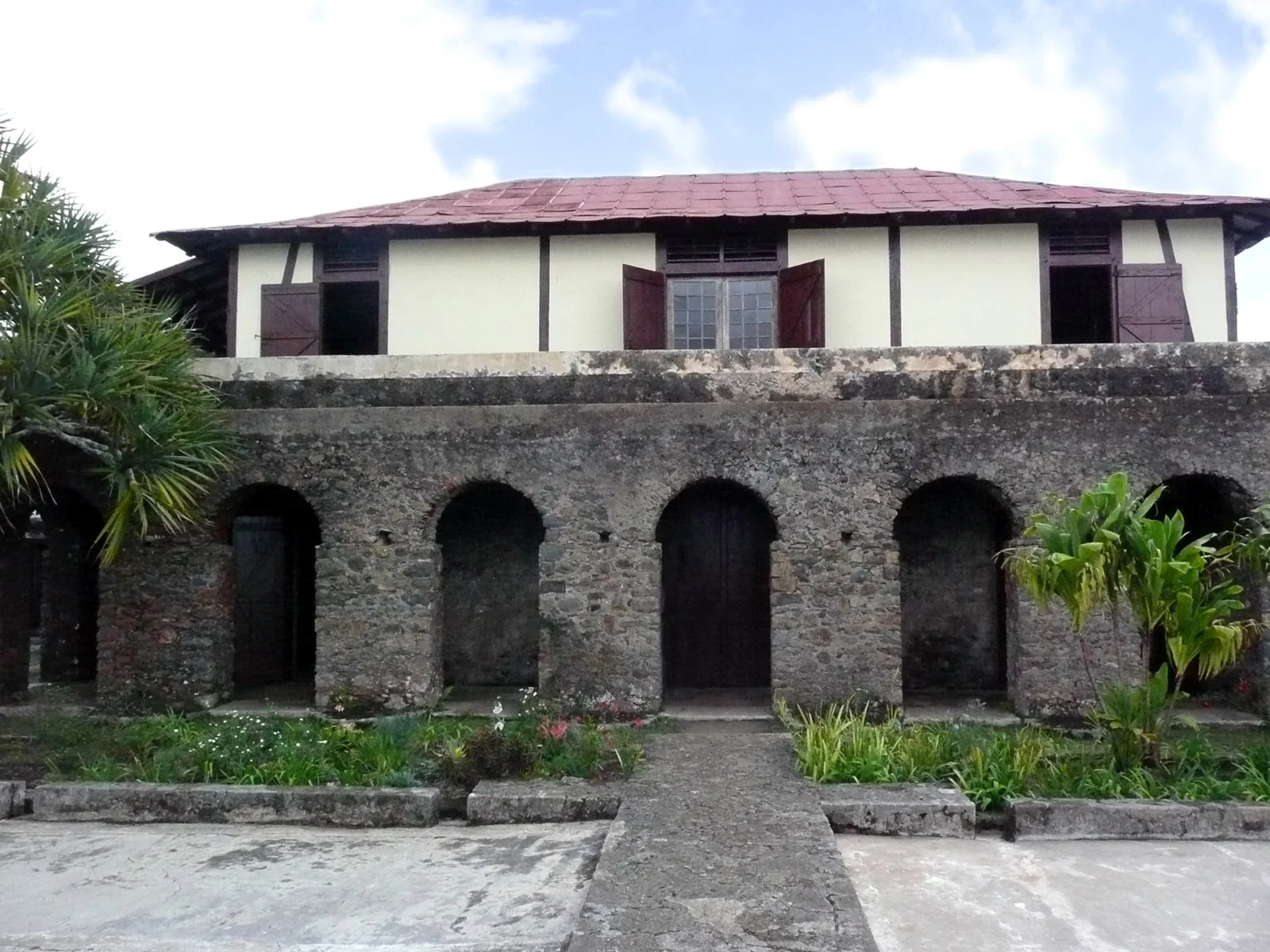
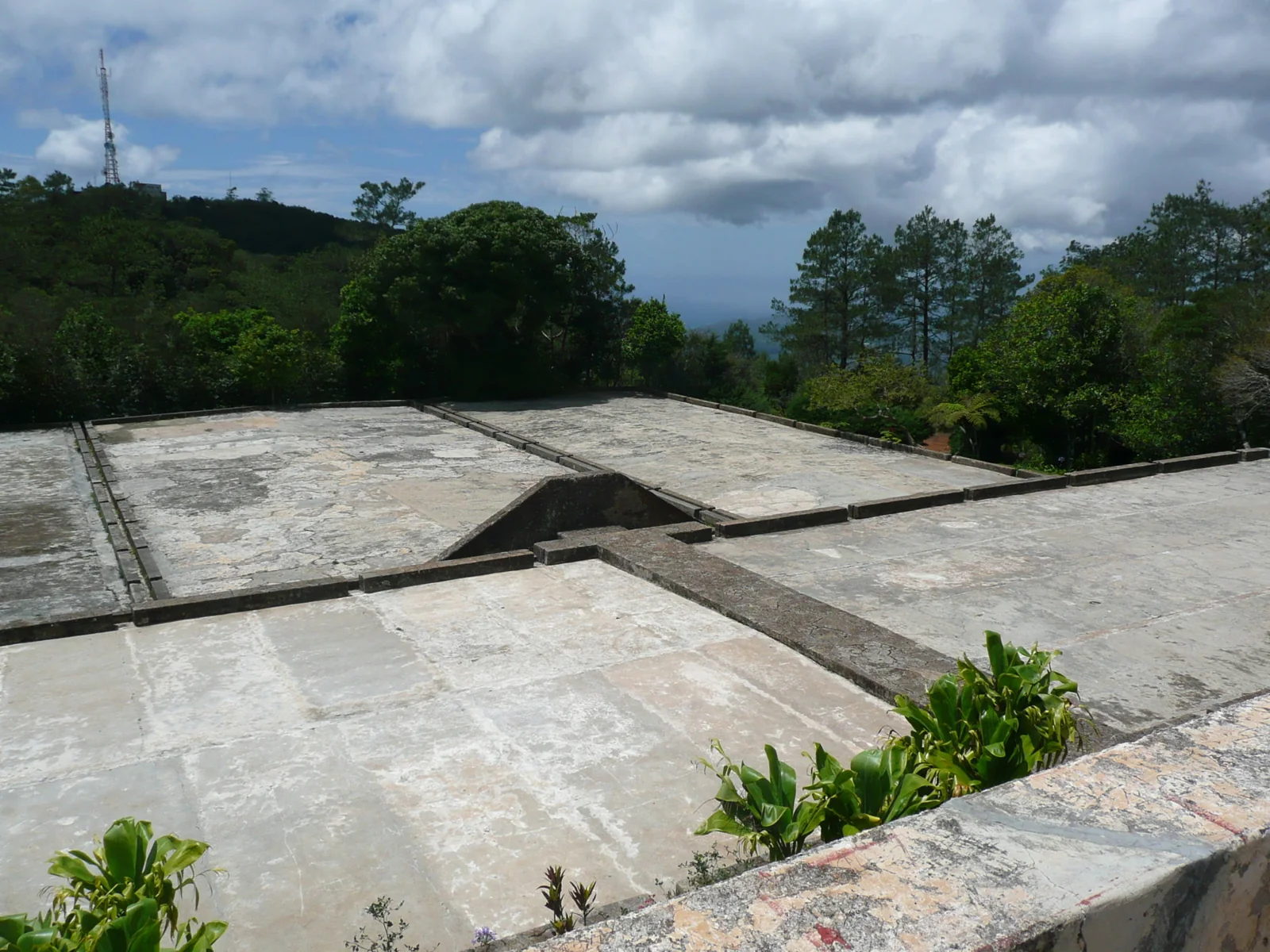
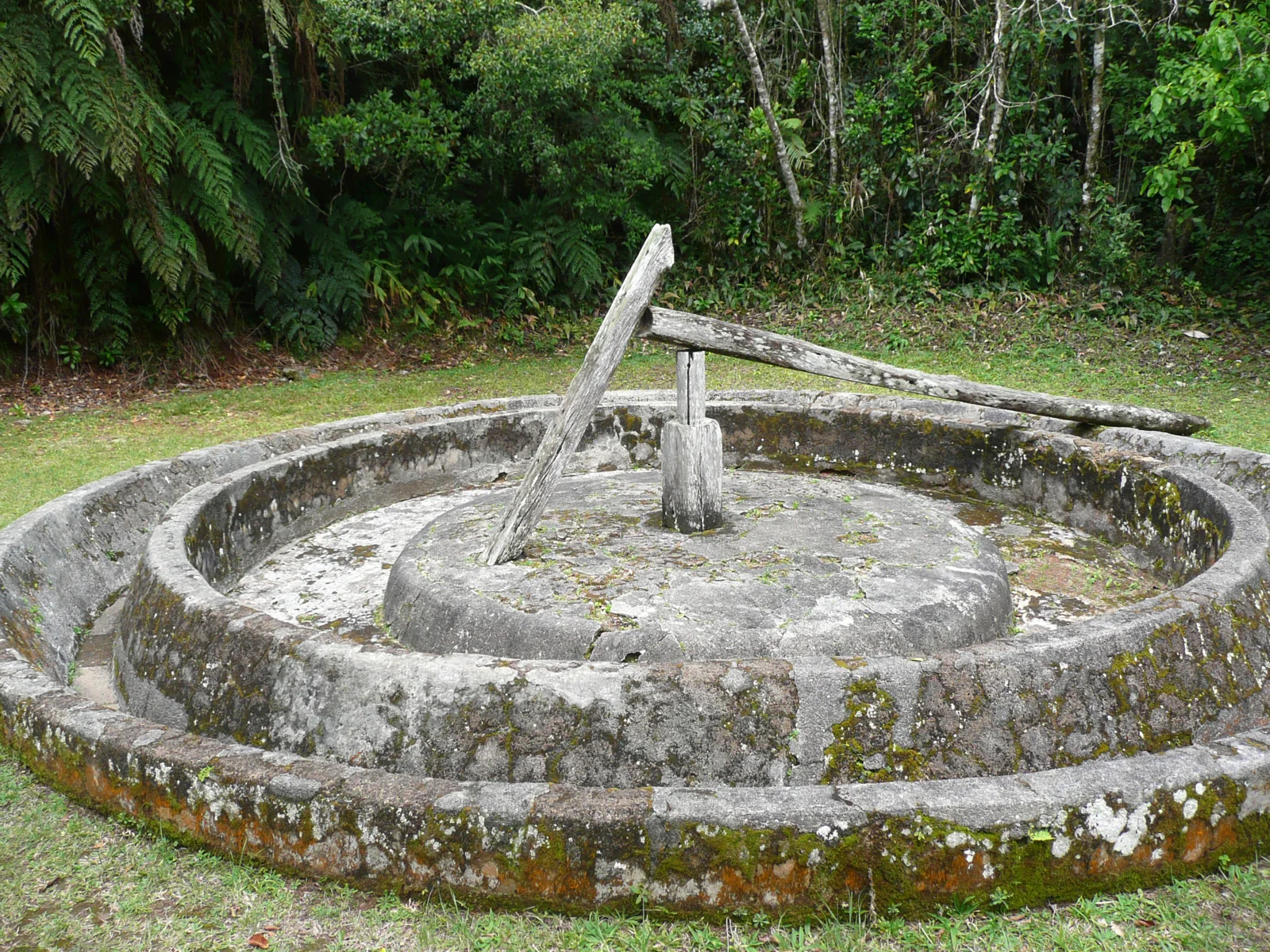
Today
Cuban coffee is mountain coffee from the Oriente. About 90% of production comes from the mountain strip of the provinces of Holguín, Granma, Santiago de Cuba and Guantánamo, and Tercer Frente, in Santiago province, is the country's leading producing municipality. The center of the island also produces, in the Escambray. The coffee zones are emptying: about 700,000 people live in the mountains, 6% of the population, and the lack of hands for picking comes back in every source as the first cause of poor harvests. To get around it, the Grupo Empresarial Agroforestal, the state enterprise of the Ministry of Agriculture that oversees production, has run since 2017 a “café en el llano” program, that is, lowland coffee: 1,200 hectares planted in 2021, mainly in the provinces of Matanzas, Villa Clara and Mayabeque, with a target of 7,163 hectares and more than 4,000 tonnes a year by 2030 [14][15][16][17].
Both species are cultivated. The State buys first-quality arabica at 500 pesos the lata and canephora at 420 pesos; the lata is the harvest's unit of account, a box of 12.88 kilos of cherries according to Granma. Canephora is the last to ripen, so that in November 2025 about 360 tonnes still remained on the trees of Guantánamo province alone. On the arabica side, a study carried out at Filé, in the municipality of Tercer Frente, compares Typica, the legacy of 1748, and two Catimors, one with yellow fruits, the other with red fruits, grown at only 200 to 350 meters of altitude; Typica gives the best cup. Genetic material from Vietnam is multiplied on the seed farms of Tercer Frente, Guisa and Buey Arriba, and Granma mentions three “high-potential” clones from this cooperation. Processing is by the wet process, the one the French had installed: pulpers, fermentation tanks and drying floors, which the 2025-2026 campaign was due to repair. The harvest opens in September and, in the Oriente, runs on into the following year [16][17][18][19][20][23].
The State controls every step after picking. Cultivation itself has largely escaped the state farms: since the mid-1990s, most of the production no longer passes through them, and the Filé study concerns private farms. Roasting for the domestic market falls to the public enterprise Cuba-Café, which produces the libreta coffee and the brands sold in foreign currency, Turquino, Serrano, El Arriero and Regil. Export goes through Cubaexport, which in 2008 paid the producer and the processor a price set by the State. A Cuban-Italian joint venture, BioCubaCafé, works with the Grupo Agroforestal on organic coffee: it announces more than 4,500 certified producers and pays 500 pesos per organic lata, and Granma credits it with a coffee aged in rum barrels with Cuba Ron, sold under the name Reserva de Tierra Cuba. With regard to the International Coffee Organization, Cuba is an exporting member of the 2007 agreement, but was suspended for persistent arrears in contributions in 2024-2025 [9][14][17][19][22][23].
The coffee Cubans drink is first of all that of the libreta, the ration book: a 115-gram packet per person per month, which corresponds to the two ounces per adult every two weeks that the US Department of Agriculture recorded in 2008. This coffee is mixed with chícharo, roasted dried peas. The blend had existed since the collapse of production after 1959; it stopped in 2005, when pure coffee returned to the ration book, then resumed in May 2011, by an official note from the ministry in charge of trade, published in Granma, which gives the reason: canephora had risen 69% in a year, to 2,904 dollars a tonne, and the pea only 30%, to 500 dollars. The same note removed the ration for children up to age six. In 2023, ration coffee is imported for at least half and blended with 50% peas, and it was not distributed for about four months starting in May. In 2025, the 115-gram packet of the Hola brand costs 11 pesos at the counter and resells for 85 to 150 pesos, while Cubita and Serrano rise to 1,500 pesos a kilo on the informal market. Per capita consumption, about 12 pounds a year at the end of the 1950s, had fallen to 3 pounds in 2001 [9][12][13][14][15].
The island imports more coffee than it sells. In 2010-2011 it bought 18,000 tonnes on the world market, for 40 to 50 million dollars a year, and Raúl Castro had put the bill at 47 million before the National Assembly in December 2010. In 2023, the island's press repeats a Granma figure from 2020: about 8,000 tonnes imported each year, all from Vietnam. Exports stayed under 2,000 tonnes in 2021, sold from 4,262 dollars a tonne for the low grades to 9,682 dollars for the best; Japan and France were the two leading customers in 2008. The targets, for their part, keep succeeding one another: 22,000 tonnes for 2015 announced in 2012, then 30,000 tonnes and 80,000 hectares for 2030, of which 5,000 to 8,000 tonnes for export. One producer sums up what is stuck: “there is no correspondence between the effort that coffee demands and what it brings in” [9][11][12][14][15].
- Arrival of the coffee tree
- 1748, by José Antonio Gelabert, with seeds from Saint-Domingue [1]
- First plantations on the World Heritage list
- 171 cafetales over 81,475 ha, provinces of Santiago de Cuba and Guantánamo, inscribed in 2000 [4]
- Production record
- 60,330 t in 1961 according to the Cuban press; 52,206 t in 1962, the FAOSTAT maximum [11]
- FAOSTAT value 2024
- 6,000 t, status X, unofficial figure from an external organization [3]
- Cultivated species
- Coffea arabica and Coffea canephora, bought at 500 and 420 pesos per lata of 12.88 kg of cherries [18]
- Main provinces
- Holguín, Granma, Santiago de Cuba and Guantánamo, about 90% of production [15]
- Libreta coffee
- 115 g per person per month, blended with peas since 2011 (pure from 2005 to 2011) [12]
- Export body
- Cubaexport, at a price set by the State [9]
Gray areas
Nobody knows exactly how much Cuba produces. FAOSTAT gives 6,000 tonnes in 2023 and 2024, a round figure that is exactly 100,000 bags of 60 kilos and carries status X; 27 of the series' 30 X values, moreover, fall on a round number of thousands of bags, which betrays figures copied from a source that counts in bags, probably the International Coffee Organization, without the FAO naming it. At the same time, the Cuban press speaks of 9,000 to 10,000 tonnes a year. The ITC guide, built on ICO data, gives 100,000 to 118,000 bags between 2014 and 2019, or 6,000 to 7,080 tonnes, while FAOSTAT imputes 9,203 tonnes to 2014. The Guardian reports a low of 5,500 tonnes in 2009, the year FAOSTAT enters 7,980 tonnes. The starting point is no better: 37,000 tonnes in 1961 for FAOSTAT, an official figure, against 60,330 tonnes for the Cuban press, which makes it the island's record. Even the harvest unit remains to be clarified: in Guantánamo province, 57,300 latas lost equal 101 tonnes, or about 1.8 kilos per lata, which presupposes a count in oro coffee, that is, hulled green coffee, but the article does not say so [3][11][12][14][20][21].
Several accounts are repeated without proof. The Guardian wrote in 2011 that Cuba was “reputed” to be the world's leading exporter in the 1940s: Ukers says it was practically out of the export trade in 1922, and the US Department of Agriculture credits it with a little over 20,000 tonnes exported in the mid-1950s, which does not make a first rank. The old sources also diverge among themselves: Ukers and World Coffee Research have the 1748 seeds come from Saint-Domingue, while Walsh in 1894 has them come from Martinique around 1750; Ukers gives 50,000,000 pounds exported per year in the 1840s, Thurber half that for the preceding decade. An online encyclopedia states that production fell to 7,000 bags in 2007-2008, or 420 tonnes, fifteen times less than the 6,240 tonnes FAOSTAT enters for 2008: probably a typo, not to be repeated [1][2][7][8][9][12][24].
Finally, what nobody has measured. No source consulted gives the share of canephora and arabica in the harvest, or the species of the clones from Vietnam, which neither OnCuba nor Granma specifies. The share of imported coffee in the hard-currency brands is also unknown, as is who makes Cubita: the sources read cite it as a brand, without saying who roasts it. The successive plans announce tonnages that were never reached, but no public assessment measures the gap, or the exact number of producers, which BioCubaCafé puts at 4,500 for its certified producers alone [15][16][17][19].
Not covered: The share of canephora and arabica in the harvest, for lack of a published figure; the species of the clones from Vietnam; the maker of Cubita; the exact source of the FAOSTAT X values, which the FAO does not name; a recent official national series (ONEI yearbook not consulted); the text of the 1959 agrarian reform and the date of the nationalization of coffee farms, which the source read does not specify; the expulsion of the French in 1809, seen only in a research summary; the number of producers in the country.
- All About Coffee, William H. Ukers, The Tea and Coffee Trade Journal Company, 1922, https://www.gutenberg.org/ebooks/28500 solid level
Introduction in 1748 by Don José Antonio Gelabert with seeds from Saint-Domingue, then to Costa Rica (1779) and El Salvador (1852) (p. 9, chronology p. 728); average exports of 50,000,000 pounds in the 1840s and causes of the decline (p. 233); 2,067 plantations “a century ago,” 1,411 plantations and 3,662,850 trees in 1907, imports (p. 282); Cuba the leading market for Puerto Rican coffee (p. 194); 13.79 pounds per inhabitant, second in the world (p. 288); 39,981,696 pounds imported in 1920 (p. 291); commercial classes (p. 361); flannel-bag preparation (p. 692). Pages checked against the library's PDF. - Coffee Varieties Catalog, World Coffee Research, 2025, https://varieties.worldcoffeeresearch.org/ solid level
Typica arrived in Saint-Domingue in 1735, seeds sent from Saint-Domingue to Cuba in 1748, then from Cuba to Costa Rica (1779) and El Salvador (1840) (p. 9). - FAOSTAT, Production: Crops and livestock products, Coffee, green, Cuba (complete normalized file), FAO, 2025, https://www.fao.org/faostat/en/#data/QCL solid level
Production from 1961 to 2024 with its status year by year, read from the complete CSV: A from 1961 to 1989 and in 2021-2022, X (“Unofficial figure”) from 1990 to 2013, from 2017 to 2020 and in 2023-2024, I from 2014 to 2016; maximum 52,206 t in 1962; 6,000 t in 2024; harvested area from 170,000 ha (1961, E) to 17,801 ha (2024, I). - Archaeological Landscape of the First Coffee Plantations in the South-East of Cuba, UNESCO World Heritage Centre, 2000, https://whc.unesco.org/en/list/1008/ solid level
Inscription in 2000; 171 plantations over 81,475 ha in the provinces of Guantánamo and Santiago de Cuba; owners mostly of French and Haitian origin, African slave labor; wet processing developed by the French in the region; abandonment in the early 20th century; La Isabelica museum in the 1960s. - CULTURE-CUBA: French Ruins May Be Named World Heritage Site, Dalia Acosta, Inter Press Service, 2000, https://www.ipsnews.net/?p=75405 medium level
Arrival of the colonists from Saint-Domingue from 1791 to 1803; 100,000 coffee trees in 1803, four million in 1807 on 191 plantations and 1,650 enslaved people, according to the work of Juan Pérez de la Riva; La Isabelica, property of Prudencio Casamayor; nearly 100 cafetales declared national monuments in 1991. - Coffee Is Not Forever: A Global History of the Coffee Leaf Rust, Stuart McCook, Ohio University Press, 2019, https://ohioopen.library.ohio.edu/oupress/96/ solid level
Collapse of the coffee plantation in the Antilles between 1790 and 1830; Cuba the only place in the Antilles where it survives, competing with sugar for slave labor (p. 29, library copy). - Coffee: From Plantation to Cup, Francis B. Thurber, 1881, https://archive.org/details/coffeefromplanta00thur medium level
Cuban exports of more than 25,000,000 pounds a year from 1830 to 1840 and of 15,710 tons in 1842; the island no longer covers its own consumption (p. 138, library copy). - Coffee: Its History, Classification and Description, Joseph M. Walsh, 1894, https://archive.org/details/coffeeitshistory00wals medium level
Plants obtained from Martinique by the Spanish around 1750 (p. 29); nearly 50,000,000 pounds a year formerly, the crop replaced by sugar and tobacco, districts of the Sierra Maestra, Vuelta Abajo, Alquízar and San Marcos (p. 158); flannel-bag preparation (p. 234). Library copy. - Cuba's Food & Agriculture Situation Report, Office of Global Analysis, Foreign Agricultural Service, USDA, 2008, https://web.archive.org/web/20131105150934/http://www.fas.usda.gov/itp solid level
Exports of more than 20,000 t a year in the mid-1950s, to the Netherlands and Germany; Japan and France the leading customers; Cubaexport sole exporter at a set price; causes of the decline after 1959 (guerrilla war in the Sierra Maestra, nationalization, exodus, plantations near Havana); levels of the 1930s then the 1920s; recovery in the 1980s and the shock of 1989-1991; end of the dominance of state farms in the mid-1990s; ration of two ounces per adult every two weeks; consumption from 12 to 3 pounds per inhabitant (pp. 49-50). - Les caféiers et les cafés dans le monde, vol. I, René Coste, Larose, 1955, https://horizon.documentation.ird.fr/exl-doc/pleins_textes/divers20-12 solid level
Arrival in Cuba in 1748; Instituto Cubano del Café among the coffee research bodies of the Americas (p. 330). Read in the library copy. - Cuba le vuelve a apostar a su café, Notimex, republished by La Opinión, 2012, https://laopinion.com/2012/06/12/cuba-le-vuelve-a-apostar-a-su-cafe/ medium level
Record of 60,330 t in 1961, yield of 0.36 t/ha; about 60,000 t in 1958; 18,000 t imported in 2010-2011, 40 to 50 million dollars a year; target of 22,000 t in 2015; more than 70% of coffee trees aged 30 to 40 years according to Vice Minister Ramón Frómeta. - Hard times mean Cuban coffee tastes of peas again, Rory Carroll, The Guardian, 2011, https://www.theguardian.com/world/2011/may/06/cuba-coffee-peas medium level
Note from the Ministry of Domestic Trade in Granma; canephora up 69% to $2,904/t, pea up 30% to $500/t; pure coffee in the ration since 2005; removal of the ration for children under six; 115 g packets; low of 5,500 t in 2009; 47 million dollars of imports according to Raúl Castro; the phrase “reputed to be the world's leading exporter in the 1940s.” - Cuba: un cafecito con chícharos, Associated Press, republished by Expansión, 2011, https://expansion.mx/economia-insolita/2011/05/04/cuba-un-cafecito-con medium level
Return of the blend in May 2011; 115 g packet going from 5 to 4 pesos; blend until 2005; production of about 6,000 t a year covering a third of needs. - ¿No hay café en Cuba?, Lucía Rojas, OnCuba News, 2023, https://oncubanews.com/cuba/economia/no-hay-cafe-en-cuba medium level
Production of 9,000 to 10,000 t a year, need of 24,000 t; yield of 0.18 t/ha; about 8,000 t imported per year from Vietnam (according to Granma, 2020); exports under 2,000 t in 2021, at $4,262 and 9,682/t; targets of 30,000 t and 80,000 ha in 2030; ration imported for at least half and blended with 50% peas, interrupted from May 2023; Cuba-Café and its brands Turquino, Serrano, El Arriero, Regil; 700,000 inhabitants in the mountains. - Cafeteras vacías: sin costumbres tampoco hay país, Ángel Marqués Dolz, OnCuba News, 2025, https://oncubanews.com/?p=579539 medium level
First cafetal in 1748 on a Gelabert property near Wajay, according to Francisco Pérez de la Riva; about 90% of production in the provinces of Holguín, Granma, Santiago de Cuba and Guantánamo; Tercer Frente the leading producing municipality; plan of 17,000 t in 2022 and 30,000 t in 2030; price of the Hola, Cubita and Serrano packets; beans from the Escambray; quotation from the producer Nidia Calunga. - Cuba apuesta por producir café en el llano con tecnología vietnamita, OnCuba News, based on the Agencia Cubana de Noticias, 2021, https://oncubanews.com/cuba/cuba-apuesta-por-producir-cafe-en-el-llano medium level
Lowland coffee program since 2017, led by the Grupo Empresarial Agroforestal; 1,200 ha planted; target of 7,163 ha and more than 4,000 t in 2030; main hubs in Matanzas, Villa Clara and Mayabeque; Vietnamese genetic material multiplied at Tercer Frente, Guisa and Buey Arriba; exodus of mountain dwellers. - Para que no falte «un traguito de café» (I), Luis Alberto Portuondo and David A. Medina Cabrales, Granma, 2025, https://www.granma.cu/cuba/2025-11-22/para-que-no-falte-un-traguito-de medium level
Record of 60,000 t in 1961; shortage of labor for picking; Tercer Frente the leading producing municipality; three clones from a project with Vietnam; BioCubaCafé, more than 4,500 certified producers, Reserva de Tierra Cuba aged in rum barrels with Cuba Ron. - Trabajan en la paulatina recuperación de la producción cafetalera, Luis Alberto Portuondo and Milena Estévez Gámez, Granma, 2025, https://www.granma.cu/cuba/2025-09-03/sin-pausas-la-recuperacion-de-la medium level
Purchase price of 500 pesos per lata of first-quality arabica and 420 pesos per lata of canephora (“robusta” in the text); harvest opening in September 2025; convention convened by the Grupo Agroforestal. - Proveen logística vital para la actual cosecha cafetalera, Luis Alberto Portuondo and David A. Medina Cabrales, Granma, 2025, https://www.granma.cu/cuba/2025-09-15/proveen-logistica-vital-para-la- medium level
Lata of 12.88 kg of cherries; 500 pesos per organic lata; BioCubaCafé, Cuban-Italian joint venture, 270 members in 2023 and 320 in 2024; repair of drying floors and fermentation tanks. - Cafetaleros del Alto Oriente: recoger y recuperar, José Llamos Camejo, Granma, 2025, https://www.granma.cu/huracan-melissa-cuba/2025-11-18/cafetaleros-del- medium level
Hurricane Melissa in Guantánamo: 6,873 ha of coffee damaged, more than 57,300 latas lost worth 101 t; about 360 t of canephora still on the trees, the latest-ripening variety; provincial target close to 670 t. - The Coffee Guide, 4th edition, table 5, pp. 86-87, International Trade Centre (ITC), 2021, https://intracen.org/resources/publications/the-coffee-guide-fourth-ed solid level
Cuba classed as arabica, coffee year from July to June; production of 101, 100, 103, 113, 118 and 110 thousand bags from 2014 to 2019 (read in the library copy, line shifted by one row in the text extraction). - Redistribution of votes in the Council for coffee year 2024/25 (ICC-140-1), International Coffee Organization, 2025, https://ico.org/documents/cy2024-25/icc-140-1e-redistribution-2024-25. solid level
Cuba among the exporting members of the 2007 agreement suspended for persistent arrears, without voting rights (document of September 22, 2025). - Estudios sobre calidad del café (Coffea arabica) en la localidad de Filé, municipio Tercer Frente, Santiago de Cuba, Yudmila Vázquez-Osorio, Daniel Vuelta-Lorenzo, Miriela Rizo-Mustelier, Ciencia en su PC, vol. 1, no. 2, pp. 66-81, 2020, https://www.redalyc.org/journal/1813/181363909010/181363909010.pdf solid level
Typica, yellow Catimor and red Catimor grown on private farms in Filé between 200 and 350 m; best chemical and sensory quality for Typica. - Coffee production in Cuba, English Wikipedia, accessed in 2026, https://en.wikipedia.org/wiki/Coffee_production_in_Cuba low level
Only the claim of a fall to 7,000 bags in 2007-2008, cited as an example of a probable error.