ATLASAngola
7,584 tonnes (FAOSTAT 2024)In-depth dossier, atlas 2026In-depth dossier: the FAOSTAT series compared with the other figures, the history, today's sector and its gray areas, numbered sources. Region: Africa.
Angola had only a statistical reference point. This dossier completes it: the history of the sector, what it is today, and what remains uncertain, each paragraph pointing to its sources, numbered at the bottom of the page.
The FAOSTAT series remains displayed as is. The dossier says what it is worth, year by year when possible, and compares it with the other figures available.
- Geographic status
- country
- Name in FAOSTAT
- Angola
- Latest value
- 7,584 tonnes in 2024
- Nature of the value
- official figure
- Start of the positive series
- 1961
- Series maximum
- 235,200 tonnes in 1967
Confirmed coverage: FAOSTAT series, and a dossier of 22 sources that crosses the history, today's sector and what remains uncertain.
History
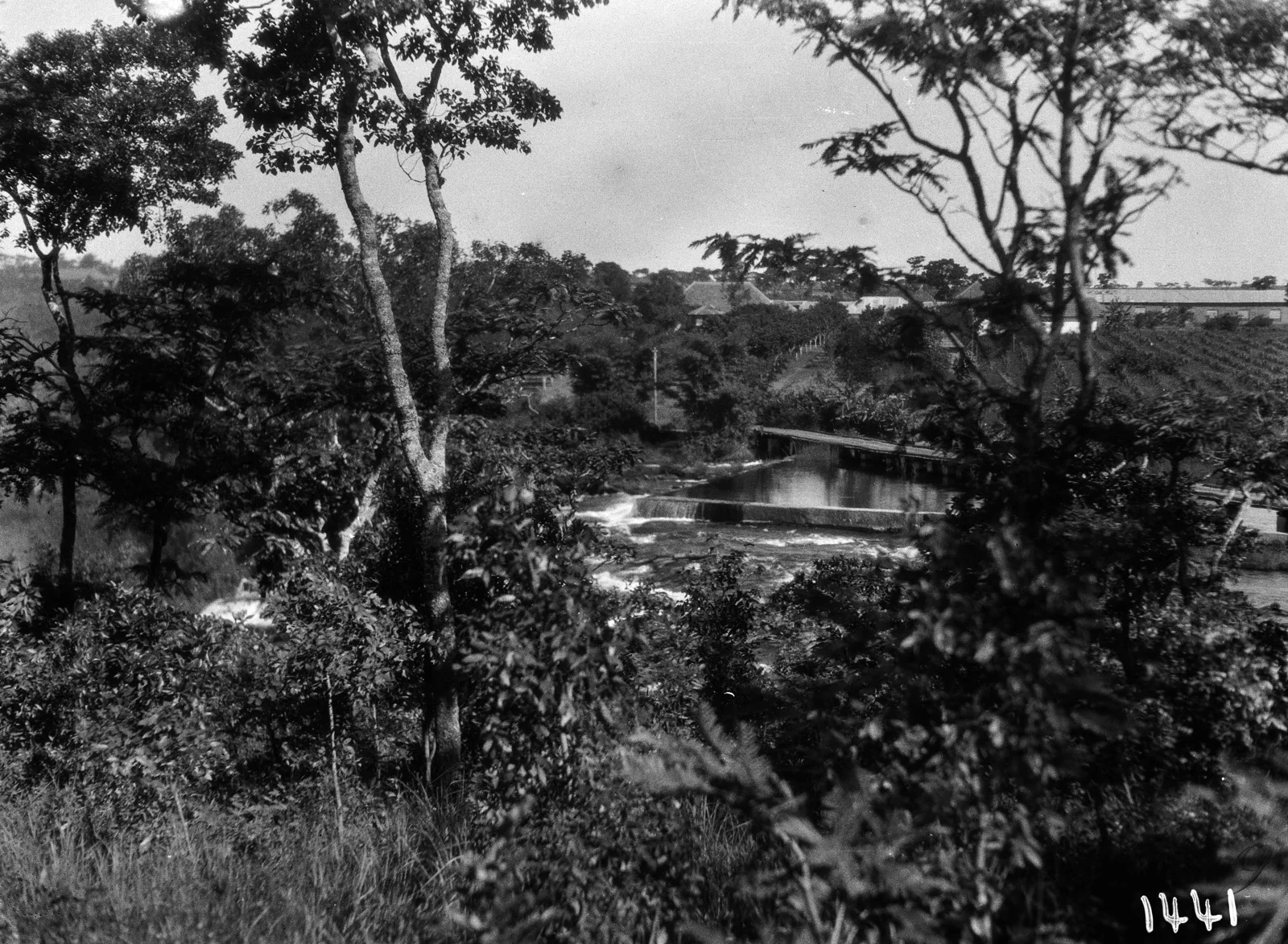
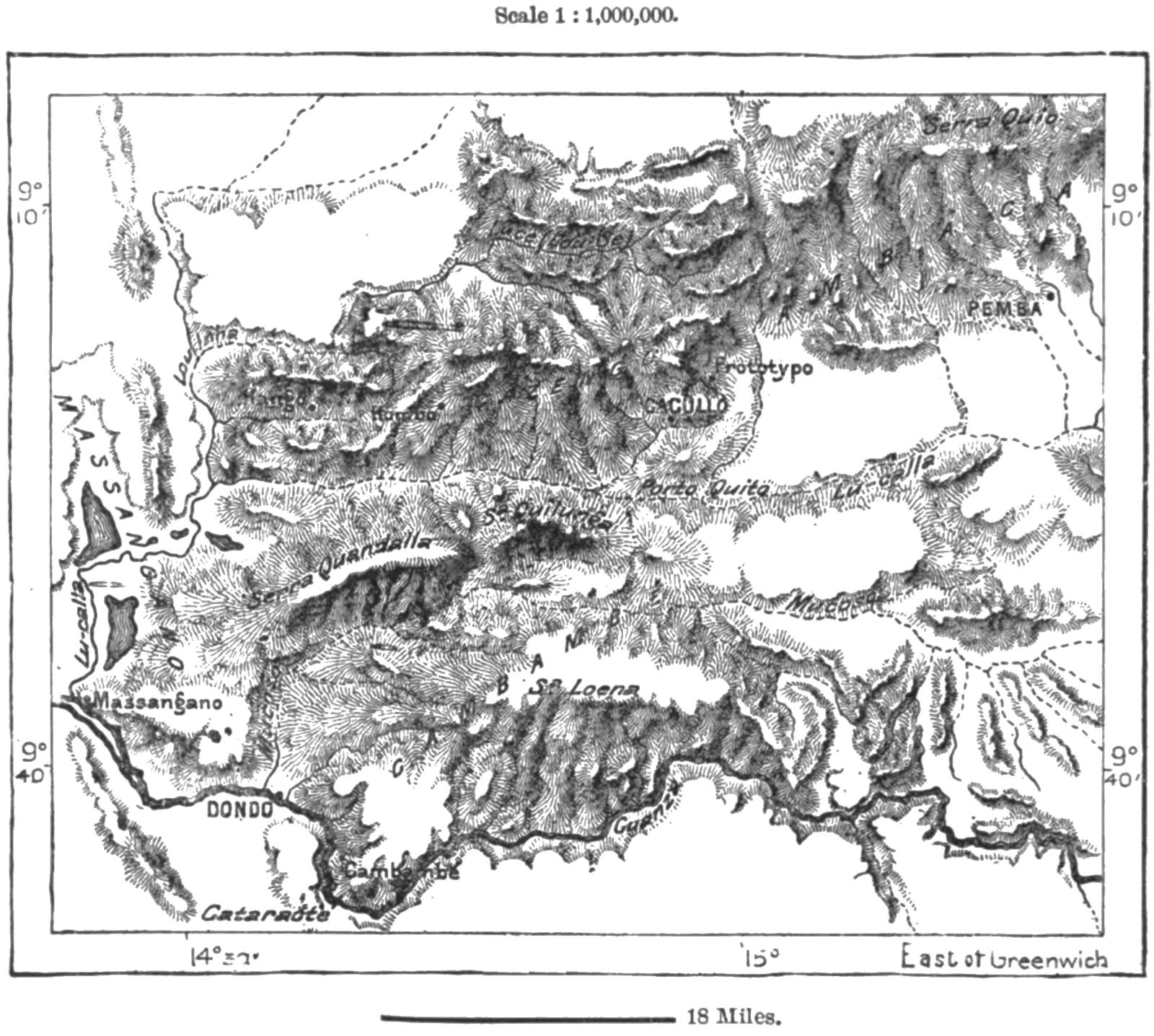
The coffee plant did not have to be introduced to Angola: Coffea canephora grows wild in the forests of the north, and Coste, in 1955, still ranks the country among the spontaneous ranges of the species, alongside coffee plants that exist only there, such as C. carrissoi and C. melanocarpa. The wild Angolan populations even form a distinct genetic group, labeled G, in the classification of canephora used by the site's plate on the diversity of the species. According to McCook, from the 1830s, Portuguese settlers, planters from Brazil and Africans began to domesticate these forest coffee plants; the Austrian botanist Friedrich Welwitsch, in the 1850s, saw Africans and Europeans cultivating a coffee whose seed they gathered in the neighboring forest, first named C. welwitschii, then attached to canephora. Seleti dates to 1833 the first significant plantation, opened in the Cazengo, north of the Cuanza River, by a Brazilian planter, João Pereira Barbosa, who counted 600 plants in 1838. Official exports through Luanda remained tiny, 1,400 kilos a year on average in 1830-1832, 6,000 in 1845, while part of the African harvest left through the port of Ambriz, which the Portuguese did not control [7][9][5][4].
Coffee grew on forced labor. The planters of Cuanza Norte were the first employers of serviçais, workers bound to their master by a status close to slavery, which survived the abolition of the slave trade: in 1902, the Companhia Agrícola do Cazengo employed 1,070 of them, and the administration let planters requisition, during the harvest, the forced labor supplied by militia soldiers. Ukers confirms it in 1922: the harvest begins in June, and the government must often lend soldiers to planters for lack of hands. He counts 10,655,934 pounds exported in 1913, about 4,800 tonnes, which place the country around third in Africa. The coffee belt runs from the Cuanza to the Congo, between 460 and 760 meters or so, and in the Cazengo valley the wild coffee plants are so dense that it is enough to thin them out. The largest plantation, that of the Companhia Agrícola do Cazengo, harvested nearly 1,500 tonnes in 1913. The coffee, sun-dried for fourteen to forty days then hulled by machine, was sold mainly in Lisbon, at a price that barely covered cost and transport; part went to Hamburg under the Cazengo brand, the smallest bean on the European market after Mocha [4][2].
The 1920s brought in foreign capital. The Companhia Agrícola de Angola (CADA), founded around 1926-1927 with capital from the Belgian bank Hallet, absorbed part of the plantations of the Companhia de Amboim and exported 2,000 tonnes as early as 1928. In October 1940, the state created the Junta de Exportação do Café Colonial, an office charged with regulating exports and moving stocks during the war. In the 1950s, Angola was, with the Belgian Congo, the only country in Africa where canephora prospered on large plantations; its production doubled between 1950 and 1960, it entered the world's top ten producers and sold mainly to Portugal and the United States. The colony had a technical service of the Junta, a public experimental station and a private station of the CADA; the administration also pushed Coffea arabica, without commercial success according to McCook. This boom required labor: Keese studies the forced labor scandals in the Congo district, in the north, from 1955 to 1961, and Seleti sees in the conflicts born of the coffee economy a cause of the uprising of March 1961, which opened the war of independence in regions covered with plantations [4][5][6].
The FAOSTAT series begins at the summit. From 168,600 tonnes in 1961, production rose to 235,200 tonnes in 1967, its maximum, or about 5.4% of the total of the countries surveyed that year. From 1961 to 1972, the country was the world's fourth-largest producer in eight years out of twelve, behind Brazil, Colombia and Côte d'Ivoire, and third in 1962, 1965 and 1967, when the Ivorian harvest slackened; it was still third in 1974. The INCA, cited by a University of Évora study, counted in 1973 525,000 hectares and 209,900 tonnes, with 60% of the area in plantations of about a hundred hectares that made 70% of the harvest, with labor from the Planalto central, the high plateaus of the center, and yields of 450 to 520 kilos of green coffee per hectare. Orange rust, absent from the colony throughout the 1950s while it raged in the neighboring Congo, was detected there in 1966; McCook supposes that the comings and goings of guerrillas and refugees across the border may have brought it, and Angola became the last relay before Brazil, hit in 1970 [1][14][5][9].
Independence, in 1975, shattered this edifice. The Portuguese settlers left the fazendas, the large estates, and the Empresa Nacional de Café, created around 1975 under the authority of the Ministry of Agriculture, had to take over the abandoned plantations, marketing, hulling and export. The civil war that followed prevented any maintenance and emptied the countryside. FAOSTAT goes from 180,000 tonnes in 1975 to 57,480 in 1976, then 17,340 in 1979; from 1990 the series falls to 5,000 tonnes a year, and reaches its low in 2002, the year the war ended, with 1,260 tonnes. According to the Évora study, yield went from about 500 kilos per hectare in 1975 to 30 in the early 1990s, many families replaced the coffee plant with food crops, and the country's share of world production fell from 3.9% in 1975 to 0.02% in 2002 [5][14][1][12].
The series has its own holes. From 1975 to 1985, then from 1994 to 2004, FAOSTAT does not publish an official Angolan figure but a value taken from an outside organization, marked X, and the areas entered at 500,000 hectares each year from 1963 to 1974 are estimates. The postwar recovery, up to 15,009 tonnes in 2014, is followed by five imputed years, from 2016 to 2020, that is, calculated by the FAO for lack of a declaration from the country. Then come two official figures that do not connect: 10,304 tonnes in 2021, 5,206 in 2022. The current value, 7,584 tonnes in 2024, is the one the Ministry of Agriculture announces for the 2023-2024 season in commercial coffee, that is, hulled; it represents a little over 3% of the 1967 maximum. What this change of scale hides is discussed in the gray areas [1][18][16].
Today
Coffee is grown on two levels. According to the INCA, canephora occupies the north, below 1,000 meters: Uíge, Cuanza Norte, Cuanza Sul, Bengo, Cabinda and part of Malanje. Coffea arabica, above 1,000 meters, is found on the plateaus of the center and south, in Huambo, Bié, Benguela and Huíla, in part of Malanje and Cuanza Sul, with an extension toward the east, in the Lundas. Canephora is said to make up about 98% of production, a figure from a 2015 assessment taken up by UNCTAD. Two provinces dominate: Uíge, with 49.4% of production, and Cuanza Sul, with 45%, according to INCA data cited by the weekly Expansão in 2025 [11][22][12][17].
The INCA does not speak of varieties in the breeders' sense but of ecotypes, that is, local canephora populations each adapted to its own environment: Ambriz, grown in Uíge, Bengo, Cuanza Norte and Malanje; Cazengo, limited to the surroundings of N'Dalatando; Amboim, of Cuanza Sul; Macocola, specific to the Macocola and Milunga zone, in Uíge; and that of Cabinda. The same names serve as commercial types for export, and in 2025 Ambriz made up 70% of exported volumes. The plantations are old, propagated by seed, with almost no fertilizer or treatments, which leads the INCA to say that the country produces “practically organic coffee,” without certification to attest it. Three experimental stations conduct research: Uíge and Amboim for canephora, Ganda, in Benguela Province, for arabica [11][19][21][12].
Production is almost entirely family-based. The INCA counted in 2025 19,894 producers, 19,570 of them family farms, on 56,421 hectares; the survey of the 2016-2017 season estimated 21,468 on 49,423 hectares harvested, with a yield of 140 kilos per hectare. UNCTAD gave in 2018 an average farm of 1.7 hectares, and 90% of farms in monoculture. For these families, coffee serves as savings: the INCA reports the expression “o meu banco,” my bank, for a coffee that is kept and sold only in case of need. The areas remain nearly ten times smaller than those of 1973 [21][11][12][14].
Processing is by the dry process. The cherries are dried whole to give mabuba coffee, or coffee in the husk, then hulled to obtain commercial coffee, that is, the green bean; according to the INCA, 10 kilos of cherries give 5 kilos of mabuba and 2.5 kilos of commercial coffee. A 2013 study in the municipality of Amboim found no wet process there, judged too costly: smallholders sell cherries or mabuba to intermediaries who hull and carry the bean to Luanda, the only export port. Quality suffers: 76% of 2025 exports are classed as second quality, and the director of the INCA asked in 2026 that coffee no longer be dried directly on the ground and that green cherries no longer be picked [11][14][21][22].
The Instituto Nacional do Café (INCA), attached to the Ministry of Agriculture and Forests, also oversees oil palm, cashew and cacao; its technical brigades advise producers, and its certification agencies, based at the ports, issue export licenses. It had 18 researchers in 2019. Exports fluctuated between 600 and 750 tonnes a year from 2013 to 2018, then rose: 1,662 tonnes in 2020, 1,427 for the 2022-2023 season, about 2,160 in 2024, 3,288 in 2025 for 12 million dollars. Portugal remains the leading customer, 961 tonnes in 2025, ahead of Poland and Italy; Angonabeiro, Angolan subsidiary of the Portuguese roaster Delta, sells an Amboim brand there and blends Angolan coffee into other blends. The National Assembly approved in March 2025 the ratification of the International Coffee Agreement of 2022. The INCA aims at 14,000 tonnes of production and 5,000 tonnes of exports in 2026-2027: these are targets, not results [11][20][19][18][21][17].
The country drinks little of the coffee it produces, and the INCA lists low domestic consumption among the weaknesses of the sector. A few brands roast the local raw material on site, Soicafé and Dona Isabela in Uíge, Bela Negra and Gabela in Cuanza Sul, Cazengo in Cuanza Norte; in 2021, the INCA also reported the use of the bean to make liqueurs [11][20].
- Dominant species
- Coffea canephora, about 98% of production (2015 assessment) [12]
- 2024 production (FAOSTAT)
- 7,584 tonnes, official figure (A) [1]
- FAOSTAT series maximum
- 235,200 tonnes in 1967 [1]
- 2025 production announced by the INCA
- 10,500 tonnes of commercial coffee [21]
- Producers and area
- 19,894 producers, 19,570 of them family-based, on 56,421 hectares (2025) [21]
- Growing altitude
- canephora below 1,000 m, arabica above [11]
- Main provinces
- Uíge (49.4%) and Cuanza Sul (45%) [17]
- 2025 exports
- 3,288 tonnes, Portugal the leading customer [21]
Gray areas
Three institutions, three orders of magnitude. For 2014-2019, FAOSTAT records 13,000 to 15,000 tonnes a year; the table of the ITC's Coffee Guide, drawn from the data of the International Coffee Organization, gives 35,000 to 45,000 bags of 60 kilos, or 2,100 to 2,700 tonnes; the INCA announces for the 2016-2017 season 13,981 tonnes of mabuba coffee and 6,942 tonnes of commercial coffee; UNCTAD writes 8,000 tonnes for 2017. The values imputed by FAOSTAT, 14,680 tonnes in 2016 and 13,543 in 2017, are close to the weight of mabuba, which keeps its husk, and not to that of the green bean that the series is supposed to count. The drop from 10,304 to 5,206 tonnes between 2021 and 2022, a ratio of 1.98, looks like a switch from one weight to the other rather than a harvest cut in half: this is a hypothesis, which no document read confirms. Official word also floats: in February 2026, the director of the INCA attributes 10,500 tonnes produced and 3,288 tonnes exported to 2025; in March, the same news agency attributes these two figures to 2024, a year for which the ministry had announced 7,584 tonnes [1][15][11][13][21][22][18].
The golden age itself is poorly quantified. For 1973, FAOSTAT records 210,000 tonnes and the INCA 209,900, but the weekly Expansão writes 240,000 tonnes and makes the country the world's third-largest producer, whereas FAOSTAT places it sixth that year. UNCTAD calls it Africa's leading producer in the 1970s, whereas in FAOSTAT Côte d'Ivoire is ahead of it in ten of the fifteen years from 1961 to 1975; the INCA speaks more cautiously of an alternation with it in the top two African places. The areas range from 500,000 hectares, a value estimated and repeated each year by FAOSTAT, to 525,000 for the INCA in 1973 and 600,000 according to its director in 2026. Further back still, the figure Ukers gives as production in 1913 is, in his own table, that of exports, and his judgment of taste, a strong, acrid coffee lacking sweetness and aroma, takes up almost word for word that of Walsh in 1894 [1][14][16][17][12][11][22][2][3].
Several accounts circulate without proof. Robusta Amboim was supposedly discovered in 1917 by a man named Couto at Cungulo, and would be milder and lower in caffeine than other canephoras: the 2013 study that reports it cites no measurement. The UNCTAD report writes that Angolan canephora would be the best of the producing countries, taking care to use the conditional. The health dates diverge: McCook dates rust in Angola to 1966, a BSPP table taken up by the site's plates gives 1930, which is also the year put forward for the arrival of coffee berry disease, the disease of green cherries, whose extension to Angola the Crop Trust confirms without dating it; the coincidence deserves checking. Finally, three coffee plants unique to Angola, C. carrissoi, C. kapakata and C. melanocarpa, have not been seen again for decades because the war made their forests inaccessible: no one knows whether they survive [14][12][5][9][10][8].
Not covered: The series of the International Coffee Organization consulted directly: the addresses of the historical statistics return a 404 page, only the ITC table was used. The report of the US agricultural service on Angolan coffee (GAIN AO2021-0002, 8,700 t estimated for 2019, according to a research abstract): the USDA site answers 403 and the file name was not found. The thesis by Maria do Mar Gago, Robusta Empire (Lisbon, 2018), protected by an anti-robot check that I did not bypass. The founding date of the INCA, the passage from the colonial Instituto do Café de Angola to the INCA, the role of the public company Cafangol: no open source establishes them. The current harvest calendar: only Ukers gives one, in 1922. The figure of 4,683 t of commercial coffee in 2023 attributed to the director of the INCA by the agency ANGOP: protected page, not read. The prices paid to producers, present in the INCA's 2019 presentation but too old to be useful alone.
- FAOSTAT, Production: Crops and livestock products, Coffee, green (code 656), Angola: production, harvested area, yield and status of each value, Food and Agriculture Organization of the United Nations (FAO), 2025, https://bulks-faostat.fao.org/production/Production_Crops_Livestock_E_ solid level
Series 1961-2024 read from the bulk archive already extracted on disk: 168,600 t in 1961, maximum of 235,200 t in 1967, 210,000 t in 1973, 180,000 t in 1975, 57,480 t in 1976, 1,260 t in 2002, 15,009 t in 2014, 14,679.61 t in 2016, 13,542.99 t in 2017, 10,304 t in 2021, 5,206 t in 2022, 6,229 t in 2023, 7,584 t in 2024. Production status: A from 1961 to 1974, X from 1975 to 1985, A from 1986 to 1993, X from 1994 to 2004, E in 2005-2006, A from 2007 to 2011, I in 2012, A in 2013-2015, I from 2016 to 2020, A from 2021 to 2024. Area estimated (E) at 500,000 ha from 1962 to 1974, imputed (I) from 2016 to 2024 (22,060 ha in 2024). World ranks calculated on the countries of the same table, excluding aggregates. - All About Coffee, ch. XX (p. 229-230), XXI (p. 268), XXII (table of exports) and XXIV (characteristics of coffees and reference table), William H. Ukers, 1922, https://www.gutenberg.org/ebooks/28500 solid level
Exports of 10,655,934 pounds in 1913 (five-year average 10,459,724), presented in the text as a production of nearly 11 million pounds; coffee the country's second product, about third in Africa; coffee belt from the Cuanza to the Congo between 1,500 and 2,500 feet; wild coffee plants of the Cazengo; nearly 1,500 t harvested in 1913 by the Companhia Agrícola de Cazengo; harvest from June, soldiers lent to planters; drying of 14 to 40 days; Lisbon price; Cazengo brand in Hamburg, smallest bean after Mocha; strong, acrid taste, without sweetness or aroma; Encoje type. - Coffee: Its History, Classification and Description, p. 105, Joseph M. Walsh, 1894, https://www.biodiversitylibrary.org/bibliography/33348 medium level
PDF copy from the local library. Angolan coffee described as strong and acrid, lacking sweetness and aroma, the coffee of the highland settlers judged superior to the wild sorts; Benguela type. Wording taken up almost word for word by Ukers in 1922. Trade work, period testimony. - Portuguese colonialism, capitalism and the Angolan coffee industry, 1850-1950, doctoral thesis, p. 46-48, 157-160, 222-223 and 319-320, Yonah Ngalaba Seleti, Dalhousie University, 1987, https://hdl.handle.net/10222/85476 medium level
Wild coffee of the forests of the Luanda hinterland; first major plantation in the Cazengo in 1833 by the Brazilian João Pereira Barbosa, 600 plants in 1838, thirteen planters in 1849; exports of 1,400 kg a year in 1830-1832, 3,000 kg in 1844, 6,000 kg in 1845, African trade through Ambriz; 1,070 serviçais at the Companhia Agrícola do Cazengo in 1902, requisition of militia soldiers for the harvest; CADA founded around 1926-1927 with the Belgian bank Hallet, 2,000 t exported in 1928; Junta de Exportação do Café Colonial created in October 1940; conflicts leading to the war of liberation of March 1961 (abstract). - Coffee Is Not Forever: A Global History of the Coffee Leaf Rust, p. 108-111, 123, 127-129, 135-139 and 143-144, Stuart McCook, Ohio University Press, 2019, https://ohioopen.library.ohio.edu/oupress/96/ solid level
PDF copy from the local library. Domestication of wild coffee plants from the 1830s; Welwitsch and C. welwitschii; production doubled from 1950 to 1960, Angola among the top ten at the end of the 1950s; canephora on large plantations in Angola and the Belgian Congo; Junta, experimental station and CADA station; promotion of arabica without commercial success; country free of rust in the 1950s, rust detected in 1966; guerrilla war of 1961 in the coffee-growing north; independence in 1975; rust in Brazil in 1970. - The Constraints of Late Colonial Reform Policy: Forced Labour Scandals in the Portuguese Congo (Angola) and the Limits of Reform under Authoritarian Colonial Rule, 1955-61, Portuguese Studies, vol. 28, no. 2, p. 186-200, doi:10.5699/portstudies.28.2.0186, Alexander Keese, 2012, https://doi.org/10.5699/portstudies.28.2.0186 solid level
Title and metadata read (Crossref), abstract seen through a search, text not read: forced labor scandals in the Congo district, in northern Angola, the region of the postwar coffee boom, from 1955 to 1961. - Les caféiers et les cafés dans le monde, tome I, Les caféiers, René Coste, 1955, https://horizon.documentation.ird.fr/exl-doc/pleins_textes/divers20-12 solid level
PDF copy from the local library. C. canephora spontaneous in Angola and cultivated at Ambriz, Seles and in the Mayumbe; Angolan species C. carrissoi and C. melanocarpa; Junta de Exportação do Café in Luanda. - High extinction risk for wild coffee species and implications for coffee sector sustainability, Science Advances 5(1), eaav3473, Aaron P. Davis et al., 2019, https://doi.org/10.1126/sciadv.aav3473 solid level
PDF copy from the local library. Coffea carrissoi, C. kapakata and C. melanocarpa classed as data deficient for lack of recent observations, access to their region having been prevented by the conflict. - Site plates: canephora diversity (robusta-05) and coffee plant diseases (maladies-03, -05, -12, -14, -19), PXL Roasters, after Gomez et al. 2009, Cubry et al. 2013, Mérot-L'Anthoëne et al. 2019, McCook 2019 and the BSPP table 2022, 2026 solid level
Source inherited from the site, not reopened in this pass: genetic group G of canephora attributed to Angola; rust in Angola in 1966 according to McCook, 1930 according to the BSPP table; coffee berry disease in Angola in 1930 according to the same set of plates; Angola the last relay before Brazil. - Global Conservation Strategy for Coffee Genetic Resources, Crop Trust and World Coffee Research (Bramel, Krishnan, Horna, Lainoff, Montagnon), 2017, https://www.croptrust.org/saving-coffee/ solid level
Copy from the local library. Extension of coffee berry disease to Angola, undated; the Angolan collection did not respond to the genebank survey; range of C. carrissoi, C. kapakata and C. melanocarpa. - Apresentação do Instituto Nacional do Café (INCA): O café, oportunidade de negócio no momento da crise, third workshop of Angola's National Green Export Review, Uíge, November 28, 2019, Luzolo Manuel, Instituto Nacional do Café, document published by UNCTAD, 2019, https://unctad.org/meetings/en/Presentation/ditc-ted-25112019-NGERango solid level
Missions of the INCA (coffee, oil palm, cashew, cacao), technical brigades, certification agencies at the ports; ecotypes Macocola, Ambriz, Cazengo, Amboim, Cabinda; 2016-2017 season: 21,468 producers, 49,423 ha, 140 kg/ha, 13,981 t of mabuba, 6,942 t of commercial coffee; old plantations without inputs; canephora below and arabica above 1,000 m; stations of Uíge, Amboim and Ganda, 18 researchers; “o meu banco”; conversion cherry, mabuba, commercial coffee; exports of 600 to 750 t a year from 2013 to 2018, 1,121 t in 2019; Angola fourth-largest producer in the world and first or second in Africa before independence; local brands; low domestic consumption. - National Green Export Review of Angola. Wood, Fish, and Coffee: Baseline Report, UNCTAD/DITC/TED/2017/8, p. 23-24, United Nations Conference on Trade and Development (UNCTAD), 2018, https://unctad.org/system/files/official-document/ditcted2017d8_en.pdf solid level
Angola presented as Africa's leading producer in the 1970s with about 500 kg/ha; production almost nil during the war, political stabilization since 2002; average yield of about 260 kg/ha; canephora 98% of production according to Bellachew (2015); Angolan canephora presented in the conditional as the best; 98% small farms, about 25,000, of 1.7 ha on average; 90% monocultures; INCA stations at Amboim, Uíge and Ganda. - Angola eyes former coffee glory for more sustainable growth, UNCTAD, news article, 2020, https://unctad.org/news/angola-eyes-former-coffee-glory-more-sustainab solid level
Article of May 6, 2020: 8,000 t produced in 2017 versus more than 230,000 t a year in the early 1970s; under 50,000 ha in 2016-2017 versus 500,000 in the 1970s; about 25,000 family producers; Uíge historic coffee center. - Estudo da produção, transformação e comercialização do café no município de Amboim, Kuanza-Sul, Cláudio Jorge Nobre Bernardo, Pedro Damião Henriques, Maria Leonor da Silva Carvalho, Universidade de Évora, 2013, https://dspace.uevora.pt/rdpc/bitstream/10174/9354/1/CAF%c3%89_CLAUDIO medium level
Conference paper based on 34 producers. Third-largest producer in the world in 1974; 525,000 ha and 209,900 t in 1973 (INCA 1997); plantations of about 100 ha on 60% of the area, 70% of the harvest, 450 to 520 kg/ha, labor from the Planalto central; Empresa Nacional de Café created around 1975; yield of 500 kg/ha in 1975 and 30 kg/ha in the early 1990s; world share of 3.9% in 1975 and 0.02% in 2002; canephora 98%; dry process only at Amboim; intermediary circuit and the port of Luanda; account of Robusta Amboim discovered by Couto in 1917, without measurement. - The Coffee Guide, fourth edition, table 5, p. 86-87, International Trade Centre (ITC), after the International Coffee Organization, 2021, https://www.intracen.org/resources/publications/the-coffee-guide-fourt solid level
PDF copy from the local library. Production of Angola, canephora and arabica, April-March year: 39,000, 41,000, 45,000, 35,000, 40,000 and 35,000 bags of 60 kg from 2014 to 2019. - Produção de café em Angola vale só 3% da última grande safra dos anos 70, Expansão (economic weekly, Luanda), 2024, https://www.expansao.co.ao/angola/detalhe/producao-de-cafe-em-angola-v medium level
Article of December 16, 2024, based on INCA statistics: 7,500 t over the first nine months of 2024; 240,000 t on 500,000 ha in 1973; 1,427 t exported in 2022-2023; 80% family production according to the director of the INCA. - Angola aprova Acordo Internacional do Café e quer aumentar a produção, Estêvão Martins, Expansão, 2025, https://expansao.co.ao/angola/detalhe/angola-aprova-acordo-internacion medium level
Article of April 2, 2025: 7,584 t of commercial coffee in 2024 according to the INCA; 240,000 t in 1973 and third place in the world; ratification of the International Coffee Agreement of 2022 approved the previous week by the National Assembly; 78% family production; Uíge 49.4% and Cuanza Sul 45%; 2,165 t exported in 2024; Amboim brand launched in Portugal by Angonabeiro, subsidiary of Delta. - Agricultura angolana cresce 6% na campanha 2023-2024, Pedro Mbinza, Forbes África Lusófona, based on the Ministry of Agriculture and Forests (Lusa dispatch), 2024, https://forbesafricalusofona.com/?p=118704 medium level
Article of December 26, 2024: 7,584 t of commercial coffee for the 2023-2024 season, up 27%; at least 2,160 t exported in 2024, up 51.3%, by 21 companies, to Portugal, Poland, Italy, Belgium and Lebanon. - Angola: Coffee Exports Generate Over Usd 3 Million, ANGOP, republished by allAfrica, 2023, https://allafrica.com/stories/202312280269.html medium level
Dispatch of December 28, 2023, remarks by the Minister of Agriculture: 1,427 t of commercial coffee (Ambriz and Amboim) exported during the 2022-2023 season for a little over 3.5 million dollars. Only the beginning of the dispatch could be read. - Country exported more than 1.6 thousand tons of coffee in 2020, Ver Angola, based on an INCA document cited by Jornal de Angola, 2021, https://www.verangola.net/va/en/042021/Trade/24947/Country-exported-mo medium level
Article of April 12, 2021: 1,662 t of green coffee exported in 2020, 27,701 bags, 1.2 million dollars, to Portugal, Spain and Lebanon; four types of canephora depending on the environment (Amboim, Ambriz, Cazengo, Cabinda); low domestic consumption, coffee used for liqueurs. - Angola arrecadou 12 milhões de dólares com exportação de café em 2025. Um terço foi para Portugal, Ver Angola, Lusa dispatch, 2026, https://www.verangola.net/va/pt/022026/Comercio/47791/Angola-arrecadou medium level
Article of February 19, 2026, remarks by the director general of the INCA, Vasco Gonçalves: 3,288 t exported in 2025 (+51.8%), 10,500 t produced (+38.4%), 12 million dollars; Portugal 961 t; 19,894 producers, 19,570 of them family-based, on 56,421 ha, 64,000 ha targeted in 2027; 76% of exports in second quality; Ambriz 70% of exports; targets of 14,000 t and 5,000 t for 2026-2027. - País não desiste da exportação de café: « Temos uma margem de progressão muito grande », Ver Angola, Lusa dispatch, 2026, https://www.verangola.net/va/pt/032026/Comercio/48090/Pa%C3%ADs-n%C3%A medium level
Article of March 16, 2026, remarks by the director general of the INCA: drying directly on the ground and picking of green cherries to be abandoned; about 600,000 ha in the colonial era versus 55,000 today; arabica and canephora provinces, extension toward the east; 10,500 t and 3,288 t attributed to 2024, in contradiction with the dispatch of February 19.