Diedrich Roasters
Production drums, Idaho, United States.
History
The firm was built on a technical choice: the gas infrared burner, under an indirectly heated drum. Infrared heats the wall without a flame licking the bean, with lower inertia than a conventional oven.
The founders left in March 2016 and the company changed hands. It then invested: new 7,400 m² headquarters in June 2020, DR-3 replacing the IR-1 and IR-2.5 in January 2022, fully electric DR3-E in April 2024, DR-280, four bags, in December 2025.
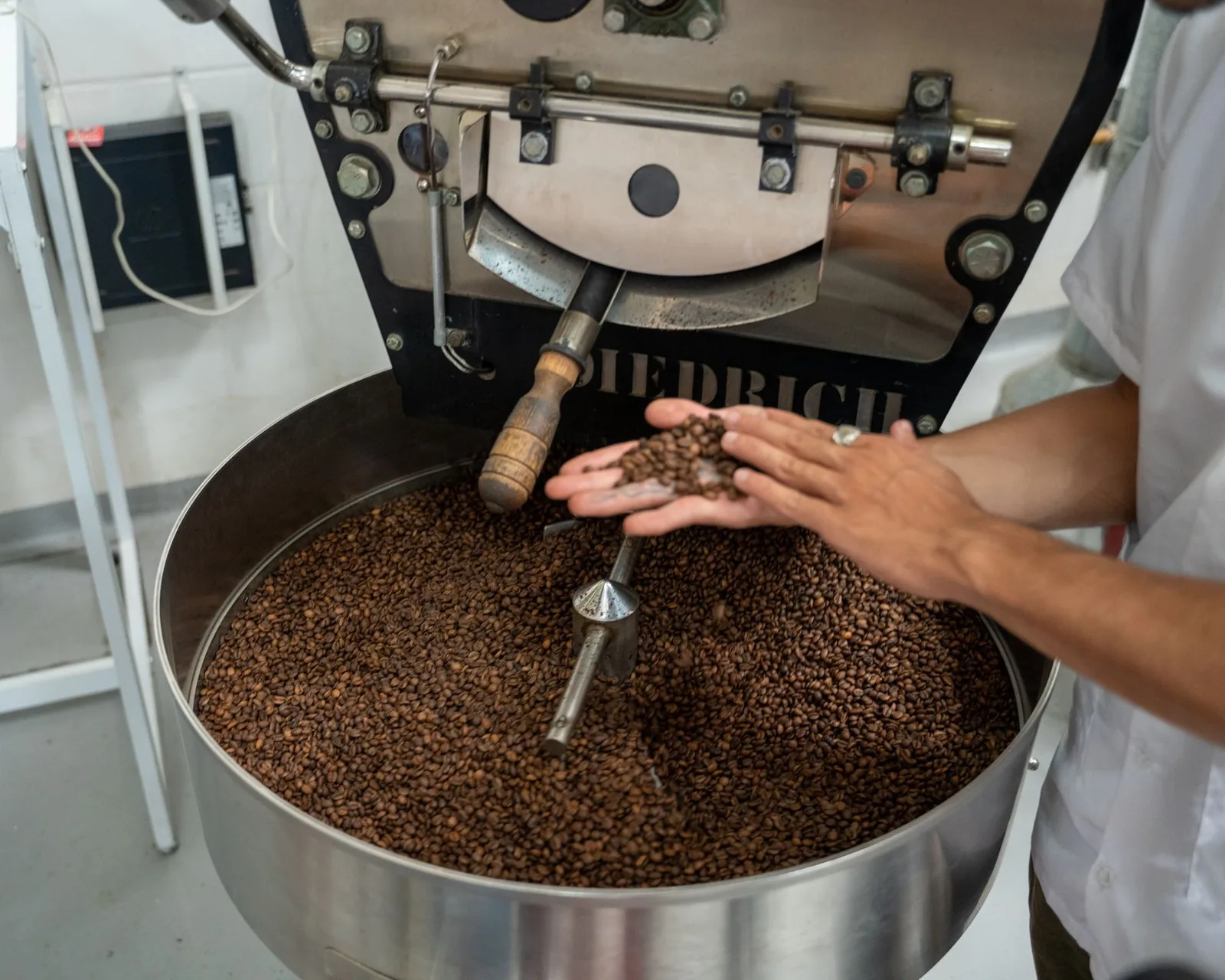
What it makes
Indirectly heated drums with infrared burners, from the shop model to the four-bag.
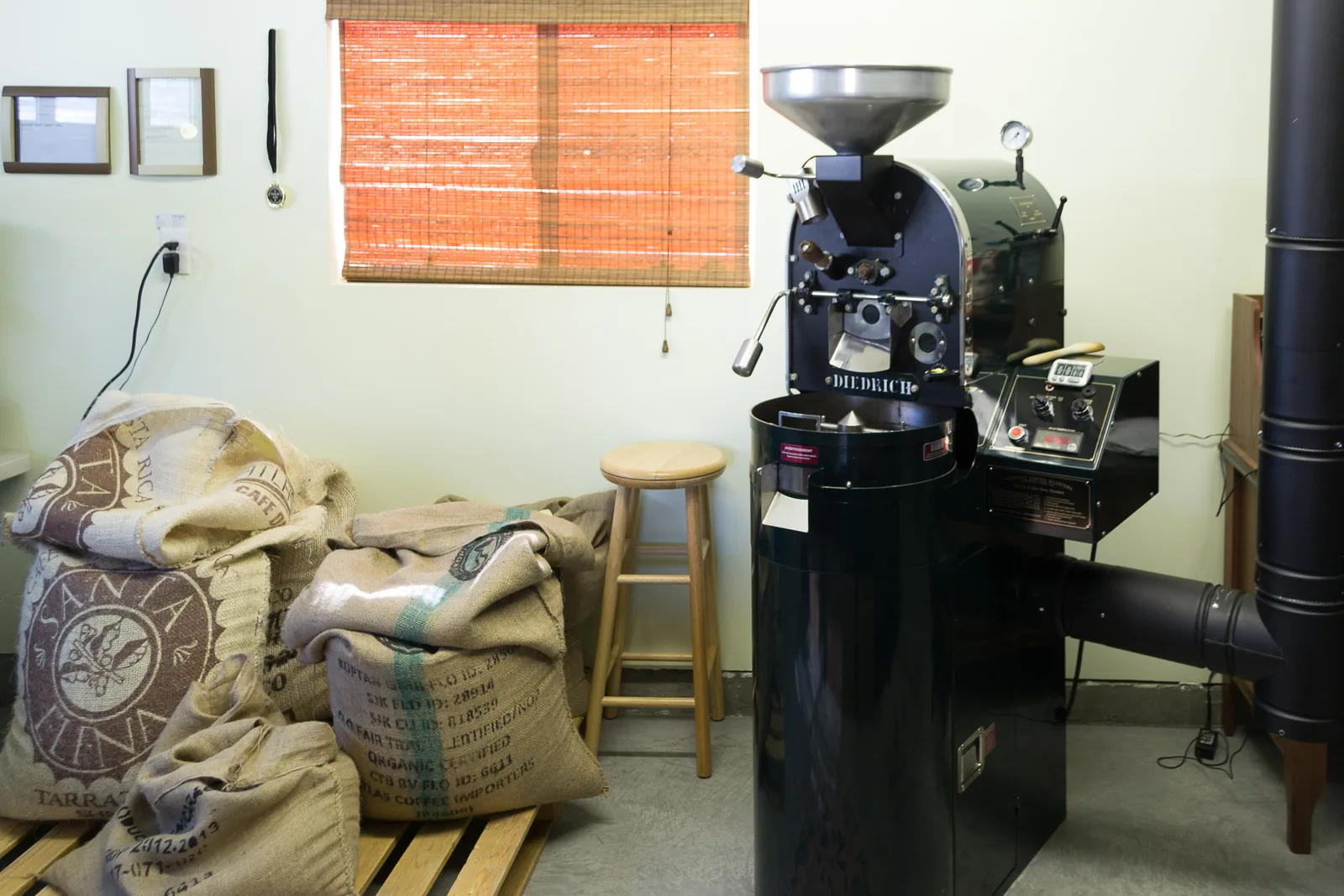
The models
- DR-3: 3 kg
- DR-5
- DR-12
- DR-25
- DR-80
- DR-280
- DR3-E fully electric
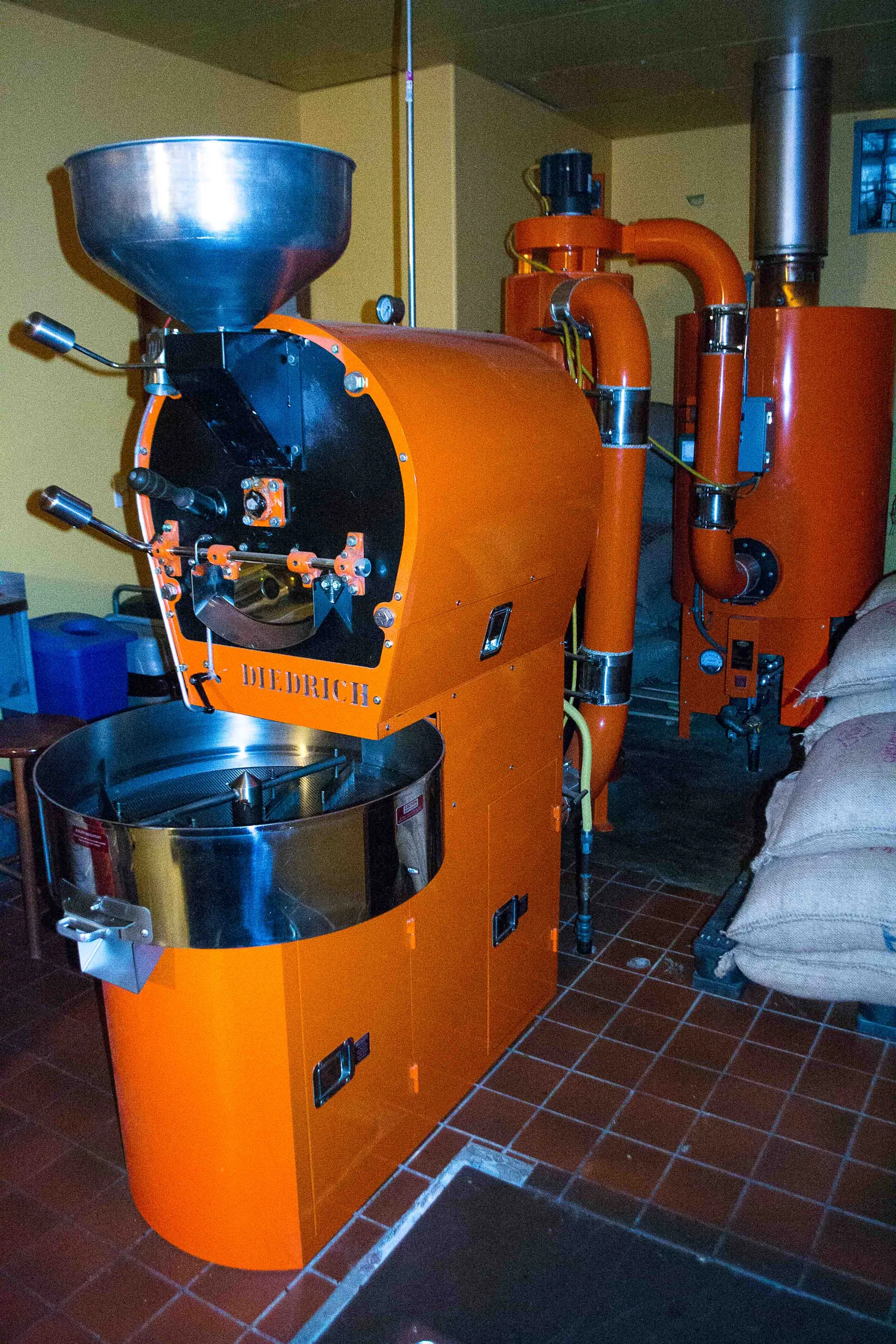
What you gain
Infrared gives a gentle, even heat: surface defects, charred tips and spots, are rare, and light roasts do well on it. The construction is straightforward and maintenance is within reach of a workshop.
What you lose
The flip side of gentleness is slowness: a soft rise cannot be recovered in three seconds. The range is narrower than the Europeans', and the network outside North America thinner.